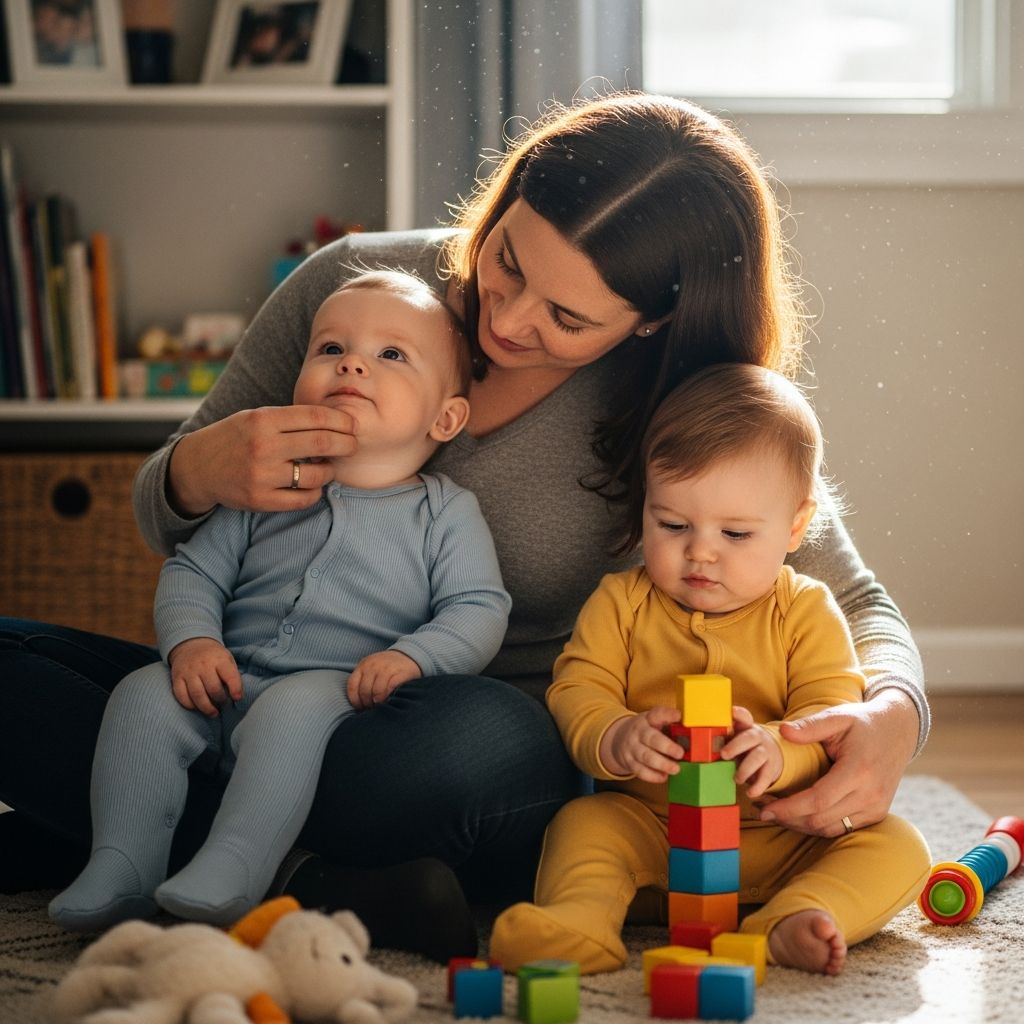
Parenting twins means falling in love twice at the same time—and also feeling pulled in two directions more often than seems humanly possible. Many parents worry: “Am I connecting enough with each child?” This guide offers realistic, judgment-free ideas to help you build a strong, personal bond with each twin while still protecting the beautiful relationship they share with each other.
Why Individual Bonding Matters for Twins
Twins grow up with a built-in companion, but they still need to be seen and cherished as separate people. When each twin feels known as an individual, it supports their confidence, reduces rivalry, and deepens the trust they have in you.
Individual bonding does not compete with the twin bond; it strengthens it. Twins who feel secure in their own relationship with a caregiver are less likely to constantly compare themselves to their sibling, and more likely to enjoy being a team.
Understanding Common Emotional Challenges
Before talking about strategies, it helps to name the emotional realities many twin parents face. Doing so can make the process of bonding feel less like a test you either pass or fail, and more like a skill you grow into over time.
Below are some typical feelings and how they can show up day-to-day.
| Parent Experience | How It Often Shows Up | Helpful Reframe |
|---|---|---|
| Guilt about giving more attention to one twin | Noticing you always soothe the fussier baby first | Equity over time matters more than moment-by-moment equality |
| Overwhelm and exhaustion | Feeling like there is never enough time for one-on-one moments | Micro-moments of connection can be powerful |
| Fear of favoritism | Finding it easier to relate to the twin whose temperament matches yours | Noticing preferences can guide you to give extra intention to the other child |
| Pressure to treat them exactly the same | Insisting on matching clothes, identical gifts, or shared activities | Fairness is about responding to each child’s real needs, not sameness |
Seeing Each Twin as a Whole Person
A strong bond starts with the way you think about each child. From the beginning, practice noticing who each twin is beyond their role as a pair—personality, preferences, and quirks all matter.
Simple shifts in language and attention can send a powerful message that you recognize each twin’s individuality.
- Use their names often instead of saying “the twins.”
- Describe their traits specifically (for example, “You’re so curious about sounds”) rather than labeling one as “the quiet one” or “the bossy one.”
- Keep a small note on your phone with observations about each child—what makes them smile, what calms them, what frustrates them.
Building Bonding Into Everyday Care
The newborn and toddler years rarely offer long stretches of free time, but they do come with many repetitive tasks. Rather than waiting for perfect conditions, use these everyday moments as the foundation of your connection with each child.
Think of routine care as built-in invitations to slow down, make eye contact, and show each twin that this moment is just for them.
Feeding as One-on-One Connection
Feeding is one of the most reliable opportunities for individual focus, especially in the early months. Even if you are tandem-feeding sometimes, try to create pockets where one twin has your undivided attention.
- Alternate which twin you feed first during solo parent shifts so neither always waits or always goes first.
- While feeding one twin, talk softly about what you are doing, name their body parts, or describe the environment around you.
- Use gentle touch—stroking their hair, holding their hand—to reinforce physical closeness.
Diaper Changes and Dressing as Mini Dates
Diaper changes, baths, and dressing can feel like endless chores, but they are perfectly sized for short, intense bursts of connection. Approaching them as mini “dates” can change the tone for both you and your child.
- Make eye contact and narrate what you see: “You’re kicking so strongly today” or “You look surprised by the cold wipe.”
- Sing a simple song that becomes “their” diaper or bath song over time.
- Offer choices when developmentally appropriate, like “blue shirt or green shirt?” to acknowledge their preferences.
Creating Simple One-on-One Rituals
Rituals are small, predictable activities that repeat over time. They do not have to be elaborate to be meaningful. The key is consistency and the sense that this ritual belongs to you and that one child in particular.
Choose rituals that fit naturally into your day rather than adding pressure to create more tasks.
Daily or Weekly Special Moments
Even five or ten minutes of uninterrupted focus can feel huge to a child, especially in a busy twin household. Rotating short rituals can help keep them realistic.
- Designate a brief “morning snuggle” with one twin while the other plays nearby with the other parent or a trusted caregiver.
- Rotate who helps with a simple chore like feeding the pet, checking the mail, or watering plants to create natural one-on-one pockets.
- As they grow, set up “helper of the day” roles so each child gets turns to be your partner in small tasks.
Bedtime as Connection Cornerstone
Bedtime can be chaotic with twins, but it is also one of the most emotionally rich parts of the day. With a bit of planning, it can turn into a reliable anchor for bonding.
- If you have help, each adult can handle bedtime for one twin on some nights, then swap the next night so both children get one-on-one stories and cuddles.
- If you are alone, try a short shared story followed by a brief “whisper minute” with each child separately, even if it is only one or two minutes.
- Create small, individual bedtime touches, such as a unique goodnight phrase or gesture for each twin.
Balancing Together Time and Alone Time
Twins benefit from both shared experiences and separate ones. The goal is not to keep them apart, but to make sure each has some space to explore identity outside the twin unit. This balance can shift with age and personality.
Instead of rigid rules, think in terms of gently expanding each child’s world while honoring their comfort level.
| Age Range | Examples of Healthy Together Time | Examples of Healthy Individual Time |
|---|---|---|
| Infant | Shared tummy time mat, tandem walks in a double stroller | One baby in a carrier while the other naps; solo cuddle after a feeding |
| Toddler | Parallel play with blocks, singing together, shared snack at the table | One twin grocery run; individual bath nights; separate lap time for books |
| Preschool and beyond | Shared playdates, family outings, cooperative games | Different activities or classes according to interests; one-on-one park trips |
Handling Guilt and the Myth of Perfect Fairness
Many twin parents measure themselves against an impossible standard of perfect fairness: identical experiences, equal minutes of attention, completely balanced emotional responses. Reality looks different. Some days one child is sicker, clingier, or more challenging and gets more of your energy.
What matters is the overall pattern over weeks and months, not the exact split on any single day. When you zoom out, you will likely see that both children are loved fiercely, even if the details never match perfectly.
- Notice patterns: if one twin consistently gets more cuddles or more responsibility, adjust intentionally instead of aiming for minute-by-minute equality.
- Use simple phrases when they are older, such as “Everyone gets what they need,” to normalize that fairness is not always sameness.
- Practice self-compassion when the day goes sideways; guilt drains energy that could be used for connection.
Working as a Team With Your Partner or Support Network
If you share parenting with a partner or other caregivers, you can use your team to make individual bonding more achievable. This is less about rigid scheduling and more about thoughtful division of labor over time.
Instead of each adult always defaulting to a particular twin, consider building in rotation and flexibility so both children develop rich relationships with each caregiver.
- Alternate who primarily handles which parts of the routine (mornings, bedtimes, baths) with each twin.
- Ask trusted family or friends to spend solo time with one twin occasionally, knowing you will do the same with the other.
- Check in regularly as adults about what is working, where one child might be getting lost in the shuffle, and how to adjust.
Supporting Individual Interests and Temperaments
As your twins grow, they will show clear preferences in play, learning style, and social interaction. Treat these preferences as invitations to know them more deeply. When you respond to each twin’s unique flavor of curiosity, they feel truly seen.
This does not mean signing them up for endless different activities; small, thoughtful responses can be just as powerful.
- If one twin loves movement, build in regular rough-and-tumble games or outdoor time together.
- If the other prefers quiet, create a reading or drawing ritual just for the two of you.
- Let each child choose a small tradition, like a special snack or route you take when alone together.
Language That Nourishes Connection
The words you use shape how your twins see themselves and each other. Thoughtful language can reduce competition and increase each child’s sense of being valued individually.
You do not need scripts, but having a few go-to phrases can help in the rush of daily life.
- Use phrases that separate behavior from identity, like “Right now you feel angry,” instead of “You are the angry one.”
- When one twin notices the other getting attention, reassure with “Your turn is coming,” or “Right now I am helping your brother; then it’s you and me.”
- Affirm their unique qualities out loud: “I love how thoughtful you are,” or “I notice how brave you were trying that new thing.”
Realistic Expectations for Different Seasons
Some seasons of twin parenting feel like survival mode, and that is normal. Newborn weeks, regressions, illnesses, or major life changes can make intentional one-on-one time nearly impossible. In those moments, the goal is not perfection, but small, meaningful touches whenever you can manage them.
It can help to think in seasons: there will be times when togetherness dominates and times when individual focus comes more easily. Both have value in your children’s long-term emotional story.
Quick Ideas for One-on-One Time by Age
Use the suggestions below as a menu, not a checklist. Choose what fits your energy level, resources, and each child’s temperament at any given stage.
Infants
- Skin-to-skin cuddles with one baby while the other is with a partner or in a safe sleep space.
- Solo stroller walks around the block, alternating babies on different days.
- Gentle baby massage after bath time, focusing on eye contact and soothing talk.
Toddlers
- “Helper” time in the kitchen, such as stirring, washing fruit, or matching lids to containers.
- Short trips like a walk to the mailbox, a drive-through errand, or a five-minute playground stop.
- Floor play focused on their favorite toy or game without interruption from the sibling when possible.
Preschool and Early School Years
- Library visits with one twin at a time, letting them choose books that match their interests.
- Occasional “mini dates,” such as ice cream, a park picnic, or visiting a pet store together.
- Quiet project time at home, like puzzles, crafts, or building sets tailored to their preferences.
Frequently Asked Questions
Do I have to separate my twins to help them bond with me?
No. You do not need to keep your twins apart to build strong individual relationships. Shared experiences are valuable, and you can still carve out brief one-on-one moments within a shared day—such as who you buckle into the car first, who you chat with while preparing a snack, or who you sit next to during a short activity.
What if I feel more connected to one twin than the other?
Feeling naturally closer to one child at certain times is common and does not mean you love them unequally. Often, this has more to do with temperament matches, current developmental phases, or how much one child is asking for your attention. Noticing this pattern is actually helpful; it allows you to intentionally invest extra time and patience in the relationship that feels less automatic.
How do I avoid constant comparisons between my twins?
Limiting comparisons starts with language. Try to describe each child on their own terms instead of using one as the reference point for the other. For example, instead of saying “You talk more than your sister,” you might say “You have a lot to say today.” Over time, this kind of framing helps each twin understand that they are not in competition for your approval.
Is it okay if they prefer one parent over the other for a while?
Preference phases are common. One twin may go through a stage of wanting one parent more for comfort or play while the other leans toward a different adult. Rather than forcing symmetry, respect the phase while gently inviting variety—for example, by having the less-preferred parent take on a fun, low-pressure role with that child, like a special game or story ritual.
How much one-on-one time is “enough” with each twin?
There is no universal formula. What matters most is that each child regularly experiences you as emotionally available, interested, and responsive. Even short, consistent moments—like a nightly two-minute check-in—can add up to a secure bond when they happen with warmth and attention over time.
Final Thoughts
Parenting twins is intense, beautiful, and often overwhelming. Bonding deeply with each child does not mean doing everything twice; it means noticing who they are, meeting them there as often as you realistically can, and trusting that small, repeated acts of connection add up. Over the years, those everyday moments become the story your twins carry with them: a story in which each of them was fully seen, fully loved, and encouraged to be their whole self—together and apart.