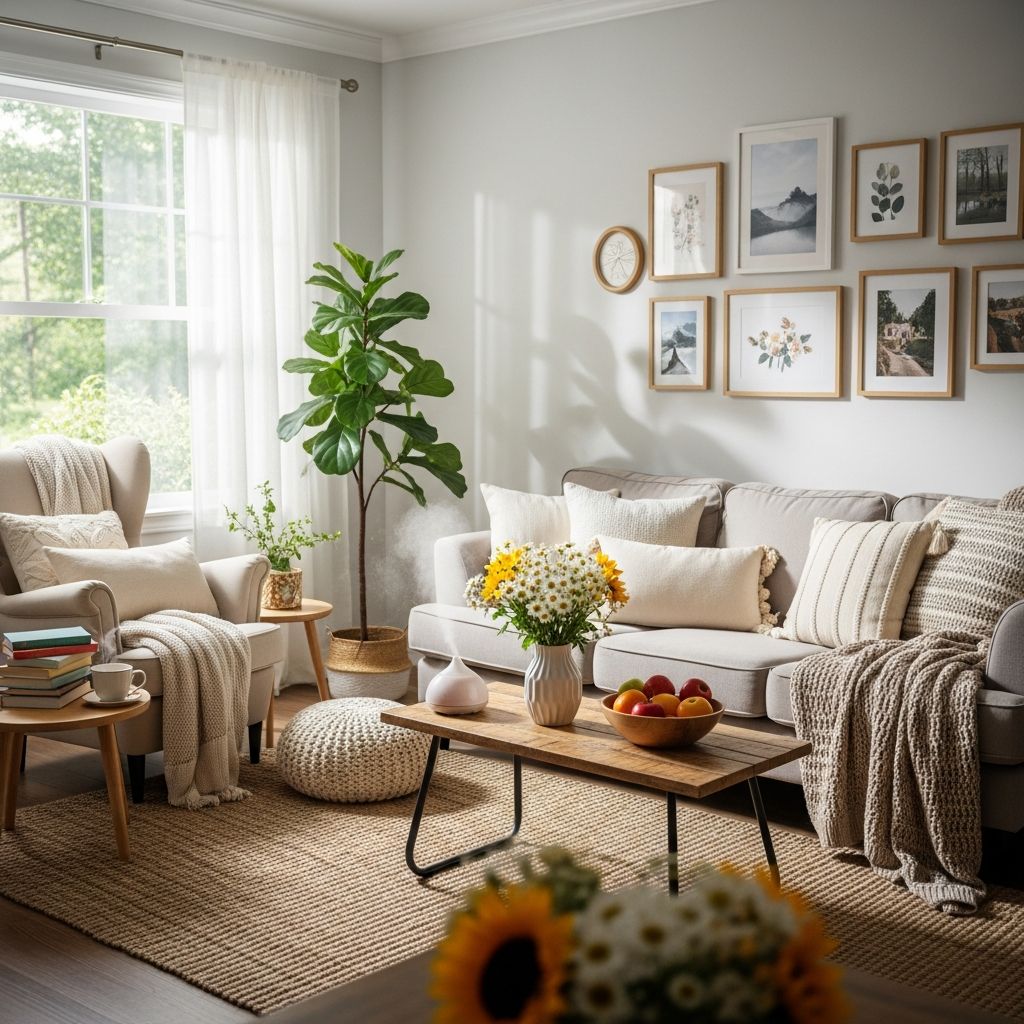
Your home shapes your mood more than almost any other place you spend time. It is where mornings begin, evenings wind down, and family life unfolds in a thousand tiny moments. When home supports your values and rhythms, everyday life feels lighter. When it does not, even small frustrations can feel overwhelming.
This article explores practical, realistic ways to make your existing home feel calmer, warmer, and more joyful, using small changes that fit real family life. You will not find perfectionism or total overhauls here—just focused ideas that compound over time.
Why Home Matters So Much for Happiness
Home is more than four walls and a roof. It is a web of habits, routines, relationships, and physical objects that either support or drain you. The same environment can feel stressful or soothing depending on how it is set up and how you move through it each day.
- Home is where you spend many emotionally charged moments: rushed mornings, bedtime battles, family meals, and quiet evenings.
- Because these moments repeat, even small improvements in how they unfold can significantly increase overall happiness.
Instead of aiming for a picture-perfect house, focus on a functional, emotionally supportive home. A home that makes the day easier and relationships smoother is a powerful engine of well-being.
Defining What “Happier at Home” Means to You
Happier at home will look different for each household. Before rearranging anything, clarify what kind of home experience you actually want. This keeps you from adopting someone else’s version of happiness.
Questions to Reflect On
- When do I feel most relaxed at home?
- Which times of day feel the most stressful?
- What three words do I want to describe our home (for example: calm, playful, organized, welcoming)?
- What do I want more of at home—conversation, laughter, quiet, creativity, rest?
Write your answers down. Treat them as a compass. Any change you experiment with should move you closer to those three words and those “more of” desires.
Designing Your Days: Routines That Support Peace
You do not need an entirely new life to feel different at home. You need a few well-chosen routines that anchor your day. These predictable patterns reduce decision fatigue and lower background stress.
Morning and Evening Anchors
Think of your day as a book with two sturdy covers: morning and evening. Strengthen those “covers” and the middle pages become easier to manage.
Simple Morning Anchors
- Set a “first five minutes” rule: no phones or email; instead, drink water, stretch, or look outside.
- Prepare visible cues the night before: backpacks by the door, breakfast items grouped, keys in one spot.
- Use the same short sequence every weekday (for example: wake, dress, breakfast, brush teeth, quick tidy).
Evening Wind-Down Patterns
- Pick a time you will start slowing down, not just the time you want to be in bed.
- Create a predictable order: dinner, light cleanup, brief family time, screens off, reading or quiet activity.
- End the day by resetting one room you will see first in the morning, even if the rest of the house is not perfect.
Clearing Space for Calm (Without Decluttering Your Entire Life)
Clutter is not only visual; it is also emotional and mental. The goal is not minimalism for its own sake. The goal is to remove the objects that block comfort, connection, and ease at home.
High-Impact Zones to Tackle First
Instead of attacking the whole house, start with small, high-traffic areas that influence the tone of your day.
- Entryway: Create a place for shoes, bags, and keys so arrivals and departures feel smoother.
- Kitchen counters: Clear surfaces make cooking less stressful and family meals more inviting.
- Living room seating: Make sure there is at least one comfortable, uncluttered spot per person.
Focus on what you want to be able to do in each area: relax, talk, work, or play. Then remove anything that makes that activity harder.
Five-Minute Daily Declutter Habit
You can make real progress with tiny, consistent efforts. Set a timer for five minutes once a day.
- Pick a small surface or drawer.
- Decide quickly: keep, relocate, recycle, donate, or toss.
- Stop when the timer rings, even if you are not finished.
Small wins build momentum. Over weeks, your environment starts matching your intention without consuming your entire weekend.
Making Space for Relationships, Not Just Stuff
Even the most organized home can feel cold if it does not support real connection. Arrange your space so that it invites conversation, shared activities, and gentle interaction.
Conversation-Friendly Layouts
- Angle chairs and sofas toward each other rather than just toward a screen.
- Place a small table between seats for drinks, books, or games.
- Keep at least one surface cleared for board games, puzzles, drawing, or shared projects.
Think less about impressing visitors and more about how your family actually spends time together.
Visible Invitations to Connect
Objects send silent suggestions. Make sure your home’s suggestions match your values.
- Keep a basket of conversation cards or prompts on the dining table.
- Store board games where children can see and reach them, not hidden on a high shelf.
- Set out a shared notebook or sketchbook where anyone can leave notes, doodles, or ideas.
Managing Devices So Home Feels Human
Technology can bring people together or quietly pull them apart. Being happier at home usually requires some gentle boundaries around screens, not rigid rules that cause constant battles.
Creating Tech-Light Zones and Times
Think in terms of “light” instead of “free.” You are more likely to maintain flexible guidelines than strict bans.
- Choose one or two device-light zones, such as the dining table and bedrooms.
- Designate specific tech-light times: family meals, the first ten minutes after arriving home, or the last thirty minutes before bed.
- Use neutral, predictable phrases like, “This is one of our tech-light times,” to reduce arguments.
Charging Stations and Digital Clutter
Physical homes are calmer when devices have a home of their own.
- Set up a central charging spot so phones do not scatter across every surface.
- Periodically delete unused apps that steal attention without adding value.
- Turn off nonessential notifications; let your home sound like people, not pings.
Small Rituals That Make Home Feel Special
Rituals are repeated actions that carry meaning. They do not have to be elaborate to be powerful. Consistent, simple rituals can make ordinary days feel distinctive and memorable.
Micro-Rituals for Everyday Life
- A two-minute greeting ritual when family members come home, such as pausing, making eye contact, and saying one specific question like, “What was one good thing today?”
- A short weekend breakfast tradition—pancakes, a certain playlist, or a different tablecloth.
- A “lights out” phrase or song at bedtime that signals the day is done and everyone can rest.
Rituals offer structure to children and a sense of continuity to adults. Over time, they create shared family stories.
Aligning Your Home with Your Values
A happy home reflects what matters most to the people who live there. When there is a gap between your stated values and your daily reality, frustration grows. Closing that gap, even slightly, can feel surprisingly energizing.
Values-to-Action Table
Use this simple table to translate your values into small, concrete actions at home.
| Value | What This Might Look Like at Home | Small First Step |
|---|---|---|
| Connection | Regular family conversations and shared activities | Instituting a 10-minute nightly check-in while cleaning up after dinner |
| Creativity | Spaces and tools ready for art, music, or building | Creating one shelf or bin with accessible art supplies |
| Health | Support for sleep, movement, and nourishing food | Clearing a small area for stretching and placing fruit in visible bowls |
| Calm | Lower noise levels and visual clutter | Choosing one room as a noise-reduced zone after a certain time |
| Learning | Books, questions, and exploration are encouraged | Keeping a few library books in a basket near the couch |
Revisit your table every few months. As life changes—jobs, school schedules, children’s ages—your values may stay steady, but the best ways to express them at home can shift.
Making Peace with Imperfection
One obstacle to feeling happier at home is the belief that joy will arrive only when everything is finally “done.” Homes with real people are never finished. There will always be more laundry, more dishes, and more minor repairs waiting.
Choosing “Good Enough” on Purpose
- Decide in advance where you will accept imperfection—maybe the playroom, the back yard, or garage storage.
- Set time limits on chores; when the time is up, you stop, even if the task is not perfect.
- Notice and name what is working well at home before mentally listing everything that needs fixing.
Shifting from “perfect” to “intentional” makes it easier to appreciate the home you already have while still making meaningful improvements.
Supporting Each Family Member’s Personality
People experience the same environment differently. A home that feels lively to one person might feel overwhelming to another. Consider personality and preferences when shaping routines and spaces.
Quiet Corners and Active Zones
- If someone in the family needs solitude, create a corner where they can retreat with a book or headphones.
- Designate an area where noise, play, and mess are more acceptable, such as a playroom, basement, or part of the living room.
- Use cues like rugs, lighting, or furniture arrangement to visually separate quiet space from lively areas.
When home offers both stimulation and rest in balanced ways, family tension often decreases, because people have appropriate outlets for their natural tendencies.
Handling Household Frictions with Less Drama
Even a well-designed home will encounter spills, disagreements, and late-night disruptions. The goal is not to avoid every problem, but to respond in ways that reduce fallout. Calm reactions can turn irritations into teachable moments.
Principles for Responding Calmly
- Pause before reacting when possible; take two breaths, then speak.
- Address behavior and impact, not character (“The backpack in the hallway is a tripping risk,” rather than, “You are always careless”).
- When something breaks or spills, focus first on safety and cleanup, later on discussion and consequences.
Children and adults alike feel safer when home is a place where mistakes are acknowledged, addressed, and then allowed to fade instead of being revisited endlessly.
Small Joys Hidden in Plain Sight
Much of feeling happier at home is noticing the good that already exists. You likely have moments and features that support happiness right now; they are just overshadowed by daily stress or comparison to others.
Everyday Gratitude Practices at Home
- Keep a pen and small notepad in the kitchen to jot down one thing you appreciated about home that day.
- Once a week, invite family members to share one small thing they enjoyed at home, such as a meal, a joke, or quiet time.
- Take occasional photos of ordinary home moments—someone reading on the couch, breakfast dishes, a messy art project—to remind yourself that happiness often looks ordinary.
Gratitude does not mean ignoring problems. It means allowing good moments to register fully instead of sliding past unnoticed.
Frequently Asked Questions About Being Happier at Home
Do I need to spend a lot of money to improve my home life?
No. Many of the most effective changes cost little or nothing. Shifting furniture, creating phone-free times, building tiny rituals, or clearing one surface each day can dramatically affect how your home feels. Large renovations may be helpful in some cases, but they are not required to increase happiness.
How do I get my family on board with changes?
Start small and invite participation instead of announcing a full overhaul. Ask each person what bothers them most about daily life at home and what they would like more of. Implement one or two ideas that matter to them, not just to you, and keep the language positive and experimental: “Let’s try this for a week and see how it goes.”
What if my schedule is already overwhelming?
Focus on micro-habits and adjustments that fit into your existing rhythm. A five-minute tidy, a short greeting ritual, or choosing one device-light meal a day can still make a noticeable difference. You do not have to “find time”; you only need to slightly reshape a few minutes you already spend at home.
Can these ideas help if I live alone?
Yes. The same principles apply: align your space with your values, simplify high-stress areas, and create small rituals that make your days feel distinct. You might focus more on inviting friends over, setting up corners for hobbies, or adding cues that support rest and self-care, such as cozy lighting and accessible reading materials.
How long will it take to feel a difference?
In many cases, you can feel a shift within days once you make targeted changes to key routines and spaces. However, building a happier home is an ongoing process rather than a project with a fixed end date. Think of it as a series of small experiments; each one teaches you more about what truly supports you and your family.
When you approach your home with curiosity, intention, and compassion, it becomes more than a place you pass through. It becomes an active partner in your well-being—a backdrop that quietly supports the happier life you are trying to build.