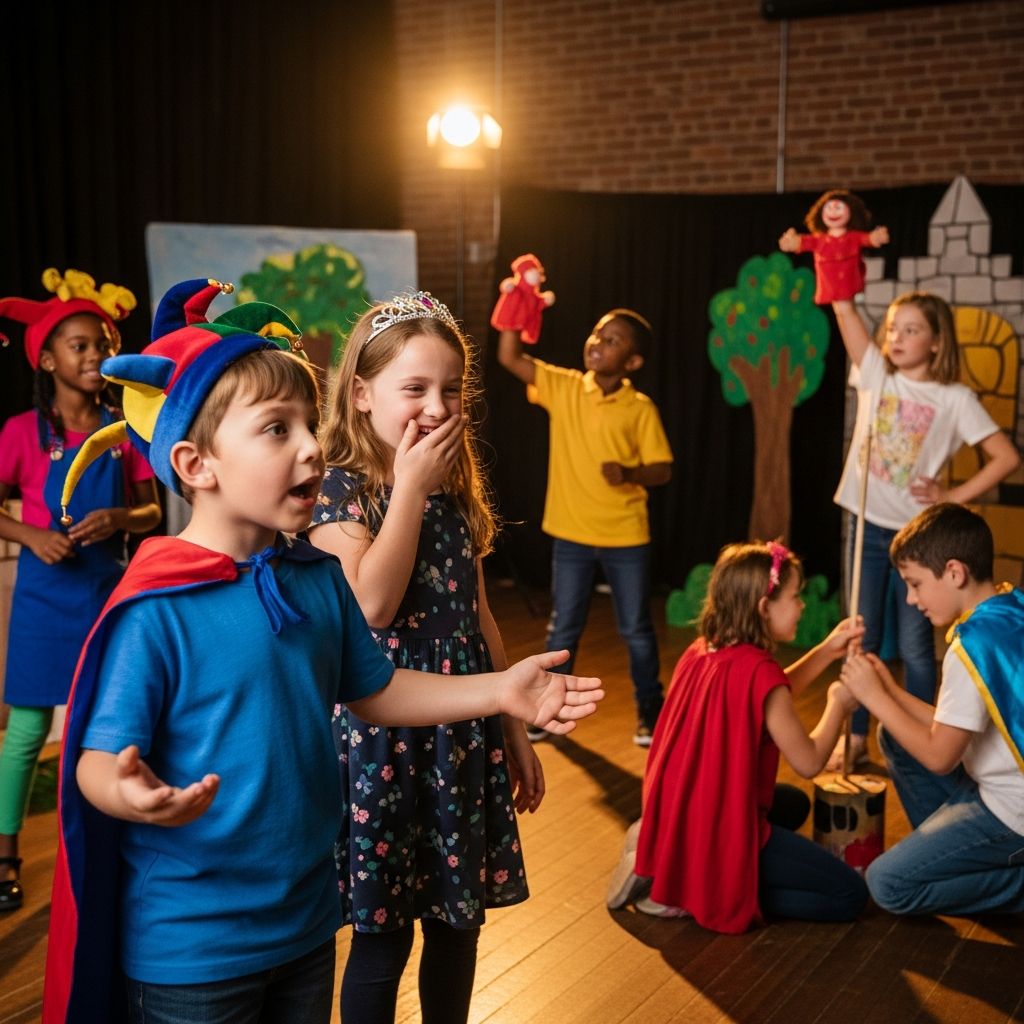
The performing arts have long been recognized as a transformative force in childhood development. When children step onto a stage—whether in a school production, community theater, or youth performing arts program—they engage in far more than entertainment. Theater becomes a comprehensive learning environment that addresses multiple dimensions of growth, from academic achievement to emotional resilience. Research consistently demonstrates that young performers develop skills that extend well beyond the spotlight, influencing their success in school, relationships, and future endeavors.
The Cognitive and Academic Advantages of Stage Performance
One of the most compelling reasons to introduce children to theater lies in its measurable impact on academic performance. Studies show that children who participate in performing arts are four times more likely to receive recognition for academic achievement compared to their non-participating peers. This correlation is not coincidental but rather reflects how theatrical training strengthens fundamental cognitive abilities.
When children memorize scripts, they exercise their working memory and recall abilities. The process of learning lines and blocking—the precise movements actors make on stage—demands sustained attention and focus. Theater programs naturally reinforce reading comprehension, as young performers must understand not just the words they speak but the deeper context and meaning behind their characters’ motivations. Students who participate in drama often maintain better attendance records and demonstrate greater overall school engagement.
Beyond basic academic metrics, theater develops critical thinking skills. Young performers must analyze their characters’ behaviors, understand plot development, and make interpretive choices about how to portray emotions authentically. This analytical thinking translates to improved problem-solving abilities across other academic subjects.
Building Emotional Intelligence Through Character Development
Theater provides a unique psychological space where children can explore and safely process complex emotions. For many young people, particularly those who struggle to articulate feelings verbally, stepping into a character offers tremendous relief. A shy child who finds it difficult to express herself in daily life can discover freedom behind a character, using the role as an intermediary through which to open up emotionally.
This emotional exploration serves a critical developmental purpose. Children learn to recognize, name, and understand various emotional states by embodying different character perspectives. They discover that feelings are valid and can be expressed in multiple ways. The stage becomes a laboratory for emotional experimentation, where trying on different feelings carries no real-world consequences.
Research on social-emotional learning (SEL)—the skills needed to manage emotions and build meaningful relationships—demonstrates that drama is a highly effective teaching tool. Elementary students who received drama interventions showed significantly higher social-emotional learning scores than their peers, establishing drama as a “very effective tool” for developing these foundational skills.
Cultivating Empathy and Perspective-Taking Abilities
The fundamental act of playing someone else naturally cultivates empathy. When children perform a character’s role, they must internalize that person’s motivations, values, and emotional landscape. This process requires them to think like another person—a cornerstone skill for developing compassion and understanding diverse viewpoints.
Research demonstrates this connection conclusively. Studies show that deeper engagement strategies, including facilitated discussions and educational theatrical experiences, positively impact middle school students’ ability to take social perspectives and experience empathy through performance. Children exposed to live theater show a much greater ability to imagine the lives of others and experience increased compassion for people different from themselves.
This enhanced empathy extends beyond the fictional realm. Students who develop strong perspective-taking abilities through theater become more attuned to the needs and feelings of their actual peers. They better understand how their actions affect others and develop stronger interpersonal awareness—skills that support healthier friendships and more cooperative classroom environments.
Strengthening Communication and Self-Expression Skills
Theater demands clear, intentional communication. Young performers must project their voices so audiences in the back rows hear them, articulate words with precision, and convey meaning through both verbal and non-verbal channels. These technical communication skills develop naturally through rehearsal and performance.
Beyond technical proficiency, theater provides structured opportunities to develop authentic self-expression. Through improvisation, script reading, and ensemble work, children learn to articulate their thoughts, listen attentively to others, and navigate the collaborative demands of group performance. They discover that their voice matters and that expressing ideas clearly leads to successful artistic outcomes.
For many children, the theater environment offers psychological safety that encourages communication in ways their regular academic or social settings do not. The collaborative nature of theatrical work means children receive immediate feedback from directors, peers, and audiences—feedback that refines their communication abilities across contexts.
Developing Self-Confidence and Personal Efficacy
Few experiences match the confidence boost that comes from memorizing a role, rehearsing extensively, and successfully performing before an audience. Each line learned, each rehearsal completed, and each successful performance builds self-efficacy—the psychological belief that one can succeed at challenging tasks.
Theater specifically addresses confidence gaps that many children experience. Shy students often blossom on stage, discovering they can express themselves in ways they find uncomfortable around their peers. The structured, supportive environment of rehearsals and performances allows children to gradually expand their comfort zones. Success experiences accumulate, creating a foundation of personal empowerment that extends into other life areas.
Research consistently points to improved self-confidence and academic self-efficacy as key outcomes of theater participation. The challenging yet supportive environment of theatrical training is a continuous builder of personal confidence. Children learn that nervousness is normal and manageable, that mistakes can be recovered from, and that they possess capabilities they may not have recognized previously.
Mastering Self-Control and Healthy Assertion
Stage work requires considerable discipline. Students must learn to control their bodies and voices, assert themselves appropriately within group dynamics, and maintain their positions—or move precisely as required by the production. This structured discipline develops self-regulation abilities that transfer to other contexts.
Longitudinal research demonstrates that drama program participation improves key components of social competence, specifically children’s assertion and self-control abilities. These are skills that allow young people to express themselves effectively while managing their reactions appropriately. A child learns when to speak up and when to listen, when to lead and when to follow—social nuances that serve them throughout life.
The rehearsal process itself teaches self-regulation. Directors provide feedback, ask for retakes, and require children to make adjustments. Through repeated practice and refinement, children develop the capacity to receive direction, adjust their behavior, and persist through challenges—all components of emotional regulation and healthy assertion.
Creating Supportive Communities Through Collaborative Performance
Theater fundamentally operates through collaboration. A successful production requires actors, stagehands, costume designers, lighting technicians, and many other contributors working in synchrony. This collaborative necessity builds teamwork skills and interpersonal connection in ways that individual academic pursuits cannot.
Studies on school-based drama programs show positive effects on social relationships among students. This benefit is especially pronounced for students from diverse social and cultural backgrounds, as drama education naturally advances cooperation skills and improves interpersonal relationships across different groups. Children discover that they depend on one another for success, creating bonds and mutual respect.
The ensemble aspect of theater also provides profound social benefits. Young performers build trust essential to successful performances. They learn to support one another, celebrate each other’s achievements, and work through challenges together. These relationships often extend beyond the production, creating lasting friendships and a sense of belonging that positively influences school engagement and attendance.
Theater as Protection Against Behavioral and Emotional Difficulties
The structure and emotional outlet provided by performing arts programs can stabilize behavior both inside and outside the classroom. Research indicates that drama programs serve as protective factors by reducing externalizing behaviors—acting out, aggression, or disruption—and internalizing problems such as anxiety or withdrawal.
This protective function operates through multiple mechanisms. The structured environment provides clear expectations and positive adult relationships. The collaborative nature of theater reduces isolation and increases social connection. The emotional outlets available through character work and creative expression provide healthy channels for processing difficult feelings. Together, these elements create a buffer against behavioral and emotional challenges.
Reducing Bullying Through Empathy and Social Connection
Theater’s capacity to build empathy and improve social relationships naturally creates a more respectful peer environment. Controlled studies on school-based drama programs observed that such programs significantly decreased bullying victimization in intervention groups. This anti-bullying effectiveness stems directly from the empathy and social skills that theater develops.
When children learn to imagine others’ perspectives and experiences, they become less likely to target or demean peers. When they experience the collaborative support within a theater ensemble, they become more invested in protecting group members from harm. The cognitive resilience developed through character work and public performance also gives children confidence to handle difficult social situations.
Supporting Children with Diverse Learning Needs
Theater’s multisensory, active, and experiential learning style offers an accessible pathway for students who struggle with traditional teaching methods. Children with learning disabilities, attention differences, or other educational challenges often find success in theater contexts where they can learn through doing, moving, creating, and collaborating.
The combination of auditory (hearing scripts and dialogue), visual (seeing costumes, sets, and other performers), kinesthetic (moving, gesturing, physically expressing emotion), and interpersonal learning modalities means theater accommodates diverse learning styles and strengths. Students who might struggle with traditional classroom instruction can thrive in theatrical contexts.
Nurturing Long-Term Artistic Passion and Creative Identity
Beyond immediate developmental benefits, theater participation can ignite a lifelong passion for the arts. Whether children dream of becoming professional performers or simply develop a lasting love for attending theater, these programs offer glimpses into the magic of theatrical creation and inspire creative aspirations.
Even for children who do not pursue performing arts professionally, the memories and skills gained from youth theater leave lasting impressions. They develop creative confidence and the ability to imagine possibilities beyond conventional thinking. Theater becomes a formative experience that shapes how they approach challenges, express themselves, and engage with the world.
Academic Achievement and School Engagement Outcomes
The research connecting theater participation to improved academic outcomes is compelling and multifaceted. Children who participate in drama programs show increased engagement with school material, demonstrate better reading comprehension, and maintain more consistent attendance records. The sense of belonging found in a theater ensemble encourages students to show up consistently, both literally and emotionally invested in their educational experience.
Studies on after-school musical theater programs found positive impacts on student attendance, with participation greatly increasing a student’s engagement in school and cultivating a better attitude toward learning. This improvement in school engagement often catalyzes broader academic improvement, as children who feel connected to school and invested in their activities tend to perform better across subjects.
The Comprehensive Developmental Picture
Theater functions as a comprehensive developmental intervention that addresses multiple dimensions of growth simultaneously. In a single rehearsal or performance, children exercise cognitive abilities, process emotions, develop social skills, build confidence, and practice collaboration. No single activity encapsulates so many crucial developmental processes.
The research is overwhelmingly clear: the benefits of theater for children are numerous, measurable, and profound. A high-quality performing arts experience provides a powerful, evidence-based pathway to developing skills crucial for success in school and beyond. From boosting social-emotional literacy and empathy to tangibly improving academic performance, theater is a comprehensive educational experience.
Frequently Asked Questions About Theater for Children
At what age should children start participating in theater?
Children can begin participating in theater at various ages. Some programs accept children as young as four or five years old in informal dramatic play and movement classes. More structured theater programs typically begin around ages seven to eight, though older children and teenagers also benefit significantly. The best time to start is whenever a child shows interest or when parents feel they are developmentally ready for group activities and learning scripts.
Will theater help a shy or introverted child?
Yes. Research shows that shy children often blossom in theatrical environments, discovering they can express themselves in ways they find uncomfortable around their peers. The structured, supportive environment of theater provides psychological safety that encourages even reserved children to expand their comfort zones. Theater does not require children to change their fundamental personality but rather provides a context where they can safely explore self-expression.
How does theater improve academic performance?
Theater improves academics through multiple mechanisms: memorizing scripts strengthens memory, understanding character motivations develops critical thinking, reading scripts builds comprehension, and collaborative work teaches communication. Additionally, the confidence and engagement theater builds often translates to improved performance across all academic subjects. Students who participate in performing arts are four times more likely to receive academic recognition.
What if my child is not interested in performing arts?
Theater programs offer multiple roles beyond acting. Children can contribute as costume designers, set builders, lighting technicians, makeup artists, or stagehands. Even watching live theater provides demonstrated developmental benefits for children, including improved empathy, imagination, and social understanding. Exposure to theater—whether through participation or audience attendance—offers valuable developmental benefits.
How does theater help children with learning disabilities?
Theater’s multisensory, active, and experiential learning style accommodates diverse learning needs. Children who struggle with traditional instruction can thrive in theatrical contexts that combine auditory, visual, kinesthetic, and interpersonal learning. The collaborative, supportive environment also builds confidence and social connection, which can be particularly valuable for children with learning differences.
References
- Top 10 Benefits of Theatre for Children’s Development — Triple Promise. 2024. https://triplepromise.com/top-10-evidence-based-benefits-of-theater-for-childrens-development/
- Unleash Your Child’s Creativity: The Benefits of Youth Theater Programs — Fairmont Opera House. 2024. https://fairmontoperahouse.org/unleash-your-childs-creativity-the-benefits-of-youth-theater-programs/
- Envisioning the Future of Theater for Young Audiences — National Endowment for the Arts (NEA). 2024. https://www.arts.gov/sites/default/files/Envisioning%20the%20Future%20of%20TYA.pdf
- How the Performing Arts Benefit Kids — Scholastic Inc. 2024. https://www.scholastic.com/parents/family-life/parent-child/how-performing-arts-benefit-kids.html
- Benefits of Theatre Ed — American Alliance for Theatre and Education (AATE). 2024. https://www.aate.com/benefits-of-theatre-ed