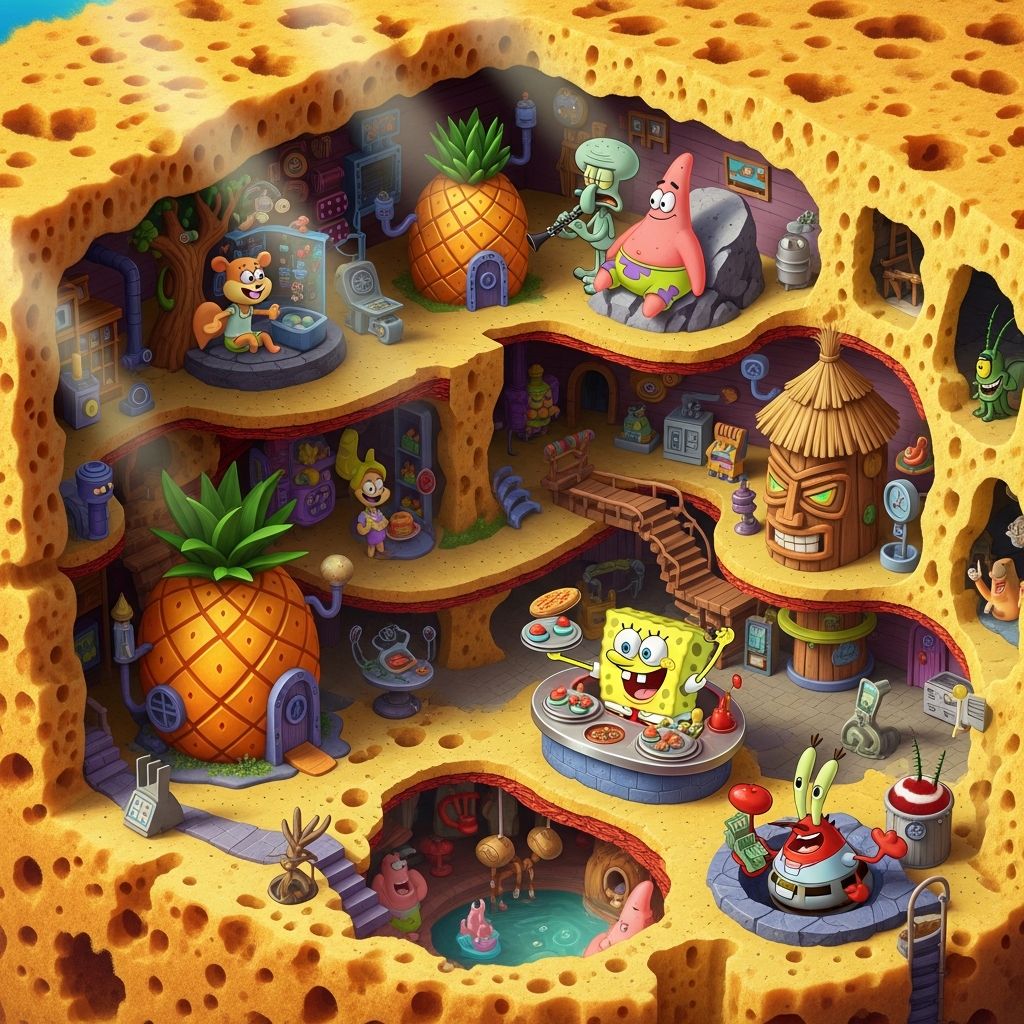
SpongeBob SquarePants has lived under the sea for more than two decades, but the real magic comes from the people standing in dark recording booths, laughing into microphones, and turning ink on a page into characters families feel like they know personally.
The Many Layers Of A Very Simple Sponge
On the surface, SpongeBob is a cheerful fry cook who laughs too loudly and takes every tiny task far too seriously. Yet the longer the series has run, the more emotional layers the cast and creative team have uncovered. The performances give a loopy show about sea creatures a surprisingly relatable, human core that keeps audiences coming back.
Instead of treating the characters as simple joke machines, the actors lean into their quirks: SpongeBob’s optimism, Patrick’s innocent confusion, Squidward’s frustration, and the grounded warmth of characters like Sandy and Mr. Krabs. Those personalities collide in ways that feel exaggerated but oddly true to life in almost every episode or movie-scale adventure.
Finding A Voice For Bikini Bottom
Every animated character begins as a sketch and a description on a page. Turning that into a believable personality is where voice work becomes an art form. Casting directors search for performers who can not only sound distinctive, but also be consistently funny, vulnerable, and emotionally truthful over years of recording sessions.
For a show like SpongeBob, actors typically experiment with several vocal ideas before landing on the version that feels right. Once that sound is chosen, the challenge becomes keeping it fresh across episodes, specials, and films, while honoring the original spirit of creator-driven comedy and heart.
How The Cast Builds Comedy That Sticks
Comedy in animation lives or dies on timing. The SpongeBob cast has spent years honing a rhythm that feels spontaneous even when the lines are carefully scripted. Much of the humor comes from how a sentence is delivered: the length of a pause, a sudden rise in pitch, or a small muttered aside that turns a simple line into a memorable gag.
- Exaggerated reactions help punch up slapstick moments, making even minor mishaps feel epic.
- Deadpan deliveries from grumpier characters balance out SpongeBob’s high energy and keep scenes from feeling too chaotic.
- Occasional quiet, sincere readings give emotional beats space to land, especially in feature-length stories.
Over time, the cast has developed a shared sense of rhythm, so that even when they record separately, scenes cut together as if everyone was in the room riffing face to face.
Recording Sessions: Organized Chaos In A Booth
Voice acting may look simple from the outside, but a typical session can be surprisingly demanding. Actors often perform the same line multiple times, trying tiny variations in volume, speed, and emotion until the director hears the version that matches the storyboard and tone of the episode or film.
Because SpongeBob stories frequently shift from absurd comedy to genuine feeling, performers move quickly between big, loud moments and quieter, more intimate ones. That range is especially important in movie projects, where the stakes are larger and characters often leave their familiar underwater settings for stranger, more cinematic adventures.
Loyalty To Characters Fans Have Grown Up With
One of the unique challenges of SpongeBob is that many viewers literally grew up with these characters. Parents who watched the early seasons now introduce the show and newer films to their children, creating a layered audience with different expectations and nostalgic connections.
The cast carries that responsibility carefully. They strive to keep every character recognizably themselves, even as animation technology, story structure, and pop culture references evolve. That stability gives families a sense of comfort and continuity, whether they are watching a classic eleven-minute episode or a modern theatrical adventure.
Why SpongeBob Thrives In Big-Screen Adventures
Short episodes let the show fire off rapid-fire jokes, but film-length stories demand a different approach. A movie for SpongeBob and his friends has to balance slapstick, visual spectacle, and an emotional throughline that can carry viewers for more than an hour. The result is a story that feels both huge and oddly intimate.
In a longer format, the cast has more room to explore new sides of the characters. SpongeBob can wrestle with self-doubt, Patrick can play unexpected hero, or a supporting character can move to the center of the plot. These arcs deepen the world without sacrificing the anarchic spirit that made Bikini Bottom famous in the first place.
Digital Animation, Physical Performances
Modern SpongeBob projects lean heavily on digital tools, but the performances stay very physical. Many voice actors use broad gestures, facial expressions, and body language in the booth to push energy into the microphone. Even though no one sees this movement on screen, the effort shapes the way lines sound.
When production shifts to a film, animation teams often add more nuanced facial acting and detailed environments. That visual richness works best when the recorded performances already feel grounded. The cast provides that anchor, making sure every wild set piece still revolves around a character choice rather than just flashy effects.
From Guest Stars To Lifelong Residents
Over time, Bikini Bottom has welcomed a wide range of guest voices, from comedians to dramatic actors trying their hand at playful villainy. These special appearances give the cast new energies to bounce off of and invite older fans to enjoy subtle winks to broader pop culture.
Integrating high-profile guests requires a delicate balance. The core cast must keep the tone consistent so that a larger-than-life new character feels like a natural part of this underwater world instead of overshadowing the show’s regular residents. Done well, these roles highlight how flexible the universe of SpongeBob really is.
Bikini Bottom’s Emotional Core
For all its chaos, SpongeBob is surprisingly sincere. Underneath the nonsense songs and jellyfishing mishaps is a simple message about kindness, effort, and friendship. The cast leans on that message whenever a story brushes up against bigger themes like insecurity, failure, or the fear of growing up and moving on.
Moments where a character quietly admits fear or disappointment can be more powerful precisely because they happen in a world that is usually so loud and silly. Families often recognize something of their own lives in these beats, which helps explain why the show’s humor sits comfortably next to genuine warmth.
How Different Generations Watch Together
SpongeBob occupies a rare space where children, teens, and adults can all find something to enjoy. Younger viewers latch onto physical comedy and bright designs, while older fans appreciate the absurdist jokes, background details, and surprisingly sharp character observations tucked into throwaway lines.
The cast plays a big role in this multigenerational appeal. They modulate performances so that a single line might contain an easy laugh for kids and a more subtle tone or implication that lands with parents. That layered delivery encourages repeat viewings and lets families form their own traditions around episodes and movies.
SpongeBob’s World At A Glance
The table below summarizes some of the key dynamics the cast brings to Bikini Bottom, highlighting how character traits translate into performance choices.
| Character Role | Core Trait | Voice Acting Approach | Emotional Function In Stories |
|---|---|---|---|
| Enthusiastic lead | Relentless optimism | High pitch, quick rhythm, elastic reactions | Turns setbacks into hopeful new attempts |
| Best friend sidekick | Naive curiosity | Slower delivery, gentle confusion, big laughter | Shows that mistakes can be harmless and funny |
| Grumpy neighbor | Perpetual annoyance | Dry tone, sighs, sharp emphasis on sarcasm | Provides contrast and adult-like exasperation |
| Inventive friend | Practical intelligence | Steady pacing, confident phrasing | Grounds outlandish plots with logic and science |
| Gruff authority figure | Greedy bravado | Roughened voice, booming laughs, quick shifts | Embodies responsibility, money worries, and pride |
Why SpongeBob Still Matters To Families
In an era crowded with animated options, SpongeBob’s staying power says a lot about the way its cast and crew approach storytelling. Rather than chasing every short-lived trend, the series stays focused on character-driven humor, handmade-feeling performances, and a sense of playful absurdity that feels timeless.
For parents, the show offers a chance to share a piece of their own childhood with their kids while discovering new stories and movies together. For children, it is an introduction to a broader animation legacy that values both laughter and empathy. The cast’s commitment to these values is what lets Bikini Bottom continue to feel new without losing its familiar charm.
FAQs About The SpongeBob Cast And World
Is it harder to perform for a movie than for a regular episode?
Feature-length stories ask more of the cast because emotional arcs need to build slowly and pay off in a satisfying climax. In an episode, a character might experience a problem and resolve it within minutes, but in a film they can wrestle with doubts, face bigger obstacles, and earn their victories over the course of an entire adventure.
Do the voice actors record together?
Production methods vary from project to project. Sometimes actors record in the same room to capture the feel of live improvisation, and other times they work separately due to scheduling or technical needs. Skilled performers learn to imagine how their castmates might respond so that their own lines still sound conversational when edited together.
How do actors keep the same voice consistent for so many years?
Long-running shows demand careful vocal maintenance. Many performers rely on warm-ups, good hydration, and clear reference recordings to stay locked into a character’s distinctive sound. They also keep notes on emotional ranges and catchphrases to ensure that even after long breaks, the character immediately feels like themselves again.
Why do adults enjoy SpongeBob as much as kids?
The series operates on multiple levels at once. While children connect with the bright colors and goofy misadventures, older viewers pick up on sly references, tonal shifts, and character moments that mirror real-world frustrations and friendships. The cast plays into that dual appeal, carefully shaping line readings so they work for every age group watching.
What makes SpongeBob different from other animated comedies?
Many shows depend heavily on topical jokes that age quickly. SpongeBob leans more on character-based humor and surreal scenarios that remain funny even when trends change. The cast understands this balance, making performance choices that keep episodes and films rewatchable long after their original release.