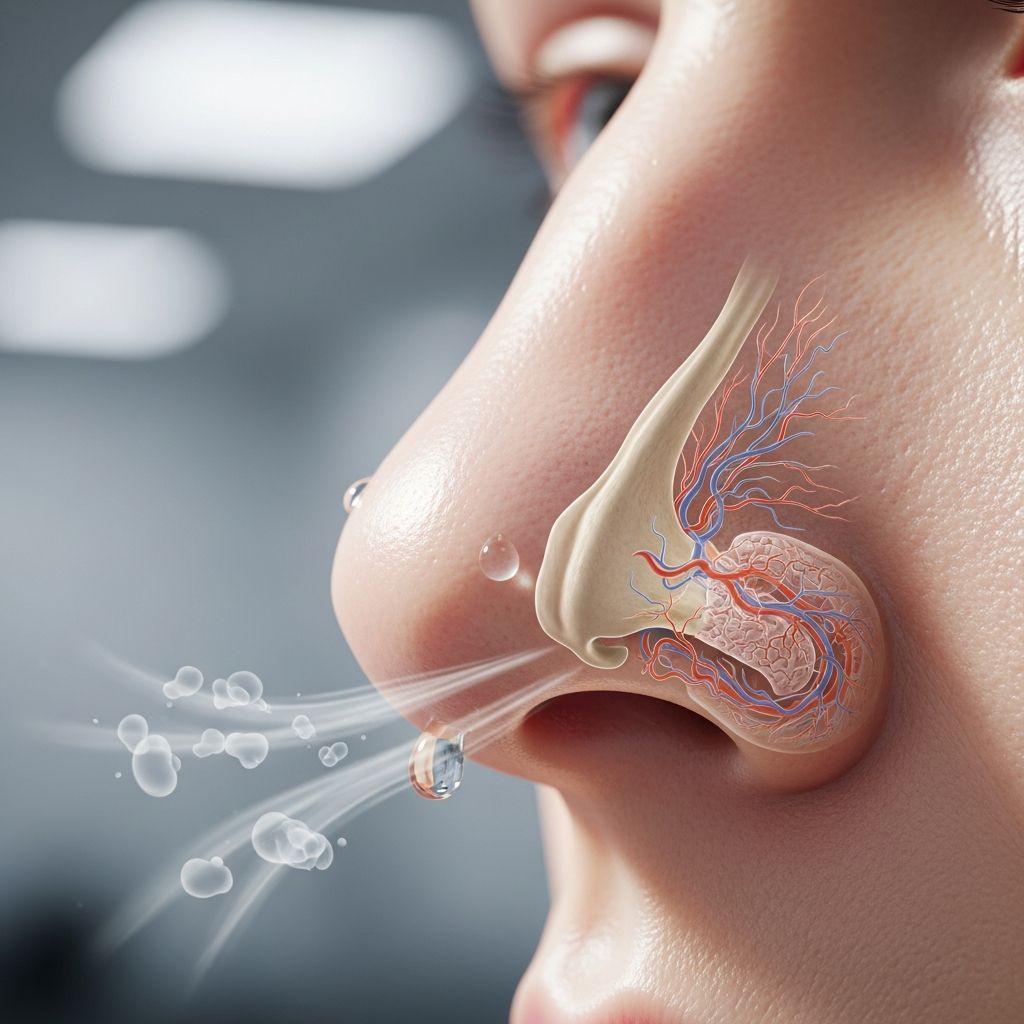
The Nose: Your Body’s Remarkable Air-Processing System
Your nose is far more than just the feature in the middle of your face. It’s a sophisticated organ that plays crucial roles in breathing, smelling, and protecting your respiratory system from harmful particles and pathogens. Every single day, your nose works continuously to process approximately 10,000 liters of air that you breathe in. Understanding how your nose functions and what makes it special can help you appreciate this remarkable body part and take better care of it.
The Building Blocks: Nasal Anatomy Explained
To understand how your nose works, it helps to know what it’s made of. Your nose consists of several interconnected structures that work together seamlessly to perform its essential functions.
The Outer Structure
The visible part of your nose is made primarily of cartilage—a flexible, tough tissue that gives your nose its shape and provides structural support. This cartilage is covered with skin, and beneath the skin lie blood vessels and nerves that help your nose perform its functions. The nostrils, or nares, are the openings at the bottom of your nose where air enters your nasal passages.
The Nasal Septum and Passages
Inside your nose, a wall of cartilage and bone called the septum divides your nasal cavity into two separate passages. Each passage is lined with a moist membrane called the mucous membrane, which produces a sticky substance known as mucus. This protective lining extends throughout your nasal passages and plays a vital role in filtering and preparing the air you breathe.
The Turbinates
Within each nasal passage, you’ll find small, curved structures called turbinates (also known as conchae). These structures are covered with mucous membrane and project into the nasal cavity from the lateral walls. Turbinates increase the surface area inside your nose, allowing more air to come into contact with the mucous membrane. This increased surface area is essential for the warming and humidification processes that occur as you breathe.
The Sinuses
Surrounding your nasal cavity are hollow, air-filled spaces called sinuses or paranasal sinuses. Your skull contains four major pairs of these sinuses: the maxillary sinuses in your cheeks, the frontal sinuses in your forehead, the sphenoid sinuses deep behind your nose, and the ethmoid sinuses between your eyes. These air-filled cavities are lined with the same mucous membrane that covers your nasal passages and connect directly to your nasal cavity through small openings called ostia.
How Your Nose Filters the Air You Breathe
One of your nose’s most important jobs is to filter the air before it reaches your lungs. This protective function works through several mechanisms working in concert.
The first line of defense is the nasal hairs, or vibrissae, located just inside your nostrils. These coarse hairs catch larger particles like dust, pollen, and debris before they travel deeper into your nose. While they might not seem important, these tiny hairs prevent many potentially harmful particles from entering your respiratory system.
Deeper within your nasal passages, the sticky mucus traps smaller particles and bacteria that escape the initial hair filtration. The mucus acts like a protective coating, capturing unwanted substances and preventing them from reaching your lungs. Tiny hair-like structures called cilia line your nasal passages and continuously move in a wave-like motion to push trapped particles and mucus toward the back of your throat, where they’re swallowed and destroyed by stomach acid.
Warming and Humidifying Your Breathing Air
Your nose doesn’t just filter air—it also prepares it for your lungs by warming and moistening it. This process is essential for your respiratory system to function properly.
As air enters your nasal passages, it comes into contact with the warm mucous membrane lining. The extensive network of blood vessels in this membrane heats the incoming air, bringing it closer to your body temperature. By the time air reaches your lungs, it has been warmed to approximately body temperature, which is important because your lungs function best when they receive air at this temperature.
Simultaneously, the mucous membrane releases moisture into your nasal passages, humidifying the air you breathe. In fact, by the time air travels through your nose, it reaches near 100 percent humidity. This humidification process is crucial because dry air can irritate and damage the delicate tissues in your lungs and lower respiratory tract.
The Sense of Smell: Your Nose’s Secondary Function
Beyond breathing, your nose is also your organ of smell. Located in the upper portion of your nasal cavity, in an area called the olfactory region, are millions of specialized sensory cells that detect odor-bearing particles. When you breathe in, odor molecules travel through your nasal passages and reach these special cells, which send signals to your brain about what you’re smelling.
Your sense of smell is closely connected to your sense of taste—in fact, much of what you perceive as taste is actually smell. This is why food tastes bland when you have a cold and your nasal passages are congested.
The Role of Mucus: Your Nose’s Unsung Hero
While mucus might seem unpleasant, it’s actually a crucial component of your nose’s protective system. This sticky substance serves multiple important functions:
- Traps bacteria, viruses, and other harmful particles before they can enter your lungs
- Moisturizes the air you breathe by adding water vapor
- Contains antibodies and white blood cells that help fight infection
- Keeps the delicate tissues inside your nose from drying out
- Works with cilia to clear debris from your nasal passages
The amount of mucus your nose produces varies throughout the day and can increase when you’re sick or exposed to irritants. While excess mucus can be uncomfortable, it’s your body’s way of protecting itself.
Blood Supply and Nerve Connections
Your nose has an extensive network of blood vessels that supply oxygen and nutrients to its tissues. The blood vessels in the nasal passages also play a crucial role in warming the air you breathe and regulating nasal airflow. The sphenopalatine artery supplies the posterior and lateral nasal walls, while the anterior and posterior ethmoid arteries supply the upper portions of the nasal cavity.
One particularly important area is the Kiesselbach plexus, also known as Little’s area, located in the lower front portion of the nasal septum. This region is where three major blood supply routes meet and is the site where nosebleeds most commonly occur in children. Fortunately, nosebleeds in this area typically respond well to simple first aid, such as gently pinching the nose and applying a cold compress.
Nerve connections throughout your nose transmit sensory information to your brain. The infraorbital nerve supplies the outer surface of the nose, while internal nerves handle sensations from inside your nasal passages. These nerves also control the muscles involved in flaring your nostrils and other nasal movements.
How Your Nose Develops During Childhood
Your nose doesn’t develop all at once. The nasal cavity begins forming very early in fetal development, and different structures develop at different times. Interestingly, some of your sinuses are present at birth, while others develop gradually throughout childhood and into adolescence. Your maxillary sinuses (in your cheeks) are present at birth and continue growing, your frontal sinuses (in your forehead) don’t develop until around age seven, and your sphenoid sinuses (deep in your face) typically don’t develop until adolescence. This is why sinus infections and sinus-related problems are more common in older children and teenagers than in very young children.
Maintaining Healthy Nasal Function
Taking care of your nose helps ensure that it continues to function properly and protects your overall respiratory health. Here are practical ways to maintain nasal health:
- Stay hydrated: Drinking plenty of water helps keep your mucous membranes moist and allows them to function effectively
- Use a humidifier: Adding moisture to the air in your home, especially during dry seasons, can prevent nasal passages from becoming irritated
- Avoid irritants: Stay away from smoke, strong chemical odors, and other pollutants that can irritate your nasal passages
- Practice proper nasal hygiene: Gentle nasal saline rinses can help remove excess mucus and debris
- Don’t insert objects: Avoid putting anything into your nose, which can damage delicate tissues
- Wash hands frequently: This prevents bacteria and viruses from being introduced into your nasal passages
When Your Nose Needs Medical Attention
While most nasal issues resolve on their own, certain conditions warrant professional medical evaluation. Persistent nasal congestion, frequent nosebleeds, loss of smell, or structural problems with your nose may require assessment by a healthcare provider. Severe or frequent sinus infections, nasal polyps, or breathing difficulties should also be evaluated by a doctor.
Common Questions About Your Nose
Q: Why does your nose run when you’re cold?
A: Cold temperatures actually cause your nasal blood vessels to constrict and then dilate, which increases mucus production. Additionally, cold air stimulates your nasal mucous membranes to produce more mucus as a protective response.
Q: What causes nosebleeds?
A: Nosebleeds often occur in the Kiesselbach plexus area due to dry air, trauma, or vigorous nose-blowing. Most nosebleeds in children are minor and stop with gentle pressure and a cold compress.
Q: Can you lose your sense of smell?
A: Yes, nasal congestion from a cold or allergy can temporarily block odor molecules from reaching your olfactory cells, causing temporary loss of smell. In rare cases, illness or injury can cause permanent changes to your sense of smell.
Q: Why is it hard to breathe when you have a cold?
A: When you’re sick, your nasal mucous membranes swell and produce excess mucus to fight infection, which narrows your nasal passages and makes breathing more difficult.
Q: How often should you blow your nose?
A: Gentle nose-blowing is fine, but forceful blowing can irritate nasal tissues and push bacteria into your sinuses. If you need to clear mucus frequently, using a saline rinse is gentler than repeated blowing.
Q: Do nose hairs serve a purpose?
A: Absolutely! The hairs inside your nostrils trap larger particles and debris before they can travel deeper into your nasal passages, providing the first line of defense against pollution and pathogens.
References
- Anatomy, Head and Neck, Nasal Cavity — National Center for Biotechnology Information (NCBI). 2024. https://www.ncbi.nlm.nih.gov/books/NBK544232/
- Nose Anatomy — Dr. Kenny Pang. 2024. https://drkennypang.com/nose-anatomy/
- Anatomy and Physiology of the Nose and Throat — Children’s Hospital of Philadelphia (CHOP). 2024. https://www.chop.edu/conditions-diseases/anatomy-and-physiology-nose-and-throat
- Nose — Britannica Kids. 2024. https://kids.britannica.com/kids/article/nose/353546