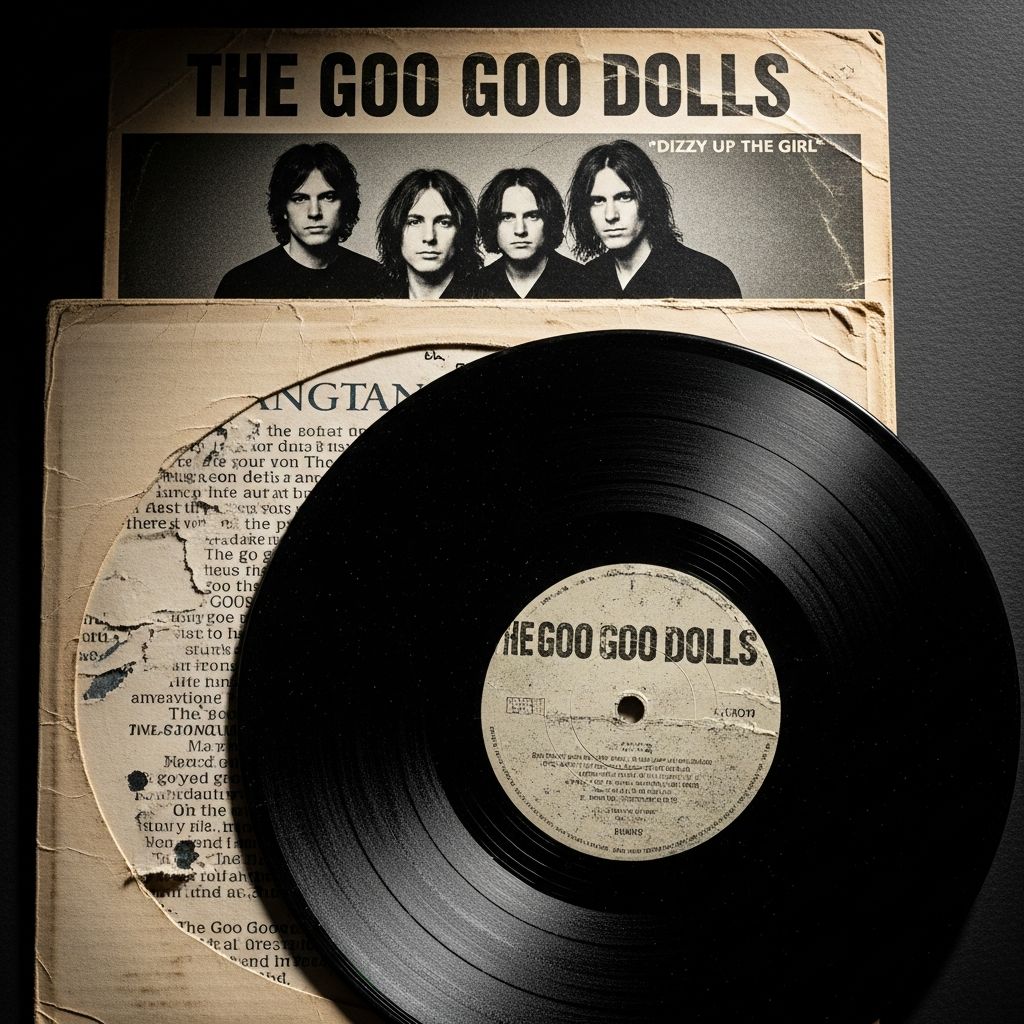
In the late 1990s, when alternative rock was splintering into a dozen niche scenes, few people expected a Buffalo bar band with punk roots to deliver one of the era’s most enduring mainstream albums. What emerged instead was a record of sweeping ballads, nervy guitar pop, and quietly grown-up themes that continues to echo through playlists, movie soundtracks, and living rooms where parents and kids now share the same songs.
From Barrooms To Ballads: A Band Rewrites Its Story
The Goo Goo Dolls did not begin life as serene balladeers or adult-contemporary staples. In their early years, they were a scrappy, noisy trio rooted in punk and garage rock, playing loud shows to underground audiences and sounding far closer to a dive-bar house band than a polished radio act.
Over time, flashes of melody began to break through the distortion, and the group stumbled into a broader audience almost by accident when a mid-90s single revealed just how potent their softer side could be. That unexpected success forced the band to decide whether to retreat to their comfort zone or lean into songwriting that felt more vulnerable, more tuneful, and more exposed than anything in their early catalogue.
- Early releases were fast, ragged, and defiantly unpolished.
- Touring shaped them into a tight live unit with instinctive chemistry.
- A breakthrough ballad proved their knack for emotionally direct, radio-ready songs.
- The stage was set for a risk: build an entire album around that melodic instinct.
The Late-90s Crossroads: Why Timing Mattered
The album that would redefine the Goo Goo Dolls arrived at a pivotal cultural moment, when grunge’s first wave had faded and audiences were searching for something less abrasive but still emotionally honest. Radio needed songs that could sit comfortably between angst-filled holdovers and emerging pop acts, and the band’s blend of chiming guitars and earnest lyrics fit that gap perfectly.
At the same time, film and television were turning power ballads into emotional shorthand, using them to signal heartbreak, longing, and bittersweet hope in a single soaring chorus. When one of the record’s signature songs landed on a major movie soundtrack, it didn’t just introduce the band to new listeners; it reframed them as soundtrack-ready storytellers whose music could color entire scenes in people’s lives.
| Trend | What Audiences Heard | How The Album Responded |
|---|---|---|
| Post-grunge fatigue | Heavy guitars, darker themes, emotional burnout | Cleaner production, clarity in lyrics, focused hooks |
| Pop’s resurgence | Teen pop acts dominating charts and TV | Rock songs with pop accessibility and adult perspectives |
| Soundtrack culture | Ballads defining movie moments | Anthemic tracks built for cinematic emotion |
| Radio format blending | Stations mixing rock, pop, and soft rock | Songs that crossed between alternative and adult formats |
Inside The Record: Themes That Still Feel Familiar
Beneath its radio gloss, the album is animated by an anxiety that feels instantly recognizable to anyone who has ever stepped gingerly into adulthood: fear of failure, fear of being truly seen, fear of settling down and still feeling incomplete. Even its love songs are laced with self-doubt, using big choruses not to offer easy answers, but to shout questions a little louder.
Lyrically, the record walks a delicate line between romantic idealism and a quiet acknowledgment that life rarely matches the soft-focus montage we imagine in our heads. Many of the most memorable lines come from characters stuck between versions of themselves: the one they show the world and the one they quietly suspect might be more honest, more fragile, and harder to love.
- Recurring motifs include distance, compromise, and the fear of emotional transparency.
- Even upbeat tracks often carry a sense of restless searching beneath their hooks.
- Ballads frame vulnerability not as weakness, but as a necessary risk.
- The perspective is older than teenage heartbreak, hinting at careers, commitments, and long-term regret.
Sound And Shape: How The Music Balances Edge And Warmth
Musically, the album builds its emotional reach from fairly straightforward ingredients: bright, mid-tempo guitars; steady, unfussy drumming; and arrangements that ramp up carefully from intimate verses to explosive choruses. Rather than chase stylistic experiments, the record refines a template until nearly every track feels engineered to land on either radio or a personal mixtape.
Part of its staying power comes from contrast. Songs anchored by acoustic picking often sit next to numbers driven by electric crunch, and the trade-off between the band’s two primary vocalists keeps the record from drifting into one-note melodrama.
- Ballads as anchors: The slower tracks provide emotional centerpieces, guiding listeners through breakups, confessions, and quiet reconciliations.
- Up-tempo relief: Punchier songs cut through the sentiment with a little grit, echoing the band’s punk-adjacent past.
- Layered guitars: Overlapping acoustic and electric parts create a sense of width that still feels inviting rather than overwhelming.
- Sing-along structures: Big, repeatable choruses make even first-time listeners feel as if they’ve known the songs for years.
A Commercial Breakthrough That Rewrote Expectations
The record’s commercial performance surprised critics who had pegged the band as one-hit outliers and blindsided long-time fans who were more accustomed to cramped clubs than sold-out amphitheaters. Multiple singles climbed charts across rock and pop formats, pushing the album into multi-platinum territory and entrenching the band in a mainstream conversation they had never set out to join.
That success came with a cost. Some early supporters viewed the polished sound as a betrayal of the raw energy that defined the group’s first decade, while others simply felt bewildered that the once-feral local heroes were now soundtracking weddings and big-budget dramas.
| Era | Typical Venue | Production Style | Audience Perception |
|---|---|---|---|
| Early years | Clubs, underground spaces | Rough, punk-influenced, low-budget | Local cult favorite with loyal scene following |
| Breakthrough album cycle | Theaters, arenas, festival stages | Glossy but guitar-driven, radio-focused | Unexpected mainstream stars with crossover appeal |
| Post-breakthrough years | Consistent touring on large stages | Refined, often leaning toward adult pop-rock | Reliable hitmakers and nostalgia-tour anchors |
Growing Up With The Album: Why Parents Still Hit Play
For listeners who first encountered the record in high school or college, its songs have become time capsules of a specific kind of late-90s adolescence: pay phones, burned CDs, car stereos that rattled under the weight of their own bass. Those same listeners are now often parents, and the music they once clung to in the backseat has moved to the front of the minivan, folded into shared playlists that bridge generations.
Part of the album’s intergenerational appeal lies in its emotional clarity. The choruses are big enough for kids to sing along before they fully understand them, while the verses still reveal new shades to adult ears wrestling with aging, responsibility, and the strange vertigo of realizing that the band from your youth is now old enough to be a heritage act.
- Parents often introduce the album as “road trip music” that feels safe but not saccharine.
- Lyrics that once felt like break-up confessions now read as reflections on marriage, work, and compromise.
- Children latch onto hooks first, then gradually absorb the bittersweet undercurrents.
- The band’s continued touring and anniversary shows keep the songs culturally visible rather than purely nostalgic.
Longevity In The Streaming Era
In a world of endless choice, the survival of a late-90s rock album on modern platforms is not guaranteed. Yet key tracks from this record still rack up streams, land on algorithmic playlists, and surface in curated mixes aimed at everything from “90s throwbacks” to “feel-good rock.”
The album’s continued relevance says as much about its construction as about nostalgia. Songs rarely exceed radio-friendly runtimes, choruses arrive quickly, and the production rarely indulges in dated gimmicks, making the whole project sound more timeless than many of its peers.
- Streaming algorithms favor tracks with strong intros and clear hooks, both of which the album supplies in abundance.
- Playlist culture treats its ballads as emotional keystones in lists designed for reflection or catharsis.
- Reissues, anniversary tours, and live recordings continually reintroduce the songs to new audiences.
How The Album Reshaped The Band’s Identity
Before this release, the Goo Goo Dolls could plausibly have remained a proudly regional band, mentioned fondly in local histories and treasured by collectors of obscure punk-adjacent records. Afterward, they were locked into a different trajectory entirely, one in which every new project would be measured against the sweeping choruses and emotional directness of their breakthrough.
That shift carried creative implications. Pursuing further success meant working with high-profile producers, embracing a more polished aesthetic, and learning to navigate the strange space between alternative credibility and adult-pop accessibility—a tightrope walk that defined much of their subsequent catalogue.
- The band moved from cult status to mainstream recognition, gaining new fans while confusing some old ones.
- Later albums experimented with broader pop textures without abandoning guitar rock roots altogether.
- Live sets became balancing acts, blending deep cuts for long-time followers with the hits casual listeners expected.
Lessons From A Surprising Classic
Beyond its chart performance, the album stands as a quiet case study in how bands can evolve without entirely severing ties to their past. Rather than flipping a switch from punk to pop overnight, the Goo Goo Dolls arrived at their signature sound through incremental shifts: tightening song structures, opening up lyrically, and trusting that clarity did not automatically mean compromise.
For listeners, the record offers a different kind of lesson. It shows how the music that once seemed inextricably tied to teenage feelings can grow alongside its audience, revealing new meanings as life circumstances change and transforming youthful anthems into reflections on mortgages, kids, and quiet drives home from late shifts.
- Artistic growth often looks like refinement rather than reinvention.
- Commercial success can amplify the core traits that were present all along, rather than impose entirely new ones.
- Albums become classics not only because of their songs, but because of the evolving lives that those songs accompany.
FAQs: Goo Goo Dolls & Their Breakthrough Era
Why is this album considered the band’s defining release?
It gathered together the melodic instincts, emotional candor, and polished arrangements the band had been edging toward for years, and presented them in a concentrated, radio-ready form that resonated widely. Earlier records hinted at this combination, but none balanced vulnerability and accessibility as effectively as this one.
Did longtime fans accept the more polished sound?
Reactions were mixed: some early adopters missed the rough-edged chaos of the band’s club days, while others appreciated seeing a once-local act reach larger stages. Over time, many listeners came to view the album and the pre-fame material as two complementary chapters in a longer story rather than mutually exclusive identities.
How did the album change the band’s career path?
Its success elevated the group from regional favorites to global touring artists, opened doors to television appearances and high-profile collaborations, and effectively guaranteed that they would continue recording for major labels. At the same time, it created a benchmark they would be measured against for the rest of their careers, shaping expectations for what a “Goo Goo Dolls record” should sound like.
Why does the album still appeal to younger listeners?
The melodic clarity and emotional directness of its songs translate easily across generations, allowing new listeners to connect with them even without any nostalgia for the era in which they were recorded. Streaming platforms, movie placements, and parental playlists all help the songs circulate in spaces where kids encounter them organically.
Is it fair to call the band a “ballad group” because of this era?
While the band is widely recognized for its sweeping ballads, that label only captures part of the picture, overlooking the more up-tempo and rough-hewn material that still threads through their albums and live sets. If anything, the record showcases their range, demonstrating how a group with punk roots can write slow-burning songs without losing the sense of urgency that defined their earliest work.