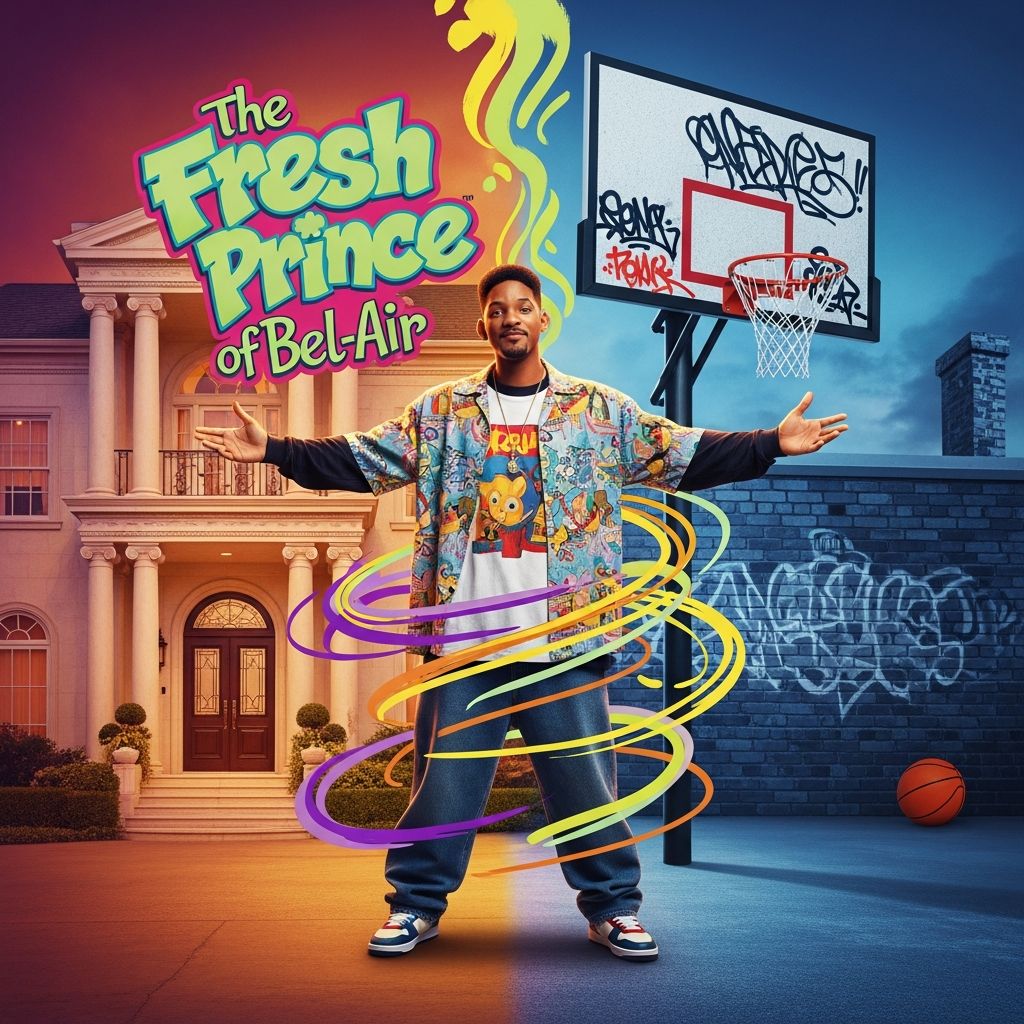
When The Fresh Prince of Bel-Air premiered on NBC in 1990, it looked like another lighthearted family sitcom. But beneath the punchlines, it quietly reshaped how mainstream television depicted Black life, class mobility, and youth culture. More than three decades later, the series still resonates with new generations who discover it through reruns and streaming.
This retrospective explores how the show came to be, why it felt so different from earlier sitcoms, and how its blend of comedy, emotion, and social commentary helped change the way America talked about being Black.
From Rap Star to Primetime: How the Show Was Born
The story of The Fresh Prince of Bel-Air starts with the unlikely journey of Will Smith from chart-topping rapper to sitcom star. Before television fame, Smith performed as part of DJ Jazzy Jeff & The Fresh Prince, a duo known for clean, humorous rap songs that appealed to both hip-hop fans and mainstream audiences.
NBC executives saw an opportunity: pair Smith’s music-driven charisma with a fish-out-of-water premise, and build a show that could attract young viewers without alienating families. The result was a fictional version of Will who travels from working-class West Philadelphia to live with wealthy relatives in Bel-Air.
- Network ambition: NBC needed fresh hits to compete in the early 1990s and saw a youth-oriented show with a Black lead as both a risk and an opportunity.
- Hip-hop crossover: The series extended hip-hop’s reach into living rooms that might never have bought a rap album, continuing a broader trend of rap moving into mainstream culture.
- Built around personality: The show’s structure, tone, and comedy were designed around Smith’s natural performance style rather than forcing him into a conventional sitcom mold.
The gamble paid off quickly. In its first season, The Fresh Prince of Bel-Air became NBC’s highest-rated new sitcom, drawing close to 20 million weekly viewers at its peak.
Why the Premise Felt Radically New
Black family sitcoms existed long before Fresh Prince, but the show’s particular setup—a street-smart teenager moving into the home of his affluent Black aunt and uncle—introduced dynamics that American audiences had rarely seen on primetime TV.
Earlier hits like The Cosby Show presented a stable, aspirational family that largely sidestepped overt discussions of racism and class. Fresh Prince went in a different direction by making those tensions central to the storytelling and comedy.
- Culture clash: Will’s basketball jerseys and slang collided with the Banks family’s private-school uniforms, country-club habits, and formal dinner parties.
- Multiple Black experiences: The show challenged the idea of a single “authentic” Black identity by placing working-class and upper-middle-class characters in the same household.
- Comedy as entry point: Jokes softened the edges of serious subjects, allowing the series to address loaded topics without turning into a lecture.
| Element | Will (West Philly) | Banks Family (Bel-Air) |
|---|---|---|
| Class Background | Working-class, urban | Wealthy, professional |
| Outlook | Suspicious of authority, informal | Institution-oriented, status-aware |
| Relationship to Whiteness | Outsider to elite spaces | Regular participants in predominantly white institutions |
Redefining Black Representation on Network TV
By the early 1990s, American television still offered relatively few shows led by Black ensembles. When The Fresh Prince of Bel-Air found its audience, it quickly became one of the most popular series with an all-Black principal cast, airing in a primetime slot on a major network.
Its impact went beyond simple visibility. The show:
- Showed economic comfort: Viewers saw a Black family living in a large home, sending kids to elite schools, and navigating legal and corporate careers.
- Highlighted internal diversity: Characters like Carlton, Hilary, and Geoffrey offered portrayals that broke from flat stereotypes of Black masculinity, femininity, and working-class life.
- Linked race and class: Storylines revisited how money affected safety, policing, and opportunity for the Banks family versus Will and his friends.
Media scholars have noted that imported airings of the show around the world helped make Black American youth culture visible far beyond U.S. borders, especially as channels looked for cost-effective American content in the 1990s.
The Art of Mixing Laughs With Hard Truths
One of the show’s most enduring strengths was its ability to slide between slapstick humor and deeply emotional scenes without losing coherence. That tonal flexibility let it tackle topics many sitcoms avoided while still functioning primarily as a comedy.
Recurring themes included:
- Racial profiling and policing: Episodes showed Will and Carlton experiencing unjust treatment by law enforcement, confronting viewers with the reality that status does not fully shield Black people from discrimination.
- Absent parents and emotional trauma: Some of the series’ most memorable moments focused on the pain of abandonment and the longing for parental approval, especially in Will’s relationship with his father.
- Respectability and authenticity: Will often challenged the idea that success required abandoning one’s roots, pushing back against assumptions that academic achievement or professional dress meant “selling out.”
These storylines resonated broadly because they were anchored in specific, lived-in details rather than generic “very special episode” templates. The show rarely offered neat solutions; instead, it portrayed difficult conversations within a family that was still learning how to understand one another.
Hip-Hop, Comedy, and Style as Cultural Bridges
The Fresh Prince of Bel-Air arrived at a pivotal time, as hip-hop moved from subculture to global force. Mainstream coverage sometimes portrayed rap as a threat, focusing on explicit or politically radical artists. The series introduced a different side of the genre to broad audiences.
- Theme song as entry point: Performed by Will Smith, the opening narrative rap explained the show’s premise and embedded hip-hop into one of television’s most recognizable sequences.
- Fashion as identity: Bright patterns, flipped blazers, high-top fades, and sneakers became visual shorthand for youth culture, later fueling nostalgia-driven merchandise and collaborations.
- Comedy rooted in music: Even when the series wasn’t explicitly about rap, its rhythm, pacing, and playful language reflected hip-hop sensibilities.
By normalizing a rap-inflected sensibility within a family-friendly package, the show helped ease hip-hop into households that network executives might once have considered unreachable.
Complex Characters in a Colorful Sitcom
Much of the show’s longevity comes from characters who are bigger than life yet emotionally grounded. Each main figure embodies a distinct perspective on class, race, and aspiration.
- Will: Charismatic, impulsive, and fiercely loyal to his roots, he continually tests the boundaries of the Banks household while protecting its members from prejudice they sometimes underestimate.
- Uncle Phil: A successful lawyer and later judge, he represents the generation that fought its way through systemic barriers, balancing pride in his achievements with a deep, if occasionally stern, love for his family.
- Aunt Vivian: As a Black woman with intellectual and artistic ambitions, she brings nuance to conversations about career, motherhood, and identity.
- Carlton: Often played for laughs as preppy and rule-bound, he embodies how Black upward mobility complicates assumptions about authenticity, prejudice, and belonging.
- Hilary and Ashley: Hilary’s image-consciousness and Ashley’s coming-of-age stories illustrate generational shifts in how young women negotiate ambition, image, and independence.
The ensemble allowed the writers to explore multiple angles on the same question: What does it mean to “make it” in America without losing yourself?
Global Reach and Long-Term Legacy
After its original run ended in 1996, The Fresh Prince of Bel-Air only grew in popularity through syndication and international distribution. By the late 1990s and early 2000s, the show topped import charts in dozens of countries, exposing global audiences to U.S. Black culture and 1990s aesthetics.
Several factors explain its staying power:
- Universal themes: Conflicts over family expectations, adolescence, and belonging make sense even to viewers unfamiliar with U.S. racial politics.
- Streaming revival: Availability on digital platforms has introduced the show to viewers who were not born when it first aired.
- Reboot momentum: The dramatic reinterpretation Bel-Air revisits the original premise through a more grounded lens, reflecting contemporary concerns about policing, social media, and mental health while honoring key relationships from the 1990s series.
In media studies, the show is often cited as an example of how youth-oriented, identity-centered programming helped networks adapt to a more fragmented audience landscape in the 1990s and beyond.
What Parents and Viewers Still Take From the Show
For adults introducing the series to their kids—or revisiting it themselves—The Fresh Prince of Bel-Air remains a useful conversation starter. Its stories can open up discussions about how things have changed and how some challenges persist.
- Race and class: Episodes about profiling, code-switching, and economic inequality can be compared with current events and personal experiences.
- Family structure: Viewers can talk about blended families, guardianship, and different models of care, particularly in communities where extended family support is crucial.
- Mental and emotional health: Scenes dealing with abandonment, grief, or disappointment offer a way to discuss big feelings that children and teens may struggle to articulate.
Because the show balances weighty topics with humor, it often feels less intimidating than news reports or formal discussions—and that can make difficult conversations more approachable.
Frequently Asked Questions (FAQs)
When did The Fresh Prince of Bel-Air originally air?
The series ran on NBC from September 10, 1990, to May 20, 1996, spanning six seasons of primetime network television.
Why was The Fresh Prince of Bel-Air considered groundbreaking?
It centered a Black teen protagonist in a major network sitcom, portrayed an affluent Black family, mixed hip-hop culture with family comedy, and addressed issues like racism, class, and identity more directly than many earlier shows.
How successful was the show during its original run?
At its peak in the early 1990s, the show attracted nearly 20 million weekly viewers and briefly became one of NBC’s top-rated series, later achieving worldwide popularity in syndication.
What is the connection between The Fresh Prince of Bel-Air and Bel-Air?
Bel-Air is a modern, dramatic reimagining of the original premise, expanding on the same core setup—Will leaving West Philadelphia for Bel-Air—while exploring contemporary social issues in a more serialized format.
Why does the show continue to resonate with younger audiences?
Themes of belonging, pressure to succeed, cultural identity, and family conflict remain relevant, while the show’s humor, fashion, and music appeal to nostalgia and to viewers discovering 1990s culture for the first time.
References
- 33 Years Ago, One Family Sitcom Changed The Conversation About Being Black — Fatherly. 2023-09-10. https://www.fatherly.com/entertainment/fresh-prince-bel-air-retrospective
- How The Fresh Prince of Bel-Air redefined the Nineties sitcom — The Independent. 2020-09-10. https://www.the-independent.com/arts-entertainment/tv/features/fresh-prince-bel-air-anniversary-will-smith-karyn-parsons-hillary-banks-sitcom-a9599861.html
- The Fresh Prince of Bel-Air — Wikipedia (summary of broadcast history, used as a tertiary reference; primary details cross-checked with other sources). 2024-05-01. https://en.wikipedia.org/wiki/The_Fresh_Prince_of_Bel-Air
- “The Fresh Prince of Bel-Air”: Why It Was So Successful — HotNewHipHop. 2023-05-25. https://www.hotnewhiphop.com/651474-fresh-prince-tv-show
- Exploring “The Fresh Prince” And Its Impact — Uproxx. 2016-03-28. https://uproxx.com/tv/the-fresh-prince-project-chris-palmer-interview/
- How ‘The Fresh Prince of Bel-Air’ Changed Pop Culture using the 4C’s — SnobHop (Substack). 2021-09-09. https://snobhop.substack.com/p/how-the-fresh-prince-of-bel-air-changed
- Why ‘The Fresh Prince Of Bel-Air’ And ‘Bel-Air’ Both Resonated — Girls United / Essence. 2022-02-14. https://girlsunited.essence.com/feedback/news/fresh-prince-bel-air-reboot-feature/
- The Fresh Prince of Bel-Air, Channel Fragmentation, and the Construction of a Global Market for US Youth Culture — University Press Scholarship Online. 2006-01-01. https://www.universitypressscholarship.com/view/10.18574/nyu/9780814737200.001.0001/upso-9780814737200-chapter-005