The COVID-19 pandemic fundamentally altered the fabric of everyday existence, introducing shifts that have persisted well beyond the initial lockdowns. Five years on, elements like hybrid work arrangements, heightened digital reliance, and evolving health consciousness continue to influence personal and collective behaviors. This article delves into these transformations, highlighting both challenges and opportunities in our redefined reality.
Transformations in Work and Productivity
One of the most enduring legacies of the pandemic is the widespread adoption of remote and hybrid work models. Data indicates that over one-third of employed individuals now work from home at least part-time, a stark departure from pre-2020 norms. This shift was initially driven by necessity but has proven resilient due to its flexibility and efficiency.
Companies reevaluated office needs, leading to reduced demand for large urban spaces and prompting adaptations in commercial real estate. Urban planning has responded by accommodating new commuting patterns, with many professionals enjoying better work-life integration despite challenges like blurred boundaries between home and office.
- Hybrid models blend in-office collaboration with remote flexibility, boosting retention and productivity for knowledge workers.
- Non-remote sectors, such as manufacturing and healthcare, adapted through staggered shifts and enhanced safety protocols.
- Global supply chains underwent reconfiguration, emphasizing resilience over just-in-time efficiency.
These changes have democratized access to opportunities, allowing rural or suburban residents to access urban jobs without relocation. However, they exacerbate divides for those without reliable internet or home offices.
Evolving Social Connections and Community Ties
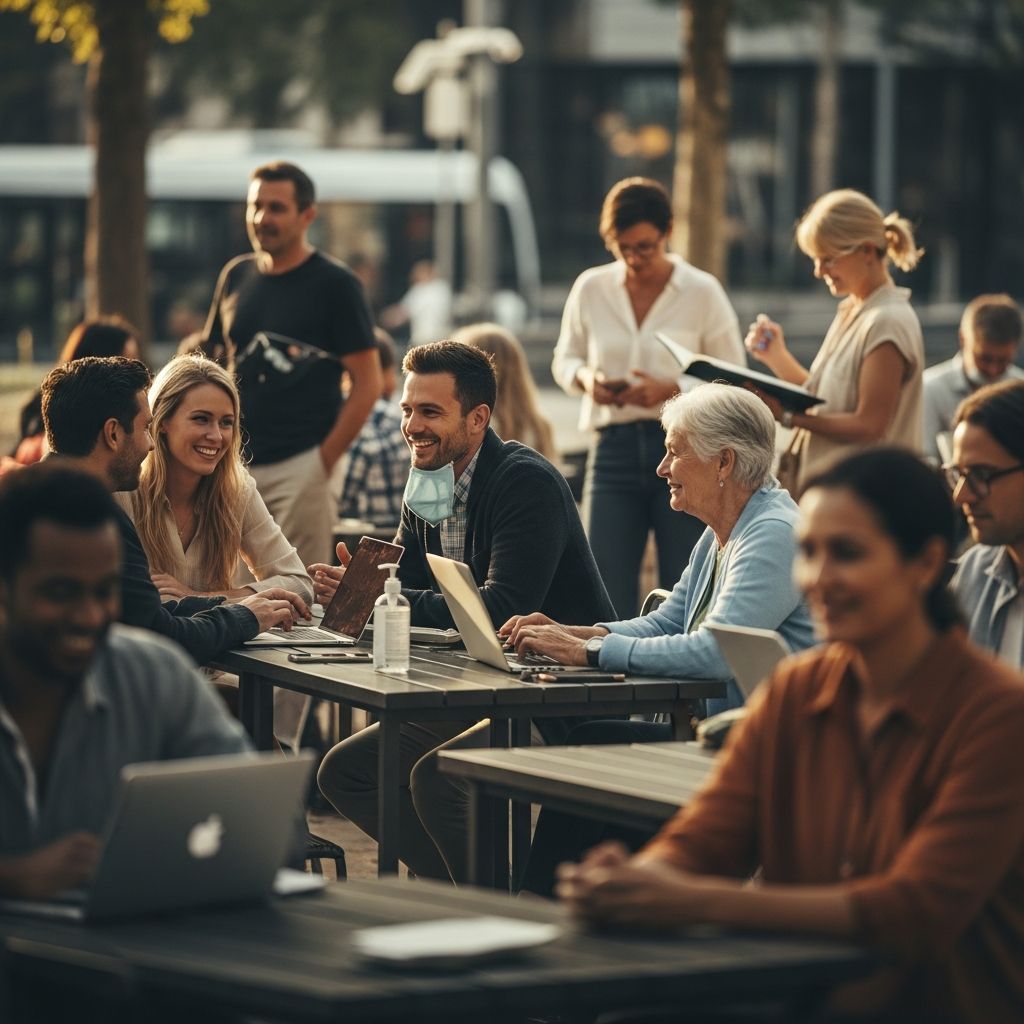
Social interactions underwent a profound overhaul, with physical distancing accelerating virtual alternatives. Video calls and online gatherings became staples, filling voids left by lockdowns. Even as restrictions lifted, a hybrid approach persists: some prefer digital convenience, while others crave in-person warmth.
Older adults, in particular, report spending more time at home and less in public spaces, contributing to an ‘epidemic of loneliness.’ Surveys from 2022 show over half have not resumed pre-pandemic social routines, underscoring long-term mental health risks.
| Group | Pre-Pandemic Socializing | Post-Pandemic Habits |
|---|---|---|
| Older Adults | Frequent public outings | 50%+ more home time |
| General Population | In-person events dominant | Hybrid virtual/in-person |
| Families | Limited home gatherings | Increased family meals |
Positive adaptations include heightened backyard holidays and local tourism, bolstering community economies. Yet, hypervigilance to coughs or sneezes lingers, fostering better hygiene but occasional social awkwardness.
Health and Wellness in a Changed Landscape
Lifestyle behaviors shifted dramatically, with mixed outcomes. Physical activity declined for many due to sedentary routines, though some increased outdoor exercise—about 10% more frequently post-pandemic. Sleep disturbances affected around 40% during peak crisis, with residual stress impacting recovery.
Dietary patterns varied: stress led to poorer choices like emotional eating, while others embraced healthier home cooking. Food insecurity rose, limiting fruit and vegetable intake, particularly among vulnerable groups. Mental health suffered, with anxiety and depression spiking from isolation, though resilience-building habits like emotion regulation aided quality of life.
- Higher education correlated with sustained healthy eating and activity levels post-quarantine.
- Students faced weight gain from inactivity, alongside rising caffeine use tied to anxiety and poor sleep.
- Family-shared meals emerged as a beneficial holdover, enhancing bonds and nutrition awareness.
Public health infrastructure now prioritizes surveillance and stockpiles, reflecting lessons in preparedness. Contactless payments and e-commerce surged, reshaping consumer safety perceptions.
Economic and Urban Reconfigurations
The pandemic accelerated e-commerce, with online shopping persisting for its convenience. Financial services digitized rapidly, from mobile banking to touchless transactions. Cities grapple with ‘urban flight’ trends, as 39% of dwellers consider less dense areas amid remote work’s rise.
Yet, opportunities arise for resilient urban redesigns, fostering nimble communities with robust social infrastructure. Inequality widened, hitting marginalized groups hardest in education, employment, and health access.
Predictions point to sustained hybrid work, health-focused policies, and sustainable consumerism emphasizing outdoor activities.
Mental Resilience and Time Perception Shifts
Beyond routines, the pandemic distorted time perception—a common refrain in social discourse. Research confirms this altered sense of time passage, linked to disrupted rhythms and uncertainty.
Mental well-being demands proactive strategies: maintaining exercise, fostering connections, and regulating emotions. Policymakers must address disparities, investing in digital equity and mental health support to harness innovations while mitigating harms.
Frequently Asked Questions (FAQs)
Has remote work become permanent?
Yes, hybrid and remote work are entrenched, with over 33% of workers continuing from home, transforming office landscapes.
Will social distancing habits fade?
Many hygiene practices endure, but social reconnection is gradual, especially among older adults who remain more homebound.
How did diets change long-term?
Heterogeneous shifts occurred; some improved via home cooking, but stress eating and inactivity led to weight issues for others.
What urban changes are expected?
Potential suburban shifts and resilient city planning, balancing remote work with community infrastructure.
Can mental health fully recover?
With healthy habits and support, yes—resilience factors like emotion regulation predict better outcomes.
References
- Post-COVID pandemic: The new normal and aftermath — PMC. 2024. https://pmc.ncbi.nlm.nih.gov/articles/PMC11610867/
- COVID upended everyday life. What’s stuck around 5 years after lockdown — WGBH. 2025-03-07. https://www.wgbh.org/news/health/2025-03-07/covid-upended-everyday-life-whats-stuck-around-5-years-after-lockdown
- How life has changed due to COVID-19 (and tips to help you cope) — The Skill Collective. 2020. https://theskillcollective.com/blog/coronavirus-new-normal
- An epidemic of loneliness: How the pandemic changed life for aging adults — University of Colorado Boulder. 2024-04-09. https://www.colorado.edu/today/2024/04/09/epidemic-loneliness-how-pandemic-changed-life-aging-adults
- A New Map of Life: After the Pandemic — Stanford Center on Longevity. 2020. https://longevity.stanford.edu/after-the-pandemic/
- Lifestyle and Health Changes During and After the COVID-19 Pandemic — PMC. 2024. https://pmc.ncbi.nlm.nih.gov/articles/PMC12610534/
- Yes, Time Does Feel Different Since The Pandemic — University of Michigan LSA. 2023. https://lsa.umich.edu/psych/news-events/all-news/faculty-news/yes–time-does-feel-different-since-the-pandemic—and-there-s-a.html