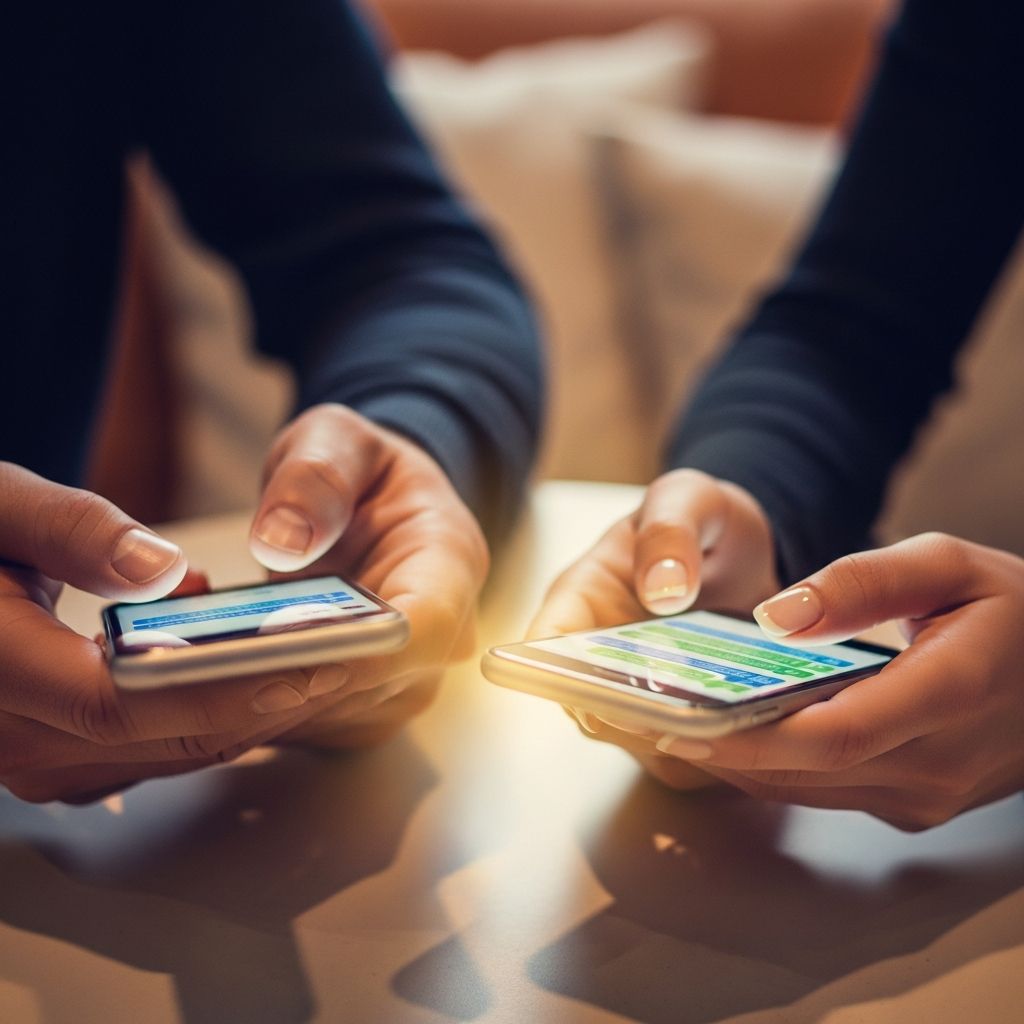
In an era dominated by smartphones, a simple message can bridge emotional gaps and fortify romantic partnerships. Research indicates that conveying love through digital means, such as heartfelt texts, correlates with heightened relationship satisfaction and intimacy. This article delves into the mechanisms behind this phenomenon, drawing from psychological studies on affection expression and its impact on couples.
The Neuroscience of Love in Messages
When partners exchange loving communications, the brain responds with surges of dopamine, activating reward pathways similar to those triggered by essential survival needs. These neurochemical reactions foster feelings of well-being and attachment, making everyday texts potent tools for sustaining passion.
Harvard Medical School research highlights how love, even in brief digital forms, engages the brain’s reward system, promoting sustained relational health. The American Psychological Association echoes this, noting that such interactions model fundamental well-being needs, reinforcing pair bonds over time.
Understanding Love Languages in the Digital Age
Gary Chapman’s framework posits five primary ways people express and receive love: words of affirmation, acts of service, receiving gifts, quality time, and physical touch. For many, words of affirmation—praise and loving statements—stand out as particularly impactful via text, allowing instant, thoughtful delivery regardless of distance.
A study with 100 heterosexual couples tested this by measuring preferences for receiving and expressing these languages, alongside relationship and sexual satisfaction. Results showed that when partners aligned their expressions with the other’s preferences, satisfaction levels rose significantly. Mismatches led to lower fulfillment, underscoring the value of tailored digital affirmations.
| Love Language | Description | Digital Text Example |
|---|---|---|
| Words of Affirmation | Verbal appreciation and encouragement | “You make every day brighter.” |
| Quality Time | Undivided attention | “Can’t wait to share dinner with you tonight.” |
| Acts of Service | Helpful actions | “Picked up your favorite coffee on my way home.” |
| Gifts | Tangible tokens of love | “Surprise! Ordered that book you wanted.” |
| Physical Touch | Non-sexual touch | “Wishing I could hug you right now ❤️” |
This table illustrates how each love language adapts to texting, making affection accessible during busy days or separations.
Empirical Evidence: Texts and Satisfaction
Quantitative analysis from peer-reviewed sources reveals that affectionate messaging directly enhances relational dynamics. In one investigation, partners rating high on empathy better matched their expressions to their spouse’s preferences, yielding superior outcomes in both emotional and physical intimacy.
Conversely, broader reviews question the rigid categorization of love languages but affirm that any form of loving expression boosts satisfaction universally. A 2023 study using advanced methods found all love language expressions positively linked to happiness, with minimal matching-specific effects—suggesting consistent affection, textual or otherwise, is key.
Thesis research on texting in romances further supports this: respondents reported that affirmations via SMS created emotional connections, increasing overall happiness and passion. Daily “I love you” texts were particularly noted for reigniting sparks amid routine.
Practical Strategies for Text-Based Love
- Personalize Messages: Reference specific qualities or shared memories to make texts resonate deeply, aligning with words of affirmation.
- Schedule Affirmations: Set reminders for midday check-ins, combating workday disconnection.
- Mix Languages: Combine texts with plans for quality time or virtual gifts to cover multiple preferences.
- Respond Promptly: Acknowledging a partner’s message reinforces mutual validation.
- Use Emojis Thoughtfully: Hearts and hugs digitally mimic physical touch for remote couples.
Implementing these can transform routine communication into a relationship sustainer, especially for parents juggling demands.
Challenges and Mixed Research Findings
Not all studies unanimously endorse love language matching. Greater Good Science Center reviews indicate mixed results: some couples with aligned languages report higher satisfaction, while others do not. Two studies linked knowing a partner’s language to future satisfaction, yet three found no matching advantage.
Critics argue the five-language model lacks robust empirical backing for its core assumptions, like distinct primaries or mismatch as a primary issue. Recent data shows expressions in any language benefit relationships broadly. Thus, while texting loving words works, variety prevents over-reliance on one mode.
Long-Term Benefits for Marital Health
Consistent digital affection builds resilience against stressors. Couples practicing responsive love-filling—meeting preferences—cultivate empathy and positivity. Over time, this ‘love tank’ fullness translates to enduring commitment.
For modern families, texts offer low-effort, high-reward intimacy. A quick affirmation during a child’s activity or work break maintains connection, preventing drift. Brain science reinforces this: repeated loving exchanges strengthen neural reward circuits, embedding relational security.
Frequently Asked Questions
What if my partner’s love language isn’t words?
Adapt: Text about upcoming acts of service or shared time to bridge gaps effectively.
Can too many texts overwhelm?
Balance is key—gauge responses to ensure messages uplift without pressuring.
Does this work for long-distance couples?
Absolutely; texts excel here, sustaining bonds until reunions.
How quickly do benefits appear?
Studies show rapid uplifts in satisfaction from consistent practice.
Is there science beyond love languages?
Yes, neurochemical responses confirm affection’s universal brain boost.
Integrating Texts into Daily Rituals
To maximize impact, create rituals like morning appreciations or evening recaps. Track progress via shared journals or apps noting mood post-messaging. Over months, these habits compound, mirroring findings where aligned expressions predict lasting quality.
Parents benefit doubly: quick texts model healthy communication for children while sustaining parental partnerships. In essence, the smartphone becomes a conduit for enduring love.
References
- I love the way you love me: Responding to partner’s love language … — PMC/NCBI. 2022-06-14. https://pmc.ncbi.nlm.nih.gov/articles/PMC9216579/
- Is There Science Behind the Five Love Languages? — Greater Good Magazine, UC Berkeley. 2023. https://greatergood.berkeley.edu/article/item/is_there_science_behind_the_five_love_languages
- Evaluating Love Languages From a Relationship Science Perspective — SAGE Journals. 2023-12-01. https://journals.sagepub.com/doi/10.1177/09637214231217663
- The Pursuit of Happiness: Texting and Romantic Relationships — CSU Monterey Bay Digital Commons. 2019. https://digitalcommons.csumb.edu/cgi/viewcontent.cgi?article=1089&context=caps_thes_all
- The Psychology Behind the 5 Love Languages — University of Arizona Global Campus. 2023. https://www.uagc.edu/blog/the-psychology-behind-the-5-love-languages
- Love and the Brain — Harvard Medical School. 2022. https://hms.harvard.edu/news-events/publications-archive/brain/love-brain
- What happens in your brain when you’re in love? — American Psychological Association. 2023. https://www.apa.org/topics/marriage-relationships/brain-on-love