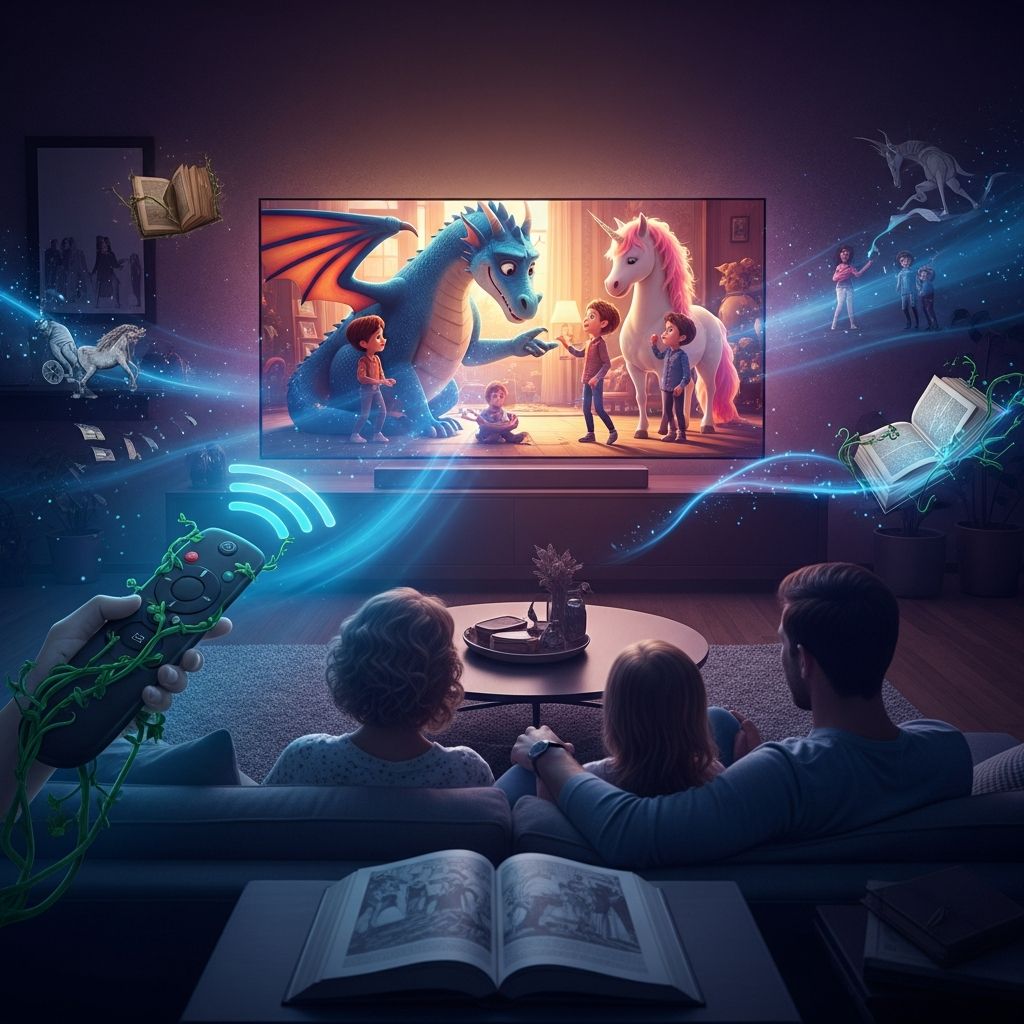
Streaming has done more than move entertainment from theaters and cable channels onto laptops and living room TVs; it has quietly rewritten the way families share stories, build traditions, and decode the tiny details hidden in children’s narratives.
One of the clearest examples is how modern adaptations of beloved book series, including darkly comic tales about unlucky orphans and mysterious conspiracies, use visual clues, redesigned objects, and recurring symbols to pull both kids and adults into the same imaginative world.
From Bedtime Chapters to Binge Nights
Before on-demand streaming, reading a children’s book series and then catching an occasional movie version felt like a slow, one-way journey: page first, screen later, usually years apart.
Now, families often move back and forth between episodes and chapters in the same week, letting the show and the book bounce off each other and deepen the story’s impact.
How streaming changes family habits
- Parents and kids can watch an episode together and then read the matching chapter at bedtime, comparing how scenes and objects look in each version.
- Cliffhangers are no longer locked to weekly schedules; parents decide whether to let “just one more episode” run, turning narrative suspense into a negotiated family ritual.
- Characters and symbols linger longer in conversation because the story world is always one tap away, even during breakfast or car rides.
Reinventing the Smallest Details
Adaptations once focused mainly on getting the big plot points and main characters roughly right, hoping readers would forgive whatever changes appeared on screen.
Streaming-era shows often do the opposite: they pour attention into the tiniest elements—props on a table, labels on jars, recurring motifs in the background—turning minor book details into visual anchors that families love to analyze together.
Why little objects matter so much
- They act as emotional shortcuts, tying a specific object to a memory or a twist from the books, so viewers feel a rush of recognition when it appears.
- They give children something concrete to focus on, while adults enjoy deeper symbolic meanings and callbacks to earlier scenes or chapters.
- They invite rewatching, since viewers notice new background clues and visual jokes each time, extending the life of a single season.
Streaming’s Influence on Visual Storytelling
Because streaming shows expect many viewers to watch multiple episodes in a row, the design of each scene is built with continuity and layering in mind.
That means recurring objects, like a strangely important household item or a recurring emblem on documents and buildings, are carefully tracked and evolved across episodes as part of a larger visual language.
Visual storytelling techniques in family adaptations
- Color coding: Families may notice that certain colors follow specific characters or organizations, helping even young viewers track who is connected to whom.
- Symbol echoes: A shape or sigil that first appears in a harmless setting might quietly reappear in more menacing scenes, hinting at hidden connections.
- Object evolution: Everyday items, once used innocently, might return later with altered designs, new context, or secret compartments, signaling the growth of the plot and the children’s awareness.
When Nostalgia Meets New Interpretation
Parents often come to an adaptation carrying vivid memories of the original books—how the story felt when they first read it as kids, or when they shared it with younger siblings.
Streaming versions, however, are made for a multi-generational audience, balancing respect for the original tone with fresh humor, updated references, and visual reinterpretations designed for children who grew up around on-demand content.
Layers of meaning for different ages
- Children experience the adaptation primarily as an adventure or mystery, following the heroes and reacting to visual clues and comic villains.
- Parents catch meta-jokes about bureaucracy, media, or adulthood, hearing echoes of themes they barely noticed when first reading the books.
- Grandparents may recognize older cinematic styles or storytelling traditions referenced in costuming, narration, or set design.
New Rhythms of Suspense and Comfort
One of the subtle powers of a serialized streaming adaptation is how it reshapes the rhythm of tension and relief in a family’s week.
Instead of waiting a whole week between installments, families can cluster episodes into a Friday-night ritual or stretch one volume of a story across several evenings to match homework schedules and adult workloads.
Emotional pacing at home
- Parents can pause on intense moments, letting kids ask questions about danger, loss, or unfairness before moving on.
- Episodes with emotionally heavy endings can be followed immediately with lighter ones, giving families a built-in way to balance dark humor with comfort.
- Because episodes sit side by side, families can revisit favorite comforting scenes after a particularly stressful day, turning the show into a shared coping tool.
Narrators, Irony, and Trust
Many modern adaptations of children’s books lean into playful narration and self-aware commentary, inviting kids to think critically about who is telling the story and how reliable that voice might be.
Streaming encourages this approach by letting a narrator build a relationship with the audience over many episodes, slowly shifting from detached observer to emotional participant or co-conspirator.
How this shapes young viewers
- Children begin to recognize irony and exaggeration, learning that not every statement in a story should be accepted at face value.
- They become more attuned to perspective, noticing that different characters interpret the same event in different ways.
- Families can talk about honesty, bias, and storytelling tricks using a familiar character’s narration as a safe example.
Worldbuilding Through Recurring Motifs
Beyond individual objects, streaming adaptations rely heavily on recurring motifs—visual, musical, or linguistic elements that signal the presence of certain secrets or societies within the narrative.
For children, these motifs function like puzzles to solve; for adults, they echo the feeling of slowly uncovering hidden lore when reading the original books.
| Motif Type | How It Appears | Impact on Families |
|---|---|---|
| Visual symbols | Logos, emblems, repeated shapes on props and scenery. | Encourage kids to scan the screen, boosting attention to detail and recall. |
| Musical themes | Short melodies tied to characters, organizations, or mysteries. | Help young viewers track unseen threats or allies even before they appear. |
| Language quirks | Repeated phrases, definitions, or running jokes across episodes. | Give families quotable lines that become part of their shared vocabulary. |
Balancing Darkness and Safety
Some of the most beloved children’s book series walk a sharp line between whimsical absurdity and genuine peril, placing young heroes in situations that are both exaggerated and emotionally real.
Streaming adaptations must translate that tone visually, shaping how dangerous scenes look, how long they last, and how quickly the narrative offers reassurance that the children’s resilience and cleverness will carry them through.
How adaptations keep it watchable for kids
- Costumes, sets, and exaggerated performances signal that a villain is more theatrical than realistic, softening the emotional blow for younger viewers.
- Humor punctures tension, often arriving right after a frightening image to reset the mood.
- Repetition of certain safe patterns—like adults consistently underestimating the children—reassures kids that the heroes remain competent even in chaos.
Parents as Co-Viewers, Not Just Gatekeepers
Streaming has reshaped the role of parents from simple content filters into active co-viewers who participate in decoding symbols, debating character choices, and guessing future twists.
Instead of previewing everything alone, many parents now watch alongside their kids from the first episode, pausing to explain complex themes or offer context from the original books.
What co-viewing adds
- Shared reference points for difficult topics like grief, injustice, or courage, framed safely within a fictional narrative.
- Opportunities to talk about media literacy: why certain scenes are staged the way they are, and how filmmakers influence emotions.
- Family in-jokes and traditions, such as themed snacks or repeated lines every time a certain object appears on screen.
Binge-Worthy Structure and Chapter Feel
Many streaming adaptations of children’s books are structured to echo the feel of reading a chapter at a time, while still encouraging viewers to consume several episodes in one sitting.
Each installment resolves a small arc but leaves one or two questions dangling, mirroring the way book chapters close on a sentence that nudges readers to keep going.
Designing episodes like chapters
- Cold opens that drop families into the middle of a strange situation, then slowly reveal how it connects to ongoing mysteries.
- Final shots that focus on a clue or object rather than a character’s face, inviting speculation between episodes.
- Running definitions or explanations that double as both educational moments and character-driven humor.
Streaming and the Business of Childhood Classics
From an industry perspective, adapting a well-known children’s series into a streaming show is both a creative and strategic move, pulling in existing fans while attracting new viewers who discover the story for the first time on screen.
Subscription platforms especially value book-based series because they encourage multiple forms of engagement—reading, watching, rewatching, and discussing—across different age groups in the same household.
Why book-based shows thrive on streaming
- They come with built-in story arcs that span multiple seasons, reducing the risk of running out of material too quickly.
- They inspire merchandise and themed experiences, from board games to escape-room-style activities that echo the series’ puzzles and clues.
- They boost interest in the original books, turning the show into an entry point for reluctant readers.
Family Rituals Around Adaptations
Over time, a streaming adaptation of a beloved book series can evolve into a family ritual that marks seasons, school breaks, or special occasions.
Parents may rewatch the first season with younger siblings as they grow up, revisiting familiar episodes the way earlier generations re-opened worn-out paperbacks.
Examples of emerging rituals
- An annual themed weekend where the family re-watches key episodes, cooks inspired food, and revisits favorite chapters.
- Sibling traditions, like introducing the story to a younger child the moment they turn a certain age, mirroring the original reader’s experience.
- Creating homemade props or costumes that echo the show’s redesigned objects, letting kids step into the story world physically.
Frequently Asked Questions
Is it better for kids to read the books before watching the streaming adaptation?
There is no single right order; reading first lets children imagine the world before seeing it visualized, while watching first can help reluctant readers picture complex settings and characters when they later open the books.
Many families find a hybrid approach works best, alternating between chapters and episodes so that each medium enriches the other.
Do streaming adaptations change important plot points from the books?
Most modern adaptations aim to maintain the core storyline and emotional arcs while adjusting pacing, side characters, and visual details to suit episodic television.
Changes often occur in minor scenes, background information, and supporting roles rather than in the key fates of major characters, allowing viewers to recognize the overall journey while enjoying surprises.
How can parents use these shows to encourage reading?
Parents can pause episodes at dramatic moments and suggest reading the corresponding chapter to see how the book handles the scene, turning curiosity into motivation to read.
They can also invite children to compare descriptions and visuals, asking what the kids imagined differently and why those differences might matter.
Are the darker themes in some book-based shows appropriate for younger viewers?
Suitability depends heavily on each child’s temperament, age, and experience with fiction, so parents benefit from co-viewing the first episodes and monitoring reactions.
Because streaming allows easy pausing and rewatching, adults can take time to explain complicated or frightening moments, framing them as opportunities to talk about resilience, empathy, and moral choices.
Why do kids get so attached to small objects and symbols in these shows?
Children often latch onto recurring objects because they act as stable landmarks in an unpredictable story world, making the narrative easier to follow.
These symbols also invite kids to feel like detectives, rewarding attention and making them feel actively engaged in uncovering secrets rather than passively watching.
Streaming as a New Chapter in Classic Stories
Streaming adaptations of children’s book series have turned once-solitary reading experiences into multi-layered family events where nostalgia, design, narrative, and technology all collide.
By reshaping how tiny details, recurring motifs, and serialized suspense work on screen, these shows invite households to become co-authors of their own traditions around beloved stories, ensuring that each new generation encounters the same worlds in fresh, vividly collaborative ways.