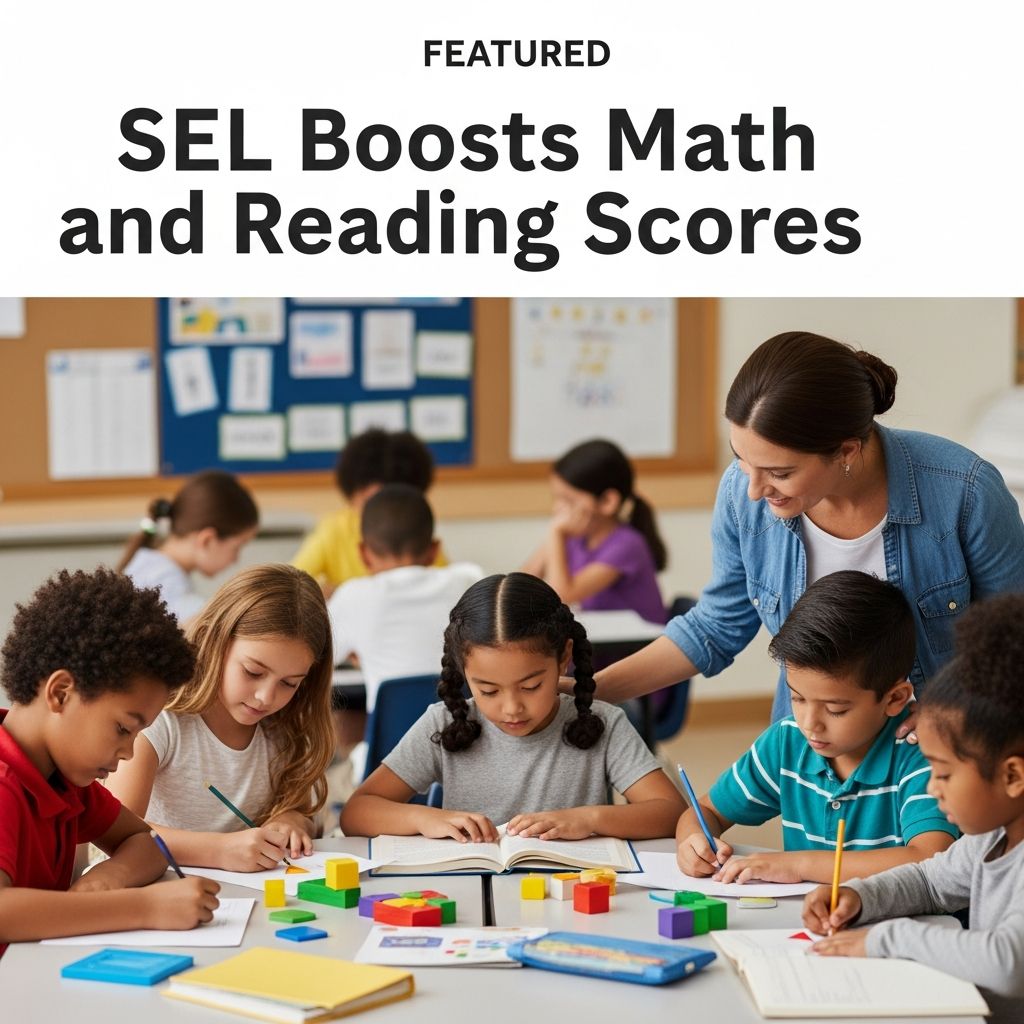
Social-emotional learning (SEL) equips students with vital skills like self-awareness, relationship building, and responsible decision-making, directly contributing to elevated performance in core subjects such as math and reading. Rigorous studies confirm that SEL interventions yield measurable gains in academic achievement, with effect sizes translating to percentile increases of 4-6 points in literacy and numeracy.
Understanding the Power of Social-Emotional Learning
Social-emotional learning encompasses competencies that enable students to navigate emotions, build healthy relationships, and make ethical choices. These skills form the foundation for academic success by fostering engagement, resilience, and focus. Unlike traditional instruction focused solely on cognitive tasks, SEL integrates emotional intelligence, addressing the whole child.
Key SEL domains include:
- Self-awareness: Recognizing one’s emotions and strengths.
- Self-management: Regulating impulses and stress effectively.
- Social awareness: Empathizing with diverse perspectives.
- Relationship skills: Communicating and collaborating productively.
- Responsible decision-making: Weighing consequences ethically.
Programs emphasizing these areas, often delivered by classroom teachers, promote prosocial behaviors and reduce disruptions, creating optimal learning environments.
Proven Academic Gains from SEL Implementation
Meta-analyses of hundreds of studies reveal consistent positive effects on academic outcomes. Students in SEL programs show improved test scores in math and reading, alongside enhanced engagement. For instance, explicit SEL instruction results in a 6.3 percentile gain in literacy and 3.8 in math compared to non-participants.
A comprehensive review of 424 experiments across 50+ countries, involving over 500,000 students, affirmed SEL’s role in boosting achievement and well-being. Similarly, NYU research linked SEL growth—especially in growth mindset and self-regulation—to greater academic progress, particularly for disadvantaged students.
| Study Source | Key Finding | Academic Impact |
|---|---|---|
| Yale Child Development (2025) | SEL programs analyzed globally | 4.2 percentile overall; 6.3 literacy, 3.8 math |
| California CORE Districts | Within-student SEL changes | Up to 25% extra annual math/ELA gains |
| Learning Policy Institute | PreK-12 meta-analysis | Medium-large effects on performance |
| AERA Review (2025) | Universal SEL programs | Significant achievement gains, strongest in elementary |
These results hold across demographics, grades, and socioeconomic statuses, underscoring SEL’s broad applicability.
How SEL Specifically Enhances Math and Reading Proficiency
In math, SEL fosters perseverance through growth mindset, where students view challenges as opportunities. California data showed a one standard deviation increase in growth mindset correlating with 7.97-25.06% of average annual learning gains in math. Self-management reduces anxiety, enabling sustained problem-solving.
For reading, SEL improves comprehension via empathy and self-regulation, key for analyzing texts. Students with stronger SEL report higher ELA scores, as emotional regulation supports focus during complex reading tasks.
Longitudinal evidence indicates these gains persist, with SEL-linked students achieving higher scores well into later grades.
SEL’s Impact on Vulnerable Student Populations
SEL delivers amplified benefits for at-risk groups. In structurally disadvantaged neighborhoods, growth mindset and self-regulation yield larger academic boosts. Students with Individualized Education Plans (IEPs) experience similar gains, addressing barriers like emotional distress.
Subgroup analyses from California confirm SEL improvements predict math/ELA rises across gender, race, economic status, and prior achievement, with strongest effects for those starting with lower SEL levels.
Effective Strategies for Integrating SEL in Classrooms
Successful SEL requires structured programs lasting over one semester, ideally teacher-led. Evidence-based approaches include:
- Daily explicit lessons on competencies.
- Infusing SEL into academic subjects, like group math discussions for collaboration.
- School-wide practices promoting positive climates.
Core components from elementary SEL programs emphasize safe environments, sequenced activities, and skill practice. Programs like those reviewed by CASEL advance five competencies systematically.
Overcoming Challenges and Addressing Criticisms
While most evidence supports SEL, some studies note inconsistent academic effects due to implementation variability. Critics highlight potential negative impacts in poorly designed programs. However, rigorous meta-analyses counter this, showing reliable positive outcomes when fidelity is maintained.
To maximize benefits, schools should select evidence-based curricula, train educators, and monitor progress.
Long-Term Benefits Beyond the Classroom
SEL extends to adulthood, linking to better peer interactions, health, and happiness. Reduced emotional distress and conduct issues create supportive school cultures, indirectly boosting academics.
Attendance improves alongside SEL gains, further enhancing learning opportunities.
Frequently Asked Questions About SEL
What is social-emotional learning (SEL)?
SEL teaches skills for managing emotions, building relationships, and making responsible decisions, complementing academic instruction.
Does SEL really improve math and reading scores?
Yes, studies show 3.8-6.3 percentile gains in math/reading from SEL programs.
Which students benefit most from SEL?
All students gain, but effects are largest for disadvantaged, low-SEL starters, and IEP students.
How long should SEL programs last for results?
Over one semester (4+ months) for consistent academic gains.
Can SEL be taught in any grade level?
Evidence supports PreK-12, strongest in elementary.
Building a Brighter Future with SEL
Integrating SEL transforms schools by enhancing academic performance, behavior, and well-being. Policymakers and educators should prioritize evidence-based SEL to equip students for success.
References
- Social-Emotional Learning and Academic Growth — NYU Steinhardt Research Alliance. 2021-07. https://steinhardt.nyu.edu/research-alliance/research/social-emotional-learning-and-academic-growth
- New Research Published in Child Development Confirms Social and Emotional Learning Significantly Improves Student Academic Performance — Yale School of Medicine. 2025. https://medicine.yale.edu/news-article/new-research-published-in-child-development-confirms-social-and-emotional-learning-significantly-improves-student-academic-performance-well-being-and-perceptions-of-school-safety/
- Evidence for Social and Emotional Learning in Schools — Learning Policy Institute. N/A. https://learningpolicyinstitute.org/product/evidence-social-emotional-learning-schools-brief
- Changes in Social-Emotional Learning — California Education Policy. N/A. https://edpolicyinca.org/publications/changes-social-emotional-learning
- Social and Emotional Learning Programs Linked to Academic Gains — American Educational Research Association (AERA). 2025-10-09. https://www.aera.net/Newsroom/Social-and-Emotional-Learning-Programs-Linked-to-Academic-Gains
- Does Social and Emotional Learning (SEL) improve academic performance? — Science of Learning Substack. N/A. https://scienceoflearning.substack.com/p/does-social-and-emotional-learning
- Social-Emotional Learning Linked to Higher Math and Reading Test Scores — Education Week. 2025-10. https://www.edweek.org/leadership/social-emotional-learning-linked-to-higher-math-and-reading-test-scores/2025/10