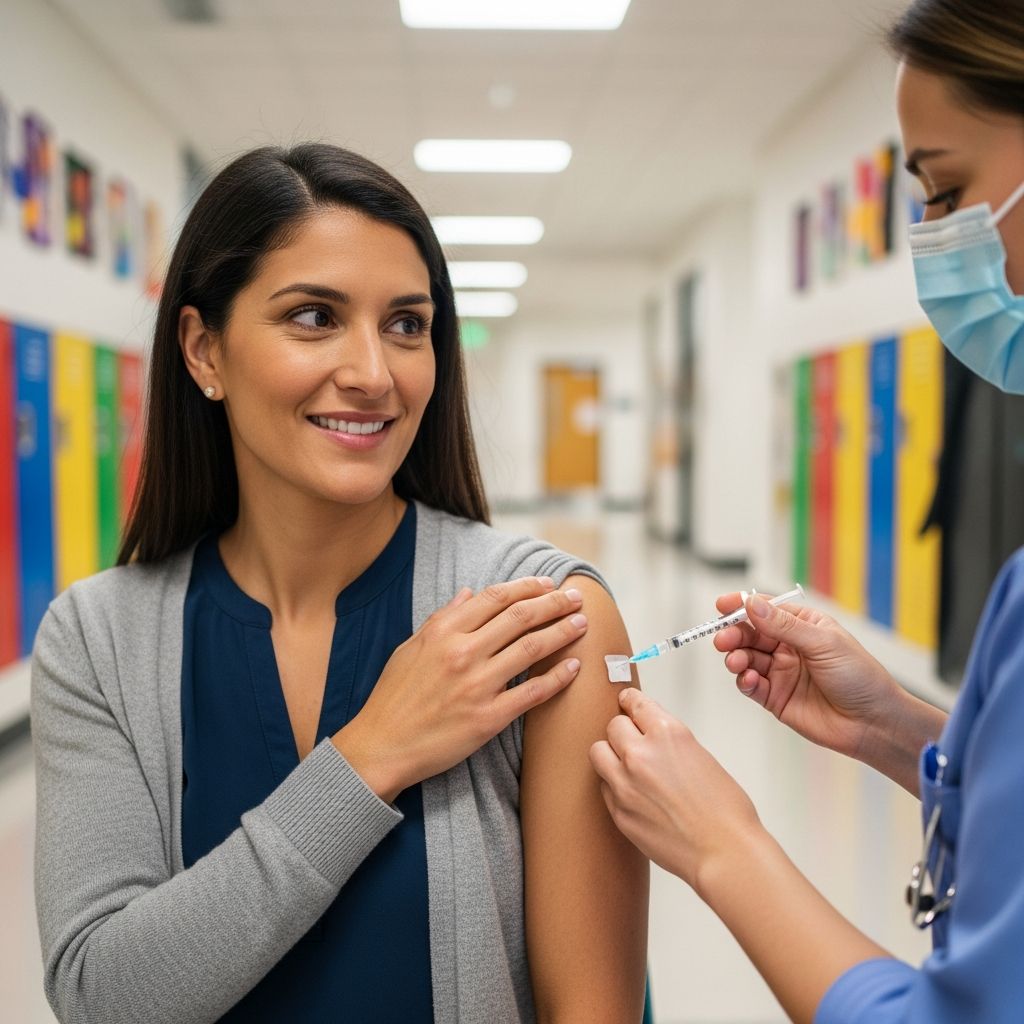
The introduction of single-dose COVID-19 vaccines marked a pivotal shift in protecting essential workers, particularly educators. Unlike two-dose regimens, the Johnson & Johnson (J&J) vaccine required just one shot, simplifying logistics and speeding up immunity for teachers and school staff nationwide. This approach addressed key barriers in vaccination campaigns, allowing quicker returns to in-person instruction while minimizing workforce disruptions.
The Rise of Simplified Vaccination Strategies
Early in 2021, as vaccine supplies increased, public health strategies evolved to prioritize high-risk groups beyond the elderly and healthcare workers. The single-dose option emerged as a game-changer, reducing the need for follow-up appointments that often led to drop-offs in two-dose series. In Texas, for instance, administration of the J&J vaccine coincided with expanded eligibility, enabling providers to immunize school personnel efficiently.
This streamlined method was crucial for educators, who faced daily exposure to children—many too young for vaccines themselves. By March 2021, federal guidance urged states to include pre-primary, primary, secondary school staff, Head Start workers, and child care providers in priority groups. Such directives aimed to safeguard both staff and students, facilitating safer classroom environments.
State-by-State Rollouts and Eligibility Timelines
Vaccination access for teachers varied widely across the U.S., reflecting diverse state policies. By April 2021, all K-12 educators nationwide qualified, but timelines differed significantly. Twelve states, Puerto Rico, and the District of Columbia opened eligibility in January, followed by eight in February and 16 in March. Others phased it incrementally by age or location, with Montana relying on general public openings.
In Texas, a federal letter prompted immediate action, making teachers, bus drivers, and child care workers eligible without prior state prioritization. This aligned with ramping supplies, where daily doses averaged over 123,000 by early March. San Francisco exemplified targeted efforts, hosting clinics to deliver over 1,500 J&J doses exclusively to unified school district staff.
| Month | States Opening Eligibility | Key Examples |
|---|---|---|
| January | 12 states + DC + PR | Early adopters prioritized educators amid surges |
| February | 8 states | Building on initial phases |
| March | 16 states | Federal push via Retail Pharmacy Program |
| April | Nationwide | All K-12 teachers eligible |
These variations highlighted logistical challenges, but single-dose availability helped bridge gaps, ensuring broader coverage without extended scheduling.
Real-World Uptake Among Educators
Despite prioritization, vaccine acceptance among teachers lagged. A study of Arkansas public K-12 staff after 13 weeks showed 51.2% receiving at least one dose, with 44% fully immunized. Uptake surged initially from 4% to 43% between mid-January and mid-February following Phase 1b announcements, but plateaued at 51% over subsequent weeks.
Demographics played a role: 73.4% of recipients were women, 75.3% white, and 51.8% aged 45-64, mirroring national teacher profiles. By staff type, certified non-teachers led at 66.5% (one dose), followed by teachers at 54.7% and classified staff at 46.4%. Completion rates were lower: 57.8% for certified, 47.5% for teachers, and 39.1% for classified staff. Rural districts fared worst, with some under 10% uptake, while top urban areas exceeded 60-70%.
- Initial Surge: Rapid increase tied to access improvements.
- Plateau Effect: Stagnation despite onsite clinics and supply growth, hinting at hesitancy.
- Urban-Rural Divide: Higher rates in populous districts.
J&J’s single-dose format likely boosted partial uptake, as it counted as full immunization immediately, unlike Pfizer or Moderna.
Overcoming Barriers to Educator Vaccination
Several factors impeded progress. Access issues eased with prioritization, yet hesitancy persisted, potentially significant per analyses. Logistical hurdles, like transportation for second doses, diminished with J&J, but concerns over side effects, mandates, and misinformation lingered.
Targeted interventions proved effective. Onsite school clinics in places like San Francisco minimized time away from classrooms. Federal programs, such as the Retail Pharmacy Partnership, enabled March 8 eligibility nationwide, bypassing some state delays. States like Texas integrated child care and Head Start into directives, broadening protection.
Equity gaps emerged: Rural areas and classified staff (e.g., aides, custodians) showed lower rates, underscoring needs for mobile units and outreach. Women, comprising most educators, drove uptake, but overall figures suggested room for confidence-building campaigns.
Impacts on School Operations and Safety
Immunizing teachers directly influenced reopening decisions. With 6.8% of Texans fully vaccinated by early 2021 (two-dose metrics), single-dose options accelerated herd immunity efforts among adults. Protected staff reduced transmission risks to unvaccinated children, supporting hybrid and full in-person models.
Studies linked educator vaccination to fewer outbreaks. Higher-immunized districts maintained operations longer, avoiding closures. The J&J vaccine’s EUA in February 2021 timed perfectly with teacher prioritization, offering robust protection against hospitalization with one administration.
Long-term, these efforts informed future preparedness. Lessons from plateaus emphasized addressing hesitancy through education, not just access. By April 2021, universal eligibility marked a milestone, though full coverage demanded sustained pushes.
Comparing Vaccine Types for School Staff
| Vaccine | Doses | Uptake Advantage for Teachers | Notes |
|---|---|---|---|
| Johnson & Johnson | 1 | Simplified scheduling; immediate full immunity | Key in Texas, SF clinics |
| Pfizer-BioNTech | 2 | High efficacy; widely available | Drop-off risk post-first dose |
| Moderna | 2 | Strong against variants | Similar completion challenges |
Single-dose prevalence correlated with higher completion equivalents, vital for busy educators.
Evolving Strategies for Future Pandemics
Retrospective views highlight single-dose vaccines’ role in workforce immunization. Policymakers now prioritize flexible options in planning. Ongoing requirements, like Texas’ diphtheria/tetanus mandates for students, underscore sustained public health vigilance.
For educators, FAQs clarify persistent queries:
Frequently Asked Questions
What made single-dose vaccines ideal for teachers?
They eliminated second-dose logistics, allowing quick protection without missed school days.
How did uptake vary by location?
Urban districts hit 70%+; rural ones often below 25%.
Were all teachers eventually eligible?
Yes, nationwide by April 2021.
Did hesitancy impact rates?
Plateaus post-prioritization suggest yes, beyond access issues.
Can schools mandate staff vaccines?
Policies vary; some districts implemented without state mandates.
These insights equip future responses, balancing speed, equity, and trust.
References
- Texas teachers, child care workers now eligible for COVID-19 vaccine — Texas Tribune. 2021-03-03. https://www.texastribune.org/2021/03/03/texas-teachers-child-care-coronavirus-vaccine/
- COVID-19 vaccine uptake among Arkansas public K-12 teachers and staff — PMC/NCBI. 2022. https://pmc.ncbi.nlm.nih.gov/articles/PMC9343748/
- Where Teachers Are Eligible for the COVID-19 Vaccine — Education Week. 2021-04-05. https://www.edweek.org/policy-politics/where-teachers-are-eligible-for-the-covid-19-vaccine/2021/01
- Requirements | Texas DSHS — Texas Department of State Health Services. Accessed 2026. https://www.dshs.texas.gov/immunizations/school/requirements
- San Francisco Teachers Get Single-Dose Johnson & Johnson Vaccine — YouTube (SFUSD). 2021. https://www.youtube.com/watch?v=78cMdY4C9_8
- FAQ: Vaccines for Educators — Education Minnesota. 2021-11-04. https://educationminnesota.org/wp-content/uploads/2021/09/FAQ-Vaccines-for-Educators-11-4-21.pdf