The Science Behind Spacing: How Age Differences Shape Family Structures
When parents decide to expand their families, one of the most significant choices involves determining the ideal spacing between children. The age gap between siblings influences not only immediate family dynamics but also has lasting effects on how children develop socially, emotionally, and academically. Research demonstrates that sibling relationships are shaped by multiple factors, including the developmental stages of each child, parental resources, and the unique psychological processes through which siblings influence one another.
The relationship between siblings encompasses both complementary interactions—similar to adult-child relationships—and reciprocal exchanges that resemble peer interactions. This dual nature means that siblings serve multiple roles throughout their childhood and into adulthood, acting simultaneously as mentors, competitors, supporters, and role models. Understanding how age gaps affect these roles can help parents navigate the complexities of raising children at different life stages.
Navigating Power Dynamics and Role Development
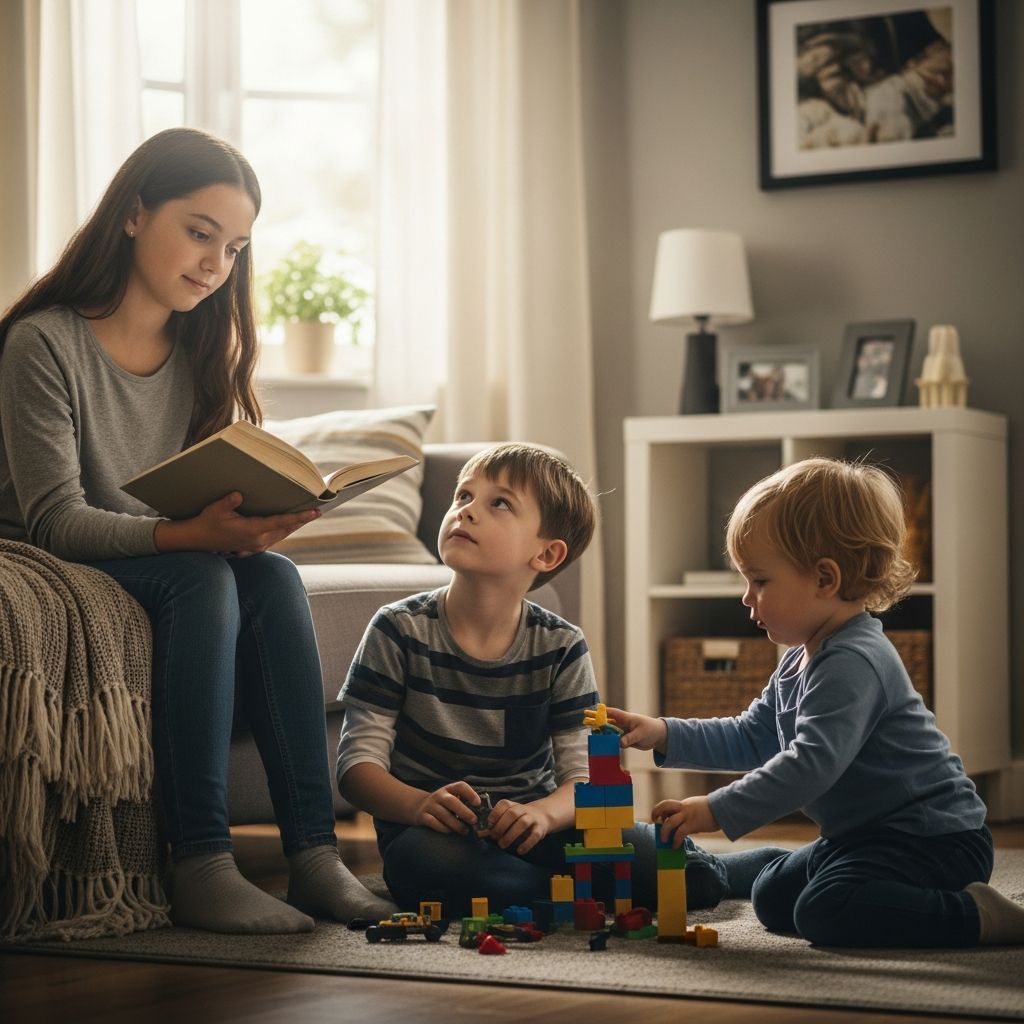
One of the most significant aspects of sibling relationships involves the natural power imbalances created by age differences. These power dynamics are neither inherently positive nor negative; rather, they create a context for both conflict and meaningful learning opportunities. When siblings are further apart in age, the older child typically possesses greater physical strength, cognitive abilities, and life experience, which can position them in a protective or mentoring capacity.
As younger siblings grow and develop cognitively, linguistically, and socially, they begin to assume more active roles in sibling interactions. What starts as a relationship where the older child leads and teaches gradually transforms into a more balanced dynamic. This evolution reflects the natural maturation process where power imbalances become less prominent over time, and interactions become increasingly equitable as both children approach adulthood.
The gender of siblings also influences these dynamics. Research indicates that older sisters more frequently engage in caretaking and helping roles compared to older brothers, while boys tend to display more aggressive behavior with siblings according to parental observations. However, these patterns vary significantly among individual families and are not absolute predictors of sibling relationships.
Building Foundations for Personal Growth Through Mentorship
Larger age gaps create natural mentorship opportunities that can significantly benefit younger siblings. An older sibling serves as a built-in role model who can positively influence younger children’s behavior, learning patterns, and social skills development. This mentorship extends beyond informal guidance, as older siblings often assist with learning activities, homework support, and the development of academic competencies.
Second-born children frequently experience accelerated development in certain areas due to exposure to an older sibling’s abilities and knowledge. This “precocious development” phenomenon suggests that having an older role model can jumpstart certain developmental milestones. The teaching and helping behaviors demonstrated by older siblings create a learning environment that may be more intensive than what parents alone can provide, particularly when parents are managing multiple responsibilities.
The supportive functions of older siblings extend beyond academics. During middle childhood, siblings provide emotional support during stressful family experiences, and in early childhood, they can serve as sources of security when parents are temporarily absent. These supportive interactions build resilience and create emotional bonds that often persist throughout adulthood.
Managing Rivalry and Competition Across Age Spans
While the notion that larger age gaps eliminate sibling conflict is a common misconception, research shows that significant spacing does reduce certain types of competition and rivalry. When children are at vastly different developmental stages, they typically compete for different resources and parental attention, reducing direct competition for the same toys, friends, or achievements.
However, the absence of direct rivalry does not guarantee harmonious relationships. Younger siblings may harbor feelings of jealousy if they perceive that older siblings receive more privileges, while older children might feel resentment if they believe their younger siblings receive preferential treatment or escape consequences more easily. These feelings of disconnect can emerge even when siblings do not actively compete with one another in the traditional sense.
The quality of sibling relationships shows significant continuity over time, particularly regarding older siblings’ positive behavior and feelings toward younger ones. This suggests that early patterns of interaction establish templates for future relationships. Parents who foster cooperative rather than competitive dynamics during early childhood are more likely to see these positive patterns persist as children mature.
Parental Resources and the Financial Dimension
Beyond emotional and relational factors, age gaps have practical implications for family finances and parental capacity. Parents benefit from more time to recover financially from the expenses associated with raising a first child before taking on the costs of a second. This spacing provides opportunities to save for major milestones such as vehicle purchases, educational expenses, and college tuition without managing overlapping financial demands.
The financial recovery period also reduces stress on household budgets during critical developmental phases for both children. Rather than simultaneously funding infant care, preschool, and other early childhood services, families with larger gaps can sequence these expenses, potentially allowing for better quality care or educational opportunities for each child. Additionally, the period between children allows parents to rebuild savings and potentially improve their overall financial stability before welcoming another dependent.
Attention Distribution and Quality Time
A significant advantage of larger age gaps is the ability to provide intensive individual attention during crucial developmental windows. When older children attend school, parents can focus their attention on the younger child’s early development without constantly dividing their efforts. This concentrated attention during infancy and toddlerhood allows parents to form strong bonds and respond attentively to developmental needs.
Older children’s increasing independence creates natural windows for focused parental engagement with younger siblings. As older children develop self-care skills and become absorbed in school activities, friendships, and extracurriculars, parents have more mental and emotional capacity to invest in their younger child’s formative experiences. This is distinctly different from families with closely spaced children, where parental resources must be constantly divided among children with overlapping needs.
The quality of parent-child relationships varies between firstborn and later-born children, partly due to parental experience. Research shows that parents exhibit more effective parenting behaviors, including lower conflict levels and higher warmth, when engaging with second-born adolescents compared to firstborn adolescents at similar ages. This improvement reflects parental learning through practice and adjusted expectations based on prior experience.
Comparative Analysis: Age Gap Considerations
| Age Gap Range | Primary Advantages | Potential Challenges | Family Dynamics |
|---|---|---|---|
| 1-3 Years Apart | Shared peer friendships, common interests, frequent play | Direct competition, simultaneous resource demands, overlapping needs | More reciprocal, intense rivalries, shared cultural references |
| 4-6 Years Apart | Balanced mentorship, reduced rivalry, sequential attention | Limited peer bonding, different social circles, age-appropriate play challenges | More teaching-learning focused, moderate independence levels |
| 7+ Years Apart | Significant mentorship, minimal rivalry, clear independence phases | Limited shared experiences, potential emotional distance, different life stages | Minimal direct competition, caretaking roles, protective dynamics |
The Context of Individual Differences and Family Systems
While age gaps provide a structural framework for sibling relationships, research emphasizes that significant individual differences exist among families with similar spacing patterns. Factors such as children’s temperamental profiles, the number of siblings in the family, children’s social understanding, and parenting styles all influence how age gaps ultimately affect relationships.
Family systems theory suggests that siblings function as building blocks within the larger family structure. When a new sibling joins the family, the entire system reorganizes. The birth of a younger child creates new subsystems—such as infant-parent relationships and sibling-to-sibling dynamics—that ripple throughout the entire family structure. These reorganizations affect every family member’s experiences, self-perception, and relational patterns.
Parental treatment consistency and fairness play crucial roles in determining how age gaps affect sibling relationships. When one parent shows preferential treatment toward one sibling while another parent favors the other, this incongruence may signal problematic family dynamics associated with poor adjustment in both children. Conversely, parents who recognize developmental differences while maintaining fair and consistent discipline across different maturity levels foster more positive outcomes.
Long-Term Developmental and Psychological Outcomes
The influence of sibling relationships on development and adjustment is substantial and measurable even after accounting for other significant relationships in children’s lives. During adolescence, siblings contribute to positive developmental outcomes including prosocial behavior, empathy development, and academic engagement. These contributions often occur outside direct parental supervision, during periods when siblings spend considerable time together and influence one another’s choices and values.
Sibling support during adolescence has been linked to better overall adjustment, while positive sibling relationships can actually buffer youth against family negativity. Some young people compensate for difficulties in other family relationships by forming close connections with siblings, and these supportive sibling bonds protect them from adjustment problems. This protective function underscores the unique value of sibling relationships in promoting resilience.
The continuity of sibling relationship quality from early childhood through adolescence suggests that early experiences establish patterns that persist over time. Children who experience positive, supportive sibling relationships in early childhood are more likely to maintain these patterns into middle childhood and early adolescence, suggesting that intentional efforts to foster positive sibling dynamics pay dividends across development.
Practical Strategies for Maximizing Benefits Across Age Gaps
- Foster teaching opportunities by creating structured and informal moments where older siblings can assist younger ones with learning activities, homework, or skill development
- Recognize developmental differences in setting expectations, rules, and consequences while maintaining fairness and consistency across the family
- Create family rituals that bring siblings together despite their different schedules and interests, building shared memories and connection points
- Monitor for differential treatment carefully, ensuring that neither sibling feels unfairly advantaged or disadvantaged compared to their brother or sister
- Facilitate mentorship moments by praising older siblings when they demonstrate helpful, protective, or teaching behaviors toward younger ones
- Allocate individual attention time with each child to ensure that parental presence and emotional investment are not entirely absorbed by one sibling’s needs or stage
- Encourage perspective-taking by helping each child understand their sibling’s developmental stage, capabilities, and emotional experiences
Frequently Asked Questions About Sibling Age Gaps
Is there a scientifically “ideal” age gap between siblings?
No single age gap is universally ideal, as advantages and challenges vary depending on family circumstances, parental resources, individual temperaments, and family values. What works well for one family may not suit another. Research shows that gaps ranging from 3 to 7 years often provide balance between mentorship opportunities and manageable parental resource distribution, but larger or smaller gaps can work successfully with intentional parenting strategies.
Does a large age gap mean siblings won’t be close?
Large age gaps do not prevent sibling closeness. While children at very different developmental stages may not share the same peer experiences or activities, they can develop strong bonds through mentorship, mutual support, and family rituals. Many siblings with large age gaps report feeling protective of and connected to one another throughout adulthood.
How can parents prevent jealousy and resentment with different-aged siblings?
Parents can minimize jealousy by maintaining consistent, fair discipline standards while recognizing developmental differences; ensuring each child receives individual attention and affirmation; avoiding comparisons between siblings; and helping each child understand why their sibling has different privileges or responsibilities based on age and maturity.
Do children with older siblings develop faster?
Second-born children sometimes experience accelerated development in certain areas due to exposure to an older sibling’s abilities and knowledge. However, development varies among individuals and is influenced by many factors beyond sibling relationships, including temperament, parental engagement, educational opportunities, and personality.
How does age gap affect sibling relationships in adulthood?
The quality of sibling relationships established in childhood often continues into adulthood, suggesting that early patterns are important. Large age gaps sometimes mean siblings had different childhood experiences and may have less in common, but they can also foster protective, mentoring dynamics that create lasting bonds.
References
- The Pros & Cons of a Sibling Age Gap — Little Sunshine’s Playhouse. 2024. https://littlesunshine.com/blog/the-pros-cons-of-a-sibling-age-gap/
- Sibling Relations and Their Impact on Children’s Development — Encyclopedia on Early Childhood Development (Child-Encyclopedia.com). 2024. https://www.child-encyclopedia.com/peer-relations/according-experts/sibling-relations-and-their-impact-childrens-development
- Sibling Relationships and Influences in Childhood and Adolescence — National Center for Biotechnology Information (NCBI/PubMed Central). 2013. https://pmc.ncbi.nlm.nih.gov/articles/PMC3956653/
- Sibling Age Gaps Are Widening—But How Does It Affect Birth Order? — PureWow. 2024. https://www.purewow.com/family/sibling-age-gaps-are-widening