When children become teenagers, shared time can quietly shrink under the weight of homework, activities, and screens. Many parents sense the emotional distance growing yet feel unsure how to close the gap without pressure or lectures. Puzzles and simple games offer a surprisingly powerful way to rebuild connection in a relaxed, respectful, and screen-free environment.
The Case for Low-Pressure Bonding
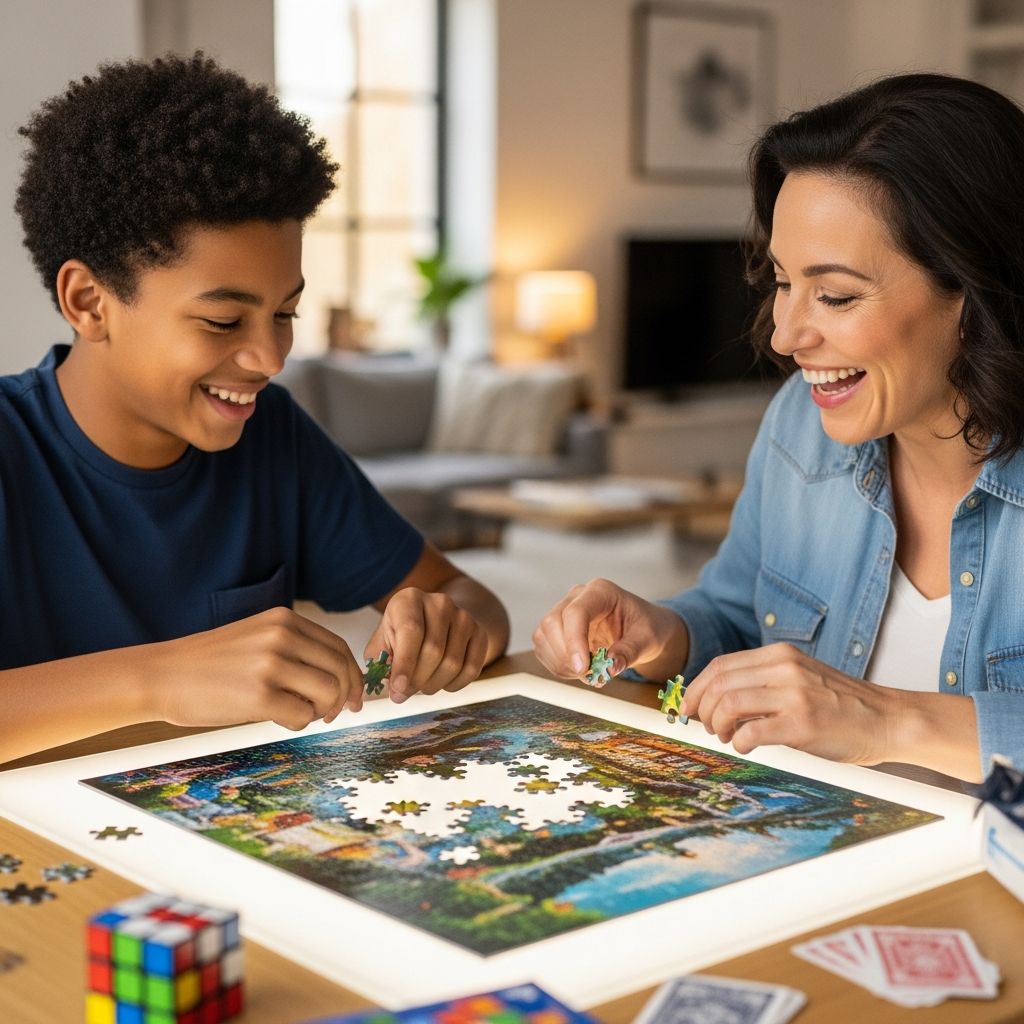
Teenagers often shut down when they feel cornered by “serious talks,” but they may open up naturally when their hands are busy and the focus is on something neutral. A jigsaw puzzle, logic puzzle, or casual board game shifts the spotlight from the relationship to a shared task, making conversation feel safer and more spontaneous.
Low-pressure bonding also respects a teen’s growing need for independence. You are inviting them into an activity, not demanding emotional vulnerability on command. Over time, the combination of predictability, shared problem-solving, and light conversation builds trust without dramatics.
Why Puzzles Work Especially Well With Teens
Puzzles combine structure and freedom in a way that fits the teen brain. There is a clear goal, but many ways to get there. This encourages cooperation while leaving plenty of room for autonomy and creativity. Teens can choose how long to stay, which parts to tackle, and how much they want to talk.
Unlike competitive games that can trigger insecurity or perfectionism, many puzzles offer collaboration instead of rivalry. Solving problems side by side reinforces the message: “We are on the same team,” a message teens rarely hear during conflicts about rules, grades, or chores.
Choosing the Right Puzzle or Game for Your Teen
Not every teen will enjoy the same type of puzzle, and pushing an activity they dislike can backfire. The goal is not to force your favorite hobby onto them but to find something that feels both accessible and genuinely interesting.
- Match their attention span: Start with smaller or simpler puzzles if your teen is busy or easily frustrated. You can always increase difficulty later.
- Honor their interests: Look for images or themes that reflect what they love—music, space, maps, animals, books, or favorite movies.
- Vary the format: Mix traditional jigsaw puzzles with word puzzles, logic challenges, escape-room-in-a-box games, and cooperative board games.
- Mind the aesthetics: Teens tend to care about design. Choose puzzles and games that look modern, funny, or stylish instead of childish.
Setting Up a Welcoming Puzzle Space
The physical environment influences whether your teen wants to stick around. A puzzle table that feels inviting—not cluttered or stressful—gives them an easy excuse to linger for “just a few minutes,” which can turn into half an hour of connection without effort.
- Keep it semi-permanent: Use a corner of the dining table, a card table, or a puzzle mat so you can leave the puzzle out and return to it together.
- Pay attention to comfort: Provide decent lighting, comfortable chairs, and maybe a cozy blanket or two.
- Make snacks part of the ritual: Simple finger foods and drinks signal that this is relaxed, enjoyable time, not another chore.
- Leave an open invitation: Start on your own and let them see the puzzle taking shape; curiosity often does the rest.
How to Invite Your Teen Without Pressure
The way you extend the invitation can matter more than the activity itself. Teens are quick to resist anything that smells like manipulation or forced “quality time.” Aim for casual, respectful, and low-key.
- Avoid guilt trips such as “You never spend time with me anymore.” Instead, try neutral invitations like, “I’m starting this puzzle. Want to help for five minutes?”
- Give them an easy exit. Let them know they can come and go, so they do not feel trapped.
- Accept “no” gracefully. If they decline, respond with, “No problem. I’ll be here if you change your mind,” and actually mean it.
- Notice what times of day they are naturally more chatty or relaxed, and invite them then.
Turning Puzzle Time Into Connection (Without Making It Awkward)
The magic of puzzles is that conversation can arise naturally from the shared focus. You do not need a speech prepared; in fact, trying to engineer a “deep” talk can make things stiff. Instead, think of puzzle time as a series of small, gentle openings.
- Start with light topics: Comment on the puzzle image, ask about their music, or share a funny story from your day.
- Use open-ended questions: Instead of “Did you have a good day?” try “What was the best and hardest part of today?”
- Follow their lead: If they bring up a topic, resist the urge to take over with advice or judgment. Stay curious.
- Include comfortable silence: Not every moment needs words. Working quietly side by side can feel surprisingly intimate.
Hidden Skills Your Teen Builds While You Bond
While the primary goal is connection, puzzles and collaborative games also build skills that serve teens in school, work, and life. Framing the activity as “fun first, skills second” respects their autonomy and avoids making the puzzle feel like homework.
| Skill | How Puzzles Help | Real-Life Benefit |
|---|---|---|
| Patience | Teens learn to tolerate frustration as they search for pieces that do not show up right away. | Increases persistence with long-term projects and goals. |
| Problem-solving | They practice trying new strategies, correcting mistakes, and thinking in patterns. | Improves decision-making in academics and everyday life. |
| Communication | They explain their thinking, ask for help, and negotiate roles. | Builds confidence in expressing needs and opinions. |
| Collaboration | Solving together teaches them to share credit and cooperate without competition. | Helps in group projects, family decisions, and future workplaces. |
| Emotional regulation | The slow pace and clear structure can be calming after a stressful day. | Supports healthier coping strategies than constant scrolling or conflict. |
Conversation Starters That Feel Natural
Many parents freeze when it is finally quiet and they have their teen’s attention. A few gentle prompts in mind can help keep the flow going without interrogating your child. Think of conversation as an invitation, not an interview.
- “If you could design your own puzzle image, what would it be and why?”
- “What is something you wish adults understood better about being a teenager now?”
- “What is the most interesting thing you learned this week, in or out of school?”
- “If you could pause time for a day, how would you spend it?”
- “What is one small thing that would make school or home life easier right now?”
Respecting Boundaries While Staying Present
True bonding requires respect for your teen’s emotional boundaries. Not every puzzle session will turn into a heart-to-heart, and that is perfectly fine. The consistency of your presence is often more powerful than any single conversation.
- Do not push for details if they seem closed off. A simple, “I’m here if you ever want to talk,” can be more effective than repeated questions.
- Avoid using information they share during puzzle time as ammunition in future arguments.
- Balance light topics and serious ones. It is okay if you mostly talk about shows, memes, or random facts.
- Remember that even if they do not say much, they are observing how safe and steady you feel.
Adapting Puzzle Time for Different Personalities
Every teen is unique. What feels cozy and fun to one might feel overwhelming or boring to another. The key is flexibility. Use puzzles as a starting point, then adjust according to how they respond over time.
- For introverted teens: Keep groups small, perhaps just the two of you, and allow long stretches of quiet.
- For highly social teens: Turn puzzles into occasional group nights with friends or siblings, with music and snacks.
- For competitive teens: Introduce timed mini-challenges (like who can sort all the edge pieces fastest) but keep the tone playful.
- For anxious teens: Choose calm, visually soothing images and avoid making speed or difficulty the focus.
If Your Teen Hates Puzzles: Alternatives With the Same Benefits
Some teenagers truly dislike puzzles, and insisting on them may send the wrong message. The good news is that many other activities mimic the same qualities that make puzzles effective: shared focus, low stakes, and gentle conversation.
- Cooperative board games where players win or lose together.
- Cooking or baking side by side, especially simple recipes you can repeat.
- Building models, miniature kits, or simple DIY projects.
- Drawing, coloring, or working in separate sketchbooks at the same table.
- Casual card games that can be played while talking.
Managing Your Own Expectations
Parents sometimes imagine a perfect bonding scene: long conversations, laughter, and a teen who suddenly shares all their feelings. Real life is messier. Some nights your teen will be grumpy, distracted, or uninterested, and that does not mean the effort is wasted.
- Measure success by presence, not by depth of conversation. Sitting together for 20 quiet minutes can still strengthen your bond.
- Let go of the idea that each moment has to be memorable. Connection grows from many small, ordinary interactions.
- Be patient with yourself. You are also learning a new way to relate to your growing child.
Sample Weekly Rituals to Try
Rituals give structure to connection, turning good intentions into habits. You do not need an elaborate plan; a simple recurring time can gradually become something your teen counts on, even if they never say so aloud.
- Midweek reset night: Choose one weeknight for an hour of puzzle time, snacks, and no homework talk.
- Weekend coffee and clues: Work on a crossword, logic puzzle, or trivia game together on weekend mornings.
- Holiday tradition: Start a tradition of buying one new puzzle each holiday season and finishing it as a family.
- Drop-in station: Keep a puzzle ongoing on a common table so anyone can add a few pieces while passing by.
Frequently Asked Questions
How long should a puzzle session last with a teen?
There is no ideal length. Aim for short, positive experiences rather than marathon sessions that leave everyone tired or irritated. Ten to twenty minutes of relaxed time together is far more valuable than an hour that ends in frustration.
What if my teen only joins for a few minutes?
That still counts as connection. A quick check-in over a puzzle piece or two may feel small, but these micro-moments add up. Respond with warmth rather than disappointment; the more welcomed they feel, the more likely they are to stay longer next time.
Can puzzle time replace serious conversations?
No activity can replace direct discussions about safety, values, or important family decisions. However, puzzle time can make those conversations easier later because it builds a foundation of trust and familiarity. It is an addition to, not a substitute for, necessary talks.
What if my teen talks about something serious during a game?
Stay calm, listen more than you speak, and avoid reacting with shock or immediate lectures. You can say something like, “Thank you for telling me; I want to think about this so we can talk more,” and then follow up at a later point when you have both had time to process.
How do I keep my teen off their phone during puzzle time?
Instead of banning phones outright, invite them into a phone-light space. You might agree together to put devices face down nearby or use them only for music. The goal is to model balance rather than control every moment of their attention.
Small Steps, Lasting Impact
Bonding with a teenager does not require dramatic trips or expensive experiences. Often, the quiet, consistent rituals—a puzzle on the table, a game after dinner, a shared laugh over a tricky piece—create the deepest sense of security. Your teen may not always show it, but your steady presence communicates, over and over: “You matter, and I like being with you.”
In a world that pulls families in a hundred directions, choosing to sit at the same table, focused on the same small task, is a powerful act of love. Piece by piece, game by game, you are building something larger than any puzzle: a relationship that can withstand the changes and challenges of the teen years and beyond.