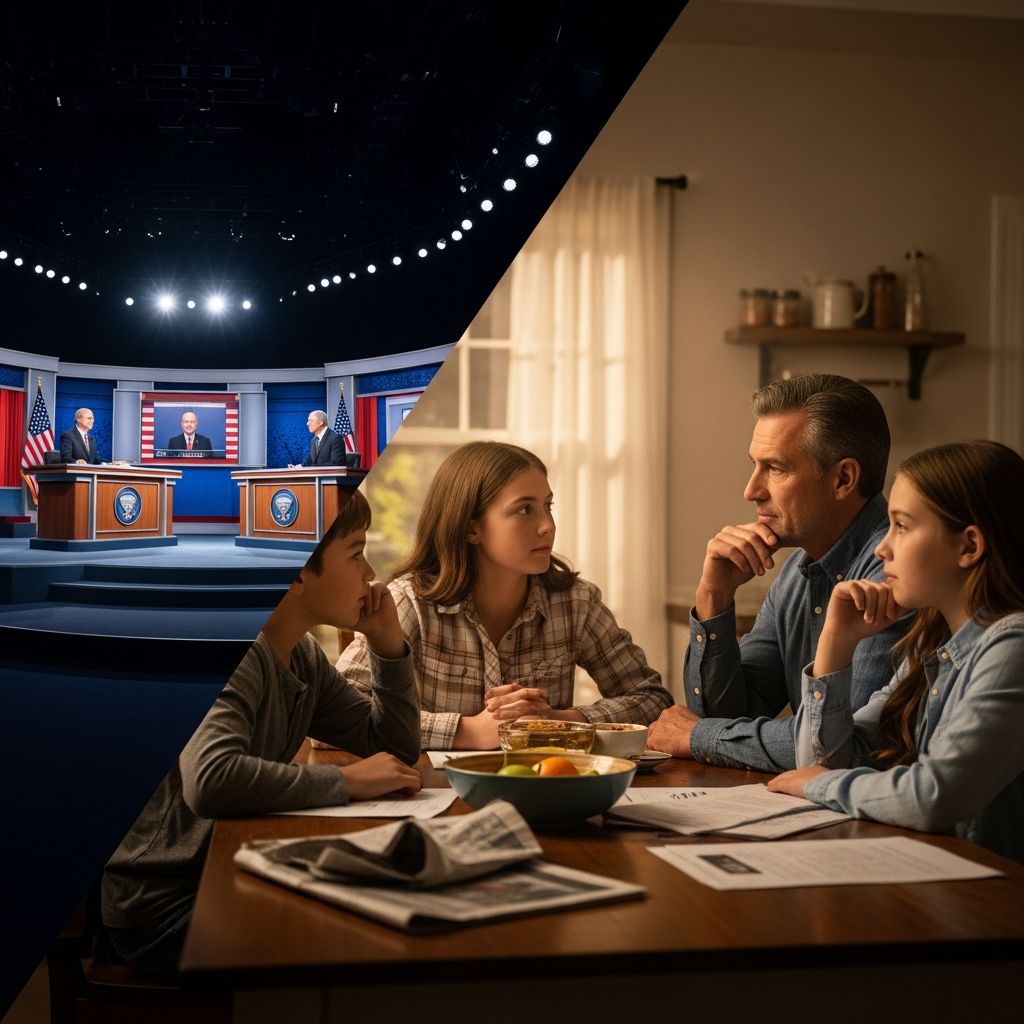
Presidential debates represent pivotal moments in American democracy, drawing millions of viewers to witness candidates clash on critical issues. Yet, for families with children and teens, these events hold untapped potential as powerful educational tools. Recent studies reveal that while many parents tune in, few involve their kids, missing chances to build civic literacy and critical thinking skills at home. This article delves into the dynamics of family viewing, historical context, content concerns, and practical ways to make debates family-friendly learning experiences.
The Educational Power of Shared Debate Viewing
Watching presidential debates together can spark intergenerational dialogues that shape young minds. According to a comprehensive survey by the Annenberg Public Policy Center (APPC), only a fraction of parents fully capitalize on this. For the 2024 Biden-Trump debate, just 13% of parents with 13- to 22-year-olds watched and discussed it with their children. The Harris-Trump debate saw a slight uptick to 19%, but still, the majority overlooked this ‘teachable moment’.
Experts emphasize that co-viewing fosters shared media experiences. R. Lance Holbert, director of the Leonore Annenberg Institute for Civics, notes that debates allow families to dissect civility, candidate qualifications, character, fact accuracy, and policy positions. Parents who engaged reported rich conversations covering multiple topics, enhancing children’s understanding of democratic processes.
Survey Insights: A Steep Drop-Off in Family Engagement
APPC’s nationally representative surveys provide granular data on parental habits. Among parents with young people at home:
- 67% watched or listened to parts of the Biden-Trump debate.
- Only 23% of those did so with a child present.
- 86% of co-viewers then discussed it, yet overall engagement totaled just 13%.
For the Harris-Trump event:
- 66% consumed some content.
- 30% viewed with family.
- 97% discussed afterward, reaching 19% total.
This pattern highlights a common barrier: while solo viewing is prevalent, inviting kids into the room and extending to talks is rare. Holbert points out that half of viewers watch with others generally, but intergenerational co-viewing lags significantly.
Historical Evolution of Debates in Family Settings
The first televised presidential debate in 1960 between John F. Kennedy and Richard Nixon transformed political engagement. Attracting 60% of TV-owning households, it prompted lively family discussions. Personal accounts recall siblings and parents debating candidates’ appearances and arguments, turning living rooms into mini forums.
Over decades, debates have evolved with issues like jobs, national security, and terrorism. The 2016 Trump-Clinton clashes at Hofstra University, moderated by Lester Holt, covered economic policies and threats, drawing college audiences and sparking youth interest. These events underscore debates’ role in family-style civics education.
Navigating Inappropriate Content: Parental Dilemmas
Not all debates suit young audiences. The 2016 debates featured mudslinging, sexual assault allegations, and heated exchanges on race and gender, prompting parental hesitation. A Highlights magazine survey found 80% of kids aged 6-12 discuss elections at home, yet many parents barred them from viewing due to uncensored rhetoric.
Common Sense Media urged moderators to steer clear of unfit topics and curb interruptions, arguing kids have the biggest stake in outcomes. CEO Jim Steyer stressed that debates should not be deemed inappropriate for under-17s, criticizing insults as poor role models. Today, parents weigh age-appropriateness against educational value.
| Debate Year | Key Content Issues | Parental Concerns | Family Viewing Rate (Est.) |
|---|---|---|---|
| 1960 (Kennedy-Nixon) | Policy, appearance | Minimal; family norm | High (60% households) |
| 2016 (Trump-Clinton) | Mudslinging, allegations | High; explicit topics | Variable; many opted out |
| 2024 (Biden/Trump-Harris) | Civility, facts, issues | Moderate; engagement low | 13-19% full |
Strategies for Making Debates Family-Friendly
To bridge the engagement gap, parents can adopt proactive approaches. Start by previewing content via summaries from reliable outlets. Set viewing rules: pause for explanations, mute during tense moments, or watch edited highlights.
Post-debate, facilitate structured talks:
- Fact-Check Together: Use nonpartisan sites to verify claims.
- Explore Issues: Relate topics like economy or security to family life.
- Discuss Values: Analyze civility and character without bias.
- Encourage Questions: Let kids lead on what confuses them.
For younger children, frame debates as stories of leadership choices. Teens benefit from deeper dives into policy implications. These steps transform passive viewing into active learning.
Benefits for Children’s Civic Development
Engaging kids in debates cultivates lifelong skills. They learn media literacy, discerning spin from substance. Discussions model respectful disagreement, countering online echo chambers. Surveys show involved families cover broad topics, from qualifications to accuracy, building informed citizens.
Long-term, this counters apathy. With youth voter turnout historically low, home-based civics can inspire participation. Historical examples, like 1960s family debates, illustrate how early exposure fosters political awareness.
Overlooked Policy Gaps: Family Matters in Debates
Debates often sideline family-centric issues like childcare, parental leave, and education funding. In 2024, economic talks touched inflation but rarely family supports. Advocacy groups note this ‘lost in the shuffle’ dynamic, urging candidates to address household realities. Parents can use this to teach advocacy, discussing how policies impact daily life.
Frequently Asked Questions (FAQs)
What age is appropriate for watching debates?
Children 10+ can handle edited versions; under 10s benefit from simplified recaps. Assess maturity and preview content.
How do I handle biased reactions from kids?
Encourage evidence-based views. Co-fact-check claims to promote neutrality.
Are debates too negative for kids?
They showcase real politics. Use as lessons in resilience and critical analysis.
What if my teen disagrees politically?
Celebrate debate. It builds empathy and reasoning skills.
How often should we discuss politics at home?
Regularly, tied to events like debates, to normalize civic engagement.
Conclusion: Seize the Next Teachable Moment
Presidential debates are more than spectacles—they’re family gateways to democracy. By watching and talking together, parents empower kids with tools for informed citizenship. The data is clear: most miss out, but you don’t have to. Next cycle, make it a household tradition.
References
- Presidential Debates Were a Missed Opportunity for Parents — Annenberg Public Policy Center. 2024-10-01. https://www.annenbergpublicpolicycenter.org/presidential-debates-were-a-missed-opportunity-for-parents/
- How to Decide Whether Your Children Can Handle Tonight’s Presidential Debate — ABC News. 2016-10-19. https://abcnews.com/Politics/decide-children-handle-tonights-presidential-debate/story?id=42905166
- Debating the candidates, family style — Smithsonian National Museum of American History. 2020-09-26. https://americanhistory.si.edu/explore/stories/debating-candidates-family-style