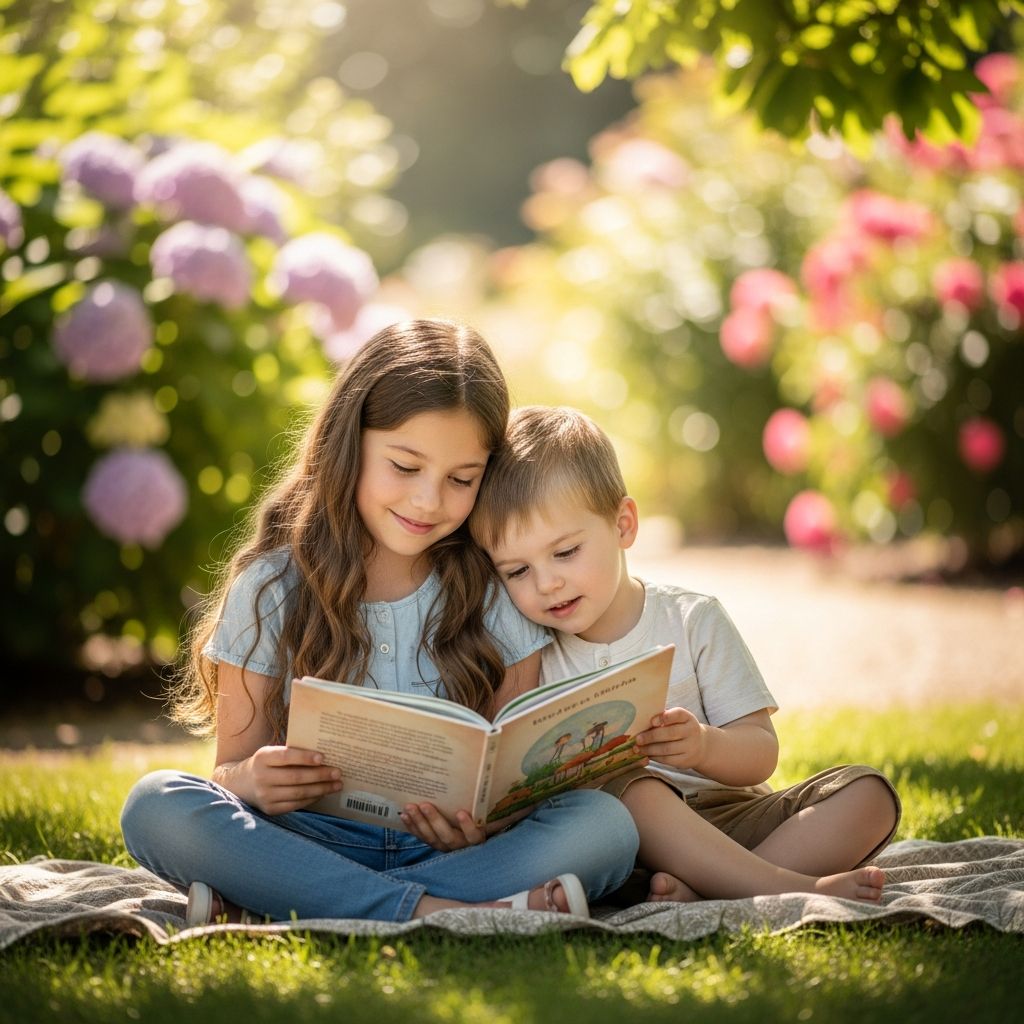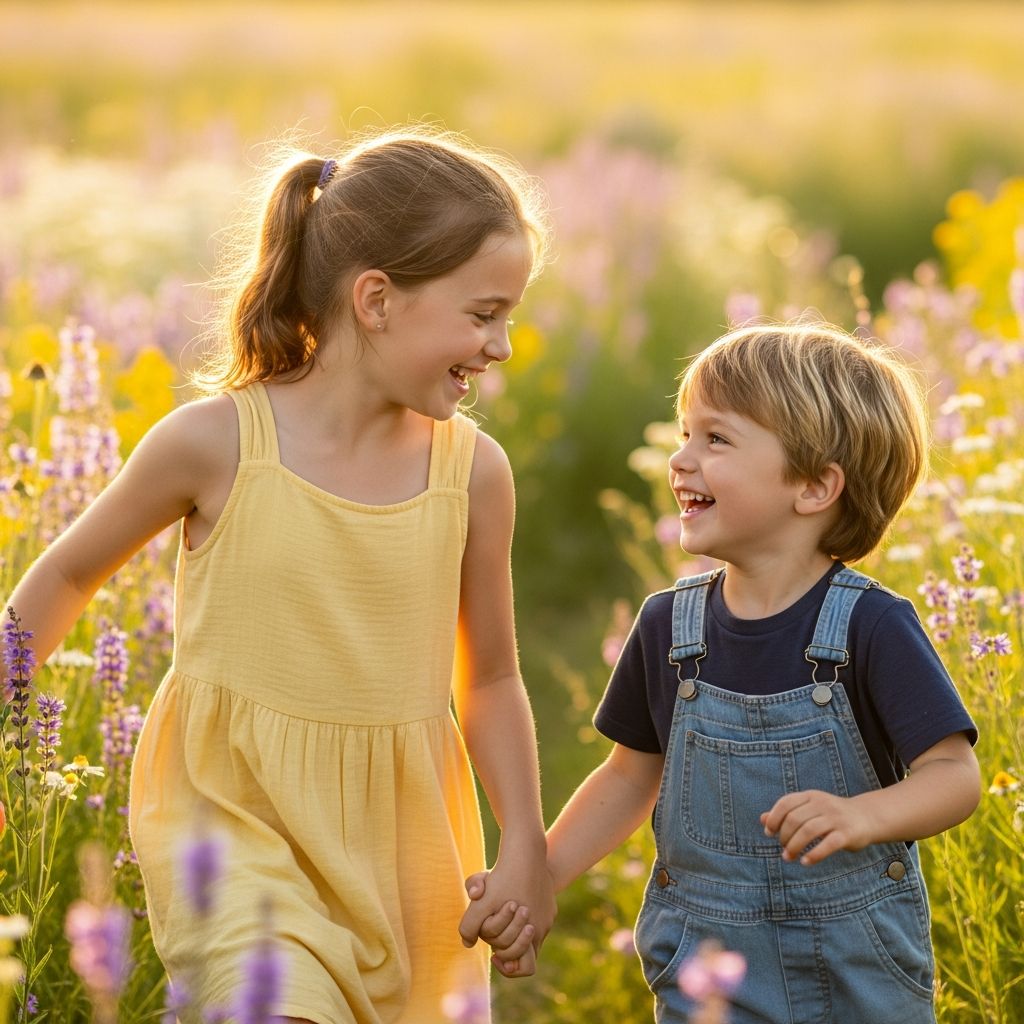
Siblings can be each other’s fiercest rivals and most loyal allies. As a parent, you cannot control every interaction, but you can shape the emotional climate that turns daily clashes into the raw material of a strong, lifelong bond.
Why Sibling Bonds Matter More Than You Think
Brothers and sisters often know each other longer than anyone else in their lives, sharing family stories, private jokes, and the experience of growing up under the same roof. A warm sibling relationship offers companionship, emotional support, and a sense of belonging that can last well into adulthood.
When children learn to cooperate, negotiate, and repair hurt feelings with their siblings, they practice skills that transfer to friendships, romantic relationships, and the workplace. The home becomes a safe laboratory for learning how to manage big emotions and competing needs while still staying connected.
The Parent’s Hidden Influence
Children bring their own temperaments and personalities into a sibling relationship, but parents provide the framework within which those traits interact. The way adults handle conflict, anger, and differences sets the template that children will unconsciously imitate with each other.
When a parent consistently responds with calm limits, empathy, and fairness, siblings are more likely to feel secure and less pressured to compete for love and attention. Over time, this reduces rivalry and makes cooperation feel more rewarding than winning at a sibling’s expense.
| Parenting Pattern | Typical Sibling Outcome |
|---|---|
| Frequent comparisons (\”Why can’t you be more like…\”) | Increased jealousy, competition, and resentment |
| Staying neutral and coaching both sides | Better problem-solving and reduced blaming |
| Taking sides or assigning a \”good\” and \”bad\” child | Fixed roles, grudges, and power struggles |
| Modeling respectful disagreement with other adults | More respectful conflict and easier repair between siblings |
Creating a Home Culture of \”Team Family\”
To move siblings from rivalry toward partnership, it helps to frame the family as a team. Each child has a unique role and value, and victories and losses are shared rather than tallied against one another.
When children see themselves as being on the same side, they are more likely to offer help, stand up for each other socially, and experience pride in each other’s successes instead of envy.
Simple Ways to Reinforce the Team Mindset
- Use inclusive language such as \”In our family, we help each other\” instead of \”Be nice to your brother.\”
- Celebrate joint successes (\”You both cleaned up so fast together\”) rather than praising only the fastest or neatest child.
- Offer group rewards occasionally, like choosing a family game night when both children contribute to a shared goal.
- Emphasize that every family member has strengths that help the whole household work better.
Balancing Connection and Individual Attention
Children are more likely to resent their siblings when they feel starved for connection with a parent. Quality one-on-one time communicates, \”You matter for who you are,\” reducing the urge to compete or undermine a brother or sister.
At the same time, experiences shared with both children together create common memories and a sense of \”us\” that can carry them through rough patches.
Practical Ideas for Connection
- Daily \”micro-moments\” of presence: a five-minute chat at bedtime, a shared joke in the car, or a hug and check-in after school.
- Regular one-on-one rituals: a weekly walk with one child, a special breakfast, or working on a small project that taps into that child’s interests.
- Shared sibling rituals: a Friday night game, a silly handshake, or a regular \”siblings choose the movie\” night.
Helping Children Understand Their Feelings About Each Other
Loving a sibling and feeling annoyed, jealous, or resentful of them can coexist. Children need help naming and normalizing these mixed emotions so they don’t feel guilty or ashamed when they struggle to get along.
When adults welcome difficult feelings instead of dismissing them, children learn that emotions are signals to be understood, not problems to be hidden or acted out through aggression.
Emotion Coaching in Everyday Language
- Reflect what you see: \”You look really frustrated that your sister knocked over your tower.\”
- Normalize the feeling: \”It’s okay to feel angry when that happens.\”
- Guide toward safe action: \”You can tell her with your words, not your hands, and we can figure out how to rebuild.\”
- Invite perspective-taking: \”If that happened to you, how do you think you would feel?\”
Transforming Sibling Conflict Into Learning
Arguments between siblings are not signs of failure; they are practice for the real world. The goal is not to eliminate conflict altogether but to help children move from hitting and blaming toward listening, negotiating, and repairing.
When parents step in as calm coaches instead of judges, children gradually learn the skills to manage disagreements themselves. This takes repetition and patience but often pays off in more respectful interactions over time.
Step-by-Step Conflict Coaching
- Ensure safety first. If things are physical or intense, separate the children briefly so bodies can calm down.
- Listen to each side. Give each child a chance to explain what happened without interruptions, even if their stories contradict each other.
- Reflect and validate feelings. Name emotions and show that you understand why each child is upset.
- Clarify needs. Ask questions like \”What were you hoping would happen?\” or \”What do you need right now to feel better?\”
- Invite solutions. Encourage the children to propose ideas for how to fix things and move forward.
- Agree on a plan. Help them choose a solution that feels reasonably fair to both, and follow through.
When Not to Play Referee
Stepping in is essential for safety and when emotions or power differences are extreme. However, constantly assigning blame or deciding who is \”right\” can make things worse, because children learn to perform for the adult’s approval rather than take responsibility for their own part.
When a disagreement is relatively minor and both children are reasonably regulated, it can help to stay close but neutral, offering reminders about respectful language and checking in only if they seem stuck.
Reducing Comparisons and Labels
Labels like \”the smart one,\” \”the shy one,\” or \”the troublemaker\” may seem harmless, but they create invisible roles that shape how siblings see themselves and each other. Children may feel trapped, either pressured to maintain a positive label or convinced they can never escape a negative one.
Frequent comparisons feed rivalry by implying that love and approval must be earned through superiority. Instead, focusing on each child’s individual growth allows room for everyone to shine without stepping on someone else’s light.
Language Shifts That Change the Atmosphere
- Swap \”You’re the smart one\” for \”You worked hard on that puzzle and figured it out.\”
- Replace \”Your brother is the athletic one\” with \”You both move your bodies in different ways; you love dancing and he loves soccer.\”
- Notice process, not personality: \”You kept trying even when it was hard,\” rather than \”You’re the talented one.\”
- Talk directly to each child instead of comparing them to their sibling’s behavior or achievements.
Handling Jealousy and New Arrivals
Jealousy is common when a new baby arrives or when one child seems to receive more attention, opportunities, or praise. Ignoring jealousy does not make it disappear; it tends to resurface as teasing, aggression, or withdrawal.
Parents can soften jealousy by acknowledging it openly and offering specific reassurance. Children who feel seen in their discomfort are less likely to act it out in destructive ways.
Supporting the Older Child When a Baby Joins the Family
- Give the older child clear ways to be involved, such as bringing a diaper, choosing a lullaby, or showing the baby a toy, while making it optional rather than mandatory.
- Protect special one-on-one time, even if brief, so the older child knows that the baby has not replaced them in your heart.
- Put jealousy into words: \”Part of you likes being a big brother, and part of you misses when you had more of my time.\”
- Avoid saying \”You’re my helper now\” in ways that load the child with adult responsibilities or emotional burdens.
Building Everyday Opportunities for Cooperation
Siblings will not suddenly become cooperative because adults tell them to get along. They need repeated experiences of working together toward shared goals and discovering that collaboration can be fun.
Rather than only intervening when there is a problem, intentionally create situations where helping, sharing, and teamwork are the easiest path forward.
Cooperative Activities to Try
- Joint projects: building a fort, putting together a large puzzle, or creating a shared artwork where each child adds something.
- Partner chores: one child washes dishes while the other dries, or they work together to sort laundry by colors.
- Silly challenges: timing how fast they can clean the living room together, or inventing a game where they can only win if they help each other.
- Story-building: taking turns adding sentences to an ongoing story about imaginary characters who must cooperate to solve a problem.
Respecting Differences in Age and Temperament
No two children are alike, and expecting siblings to interact as if they were the same age or had identical personalities can create frustration for everyone. A toddler’s impulsive grabbing is different from a tween’s eye-rolling, even if both upset a sibling.
Adjusting expectations to each child’s developmental stage helps adults respond with appropriate guidance rather than blanket rules that feel unfair or impossible to follow.
Age-Aware Strategies
- Give older children safe ways to get space, such as keeping special items out of reach of younger siblings or having a designated \”no little kids\” zone.
- Teach younger children simple phrases like \”Mine,\” \”My turn,\” or \”Help please\” so they can assert themselves with words instead of hitting.
- Explain to older siblings that younger children need more supervision and may get more hands-on help, while emphasizing that their own needs matter just as much.
- Offer responsibilities as invitations, not obligations, and be clear that adults remain in charge of safety and discipline.
Repair: The Secret Ingredient of Close Sibling Relationships
Even in nurturing families, siblings will hurt each other’s feelings or cross boundaries. What matters most is not the absence of conflict but the ability to repair. Learning to say \”I’m sorry\” and \”Can we try again?\” is a cornerstone of deep, resilient connection.
Parents can model repair by apologizing when they lose their own temper and by guiding children through the steps of making amends in authentic, age-appropriate ways.
Guiding Children Through Making Amends
- Help the child name what happened: \”I grabbed the toy and pushed you.\”
- Encourage ownership: \”That wasn’t okay, and I want to fix it.\”
- Support a sincere apology: \”I’m sorry I hurt you,\” accompanied by eye contact if possible.
- Brainstorm amends: offering to rebuild a structure, share a toy, or spend time playing a game the hurt sibling chooses.
- Remind both children that everyone makes mistakes and that relationships can grow stronger through honest repair.
Frequently Asked Questions About Sibling Bonds
Is constant bickering a sign that something is wrong?
Occasional bickering is a normal part of growing up with siblings. It often reflects tiredness, hunger, or developmental stages rather than deep relational problems. What deserves attention is any pattern of ongoing bullying, fear, or one child consistently having far less power or voice than the other.
Should siblings always be forced to share?
Requiring children to share everything can make them cling tighter to their possessions and resent each other. A more balanced approach is to allow some personal items that do not have to be shared, while encouraging turn-taking and generosity with shared toys and spaces.
What if one child always seems to be the aggressor?
When one sibling frequently initiates aggression, it is important to look beneath the behavior. That child may be struggling with impulse control, anxiety, or a sense of not feeling valued. Clear limits, consistent consequences, and increased connection usually work better than shaming or labeling them as \”the mean one.\”
Can older kids repair a rocky sibling relationship from childhood?
Relationships between siblings often shift during adolescence and adulthood. Even if childhood was marked by rivalry or distance, it is possible to rebuild connection later through honest conversations, new shared experiences, and gradual rebuilding of trust.
How involved should parents be in teen sibling conflicts?
As children grow older, they need more space to negotiate conflicts themselves. Parents can stay available as sounding boards, intervene when there is real risk of harm, and continue to set expectations for respect while respecting growing independence.
Planting Seeds for a Lifelong Alliance
Strong sibling relationships are built through repeated, small moments rather than grand gestures. Every time a parent chooses empathy over judgment, invites cooperation instead of competition, or guides children through repair rather than punishment, they lay another brick in the foundation of a lifelong alliance.
No family is perfect, and no set of siblings gets along all the time. What matters is the overall pattern: a family culture that embraces big feelings, teaches respectful boundaries, and keeps reminding each child that they belong, both as individuals and as part of a team that will carry them far beyond childhood.