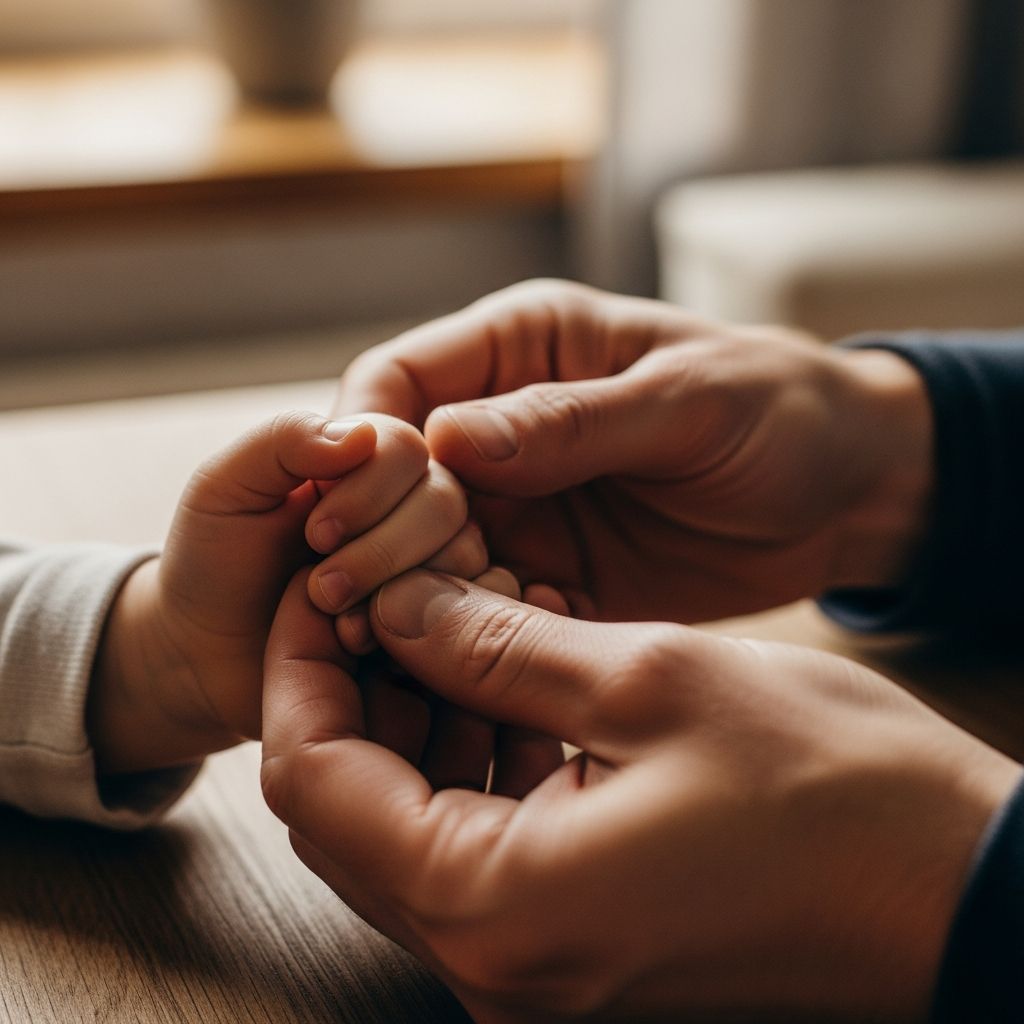
The Profound Impact of Parenthood on Personal Courage
When individuals transition into parenthood, they often experience a fundamental shift in how they perceive themselves and their capabilities. This transformation extends far beyond the immediate responsibilities of caring for a child. The psychological and emotional evolution that accompanies parenthood creates a unique catalyst for developing what many describe as a newfound sense of courage and determination. This courage manifests not as fearlessness, but rather as a willingness to confront challenges head-on while protecting and advocating for those who depend on them. The journey from individual to parent reshapes priorities, clarifies values, and fundamentally alters one’s approach to decision-making and risk assessment.
Understanding Courage in the Context of Parental Responsibility
Courage traditionally has been understood as the absence of fear, but parenthood redefines this concept entirely. Becoming a parent introduces a new framework for understanding bravery—one that acknowledges fear while moving forward anyway. Parents discover they must advocate for their children’s needs, make difficult decisions with incomplete information, and stand firm in their convictions even when facing external pressure or criticism. This practical, everyday form of courage differs significantly from dramatic displays of bravery. It involves speaking up for what matters, setting boundaries, and prioritizing family welfare over social acceptance or professional advancement when necessary. This recalibration of what courage means creates a more grounded, authentic understanding of personal strength.
Risk-Taking and Decision-Making Transform
Parenthood fundamentally alters how individuals approach risk and uncertainty. Before becoming parents, many people may take calculated professional risks or personal gambles without fully considering long-term consequences. The addition of dependent children introduces a new calculus to decision-making. Parents become more thoughtful about their choices, understanding that their actions have ripple effects extending to vulnerable family members who rely on their judgment and stability. This doesn’t necessarily mean parents become paralyzed by caution; rather, they develop a more sophisticated understanding of acceptable risk versus reckless behavior. This evolution in perspective often translates into better professional decisions, more intentional life choices, and a clearer sense of purpose. The courage parents develop includes the strength to say no to opportunities that don’t align with family values, and the boldness to pursue paths that genuinely matter despite external skepticism.
Emotional Resilience and Vulnerability
Parenthood creates an unusual paradox: as parents become more courageous in some domains, they simultaneously become more vulnerable in others. The depth of love and commitment to one’s children opens parents to profound emotional experiences they may never have encountered before. This vulnerability—the willingness to feel deeply and risk emotional hurt—represents a different but equally important form of courage. Parents learn to sit with discomfort, process difficult emotions, and maintain composure during crises affecting their children. They develop the courage to admit mistakes, apologize sincerely, and model emotional authenticity for their children. This emotional resilience, built through countless moments of challenge and growth, strengthens parents’ ability to navigate not just family situations but professional and personal difficulties throughout their lives.
Advocacy and Standing Up for What Matters
One of the most tangible ways parenthood cultivates courage involves advocacy and standing up for principles. Parents frequently find themselves defending their children’s interests, whether in educational settings, medical contexts, or social situations. This necessity to advocate creates a powerful precedent in parents’ lives—they become accustomed to speaking up, asking difficult questions, and challenging authority when their children’s wellbeing is at stake. Many parents report that this willingness to advocate for their children eventually extends to other domains of their lives. They become more likely to speak up in professional meetings, challenge unfair practices, and advocate for broader community improvements. The courage developed through parental advocacy often transforms not just individual lives but contributes to systemic change as parents become more politically and socially engaged.
Redefining Personal Success and Achievement
Parenthood reshapes what individuals consider successful living and personal achievement. Before becoming parents, success might have been defined by career advancement, financial accumulation, or personal accolades. The birth or adoption of children often recalibrates these definitions entirely. Parents recognize that true success involves raising compassionate, capable human beings, and this new definition of achievement requires different forms of courage. It takes courage to prioritize family time over career advancement, to make less money while maintaining better work-life balance, or to pursue a path less traveled because it better serves family values. This redefinition of success isn’t about abandoning ambition; rather, it’s about aligning ambition with deeper values. Parents often discover that this realignment creates a more authentic, fulfilling approach to personal development and life planning.
Navigating Criticism and External Judgment
Modern parenthood occurs within a landscape of constant scrutiny and judgment. Parents face opinions about their choices from family members, peers, social media strangers, and so-called experts. Developing courage to parent according to their own values and convictions, rather than seeking external validation, represents a critical growth area for many mothers and fathers. This courage involves trusting one’s instincts, making decisions based on family-specific circumstances, and weathering criticism without abandoning core principles. Parents who cultivate this form of courage report greater satisfaction with their parenting choices and stronger family relationships. They model for their children the importance of maintaining integrity despite external pressure, demonstrating that true strength involves staying true to oneself even when others disagree.
Building Confidence Through Small Victories
Parenting provides countless opportunities for building courage incrementally through small victories. Each time a parent handles a challenging situation—whether soothing a distressed child, enforcing a difficult boundary, or navigating a complex social situation—they strengthen their confidence reservoir. These daily experiences accumulate, creating a foundation of proven capability and resilience. Parents discover they’re more capable than they imagined: they can comfort without fixing, enforce limits without harsh punishment, and maintain composure during chaos. This evidence-based confidence differs from theoretical bravery; it’s built on actual experience and demonstrated competence. Over time, parents internalize these victories and begin approaching new challenges with greater assurance, knowing they’ve overcome similar difficulties before.
The Intersection of Caution and Boldness
Perhaps counterintuitively, parenting cultivates both greater caution and greater boldness simultaneously. Parents become more careful about certain things—safety practices, health decisions, financial planning—while simultaneously becoming bolder in other domains. This seemingly contradictory development actually reflects sophisticated maturity in risk assessment. Parents learn to distinguish between caution rooted in legitimate protective instincts and caution rooted in fear or habit. They become willing to take bold action when it serves their children’s development or family wellbeing, while maintaining appropriate vigilance about genuine dangers. This refined approach to courage and caution often extends beyond parenting, leading parents to make better decisions across all life domains by more accurately assessing which risks are worth taking and which warrant protection.
Key Elements of Parental Courage Development
- Advocacy Skills: Learning to speak up for children’s needs develops communication courage that extends to all life areas.
- Boundary Setting: Establishing and maintaining limits with children and others strengthens personal boundaries throughout life.
- Decision Confidence: Making parenting decisions despite uncertainty builds resilience and trust in judgment.
- Emotional Openness: Allowing oneself to feel deeply and vulnerably around children creates authentic courage.
- Value Alignment: Choosing parenting approaches that match personal values over social expectations builds integrity.
- Resilience Through Challenge: Navigating sleep deprivation, tantrums, and difficult phases builds genuine strength.
Long-Term Impact on Life Trajectory
The courage cultivated through parenthood often creates lasting effects on life trajectory. Parents who develop strong advocacy skills frequently become community leaders or social advocates. Those who learn to make decisions confidently despite uncertainty often become more effective in professional roles. The emotional resilience built through parenting provides a foundation for navigating other life challenges—health crises, career setbacks, relationship difficulties—with greater equanimity. Research in developmental psychology suggests that parents often experience significant personal growth that rivals or exceeds the developmental growth experienced by their children. This mutual transformation enriches not just family relationships but contributes to parents’ overall life satisfaction, career success, and ability to mentor others. The courage developed in one’s parenting years becomes a resource for addressing life’s subsequent challenges with greater wisdom and capability.
Challenging Common Misconceptions About Parental Courage
Several misconceptions exist about the nature of courage developed through parenthood. First, parental courage doesn’t mean never experiencing fear or doubt; rather, it means moving forward despite these feelings. Second, developing parental courage doesn’t require dramatic or extraordinary circumstances; it develops through ordinary parenting moments handled with intention and integrity. Third, parental courage isn’t exclusively a maternal experience; fathers and all parenting figures develop similar courage through their parenting journey. Finally, parental courage doesn’t diminish other forms of courage or personal strength; instead, it adds an additional dimension to an individual’s overall resilience and capability. Understanding these distinctions helps both parents and non-parents recognize and appreciate the genuine personal development that occurs through the parenting experience.
Frequently Asked Questions
Q: Does parental courage only develop in biological parents?
A: No, courage develops through all forms of parenting—biological, adoptive, foster, and guardianship. Any individual responsible for a child’s wellbeing experiences similar transformations in courage and resilience.
Q: Can people develop this type of courage without being parents?
A: Yes, courage develops through various forms of significant responsibility and vulnerability. However, parenthood provides a particularly intensive context where multiple dimensions of courage develop simultaneously.
Q: Does parental courage mean being fearless?
A: No, parental courage involves feeling fear while taking necessary action anyway. Parents often describe being terrified while simultaneously staying calm and capable in crisis situations.
Q: How long does it take to develop parental courage?
A: Parental courage develops incrementally throughout the parenting journey. Most parents report significant growth within the first year, with continued development as they navigate new parenting stages and challenges.
Q: Can parental courage transfer to professional and personal situations?
A: Absolutely, many parents report that advocacy skills, decision-making confidence, and emotional resilience developed through parenting directly enhance their professional effectiveness and personal relationships.
References
- Meghan Markle on motherhood: ‘It makes you more courageous’ — Fortune. 2020-10-14. https://fortune.com/2020/10/14/meghan-markle-motherhood-being-a-mom-archie-courage/
- Motherhood makes you more courageous, says Meghan Markle — Motherly. https://www.mother.ly/life/meghan-markle-motherhood-makes-you-courageous/
- Meghan Markle Says Archie’s Arrival Made Her ‘More Courageous’ — Town & Country. https://www.townandcountrymag.com/society/tradition/a34382398/meghan-markle-archie-motherhood-more-courageous-quote/