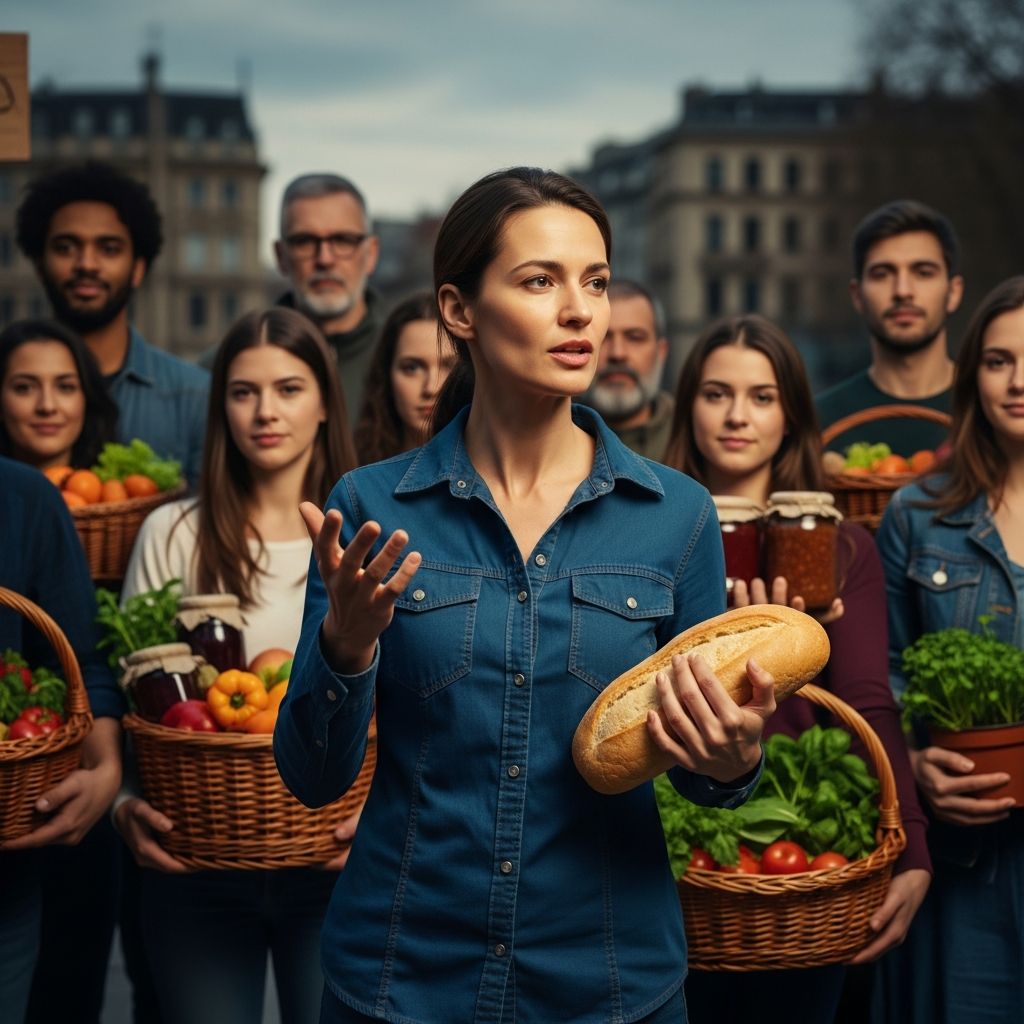
A typical morning in a busy household rarely feels historic, yet for one mother it became the turning point that reshaped her family’s life and helped ignite a broader movement for safer food. A child’s sudden and frightening allergic reaction forced her to look at what was really hiding on her pantry shelves, and the answers were more unsettling than she ever imagined. That moment did not turn her into a nutritionist or a chef; it awakened the analytical skills she had honed in finance and redirected them toward something far more personal: protecting her children.
This article is inspired by that journey and by the work of Robyn O’Brien, a former financial analyst and mom who challenged the way the food industry does business. It does not retell her story word for word. Instead, it draws on the themes of her experience—data, motherhood, courage, and corporate accountability—to offer a fresh, practical look at how everyday families can navigate a confusing food landscape and push for better options without needing a science degree or a limitless budget.
The Unexpected Food Detective: A Mom with a Spreadsheet
Many people imagine food activists as lifelong environmentalists or health professionals, yet some of the most powerful voices come from unlikely places. In this case, the central figure was a “numbers person” long before she was a “food person.” Her background was in finance and corporate analysis, where success depended on following trends, identifying risks, and asking uncomfortable questions about how money was made.
When her child’s health crisis hit, those same skills became tools for survival. Instead of accepting that food allergies were just bad luck, she began to treat the problem like a complex business puzzle. She compared ingredients between products, traced corporate ownership, and connected changes in the food supply with rising rates of allergies and chronic conditions. What began as a personal investigation soon revealed a pattern: many of the substances being added to everyday foods existed mainly to improve shelf life, color, texture, or profits—not necessarily health.
From Wall Street Metrics to Grocery Store Labels
For years, financial success in the food industry was often measured by efficiency: how cheaply companies could source ingredients, how long products could last on the shelf, and how reliably they could deliver the same appearance and taste. Chemical additives, flavor enhancers, and new forms of processing helped companies achieve those goals, and the metrics looked impressive on paper. But spreadsheets rarely show the long-term health implications of those choices.
As she dug into labels with the same determination she once reserved for balance sheets, this mother realized that modern processed food was built on a web of tradeoffs. Long ingredient lists, unfamiliar terms, and subtle changes in formulations created a system where parents could believe they were buying safe products without realizing how different they were from the foods of previous generations. The contrast between simple, whole ingredients and highly engineered products raised a basic question: if food is meant to nourish, why does it need to be so complicated?
Understanding the Rise in Food Sensitivities
One of the most alarming trends in many families today is the growing number of children experiencing food allergies and sensitivities. Classrooms, camps, and sports teams now routinely navigate nut-free zones, dairy-free snacks, and gluten-free alternatives. While some of this reflects better awareness and diagnosis, parents are also noticing that reactions seem more common and sometimes more severe than in decades past.
Inspired by her family’s ordeal, our central mother figure began to examine how the modern food environment might be contributing to these patterns. Instead of stopping at the name of an allergen, she asked deeper questions about what had changed in the way those foods were grown, processed, and packaged. She considered how additives, residues, and new protein structures could be interacting with developing immune systems in ways not fully understood. Her investigation did not claim to have all the answers, but it highlighted the gap between what families assume has been thoroughly tested and what has actually been studied.
Key Concerns in the Modern Food System
Not every family will respond to food the same way, but certain themes appear again and again in discussions about modern diets and health. Drawing inspiration from this mom-turned-advocate’s work, several clusters of concern emerge that can help parents ask sharper questions about what they buy and serve.
- Highly processed ingredients: Many packaged foods rely on refined flours, added sugars, and vegetable oils combined with gums, stabilizers, and emulsifiers to create attractive textures and long shelf lives.
- Invisible agricultural inputs: Pesticides, herbicides, and other farm chemicals may not appear on the label even though residues can remain on or in the final product.
- Novel food technologies: New forms of processing and altered proteins can enter the market faster than long-term, independent research can fully evaluate their potential impacts.
- Regulatory gaps: Different countries sometimes treat the same additives or production methods differently, leaving parents wondering why standards vary so widely if children’s biology is essentially the same.
For this mother, these concerns did not lead to panic but to a resolve to become more informed. She recognized that perfection is impossible, yet small, consistent shifts toward simpler, less manipulated foods could meaningfully reduce the burden of questionable substances in her children’s daily lives.
Balancing Budgets, Busy Schedules, and Better Choices
One of the myths about eating more thoughtfully is that it requires unlimited time and money. Parents already juggle work, school schedules, and countless responsibilities, and the idea of overhauling the pantry can feel overwhelming. The story that inspires this article is powerful precisely because it began from a place of ordinary constraints: a working mom with limited hours, a budget, and four kids to feed.
Rather than chasing perfection, she focused on high-impact changes that fit within her reality. She did not throw away every item in the kitchen or turn every meal into a gourmet production. Instead, she learned to prioritize, asking where the biggest sources of questionable ingredients might be and how to swap them out step by step. This practical, incremental approach turned what could have been a paralyzing problem into a series of manageable decisions.
Simple Swaps: A Practical Starting Point
Families who want to reduce risky or unnecessary additives do not need to start with complicated recipes. A few thoughtful swaps in commonly consumed foods can significantly improve overall quality without requiring dramatic lifestyle changes. The key is to identify products that are eaten frequently and look for versions with shorter ingredient lists, fewer synthetic additives, and more recognizable components.
| Everyday Item | Typical Version | Simple Upgrade |
|---|---|---|
| Breakfast cereal | Colorful, highly sweetened flakes or shapes | Low-sugar whole-grain cereal or plain oats with fruit |
| Yogurt | Pre-sweetened cups with flavors and dyes | Plain yogurt sweetened at home with fruit or a small amount of honey (for non-infants) |
| Snack crackers | Refined flour crackers with artificial flavors | Whole-grain crackers with minimal ingredients or nuts and seeds where appropriate |
| Drinks | Sugary sodas and juice cocktails | Water, sparkling water, or diluted 100% juice |
| Frozen meals | Highly processed entrées with long ingredient lists | Batch-cooked leftovers portioned and frozen at home |
By focusing first on the foods that appear daily—breakfast staples, snacks, and drinks—families can reduce exposure to certain additives without feeling like they have to reinvent every meal. Over time, these small choices can add up to a significantly cleaner overall pattern of eating.
Reading Labels Like an Analyst
One of the most empowering lessons from the story at the heart of this article is that parents can learn to skim a label almost as quickly as an analyst can scan a financial report. The goal is not to memorize every chemical term but to recognize red flags and make more informed comparisons. With a little practice, what once looked like a wall of text becomes a map of how the product was built.
- Count the components: A long ingredient list does not automatically mean a product is harmful, but extremely long lists often signal heavy processing and multiple additives.
- Watch for vague terms: Words like “artificial flavor” or “color added” provide little detail about the actual substances used.
- Notice order: Ingredients are listed from most to least; if sugars or refined grains are near the top, that shapes the product’s nutritional profile more than the healthy-sounding elements near the bottom.
- Compare versions: Holding two similar products side by side often reveals significant differences in sugar levels, additives, and quality of ingredients.
Adopting this mindset turns grocery shopping into an active decision-making process rather than a passive habit. Parents do not need to fear every aisle; they simply gain the confidence to navigate them with a clearer sense of what matters most to their family.
From Private Worry to Public Voice
Initially, this mother’s investigation was intensely personal—she wanted answers for her own children. But as she learned more about how food was produced and marketed, silence began to feel like complicity. Her financial background had taught her how markets respond when consumers change behavior, and she realized that every shopping cart is a form of feedback to the industry.
She began sharing her findings and concerns with friends, then with wider audiences, gradually moving from private outrage to public advocacy. She wrote, spoke, and answered questions from other worried parents who felt equally overwhelmed. Along the way, she encountered pushback and criticism, especially from those with a financial stake in maintaining the status quo. Yet the same resolve that had fueled her research helped her weather the backlash, reminding her that the health of real children—not the comfort of corporations—was the non-negotiable priority.
Leading with Data and Compassion, Not Fear
A defining feature of this mother’s approach was her refusal to stay in a place of panic. While the information she uncovered was troubling, she recognized that fear alone rarely leads to constructive change. Instead, she combined data-driven analysis with a deep sense of compassion, using both to help families move from helplessness to action.
Her message emphasized progress, not perfection. Some families can afford more organic or locally grown foods; others must prioritize only a few key items. Some have access to farmers’ markets; others rely mainly on discount grocers. By acknowledging these realities and centering love for children rather than rigid ideology, she created space for a wide range of people to participate in the push for better food.
Everyday Activism in the Aisles
Not everyone wants to become a public advocate, but every parent can practice a form of quiet activism through daily choices. When enough families shift even a small portion of their spending toward cleaner, more transparent products, companies take notice. The growth of lines featuring simpler ingredients, fewer additives, and clearer sourcing reflects a real demand signal from consumers who are paying attention.
- Vote with purchases: Buying from brands that prioritize transparency and safer ingredients shows the market that these values matter.
- Ask questions: Reaching out to companies about sourcing, additives, or labeling practices can encourage them to reconsider their formulations.
- Support better policies: Staying informed about labeling laws and food safety regulations enables parents to lend their voices when reforms are proposed.
- Share knowledge gently: Passing along what you learn to friends and family, without judgment, helps build a broader culture of awareness.
This form of activism does not require a microphone or a podium. It happens in kitchens, lunchrooms, and online communities where ordinary people trade tips, recipes, and encouragement while navigating the same complex environment.
Raising the Next Generation of Food-Literate Kids
One of the most hopeful parts of this narrative is the way it transforms a frightening event into a teaching opportunity for children. When parents learn to question what is in their food and why it was produced that way, they can pass that curiosity on to the next generation. Food literacy becomes as essential as financial literacy—a set of skills that empower kids to make wiser choices as they grow more independent.
Instead of presenting healthy eating as a list of strict rules, this mother engaged her children in age-appropriate conversations about ingredients, cooking, and where food comes from. She allowed them to help read labels, choose recipes, and experiment in the kitchen. In doing so, she taught them not just what to avoid, but how to enjoy real, satisfying food made with care.
Frequently Asked Questions (FAQs)
Do I have to buy everything organic to protect my family?
No. While organically produced foods can reduce exposure to certain synthetic chemicals, it is unrealistic for many families to buy everything organic. A more practical approach is to prioritize a few high-impact items, especially foods children eat daily, and to focus in general on less processed options with simpler ingredient lists.
Is it possible to eat more “real food” on a tight budget?
Yes, but it usually requires some planning. Staple ingredients like beans, lentils, oats, rice, frozen vegetables, and seasonal produce are often more affordable than highly processed convenience foods when compared per serving. Cooking in batches, using leftovers creatively, and relying on basic recipes can help stretch both money and time.
How do I start if my kids are used to highly processed snacks?
Gradual change works better than sudden overhauls for most families. Try replacing one type of snack at a time with a slightly less processed option—such as switching from colorful cookies to simpler whole-grain crackers or fruit. Involving kids in choosing new foods and preparing them can increase their willingness to try them.
What if my friends or relatives think I am overreacting?
Food is personal and often emotional, so not everyone will share the same level of concern or urgency. It helps to frame your choices around what works best for your family’s values and health rather than criticizing others. Sharing information calmly and focusing on your own decisions tends to be more productive than trying to convince everyone to change.
Can one person really influence the food industry?
One person alone cannot transform the entire system, but one person can spark conversations, influence purchasing patterns in their community, and contribute to broader trends. The mother whose journey inspired this article began with concern for a single child, yet her persistence helped raise awareness far beyond her kitchen. When many individuals take similar steps, the combined effect can be substantial.
Turning Fear into Forward Motion
The story behind this article shows that a terrifying moment at the breakfast table can become the starting point for a powerful, lifelong mission. A woman trained to follow money flows and corporate metrics redirected those tools toward safeguarding her children and, in the process, exposed cracks in a food system many had taken for granted. Her example demonstrates that expertise from seemingly unrelated fields—finance, data analysis, communications—can become invaluable when channeled toward protecting health and demanding transparency.
Most important, her journey proves that families do not need to wait for perfect policies or unanimous scientific agreement to begin making changes. By learning to read labels more critically, choosing simpler foods more often, asking better questions, and supporting companies and initiatives that align with their values, parents can turn everyday routines into a steady, quiet push for a saner food system. Courage in this context is not the absence of fear; it is the decision to keep learning and keep acting, one grocery list and one meal at a time.