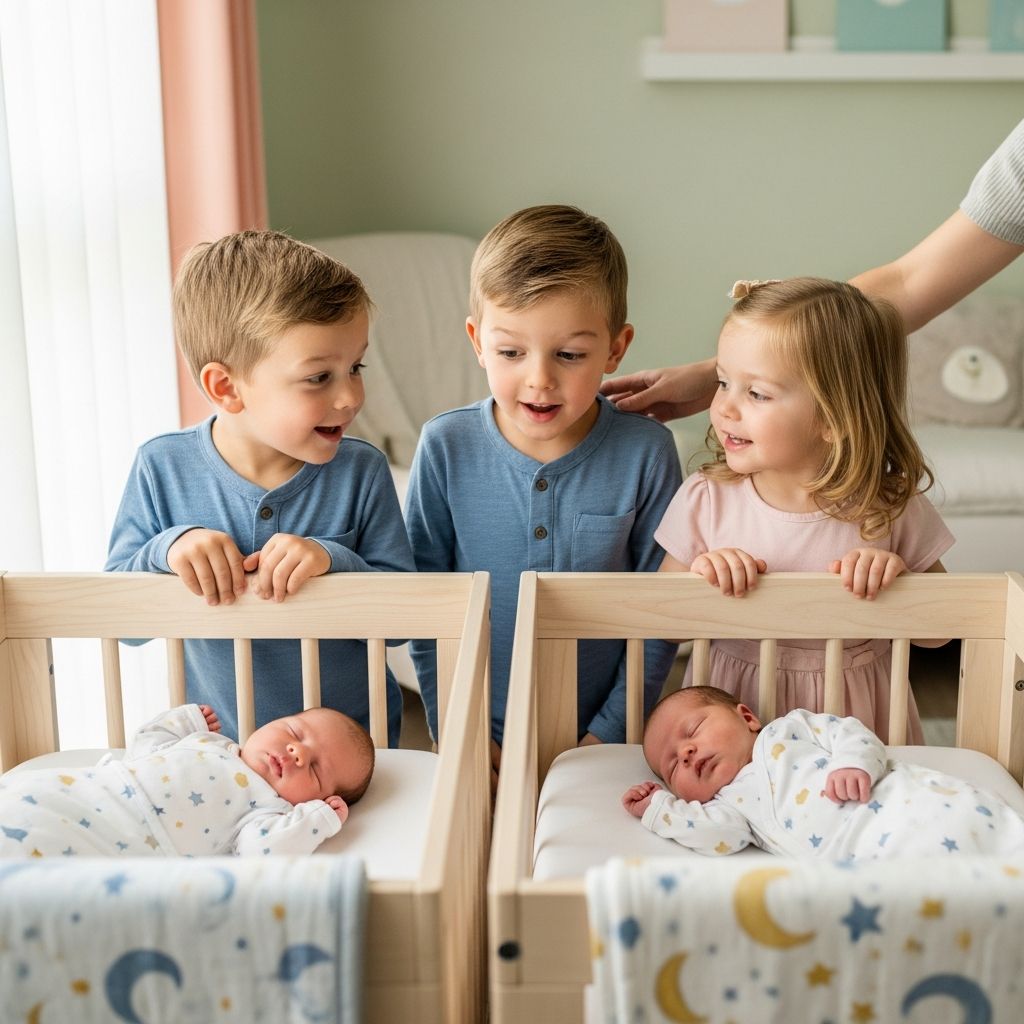
Families with twins already know that life tends to be louder, busier, and more emotional than most households. When parents then welcome a second set of twins, the moment when older twin siblings first meet the newborns can feel magical, unpredictable, and even a little overwhelming. Expectations rarely match reality, and that is completely normal.
Why This Moment Feels So Big
The first meeting between older twin siblings and newborn twins carries more emotional weight than a typical sibling introduction. Each older child is adjusting not just to one new baby but to two, and they are also trying to understand how their own twin relationship will change.
- Older twins have to share parents with two new babies at the same time.
- Parents may feel pressure for the meeting to be picture-perfect or social-media ready.
- Everyone is tired, and that can amplify reactions and emotions.
Common Reactions From Older Twin Siblings
Parents often imagine a sweet, calm scene with gentle cuddles and instant bonding. In reality, older twin siblings can show a wide range of reactions, sometimes within minutes of each other.
- Curiosity: Staring at the babies, asking questions, wanting to touch or hold them.
- Excitement: Loud voices, big smiles, running around, or exaggerated affection.
- Jealousy: Clinging to a parent, sudden tantrums, or demanding attention.
- Fear or uncertainty: Hiding, refusing to get close, or going very quiet.
- Indifference: Brief interest followed by wanting to play with toys or do something else.
Why Twins May React Differently From Each Other
Even though older siblings are twins, their personalities, temperaments, and attachment styles can be very different. One child may appear thrilled while the other is hesitant or upset. This contrast can surprise parents, but it is a sign of individuality, not a problem.
- One twin may naturally take on a more nurturing, “big helper” role.
- The other may feel more protective of their bond with a parent and withdraw.
- Different sleep needs, sensitivities, and developmental stages also shape their reactions.
Expectations vs. Reality: Why Plans Often Change
Parents often script the “perfect” first meeting in their heads. Perhaps the older twins will come into the room, smile sweetly, and gently touch the babies while someone captures it all on video. Real life tends to be more chaotic.
- Someone may be hungry, overtired, or overwhelmed right at the key moment.
- A baby might start crying just as the older siblings walk in.
- One twin might refuse to participate while the other leans in too enthusiastically.
Rather than aiming for a flawless scene, it helps to expect a mix of reactions and to treat any photos or videos as a bonus rather than the goal.
Emotional Dynamics in a “Double Twin” Family
When there are two sets of twins, the emotional landscape becomes more layered. The older pair has a long-standing bond with each other and with their parents. The new pair instantly becomes a second tight unit. Parents often worry about balancing these competing needs.
- Older twins may worry that their special status has been “replaced.”
- Newborn twins naturally require intensive, round-the-clock care, which changes routines.
- Parents may feel guilty for not having as much one-on-one time with each child.
Attachment and Identity
Older twins might suddenly ask big questions: “Do you still love me?” or “Are we still your babies?” Even if they do not say this out loud, their behavior might show the same concern. Supporting their identity as both “big kids” and “always your babies” can help them adjust more smoothly.
- Use language that emphasizes their importance: “You are the big twins and such important helpers.”
- Reassure them that love is not a limited resource and that hearts can grow.
- Highlight their unique history: stories from when they were babies, photos, and special memories.
Practical Ways to Prepare Older Twins
Preparation should start well before the first meeting. Consistent conversations, play, and small responsibilities can give older twins a sense of control and confidence about what is coming.
- Read age-appropriate books about new babies and becoming big siblings.
- Use dolls or stuffed animals to practice gentle touches and feeding routines.
- Show older twins pictures or ultrasound images of the babies and talk about names.
Involving Twins in the Pregnancy and Birth Story
When older twins feel involved, the arrival of the newborns seems less like a sudden disruption and more like a shared family project. Simple gestures go a long way.
- Let them help pack the hospital bag or choose outfits for the babies to wear home.
- Invite them to make drawings or cards to “welcome” the babies.
- Give them a small “big sibling” gift that they receive around the time the babies arrive.
Planning the First Meeting: Helpful Guidelines
Although no plan is foolproof, a few guidelines can make the first encounter smoother and more comfortable for everyone involved.
- Keep the group small: Limit the number of adults present so parents can focus on the older twins.
- Time it well: Aim for a time of day when older twins are usually fed and rested.
- Go slowly: Let the older twins set the pace for approaching the babies.
| Aspect | What Helps | What to Avoid |
|---|---|---|
| Timing | After snacks and naps, in a calm part of the day. | Scheduling when twins are overtired or rushed. |
| Environment | Quiet room, familiar toys nearby, dimmer lighting if possible. | Lots of visitors, bright lights, or loud background noise. |
| Expectations | Flexible plan, open to pauses and do-overs. | Rigid script or pressure for “perfect” photos. |
| Roles | Simple jobs like handing over a blanket or soft toy. | Expecting older twins to hold or calm crying babies alone. |
Safety and Comfort During the First Interaction
Safety is the top priority when older twins interact with newborns, especially when excitement runs high. Clear boundaries help older kids feel secure rather than scolded.
- Explain and demonstrate “gentle hands” before they touch the babies.
- Always supervise any physical contact between older twins and newborns.
- Offer alternatives if they seem too energetic, like waving, blowing kisses, or talking softly to the babies.
Handling Jealousy and Big Feelings
Even in the sweetest first meetings, jealousy often shows up later. Older twins might want to sit in a parent’s lap exactly when a baby needs feeding, or they might act out in ways they did not before.
- Acknowledge feelings: “It is hard to wait while I feed the babies. You wish it was your turn now.”
- Offer special one-on-one moments, even if short, like a bedtime story or a snack together.
- Use routines to provide predictability, such as a regular “big kid time” each day.
Balancing Time Between Two Sets of Twins
Managing attention between four children is challenging. Parents may worry that the older twins are losing out or that the newborns are not receiving the same level of focus their siblings once did. The goal is not perfect balance every day, but a sense of fairness over time.
- Rotate small responsibilities so each older twin feels trusted and included.
- Use babywearing or feeding routines to free up hands or eyes for the older twins.
- Ask for help from trusted adults to create dedicated playtime for the big kids.
The Role of Humor and Flexibility
Parents often find that humor becomes a survival tool. When plans go off the rails, laughing together can ease tension and model resilience for older twins. A silly comment or playful game can quickly turn a tense moment into a more bearable one.
- Make up a lighthearted “theme song” for the new babies and let the older twins perform it.
- Take candid photos instead of staged ones and celebrate the realness of the chaos.
- Share funny stories with friends or family to feel less alone in the experience.
Long-Term Benefits of Navigating a Messy First Meeting
Even if the first introduction feels stressful or disappointing, it is only one moment in a long relationship between siblings. What matters more is how parents continue to support their children in the weeks and months that follow.
- Working through early jealousy can strengthen emotional skills like empathy and patience.
- Older twins may grow into proud, protective big siblings once they adjust.
- The family story becomes richer: “Remember how we all met each other for the first time?”
Frequently Asked Questions
How can I tell if my older twins are really struggling with the new babies?
Signs that older twins are having a harder time include major sleep changes, severe or frequent meltdowns, aggression toward siblings or adults, or a big loss of interest in activities they used to enjoy. It is normal to see some regression, like wanting a pacifier again or asking to be held more, but if it continues for a long time or interferes with daily life, consider talking with a pediatrician or child therapist.
Should older twins hold the newborns during the first meeting?
Whether older twins hold the babies depends on their age, coordination, and comfort level. Some children feel proud and calm while holding a baby with adult support, while others become wiggly or nervous. If in doubt, start with close-up viewing, gentle touches, or letting them help by handing over a small blanket or toy.
What if one twin loves the babies and the other wants nothing to do with them?
It is very common for one older twin to warm up faster than the other. Try not to label anyone as “the helpful twin” or “the jealous twin.” Instead, give both children chances to engage on their own terms and praise even small steps toward positive interaction, like smiling at the babies or asking a question.
Can preparing too much make older twins more anxious?
Preparation usually reduces anxiety, but constant talk about the babies or big changes can become overwhelming. Aim for brief, regular conversations paired with reassuring routines, rather than long, intense discussions. Follow your children’s cues—if they change the subject or seem stressed, it is okay to pause and return to the topic another time.
What if the first meeting goes badly—did we ruin their relationship?
A stressful or messy first encounter does not define the sibling relationship. Bonds form over repeated everyday moments, not a single event. With patient support, consistent reassurance, and time, older twins and newborn twins can grow into deeply connected siblings, even if their first meeting was far from picture-perfect.
Key Takeaways for Parents
- Expect a wide range of emotions when twin siblings meet newborn twins for the first time.
- Prepare older twins with age-appropriate information, play, and small responsibilities.
- Focus on safety, flexibility, and emotional support rather than a flawless, staged moment.
- Remember that sibling relationships develop over months and years, not a single introduction.