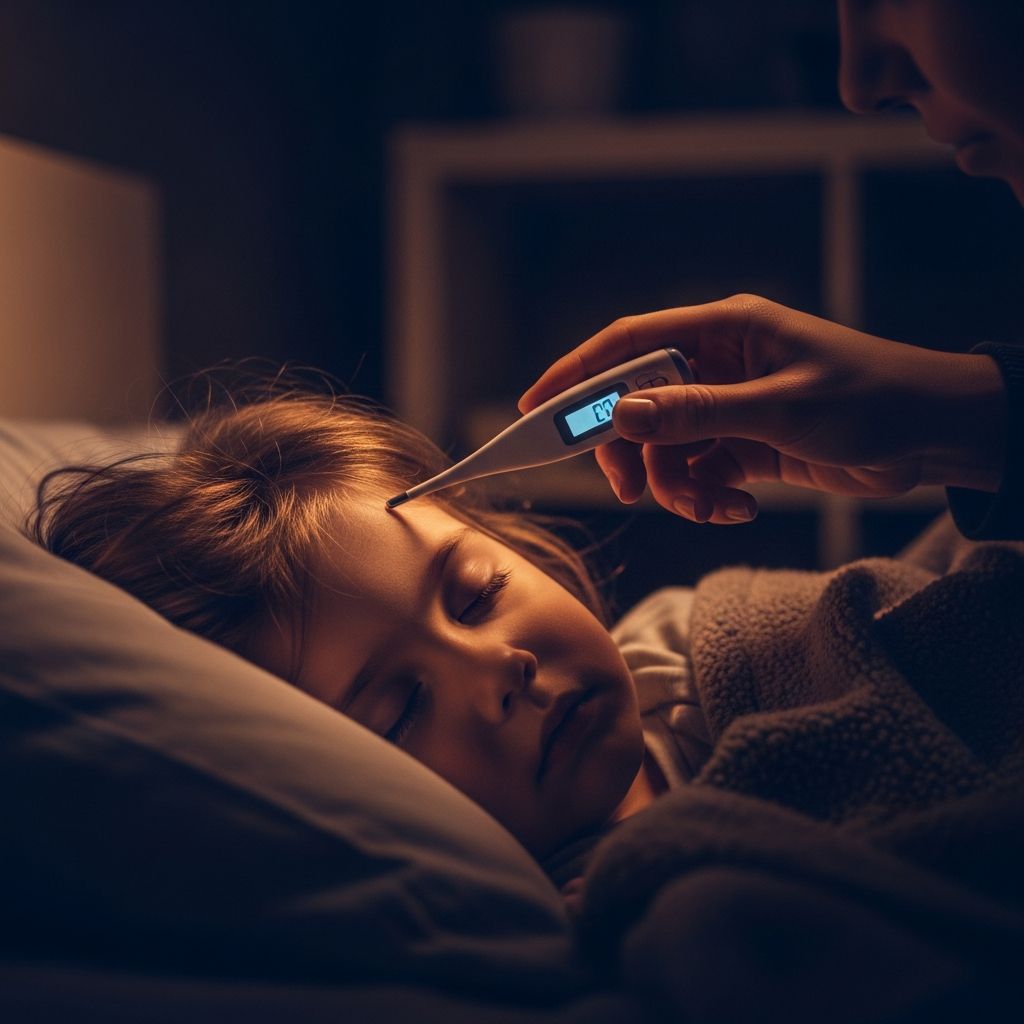
Fevers in children often spike at night, prompting parents to wonder how frequently to monitor temperature without disrupting sleep. Balancing vigilance with rest is key; guidelines suggest checking every 4-6 hours for most kids unless symptoms worsen, prioritizing accurate methods like rectal for infants.
Understanding Fevers in Children
A fever signals the body’s immune response fighting infection, typically defined as rectal temperature over 100.4°F (38°C) in infants under 3 months or 102°F (38.9°C) in older children. Nighttime elevations are common due to circadian rhythms, but constant checking can exhaust families. Focus on overall well-being: alertness, hydration, and activity levels matter more than isolated readings.
Fevers themselves rarely harm healthy children; complications arise from underlying causes like viruses or bacteria. Low-grade fevers (100-102°F) often aid recovery by enhancing white blood cell function, so treatment isn’t always needed unless discomfort occurs.
Age-Specific Guidelines for Fever Monitoring
Monitoring frequency varies by age due to vulnerability levels. Infants demand closer attention as serious bacterial infections risk is higher.
- 0-28 days: Any fever ≥100.4°F rectal requires immediate ER evaluation with full workup (blood, urine, CSF). Hospital monitoring every 3-6 hours initially.
- 29 days-3 months: Check every 4 hours if stable; escalate if fever persists >24 hours or exceeds 104°F.
- 3-12 months: Every 4-6 hours at night; observe for lethargy or poor feeding.
- Over 12 months: Every 6-8 hours suffices unless high-risk symptoms appear.
| Age Group | Fever Threshold (Rectal) | Night Check Frequency | Key Red Flags |
|---|---|---|---|
| 0-28 days | ≥100.4°F | Every 3 hours/hospital | Any fever |
| 1-3 months | ≥100.4°F | Every 4 hours | Persistent >24h |
| 3 months-2 years | ≥102°F | Every 4-6 hours | >3 days |
| >2 years | ≥102°F | Every 6-8 hours | Breathing issues |
This table summarizes AAP and hospital protocols for quick reference.
Best Practices for Taking Nighttime Temperatures
Accuracy prevents false alarms. Rectal remains gold standard for under 3 months, axillary for toddlers, oral for school-age. Avoid ear/temporal in young infants due to unreliability.
- Rectal (infants): Lubricate tip, insert ½ inch, hold 10 seconds.
- Axillary: Armpit for 5 minutes; add 1°F to reading.
- Oral (4+ years): Under tongue, lips closed, no eating 15 minutes prior.
Digital thermometers beep reliably; multi-use models save space. Clean after each use. Night checks: dim lights, minimal disturbance.
Nighttime Monitoring Strategies Without Losing Sleep
Over-checking stresses everyone. Set a schedule: baseline at bedtime, then 4-6 hours later, morning reassessment. Use baby monitors for behavior cues over temp obsession. For mild fevers, comfort measures like light clothing and fluids suffice; acetaminophen if fussy (dose by weight).
- Track patterns in a log: time, temp, symptoms.
- Alternate parents for checks.
- Sleep in child’s room if high-risk.
Tech aids like wearable monitors exist but lack medical endorsement for core decisions; rely on manual checks.
Danger Signs Requiring Immediate Action
Not all fevers need intervention, but these warrant urgent care:
- Fever >104°F unresponsive to meds.
- Lasts >3 days or recurs frequently.
- Infant <3 months with any fever.
- Stiff neck, rash, seizure, breathing distress.
- Lethargy, dehydration (no wet diapers 8+ hours).
For febrile infants 8-60 days, AAP algorithms guide labs based on inflammatory markers like procalcitonin >0.5 ng/mL or CRP >20 mg/L.
Fever Management at Home
Hydration is paramount: breastmilk/formula for infants, water/popsicles for older kids. Dress lightly; room temp 68-72°F. Meds: ibuprofen (6+ months) or acetaminophen; never aspirin. Lukewarm baths soothe but don’t lower temp core.
Myth bust: Fevers don’t cause brain damage below 107°F, rare in kids.
Common Parental Concerns Addressed
Fevers spike nocturnally from natural body clock; not worsening illness. Bundle less to aid heat escape. Teething fevers stay <100.4°F; higher suggests infection.
Frequently Asked Questions
Should I wake my child for a temperature check?
Only if under 3 months or fever >103°F previously. Let sleeping toddlers rest unless distressed.
Is a 101°F fever dangerous overnight?
No, if child is playful/hydrated. Monitor every 6 hours.
What if temperature fluctuates wildly?
Normal; recheck method accuracy. Seek care if trend upward.
Can I use forehead strips?
Not reliable for decisions; confirm with rectal/oral.
When to skip fever reducers?
If comfortable; they mask symptoms but don’t shorten illness.
Long-Term Fever Tracking Tips
Maintain a journal: date, temp, method, symptoms, meds. Share with pediatrician. Recurrent fevers? Screen for immune issues. Vaccines reduce certain fever causes.
Empower families: Knowledge reduces anxiety. Most childhood fevers resolve in 1-3 days self-limitingly.
References
- Fever – Pocket Book of Hospital Care for Children — NCBI Bookshelf. 2023. https://www.ncbi.nlm.nih.gov/books/NBK154436/
- Consensus Guidelines for Febrile Infants 0-90 Days of Age — UCSF Benioff Children’s Hospitals. 2024. https://medconnection.ucsfbenioffchildrens.org/febrile-infant-guidelines
- Infant Fever — American Academy of Pediatrics (AAP). 2023-08-01. https://www.aap.org/en/patient-care/infant-fever/
- Fever (Age 0-5) — Children’s Mercy. 2024. https://www.childrensmercy.org/siteassets/media-documents-for-depts-section/documents-for-health-and-safety/fever-age-0-5.pdf
- Fever in Infants | St. Louis Children’s Hospital — St. Louis Children’s Hospital. 2024. https://www.stlouischildrens.org/health-resources/symptom-checker/fever-0-12-months
- Fever – Safety and Wellness — Seattle Children’s Hospital. 2024. https://www.seattlechildrens.org/health-safety/illness/fever/
- Fever Chart Guide – When to Go to the ER — CHOC Health. 2024. https://health.choc.org/guide/fevers/