Why Sleep Rhythms Matter in Relationships
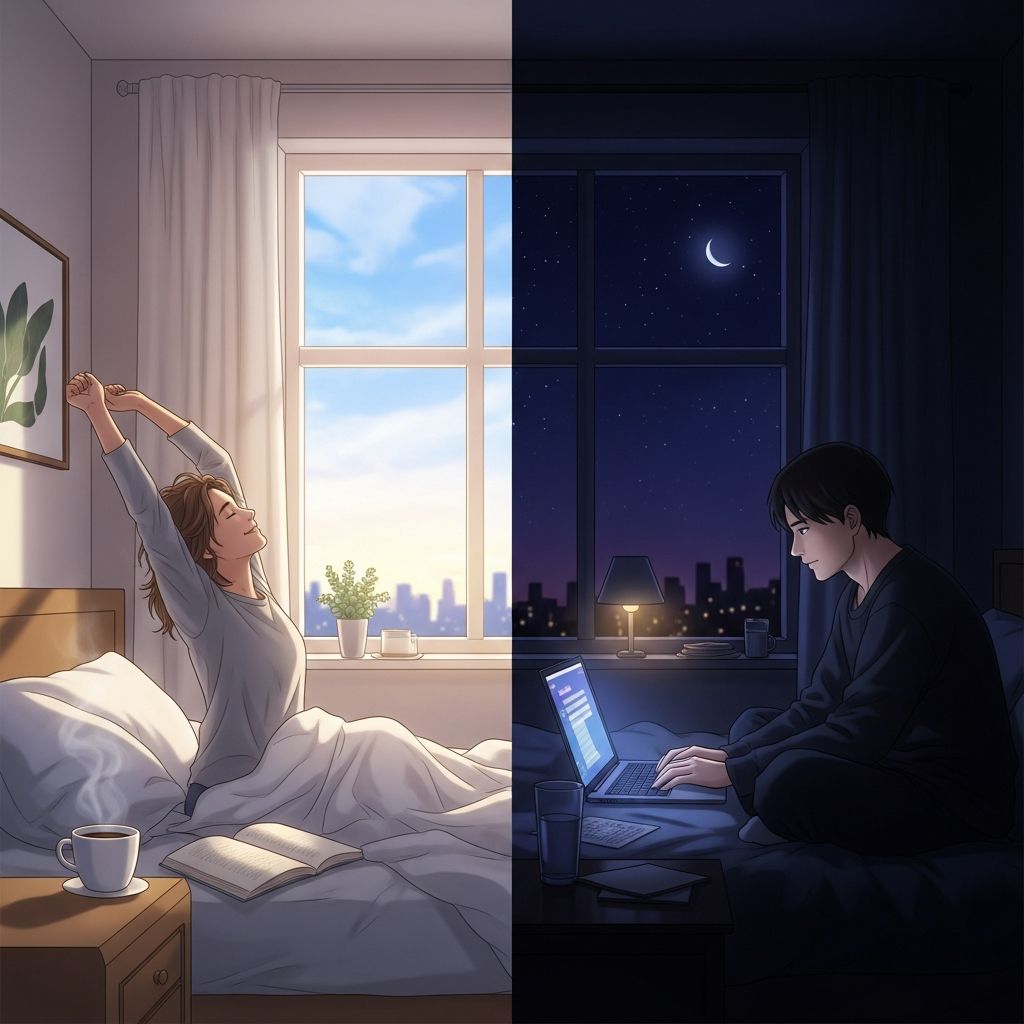
When two people live together, their daily rhythms naturally start to overlap — when they eat, when they talk, when they argue, and when they connect intimately. A mismatch in sleep preferences, where one partner is a true morning person and the other a night owl, can quietly strain even strong relationships over time .
Morning people often feel energized and ready to engage early in the day, while night owls may still be groggy or disengaged until late morning or even afternoon . On the flip side, night owls come alive in the evening, while early risers may be mentally checked out or already asleep. Without conscious planning, couples can end up feeling lonely, misunderstood, or chronically out of sync .
Common Friction Points
These differences often show up in predictable ways that can build resentment if not addressed:
- Timing of important conversations: One partner wants to talk about money, plans, or feelings in the morning, while the other isn’t mentally present yet; or late-night talks happen when the early riser is exhausted and can’t focus .
- Shared activities and social life: The night owl wants to stay out late or host friends in the evening, while the early bird feels drained and wants to leave or go to bed early .
- Household responsibilities: One person is up and moving around while the other is still asleep, leading to unbalanced chores or one partner feeling like they’re doing all the work .
- Intimacy and connection: The window for sex, cuddling, or even just talking in bed may shrink, especially if one partner is already asleep or the other is too tired to engage .
- Perceived disrespect: The early riser may see the night owl as lazy or irresponsible; the night owl may see the early bird as rigid or joyless. These judgments can erode trust and affection over time .
Understanding the Biology Behind the Difference
It’s important to recognize that being a morning person or a night owl isn’t just a matter of willpower or discipline; it’s largely influenced by circadian biology, genetics, and chronotype .
Chronotype refers to a person’s natural tendency to be more alert and active at certain times of day. Some people are genetically wired to feel most awake in the morning (morning chronotype), while others peak in the evening (evening chronotype) . Forcing someone to completely reverse their natural rhythm often leads to poor sleep, irritability, and health issues, rather than a lasting change .
Core Principles for Making It Work
Successful couples don’t usually eliminate the mismatch; instead, they build a relationship structure that respects both rhythms while protecting their connection. Key principles include:
- Accept that the difference is real and unlikely to fully disappear.
- Focus on mutual respect, not trying to “fix” the other person.
- Protect shared time and connection, even if it’s limited.
- Communicate about sleep needs and boundaries without blame.
- Be flexible when life changes (jobs, kids, travel, etc.) and renegotiate as needed.
Practical Strategies for Daily Life
1. Define a “Connection Window”
Identify a consistent block of time each day when both partners are reasonably alert and available to connect. For many couples, this is late afternoon or early evening, after work but before the early bird’s bedtime .
Use this window for:
- Shared meals (dinner together, even if one eats earlier or later).
- Checking in about the day, plans, and feelings.
- Planning dates, chores, or family activities.
- Physical affection, cuddling, or sex, if that’s part of the relationship.
2. Create a “No-Decision” Rule
To avoid arguments and poor choices, many couples benefit from a simple rule: no major decisions, big purchases, or serious relationship talks outside of a defined “clear-headed” window .
For example:
- No important financial or parenting decisions after 10 p.m. or before 9–10 a.m.
- If something urgent comes up, agree to “park” it until both are awake enough to discuss it calmly.
- Use a shared note or calendar to capture late-night ideas so they can be revisited later.
3. Split and Share Household Duties
Instead of expecting both partners to do everything at the same time, divide chores based on who is awake and available .
Examples:
- The early riser handles morning tasks (making coffee, packing lunches, walking the dog, getting kids ready).
- The night owl handles evening tasks (cleaning up after dinner, doing dishes, locking up, putting kids to bed).
- Both agree on a weekly chore list and rotate or split tasks fairly, so neither feels overloaded.
4. Protect Sleep and Minimize Disturbance
Good sleep is essential for both partners’ health and mood. Simple environmental changes can reduce friction:
- Use dim lighting and quiet sounds in shared spaces during the early bird’s bedtime and morning routine.
- The night owl can use a sleep mask, earplugs, or white noise if the early riser moves around in the morning.
- Consider separate beds or rooms if sleep quality is severely affected, without seeing it as a relationship failure.
- Agree on acceptable noise levels (TV, music, phone use) during the other’s sleep time.
5. Plan Intimacy and Date Nights
Spontaneity is harder when schedules don’t align, so planning becomes more important:
- Set regular “intimacy windows” (e.g., Sunday mornings or Wednesday evenings) so both partners can look forward to and prepare for them.
- Use gentle cues (a kiss, a text, a note) to signal interest, rather than assuming the other will be in the mood at a random time.
- Schedule regular date nights or low-pressure couple time (walks, coffee, watching a show together) during the shared connection window.
- Be realistic: some nights one partner will be too tired, and that’s okay; focus on consistency over perfection.
6. Manage Social and Family Events
When one partner wants to stay out late and the other wants to leave early, compromise is key:
- Agree in advance on how long to stay at parties, dinners, or events.
- Allow one partner to leave early while the other stays later, if transportation and safety are covered.
- Alternate who “wins” on weekends or special occasions (e.g., one weekend early, one weekend late).
- For family events, plan arrival and departure times together so neither feels abandoned or pressured.
7. Adjust for Life Changes
Jobs, children, travel, and health can shift sleep patterns over time. Couples who adapt well:
- Regularly check in about how the current routine is working (e.g., monthly or after a big change).
- Are willing to temporarily shift schedules (e.g., one partner waking earlier for a new job, the other staying up later for a project).
- Revisit chore splits, connection windows, and intimacy plans as needed, rather than sticking rigidly to old patterns.
Communication Tips for Less Conflict
How couples talk about their differences often matters more than the differences themselves:
- Use “I” statements instead of blaming (e.g., “I feel lonely when I’m the only one awake in the morning” vs. “You’re always asleep when I need you”).
- Ask questions to understand, not to fix (e.g., “What’s it like for you when I want to talk early?”).
- Set aside a calm time to discuss sleep and schedule issues, not in the middle of a fight.
- Regularly express appreciation for the other’s efforts (e.g., “I really appreciate that you handle the morning routine so I can sleep in”).
When to Seek Outside Help
Most couples can manage mismatched sleep rhythms with good communication and structure. However, it may be helpful to seek support if:
- Arguments about sleep, chores, or schedules are frequent and intense.
- One or both partners feel chronically lonely, resentful, or disconnected.
- Sleep problems (insomnia, extreme fatigue, anxiety around sleep) are affecting health or mood.
- The couple feels stuck and can’t find a compromise that feels fair to both.
In these cases, a couples therapist or sleep specialist can help clarify needs, improve communication, and create a more sustainable routine .
Realistic Expectations for Long-Term Success
It’s normal for couples with opposite sleep patterns to:
- Have some days or weeks where they feel more out of sync than others.
- Occasionally feel frustrated or wish the other could just “be like me.”
- Need to renegotiate their routine after major life changes.
What matters most is not perfect alignment, but a shared commitment to:
- Respecting each other’s natural rhythms.
- Protecting quality time and emotional connection.
- Being willing to adapt and compromise over time.
FAQs
Can a night owl and early bird really make it work long-term?
Yes, many couples with opposite sleep patterns build strong, lasting relationships by focusing on communication, shared routines, and mutual respect rather than trying to change each other’s core rhythms .
Should one partner try to change their sleep schedule?
Minor adjustments (going to bed 30–60 minutes earlier or later) can help, but forcing a complete chronotype shift is usually unsustainable and can harm sleep and health . It’s usually more effective to adapt the relationship structure around the existing rhythms.
How can we get more quality time together?
Identify a reliable daily “connection window” (often late afternoon or early evening), protect it from distractions, and use it for meals, check-ins, and affection. Also schedule regular date nights or low-pressure couple activities during times when both are awake and engaged .
What if we keep arguing about sleep and schedules?
Recurring arguments often signal unmet needs or poor communication patterns. Try setting aside a calm time to discuss the issue using “I” statements, and consider seeing a couples therapist if the conflict feels stuck or damaging to the relationship .
Is it okay to sleep in separate beds or rooms?
For some couples, sleeping apart improves sleep quality and reduces tension, which can actually strengthen the relationship . It’s not a sign of failure if both partners agree it’s the best solution for their health and connection.