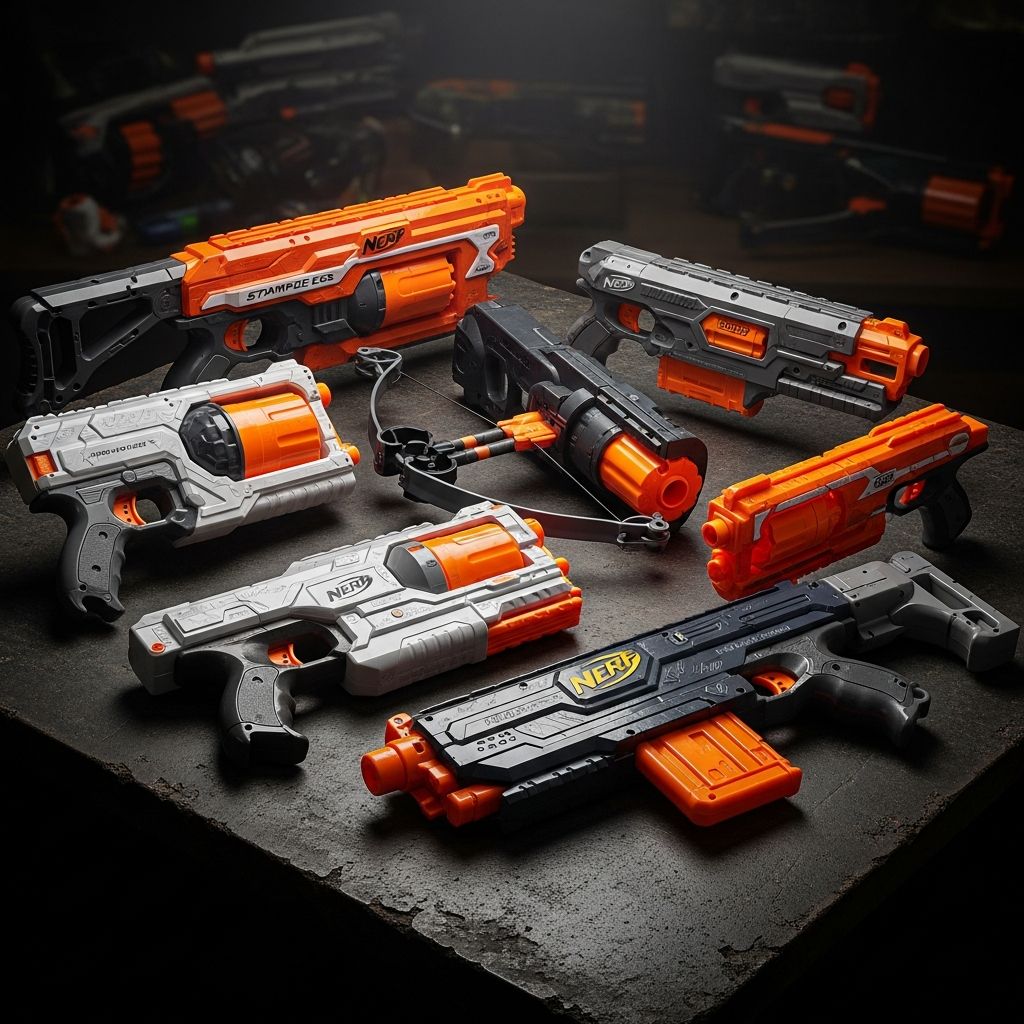
Nerf blasters began as playful toys, but a surprising number have crossed into the world of serious collectibles, with some models selling for many times their original retail price on the secondary market.
Why Nerf Blasters Became Collectibles
Over several decades, Nerf has released hundreds of blasters across different lines, themes, and collaborations, creating a deep back catalog that naturally produces rarities and fan favorites as time passes.
Short production runs, changing safety rules, evolving technology, and pop-culture tie-ins have all contributed to making certain models difficult to find and highly desirable among collectors.
- Early and discontinued models can disappear from store shelves quickly, leaving collectors to compete over limited existing stock.
- Collaborations with entertainment brands or influencers often attract both toy fans and outside fandoms, increasing long-term demand.
- Some designs are beloved for performance or style, causing players and modders to chase them even after they are out of production.
Core Factors That Drive Nerf Value
Just like vintage action figures or trading cards, Nerf blasters rise in value due to a mix of rarity, condition, nostalgia, and demand from specific communities such as competitive players, modders, and themed-war organizers.
Understanding these drivers helps collectors decide which current blasters might become tomorrow’s heavy hitters and which older pieces deserve careful preservation.
Rarity and Limited Distribution
Blasters released as exclusives through particular retailers, regional releases, or short-lived product lines are inherently scarce, which tends to push prices up as years pass and unopened examples dry up.
Variants in unusual colors, special edition packaging, or bundled accessories can also be produced in smaller numbers, making them more attractive to completionist collectors.
Condition and Packaging
Condition is one of the most powerful value multipliers, with sealed, mint-in-box items often selling for several times more than the same blaster in used condition.
Boxes with intact artwork, original darts, manuals, and inserts further boost appeal, because they present a snapshot of the era in which the blaster first appeared.
Nostalgia and Generational Appeal
People often seek out the blasters they wanted—or owned—as kids, meaning models from their childhood era usually see a rise in value as that generation reaches higher earning power.
Blasters associated with iconic marketing campaigns, schoolyard memories, or early online Nerf videos tend to inspire emotional bidding wars when good examples surface.
Performance and Modding Potential
Some blasters become sought after not just for sentiment but for performance, especially if they have strong internals, large shells for battery mods, or designs that are easy to upgrade.
Modders are willing to buy multiple copies of a desirable platform, which quietly tightens supply and can make even beat-up examples surprisingly valuable.
Types of Valuable Nerf Blasters
While individual models differ, most high-value Nerf collectibles fall into a few broad categories, each with distinct reasons for their rising prices.
Recognizing these categories helps new collectors focus their efforts on the kinds of blasters that have historically performed well on the secondary market.
Vintage Foam Icons
Early-generation blasters from the 1990s and early 2000s tend to attract dedicated fans because they showcase unusual designs and mechanics that would be unlikely to pass modern toy standards.
Brightly colored shells, oddball ammo types, and quirky firing mechanisms give these pieces a personality that modern, tacticool releases sometimes lack.
Big-Ticket Heavy Weapons
Large, shoulder-mounted or tripod-style blasters that originally retailed at premium prices often remain expensive because not many families were willing to purchase them new.
These large showpieces double as display items and practical war gear, making them especially appealing to adult fans who now have more space and disposable income.
Influencer and Licensed Collaborations
Blasters produced in partnership with entertainment brands, sports personalities, or content creators extend their appeal beyond the core Nerf audience and into broader fandoms.
When these collaborations are limited or tied to a specific event, their print run can be relatively small, which positions them well for future collectability.
Tech-Loaded Experimentals
Certain blasters represent turning points in Nerf technology, such as the introduction of fully automatic flywheel systems, integrated cameras, or remote-operated features.
These gear-heavy products are often expensive to manufacture and sell, leading to shorter lifespans and fewer units in circulation, which people later chase as unique milestones in the brand’s history.
Example Value Tiers for Collectors
Exact prices change rapidly, but it is useful to think of Nerf blasters in rough value tiers rather than obsessing over individual dollar amounts that fluctuate with each auction.
The table below presents a generic, illustrative breakdown of how different kinds of blasters might cluster in value ranges once they are off shelves and circulating among collectors.
| Tier | Typical Price Range (Secondary Market) | Common Characteristics | Who Usually Buys |
|---|---|---|---|
| Entry Collectible | $40–$90 | Recently discontinued, good condition, moderate nostalgia, often loose without box. | New collectors, casual players wanting a specific retired blaster. |
| Mid-Tier Classic | $100–$200 | Recognizable name, strong fan following, limited variants, sometimes boxed but not pristine. | Enthusiasts building themed loadouts or era-specific collections. |
| High-End Showcase | $200–$400 | Scarce availability, desirable performance or design, often tied to a specific era or collaboration. | Dedicated collectors and modders willing to pay a premium for specific models. |
| Top-Shelf Grail | $400+ | Rare production run, mint-in-box condition, or historically significant design. | Serious investors and long-time fans seeking centerpiece items. |
How to Identify a Potentially Valuable Nerf Blaster
Spotting a future gem often comes down to noticing when a blaster breaks the usual pattern, whether through unique shapes, unusual marketing, or experimental features.
Paying attention to details at release can help collectors grab interesting models at retail price instead of chasing them later at steep markups.
Clues at Launch
- The blaster is marketed as a flagship or record-breaker (range, rate of fire, or size), signaling special engineering and higher production costs.
- Retail price is substantially above standard blasters, which often leads to lower sales volume and smaller long-term supply.
- Availability is restricted to specific stores, regions, or online platforms, indicating a narrower distribution pipeline.
- Brand crossovers, influencer signatures, or special logos suggest a time-limited agreement that may not return.
Signs in the Secondary Market
- Listings disappear quickly even at strong prices, suggesting high demand relative to supply.
- Used copies sell consistently rather than sporadically, indicating a stable base of interested buyers.
- Collectors mention the model repeatedly in forums, social communities, and loadout videos as a must-have platform.
- Unboxed units already command more than their original retail price, hinting that sealed examples will grow even faster.
Buying and Storing Valuable Nerf Blasters
Once a blaster is identified as collectible, how it is purchased, handled, and stored can significantly influence its long-term value and appeal to future buyers.
Collectors who treat their shelves like miniature museums often see better returns and more satisfaction from their collections than those who overlook basics like climate and documentation.
Smart Purchasing Strategies
- Research recent sale prices across multiple platforms to avoid overpaying based on a single unusually high listing.
- Request detailed photos of boxes, seals, and internals, and ask sellers about storage conditions and any modifications.
- Factor in shipping risk for large or fragile boxes and consider local pickup when possible to avoid transit damage.
- Keep purchase records, including screenshots and receipts, to support future resale value and authenticity discussions.
Preservation and Display
- Store boxed blasters in a cool, dry environment away from direct sunlight to prevent fading and warping.
- Use protective cases or plastic tubs for sealed items, while displaying loose blasters on stands or wall mounts that do not stress the plastic.
- Avoid leaving batteries in electronic blasters; corrosive leaks can destroy both function and collector value.
- Label shelves or storage bins with model names and release years to keep the collection organized and easy to inventory.
Collecting for Fun vs. Collecting for Investment
Foam blaster collecting exists on a spectrum, from players who simply enjoy owning a few nostalgic pieces to investors who systematically track prices and treat blasters like a portfolio.
Clarifying personal goals helps determine how aggressively to chase rare items, how much to spend on preservation, and when to sell or trade.
Emotion-First Collecting
Many collectors start by seeking models that evoke personal memories, such as a first blaster, a favorite childhood commercial, or a design that stands out for style alone.
In this mode, value growth is a pleasant bonus rather than the primary objective, and collectors are more comfortable opening boxes or using their favorite pieces in actual battles.
Investment-Focused Collecting
Those who treat Nerf blasters as an asset class pay closer attention to market cycles, discontinued lines, and the condition of packaging, often keeping high-potential items sealed for years.
This approach demands patience, storage space, and a willingness to let beloved designs sit untouched, but can yield impressive returns if chosen models remain in demand.
Common Mistakes New Nerf Collectors Make
Newcomers often assume that age alone guarantees value or that any large blaster will become rare, but the market rewards nuance and careful selection.
Avoiding a few predictable traps can save both money and frustration while helping a collection feel more intentional.
- Equating size with value: Some massive blasters remain easy to find because they sold in high numbers and never built strong nostalgia.
- Ignoring condition details: Box tears, missing accessories, and worn triggers may dramatically reduce resale potential even when the shell looks fine at a distance.
- Over-customizing rare pieces: While painting and modding are fun, irreversible changes on scarce models can cut their collector pool in half.
- Chasing hype without research: Short-term buzz around a new release does not always translate into long-term scarcity or cultural impact.
Frequently Asked Questions About Valuable Nerf Blasters
Are all discontinued Nerf blasters valuable?
Discontinuation is only one ingredient in the value recipe; a retired blaster still needs solid demand, recognizable design, and at least some degree of scarcity to become truly valuable.
Many discontinued models can be found cheaply for years, while others spike quickly because they fill a unique niche that later designs do not replace.
Is it better to keep blasters sealed or open them?
From a pure investment standpoint, sealed and well-preserved boxes almost always command higher prices because they are rare time capsules from their release era.
However, collectors who care more about gameplay than eventual resale often choose to open and use duplicates, keeping only certain high-potential items untouched.
Do modifications ever increase a blaster’s value?
Custom work can be valuable to specific buyers, especially if performed by a known artist or builder, but it usually narrows the audience to people who share that exact aesthetic or performance preference.
For long-term collectability, keeping one copy stock while modifying a second blaster is usually a safer strategy.
How can someone track the market for Nerf collectibles?
Monitoring completed sales on auction sites, browsing dedicated foam-blaster communities, and comparing asking prices from multiple sellers offers a realistic view of true demand.
Over time, patterns emerge that reveal which models hold value, which are trending up or down, and which are driven mostly by temporary hype.
Is Nerf collecting a good long-term investment?
Like any collectible hobby, Nerf prices can rise or fall with trends, nostalgia waves, and broader economic conditions, so no return is guaranteed.
The healthiest approach is to collect models that are personally enjoyable to own, while treating any price appreciation as a welcome, but uncertain, bonus.
Final Thoughts: Building a Collection With Intention
The most satisfying Nerf collections balance emotional meaning with thoughtful selection, mixing childhood favorites, historically important designs, and a few strategic bets on future classics.
By understanding what drives value, recognizing patterns in the market, and caring for each blaster with museum-level attention, collectors can turn foam-dart launchers into a hobby that is both nostalgic and surprisingly rewarding.