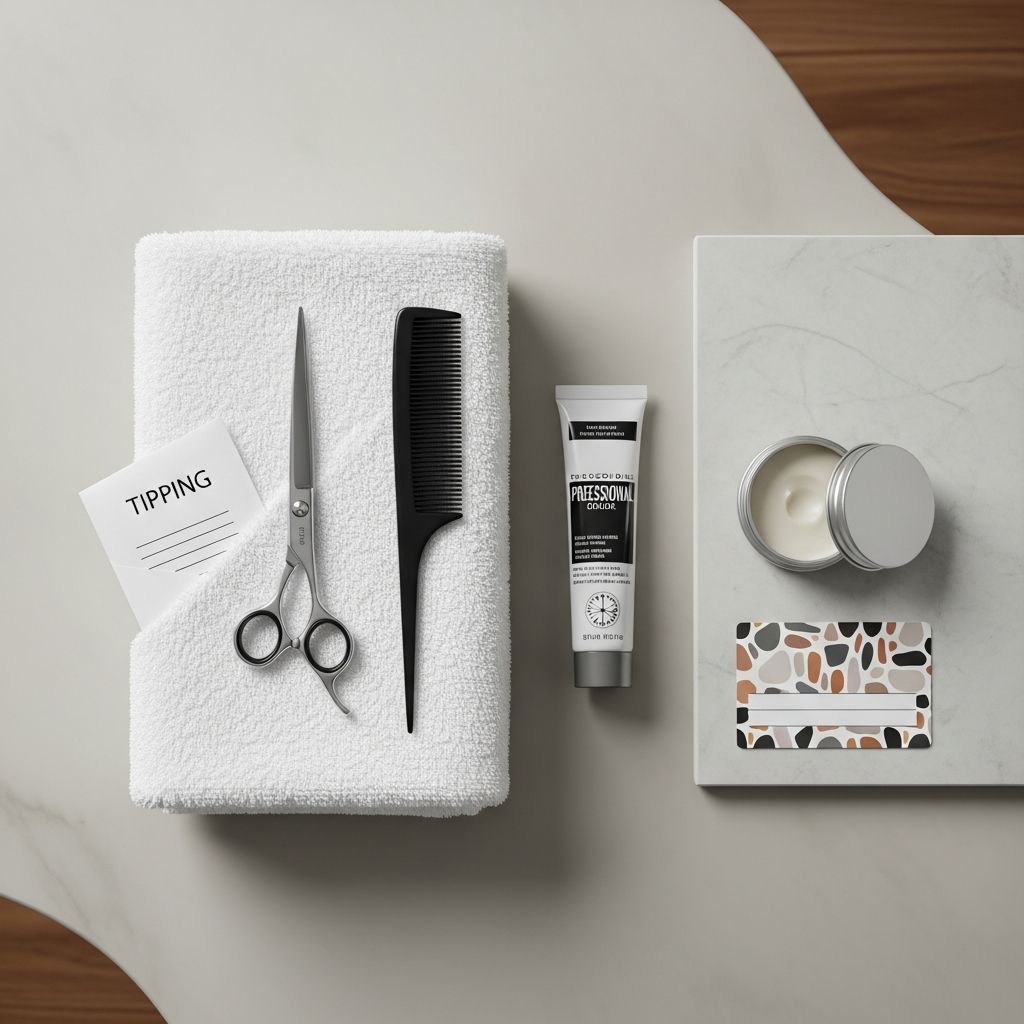
Stepping into a salon can feel relaxing—until the bill arrives and you hit the tipping screen or reach for your wallet. Is a tip expected for a free consultation? What about a quick bang trim, a major color correction, or when the owner does your hair? This guide breaks down how to tip at salons and spas in a way that is fair, realistic, and comfortable for you.
Why Tipping at Salons Feels So Confusing
Salon tipping is not regulated by law, which means there is no universal rule everyone follows. Instead, expectations grow out of social norms, local customs, and how stylists are paid.
In many service industries in the United States, tipping is part of how workers reach a livable income, especially when base pay is low or partially dependent on commissions. Salons are no exception: many stylists rely on tips to round out their earnings, particularly in high-cost urban areas.
At the same time, prices for hair and spa services have climbed, so a percentage-based tip can quickly become very expensive, leaving clients unsure of what is polite versus what is simply unaffordable.
General Salon Tipping Benchmarks
Before getting into special situations like consultations, it helps to know the broad norms often used as a starting point:
- 15–20% of the service price is commonly viewed as a standard range for good service in many U.S. salons.
- 20% is often suggested as an easy, default benchmark when you’re happy with the service.
- Above 20% is generally reserved for particularly time-consuming, complex, or extraordinary work (for example, a color transformation that takes half the day).
- Below 15% may signal dissatisfaction, a tight budget, or a different cultural perspective; it is not forbidden, but it may be noticed by regular stylists.
These are guidelines, not laws. You are always allowed to tip less, more, or not at all based on your budget, values, and the quality of service you received.
Tipping for Consultations: Free vs. Paid
Consultations are one of the trickiest situations: you may walk in for advice and walk out feeling guilty when you don’t leave a tip—but there is no universal rule that says you must.
When the Consultation Is Free
Many salons offer free consultations to encourage new clients, scope out big changes, or assess color corrections. In those cases:
- No tip is generally expected for a brief, complimentary consultation where no product is used and no hands-on service is provided.
- You may choose to tip $5–$10 if the stylist spends significant time (20–30 minutes or more) discussing options, reviewing photos, and giving detailed education—especially if you do not book the service right away.
- If you plan to return for the full appointment, it is perfectly reasonable to skip tipping the consult and show appreciation later with a normal gratuity on the actual service.
When the Consultation Is a Paid Service
Some salons charge a fee for in-depth consults, especially for corrective color or texture services. If you are paying a set price (for example, a 30-minute consult for a fee):
- Treat it like any other service: tipping around 15–20% is considerate if you are satisfied.
- If the fee is applied to a later appointment, you can tip on the full service cost when you come back instead of on the consult alone.
- When the stylist declines payment or insists on comping the consult, a small cash tip is a gracious way to acknowledge their time if you can afford it.
How Much to Tip for Common Salon Services
Use the following table as a reference, not a strict rulebook. Your location, budget, and experience still matter.
| Service Type | Common Tip Range | Notes |
|---|---|---|
| Standard haircut or blowout | 15–20% | Go toward 20% if you’re pleased with the result or it required extra time. |
| Color, highlights, balayage | 18–25%+ | Consider the time and complexity; marathon services may merit more. |
| Facials, waxing, brows | 15–20% | Closer to 20% when the provider is attentive, gentle, and detail-focused. |
| Nails (manicure/pedicure) | 15–20% | More if you request intricate designs or extended massage. |
| Massages | 15–20% or higher | Spas may automatically include gratuity for group bookings—always check. |
| Quick bang trim or neck trim | $5–$10 or 10–15% | Even if offered free for regulars, a small tip is a thoughtful gesture. |
Do You Tip the Salon Owner?
Advice about tipping owners varies widely, and older expectations often clash with newer norms.
- Traditionally, many clients did not tip salon owners, treating them more like professionals (similar to accountants or lawyers) rather than tip-based workers.
- In modern salons, especially in the U.S., it is increasingly common to tip the owner when they personally provide your service.
- If you are unsure, you can discreetly ask the front desk, “Do you accept tips on owner services?”—a straightforward, neutral question.
When the owner clearly charges premium rates and positions themselves as a high-earning professional who discourages tipping, you might reasonably skip the tip or keep it modest. When in doubt, consider your budget and how much you value the relationship.
Assistants, Apprentices, and Support Staff
Many salons rely on a team: one person shampoos, another applies toner, someone else blows out your hair. Those behind-the-scenes people are often paid less and may count on gratuities.
- If an assistant shampoos, rinses, or blow-dries, consider leaving an extra $5–$10 for them, or ask your stylist to split your tip.
- At some salons, tips are pooled and distributed among the team; at others, each provider keeps their own. When you are unsure, you can say, “Please share this with everyone who helped me today.”
- Apprentices doing discounted training services generally appreciate tips just as much as fully licensed stylists.
What If You Hate the Result?
One of the most uncomfortable situations is when you walk out unhappy. Should you still tip at all?
There are two separate questions here: how to handle the bad result, and what to leave as a tip.
- Speak up kindly but clearly before you leave: explain what feels off—too short, uneven, brassy, not what you agreed on. Many stylists would rather attempt a correction than have you leave disappointed.
- If the stylist makes a good-faith effort to fix the problem or offers a follow-up at no charge, tipping something in the 10–15% range can recognize their time, even if you remain lukewarm about the outcome.
- If the service was genuinely poor—disrespectful behavior, rushed handling, or clear mistakes—you are not obligated to tip. Your priority is to protect your hair, your wallet, and your comfort.
When you plan never to return, leaving no tip and calmly requesting a partial refund can be more effective than leaving a small tip that sends a mixed message.
Discounts, Packages, and Freebies: What to Do About the Tip?
Another gray area arises when your service is not charged at full price. Should your tip be based on the original price, the discounted price, or something in between?
- Discounted services (promos, first-time specials, loyalty rewards): tipping on the pre-discount amount is generous and often appreciated, but not strictly required. Many clients compromise by tipping on the discounted price but aiming toward the higher end of the percentage range.
- Gift certificates: if someone else paid for your service, bring cash or card to tip the provider yourself, usually based on the full value of what you received.
- Complimentary add-ons (extra conditioning treatment, mini neck massage, brow cleanup): you do not have to increase your tip, but rounding up or adding a few extra dollars is a respectful nod to their gesture.
- Completely free services (redo, consultation converted to a free trial service): a tip is optional but thoughtful if your stylist invests notable time and skill.
Cash, Card, or App? How to Physically Tip
Digital tipping options have made it easier than ever to add a gratuity via card, phone, or app, but the logistics still matter to stylists and salons.
- Cash is often preferred by stylists because they receive it immediately and in full.
- Card tips are convenient for clients but may be subject to processing delays and, at some salons, small deductions for transaction fees before reaching staff.
- Peer-to-peer apps (like mobile payment tools) are sometimes allowed; ask if your stylist accepts them directly.
- If you are unsure whether tips can be added to a card, a quick call before your appointment can prevent awkwardness at checkout.
International and Cultural Differences
Tipping customs differ widely between countries and cultures. In some places, tipping is standard and expected; in others, it is minimal or even discouraged.
- In many parts of the United States, tipping in personal care settings is routine and strongly expected.
- In some European and East Asian countries, service charges may be included in prices or bills, and tipping may be smaller or not expected at all.
- When traveling, it is wise to look up local norms for salons and spas or ask hotel staff or local friends.
What feels generous in one country may be seen as excessive or confusing in another. Let local standards guide you more than your habits from home.
Budgeting for Beauty Without Guilt
Tipping should reflect appreciation, not create financial anxiety. If full-service prices plus a 20% tip are regularly straining your budget, it may be time to adjust the services you choose rather than silently resenting the tipping process.
- Stretch time between color appointments by requesting techniques that grow out softly rather than obvious roots.
- Alternate between full services and simpler maintenance visits (for example, just a root touch-up or a quick trim).
- Ask about apprentice or junior stylist pricing if your salon offers training programs; you can still tip generously within a lower total cost.
- Be honest with yourself about what you can realistically afford on a recurring basis.
Stylists generally prefer a client who tips modestly but returns regularly over a one-time client who tips lavishly and never comes back.
Frequently Asked Questions (FAQs)
Do I have to tip for a short or simple appointment?
Tips are always discretionary, but even for a quick bang trim, polish change, or neck cleanup, leaving a small amount—often $3–$10—is a courteous way to recognize the stylist’s time and expertise.
Is it rude not to tip at all?
Social expectations in many U.S. salons strongly favor tipping, especially when the stylist is not the owner and earns a lower hourly wage. Not tipping may be interpreted as dissatisfaction or a cultural difference, but you are not legally required to leave anything.
Should I tip if my stylist raised their prices?
You may adjust your tipping percentage downward to stay within your budget—for example, dropping from 20% to 15%—without it being inherently disrespectful. If the new total still feels too high, consider spacing out visits or choosing less expensive services.
What if several people worked on my hair?
You can either leave one total tip and ask that it be shared among everyone who helped you, or tip each person separately (for example, more for the main stylist and a smaller amount for the assistant). Many salons are used to both approaches.
Is it okay to ask about the salon’s tipping policy?
Yes. A simple question like, “How do tips work here?” or “Can I add a tip to my card?” is practical, not rude. It can even help staff clarify expectations and avoid misunderstandings.
References
- Decoding salon tipping etiquette: How much to tip at a beauty salon — Zenoti. 2023-06-14. https://www.zenoti.com/thecheckin/how-much-to-tip-beauty-salon
- Salon Etiquette: Tipping — Berkeley Parents Network. 2007-01-01. https://www.berkeleyparentsnetwork.org/advice/beauty/tipping
- How Much to Tip Your Hairdresser for a Blowout, Cut, or Color — Cosmopolitan. 2024-03-12. https://www.cosmopolitan.com/style-beauty/beauty/a69237972/how-much-to-tip-hair-stylist-and-colorist/
- Tipping Guidelines Around the World — U.S. Department of State (Travel Tips). 2022-08-05. https://travel.state.gov/content/travel/en/international-travel/before-you-go/travelers-checklist.html