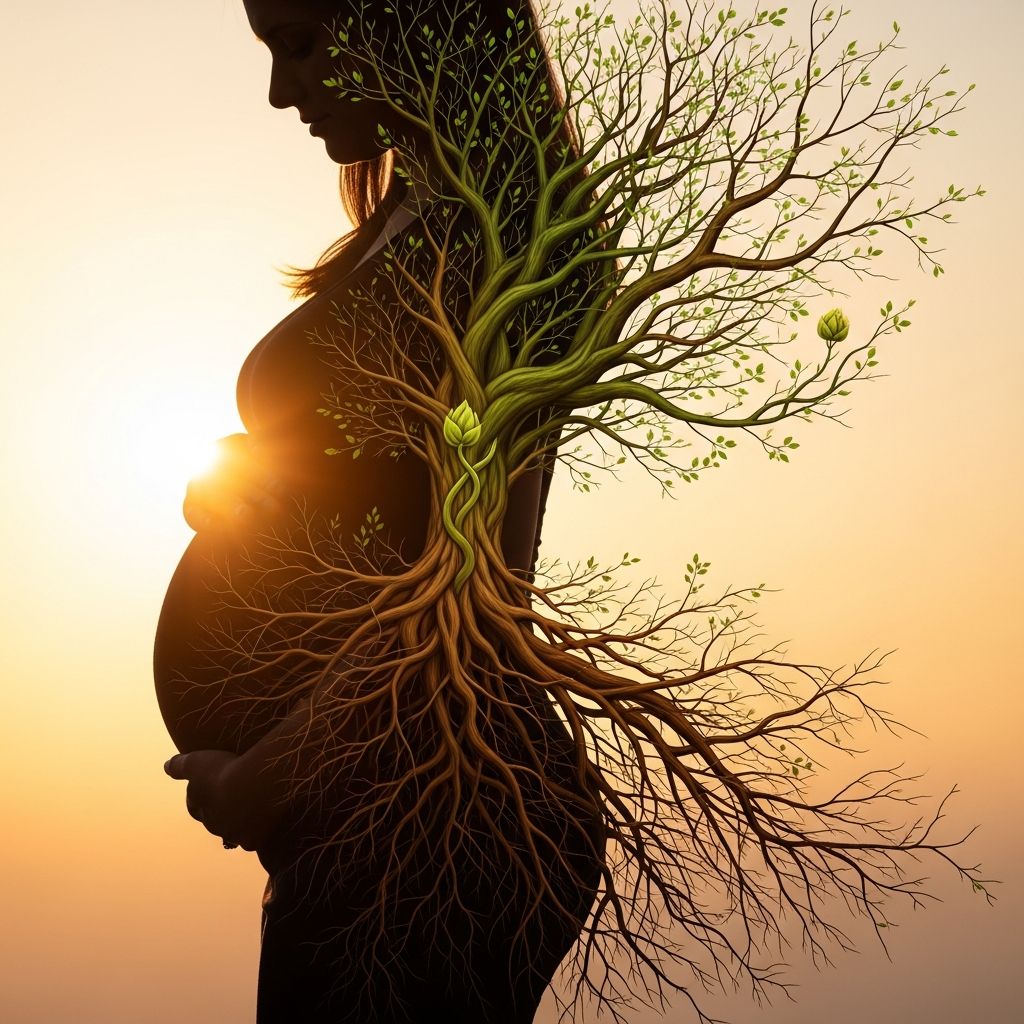
The Profound Journey of Becoming a Mother
The transition into motherhood represents far more than simply adding a new role to your life. It constitutes a fundamental reimagining of who you are, what matters to you, and how you navigate the world. This transformation touches every aspect of your existence—your relationships, your career trajectory, your physical body, and your sense of purpose. What many women discover is that this change unfolds gradually, revealing new dimensions of themselves they never anticipated encountering. The experience demands a recalibration of identity that takes time, patience, and considerable self-compassion to navigate fully.
The Neurobiological Foundation of Change
Science reveals that motherhood isn’t merely a psychological or emotional shift—it’s a genuine biological transformation. Research indicates that pregnancy and early motherhood trigger fascinating neurobiological changes in the brain, preparing women for the unique demands ahead. These changes enhance empathy, strengthen bonding mechanisms, and build resilience, fundamentally altering how mothers process information and respond to their environment. The maternal brain develops enhanced capacity for multitasking, emotional attunement, and rapid decision-making under pressure. Understanding this biological foundation helps normalize the intensity of the transformation and validates the very real nature of the identity shift many mothers experience.
When Your World Reorganizes Around New Priorities
Before becoming a mother, your decision-making framework typically centered on personal aspirations and individual satisfaction. Career advancement, leisure activities, financial goals, and personal achievements formed the architecture of your daily choices. The arrival of a child fundamentally restructures this framework. Your child’s needs—feeding schedules, sleep patterns, development, safety—gradually become the organizing principle around which your schedule rotates. This shift isn’t merely practical; it reflects a deeper reorganization of values and what constitutes a meaningful life.
This reorientation extends beyond the immediate demands of childcare. Your perspective on global issues, social priorities, and long-term planning transforms. You begin evaluating decisions through a different lens: How will this affect my child? What kind of world am I helping to create? What values am I modeling through my choices? This expanded consciousness often leads to greater engagement with community, more thoughtful consumption patterns, and increased concern for environmental and social issues that directly impact your child’s future.
Discovering Emotional Depths You Didn’t Know Existed
The emotional landscape of motherhood reveals territories of the heart that remain largely unmapped before this transition. The love you experience for your child operates on an entirely different scale than relationships you’ve previously known. This isn’t merely romantic love or familial affection—it’s a fierce, all-consuming, unconditional regard that exists independent of reciprocity or gratitude. Your child doesn’t need to earn your love through accomplishment or expression; it simply exists as a fundamental reality.
This profound emotional experience radiates outward, transforming how you relate to everyone in your life. Partners often report that their spouses demonstrate increased patience, empathy, and forgiveness. Friendships deepen as mothers develop greater emotional intelligence and understanding of human complexity. Workplace relationships improve as enhanced emotional attunement allows for better communication and conflict resolution. The wellspring of love you access for your child becomes a resource that enriches every relational connection you maintain.
Simultaneously, motherhood introduces emotional complexities that deserve acknowledgment. Joy and anxiety exist as constant companions. You experience profound happiness alongside paralyzing fear. Contentment intermingles with exhaustion and grief—grief for the person you were, for the spontaneity you’ve surrendered, for the unmarked time that once belonged entirely to you. These emotions aren’t contradictory; they coexist as part of the legitimate emotional landscape of this transformation.
The Hidden Curriculum of Resilience
Motherhood functions as an intensive training program in resilience, though one you never formally enrolled in. The challenges arrive without warning and without pause: sleepless nights that accumulate into weeks, public meltdowns in situations where you must maintain composure, endless mess and disorder in spaces you cherished for their organization, illness and injury that trigger primal fear, developmental stages that confound your expectations.
Each of these challenges demands adaptation. You learn to function effectively on minimal sleep—a capability that astonishes you in retrospect. You develop strategies for managing chaos without surrendering to overwhelm. You discover inner reserves of patience you didn’t know you possessed. The unpredictable nature of parenting requires constant flexibility; what worked yesterday may fail today, forcing you to innovate continuously. This repeated cycle of encountering challenges, adapting, and emerging successfully builds a reservoir of confidence that extends far beyond parenting.
The resilience developed through motherhood becomes portable—it serves you in career challenges, relationship difficulties, health crises, and personal setbacks. You’ve learned that you’re capable of weathering storms you never anticipated facing. This knowledge fundamentally alters your relationship with difficulty and uncertainty, making you more capable of navigating life’s inevitable challenges with greater equanimity.
Unearthing Capabilities You Never Needed Before
One of the delightful surprises of motherhood involves discovering practical and creative abilities you never knew you possessed. Perhaps you never considered yourself particularly organized, yet you find yourself color-coding systems, maintaining elaborate schedules, and implementing organizational strategies that would astound your pre-parent self. You develop project management skills that rival corporate professionals. You become adept at identifying which tasks truly matter and which can be gracefully released.
Creative capacities flourish under the demands and inspiration of parenthood. You invent games, construct elaborate birthday celebrations, devise solutions to challenges using whatever materials lie at hand. You develop resourcefulness born from necessity—the ability to make do, to problem-solve creatively, to see potential in limitations rather than being defeated by them. These qualities extend into your professional life, making you a more innovative contributor and creative problem-solver in your workplace.
Beyond practical skills, you access emotional and spiritual capabilities. You discover reserves of courage when your child faces challenges or fears. You develop intuition that guides you in parenting decisions, sometimes contradicting expert advice in ways that prove surprisingly accurate. You cultivate the ability to hold contradictions—to be simultaneously strong and vulnerable, protective and encouraging, firm and compassionate. These expanded capacities make you a more nuanced, interesting, and capable human being.
The Emergence of Clarified Purpose
Before motherhood, purpose might have resided in career achievement, personal creativity, relationship building, or contributing to causes you valued. These purposes don’t necessarily diminish with motherhood, but they’re now contextualized within a larger frame of meaning. Your daily tasks—nurturing, educating, comforting, guiding—take on profound significance. You’re not simply managing logistics; you’re shaping a human being during their most formative years. You’re the primary architect of their earliest experiences of love, safety, and possibility.
This sense of purpose provides remarkable sustenance during challenging periods. During the difficult months when your infant won’t sleep, when your toddler has rejected everything you’ve prepared for dinner, when you’ve lost your patience and handled a situation poorly, this larger sense of purpose anchors you. You’re engaged in something profoundly meaningful. Your role matters. Your presence shapes outcomes in ways both visible and invisible.
Research indicates that motherhood sparks new sense of meaning, increased self-esteem and competence, enhanced mindfulness, and deeper appreciation for simple things. Many mothers report that they understand what truly matters in ways that pre-parent versions of themselves couldn’t have comprehended intellectually. Purpose shifts from something you achieve to something you embody through your daily choices and presence.
The Necessity of Forgiveness
Motherhood introduces an unexpected but essential dimension: the profound practice of forgiveness. You must forgive yourself for not meeting your own expectations—for losing patience when you promised yourself you wouldn’t, for not spending the savings you now realize you desperately needed, for choices made before parenthood that now seem shortsighted. You forgive yourself for being imperfect, for struggling, for sometimes resenting the demands placed upon you.
You also engage in broader forgiveness work—releasing resentment toward those who withheld emotional support, who failed you, who brought their own unhealed wounds into your childhood or current relationships. Motherhood creates urgency around this internal work; you recognize that carrying old grudges and unprocessed pain directly impacts how you show up as a parent. The work of forgiveness becomes not a luxury but a necessity for your own wellbeing and your child’s benefit.
Identity Integration: Becoming the New Version of Yourself
The concept of “matrescence”—coined by social anthropologist Dana Raphael—describes this transition as fundamentally similar to adolescence: a change that changes everything. Like adolescence, matrescence involves a two-to-three-year integration period during which you’re becoming someone new. You might technically be a mother while still not fully feeling like one. You might grieve aspects of your former life while simultaneously experiencing joy in your new role. These seemingly contradictory experiences coexist legitimately.
During this integration period, you’re learning new skills, adjusting neurologically to different hormonal patterns, reorganizing your physical space and time management, and fundamentally reconceiving your identity. This is legitimate work deserving of compassion and generosity toward yourself. Rather than expecting immediate transition, recognizing the multi-year timeline gives permission for the gradual unfolding of your new identity.
Key Dimensions of the Matrescence Journey
- Biological adaptation to hormonal shifts and sleep deprivation
- Psychological reorganization of identity and sense of self
- Relationship renegotiation with partners, family, and friends
- Career recalibration and professional identity integration
- Spiritual questioning and evolution of meaning-making frameworks
- Physical body transformation and relationship with embodiment
- Financial adjustments and economic reality shifts
The Paradoxes You Learn to Hold
Motherhood teaches you to simultaneously hold truths that seem contradictory. You can feel profound love and occasional resentment toward the same person. You can be excited about your child’s independence while grieving their growing autonomy. You can recognize that happiness and joy exist as separate experiences—not automatically linked states—and that neither represents a permanent condition. You can be exhausted and exhilarated. Satisfied and unfulfilled. Present and wishing for escape. These paradoxes aren’t signs of failure or psychological complexity requiring resolution; they’re normal, natural aspects of the genuine experience of motherhood.
This capacity to hold paradox extends beyond parenting, making you a more sophisticated thinker and more nuanced participant in complex situations. You develop increased tolerance for ambiguity and contradictory truths. You become more comfortable with uncertainty and less demanding of neat resolution. These capacities serve you well across all life domains.
Building Community Through Shared Experience
Motherhood often reorients you toward community in profound ways. The isolation many mothers experience despite being physically surrounded by their children creates hunger for adult connection and shared experience. This often leads to engagement with other mothers—both those navigating similar stages and those further along the journey. These relationships provide practical support, emotional validation, and the reassuring knowledge that your experiences are shared and normal.
This community orientation extends beyond other mothers. You become more attuned to the needs of families in your broader community. You develop greater appreciation for the support systems—childcare providers, teachers, neighbors, extended family—that enable parenting. You recognize interdependence not as weakness but as fundamental reality. This shift toward community-mindedness enriches your life and often leads to meaningful civic engagement.
Frequently Asked Questions About Motherhood’s Transformation
Q: How long does it take to feel like a “real” mother?
A: Matrescence typically unfolds over two to three years, though individual timelines vary considerably. Many women report that they don’t feel fully integrated into their maternal identity until their child reaches toddlerhood or beyond. This extended timeline reflects the genuine neurological, psychological, and spiritual work of identity integration happening during this period.
Q: Is it normal to grieve your pre-parent life while loving motherhood?
A: Absolutely. Grief and joy coexist legitimately during motherhood transitions. You can simultaneously mourn the person you were, the spontaneity you’ve surrendered, and the time that belonged only to you—while also experiencing profound fulfillment in your maternal role. These emotions aren’t contradictory; they reflect the genuine complexity of major life transitions.
Q: Does motherhood permanently change your personality?
A: Research indicates that motherhood sparks increased self-esteem, competence, mindfulness, intuition, and capacity for holding paradox. While your core personality traits remain relatively stable, your expressed values, priorities, emotional range, and relational capacities expand and deepen. You become a more developed version of yourself rather than a different person.
Q: What if I don’t experience the positive transformation everyone describes?
A: Not all mothers experience motherhood as transformative in positive ways. Postpartum depression, ongoing mental health challenges, overwhelming circumstances, or personal trauma histories can make this transition profoundly difficult rather than growth-oriented. Seeking professional support is essential and appropriate. Transformation doesn’t require denying legitimate suffering.
Q: Can fathers experience similar transformation?
A: Yes, parenthood transforms fathers and other caregivers similarly, though the neurobiological changes are different since they don’t experience pregnancy. The psychological, relational, and purpose-oriented transformations apply broadly to anyone taking on primary caregiving responsibilities.
Embracing the Transformation Journey
Motherhood fundamentally changes everything—not through a sudden rupture but through gradual reconfiguration of your priorities, identity, capabilities, and understanding of what makes life meaningful. The person you become through this transformation remains fundamentally you, yet expanded, deepened, and more capable than your pre-parent self imagined possible. Rather than resisting this transformation or assuming it should happen instantaneously, approaching it with curiosity, compassion, and patience allows you to integrate this significant life change into a coherent sense of self. The journey of motherhood, with all its challenges and joys, its grief and transformation, deserves to be cherished as one of life’s most significant passages.
References
- How Motherhood Changed My Outlook on Life — Cake Maternity. Retrieved April 2, 2026. https://www.cakematernity.com/blog/how-motherhood-changed-me
- Matrescence: How Motherhood Changes Everything — Today’s Parent. Retrieved April 2, 2026. https://www.todaysparent.com/family/parenting/matrescence-how-motherhood-changes-everything/
- 9 Ways Motherhood Biologically Changes You — The Bump. Retrieved April 2, 2026. https://www.thebump.com/a/how-motherhood-changes-you
- Motherhood Changes Everything — Motherly. Retrieved April 2, 2026. https://www.mother.ly/life/motherhood-changes-everything-2/
- 5 Ways Having a Baby Will Change Your Life — Natalis Pregnancy. Retrieved April 2, 2026. https://natalispregnancy.com.au/5-ways-having-a-baby-will-change-your-life/
- How Pregnancy Rewires Your Brain for Motherhood — Nuvance Health. Retrieved April 2, 2026. https://www.nuvancehealth.org/health-tips-and-news/how-pregnancy-rewires-your-brain-for-motherhood