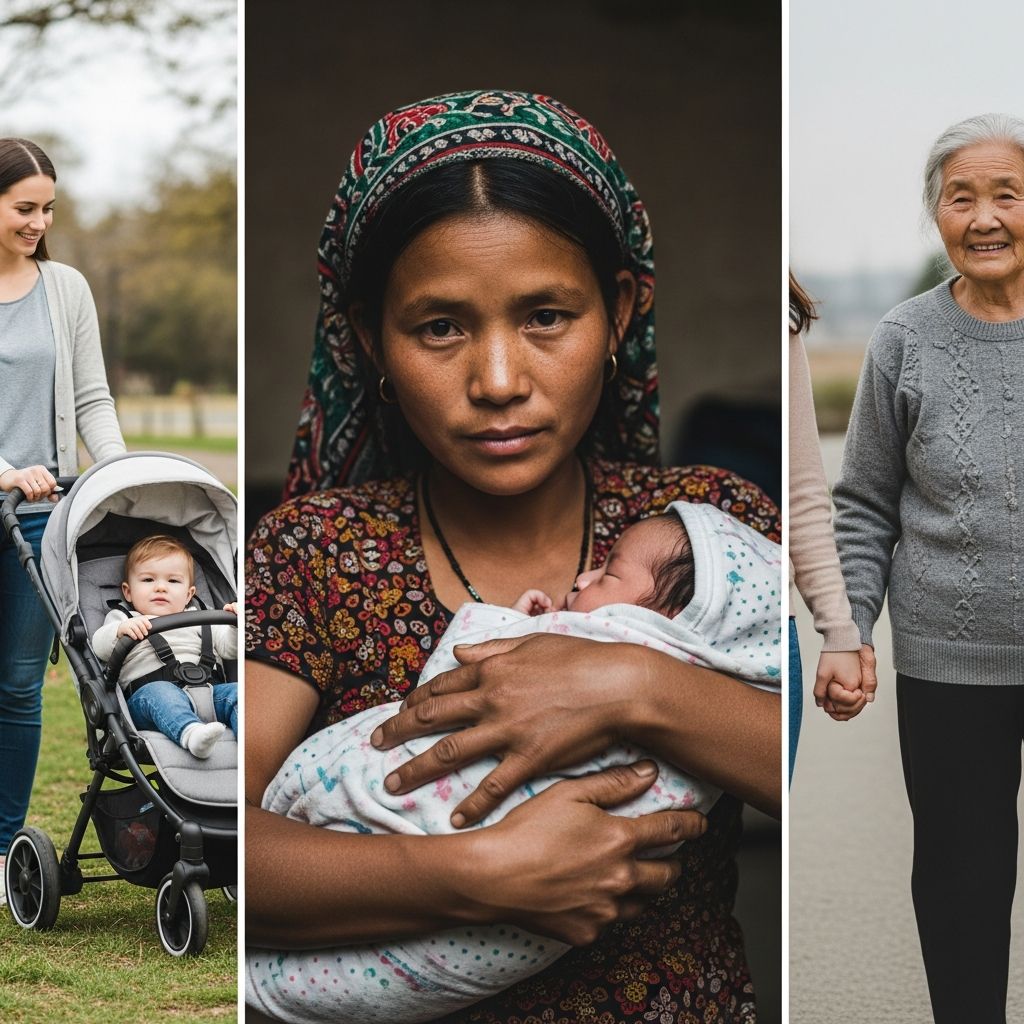
The Transcendent Power of Maternal Connection
Motherhood represents one of humanity’s most profound and universal experiences, yet it often goes unrecognized as a force capable of bridging seemingly insurmountable divides. While governments negotiate treaties and military leaders strategize across battle lines, mothers continue to reach across borders with compassion, understanding, and an unwavering commitment to protecting life. This fundamental human experience creates a silent network of solidarity that operates independently of political structures, ideological differences, and geographical separation.
The bond between a mother and her child is instinctive and primal, rooted in biology but transcending it through emotional investment and sacrifice. When a woman becomes a mother, she joins a global sisterhood that shares common fears, aspirations, and vulnerabilities. This shared identity becomes particularly powerful during times of crisis, when the maternal instinct overrides national allegiances and political considerations. Whether a woman lives in Eastern Europe, Asia, Africa, or the Americas, the experience of nurturing, protecting, and advocating for one’s children remains fundamentally similar.
When War Challenges Maternal Responsibilities
The ongoing conflict in Eastern Europe has illuminated both the challenges mothers face and the remarkable resilience they demonstrate. Ukrainian mothers, in particular, have had to navigate unprecedented circumstances while maintaining their primary role as protectors and caregivers. Air raid sirens punctuate daily life, constant displacement disrupts family routines, and the ever-present threat of violence creates an environment where normal childhood development becomes a luxury rather than a given.
A staggering 74 percent of Ukrainians have experienced separation from close family members since the full-scale invasion began, with mothers bearing much of the burden of holding families together under extraordinary stress. These women have had to make impossible decisions: whether to evacuate their children to safety abroad, separate from spouses serving in the military, or remain in dangerous areas to protect their homes and livelihoods. The psychological toll of these choices creates a unique form of maternal anxiety that transcends typical parenting concerns.
Despite these challenges, Ukrainian mothers have continued to give birth, raise children, and maintain household operations amid the chaos of conflict. This persistence reflects not merely stubbornness but a deep maternal conviction that life must continue, that hope must be preserved, and that children deserve normalcy even when their surroundings are anything but normal.
Building Bridges Between Enemy Lines
Perhaps most remarkably, maternal compassion has created unexpected pathways for cooperation even between opposing sides of the conflict. Mothers of soldiers from both Ukrainian and Russian forces have established regular communication channels to share information, provide mutual support, and advocate for the humane treatment of prisoners of war. These Zoom conferences, occurring every several weeks, represent a stunning example of how maternal concern supersedes national loyalty.
The initiative operates on a simple but powerful principle: all soldiers are someone’s children, regardless of which flag they fight under. This perspective, articulated by Ukrainian leaders like Alla Makruch, reflects a fundamental recognition that maternal love knows no nationality. Russian mothers worry about their sons imprisoned in Ukrainian territories with the same intensity that Ukrainian mothers worry about their captured soldiers. In response to this shared concern, these women have collaborated on several concrete projects.
One significant achievement involves advocating for increased access of international organizations to prisoner detention facilities. By ensuring that neutral observers can monitor conditions and facilitate communication, these mothers have worked to guarantee that imprisoned soldiers maintain contact with their families and receive adequate healthcare. Additionally, Ukrainian mothers successfully pushed for a policy granting Russian POWs daily phone privileges—a humanitarian measure that exceeds Geneva Convention requirements—in hopes that similar considerations might eventually be extended to Ukrainian prisoners held in Russia.
The Psychological Dimension of Wartime Mothering
The mental health challenges facing mothers in conflict zones extend far beyond typical parenting stress. Constant hypervigilance, repeated trauma exposure, and the responsibility for children’s emotional wellbeing create a cumulative psychological burden that demands recognition and support. Many mothers report experiencing what can only be described as chronic stress disorder, where the nervous system remains in a perpetual state of alert.
Organizations working with affected populations have documented the need for specialized mental health interventions. Rehabilitation programs specifically designed for wartime recovery have become essential, offering mothers space to process their experiences and develop coping mechanisms for continued challenges. These programs recognize that a mother’s ability to function directly impacts her children’s emotional development and resilience. By supporting maternal mental health, these initiatives protect the wellbeing of entire families.
The fog of survival that many mothers describe—where days blur together in an endless cycle of crisis management—reflects the cognitive impact of prolonged stress. Yet despite this mental exhaustion, mothers continue performing their caregiving duties, managing households, and often working to support their families. This apparent contradiction between inner devastation and outer functionality represents one of motherhood’s quiet heroisms.
Global Implications of Maternal Solidarity
| Maternal Challenge | Prevalence | Impact on Children |
|---|---|---|
| Family Separation | 74% of Ukrainians affected | Emotional trauma, developmental disruption |
| Housing Instability | Widespread displacement | Educational interruption, psychological stress |
| Loss of Parental Care | 17,241+ children without guardians | Increased vulnerability, need for foster placement |
| Economic Hardship | Near total infrastructure destruction | Food insecurity, reduced access to services |
The situation in Ukraine demonstrates how conflict amplifies pre-existing inequalities in maternal circumstances. While wealthy nations provide comprehensive support systems for new mothers and young children, conflict zones strip away these safety nets entirely. The infrastructure that enables mothers to access healthcare, education, and economic opportunities collapses, forcing women to improvise solutions with minimal resources.
Yet the international response also reveals something positive about humanity: recognition that mothers everywhere deserve support and protection. International organizations, non-governmental agencies, and global maternal health networks have mobilized to provide assistance, recognizing that maternal wellbeing during crisis has profound implications for future generations. The principle that transcends borders is simple: children deserve safety, and mothers deserve the resources to provide it.
Reimagining Community and Support Networks
Traditional support systems for mothers—extended family networks, community organizations, religious institutions—often collapse during conflict. This destruction forces mothers to rebuild networks from scratch, connecting with other women facing similar challenges. These new communities, forged in adversity, often develop a special intensity and commitment that might not exist under normal circumstances.
Mothers who have endured separation from their children, either through evacuation or military service, develop profound empathy for other mothers facing similar situations. This shared experience creates bonds that transcend ordinary friendship, resulting in support systems that are often more reliable and emotionally intimate than pre-conflict relationships. Women learn to recognize and meet each other’s needs with remarkable intuition, having experienced similar losses and fears themselves.
The digital revolution has enabled these networks to operate across vast distances. Virtual support groups, messaging platforms, and video conferencing allow mothers to maintain connections despite physical separation. While technology cannot replace in-person community, it provides a lifeline for isolated mothers, creating spaces where experiences can be validated and practical advice exchanged.
The Role of Advocacy and Policy Change
Mothers have historically played crucial roles in social movements and policy advocacy, and their involvement in conflict resolution efforts represents a continuation of this pattern. By organizing collectively and articulating demands based on their direct experience with war’s consequences, mothers have influenced government policies and international humanitarian standards. Their voices carry particular moral weight because they speak from the perspective of someone directly responsible for protecting vulnerable human beings.
The policy victories achieved through maternal advocacy—such as daily phone privileges for prisoners and commitments to international monitoring—represent tangible improvements to human dignity during conflict. More importantly, they demonstrate that sustained, organized pressure from affected populations can achieve results even when political negotiations stall. Mothers have proven themselves to be effective advocates precisely because their motivations are transparent and their demands are rooted in concrete human needs rather than abstract ideological positions.
Crossing Cultural and Political Divides
The capacity of mothers to work cooperatively across political lines reflects a deeper truth: underneath political structures and national identities lie common human experiences and shared values. A Russian mother’s anxiety about her imprisoned son’s treatment mirrors a Ukrainian mother’s concern for her captured husband. Both women understand the vulnerability of military service and the uncertainty of conflict. Both want their family members to survive, be treated humanely, and eventually return home.
This recognition that shared maternal experience transcends political division offers hope for broader reconciliation efforts. When former adversaries can recognize each other’s common humanity through the lens of parenthood, the possibility emerges for more profound understanding and eventual peace. Mothers who have cooperated to advocate for prisoners’ wellbeing may become ambassadors for broader peaceful coexistence, demonstrating through their actions that the other side consists of real people with real families, not abstract enemies.
Supporting Mothers in Crisis: Essential Actions
- Mental Health Resources: Specialized trauma counseling and rehabilitation programs designed specifically for mothers experiencing prolonged stress and repeated exposure to violence
- Economic Support: Direct financial assistance, employment programs, and livelihood restoration initiatives that enable mothers to provide for their families
- Healthcare Access: Comprehensive medical services including reproductive health, preventive care, and treatment for war-related injuries and illnesses
- Educational Continuity: Flexible schooling options that accommodate displacement and allow children to continue their development despite disrupted circumstances
- Safe Housing: Stable, secure living arrangements that provide the foundation for family stability and child development
- Community Connection: Programs that facilitate maternal peer support and reduce the isolation that intensifies psychological stress
The Lasting Impact on the Next Generation
Children who grow up with mothers navigating conflict environments experience developmental impacts that extend far beyond childhood. The stress hormones to which they are exposed during critical developmental periods can affect brain structure, emotional regulation, and long-term health outcomes. Yet research also suggests that maternal love and stability, even under difficult circumstances, provides crucial protective factors that enhance resilience.
Mothers facing these circumstances often report that their children demonstrate remarkable adaptability and maturity beyond their years. The young people emerging from these environments frequently develop heightened empathy, a realistic understanding of human suffering, and a commitment to preventing future conflict. In this way, mothers’ efforts to maintain normalcy and hope during dark times may be cultivating a generation with particular wisdom and compassion.
The bonds forged between mothers during crisis years often extend to their children, creating international networks of solidarity among the next generation. Children who have experienced war alongside their mothers frequently become advocates for peace and human rights, carrying forward the lessons their mothers learned about shared humanity transcending political boundaries.
Frequently Asked Questions
Q: How do mothers communicate across conflict lines?
A: Mothers coordinate through regular video conferences organized by maternal advocacy groups, supplemented by messaging platforms and international organization intermediaries who facilitate safe communication between separated family members.
Q: What specific policies have mothers successfully advocated for?
A: Ukrainian mothers successfully championed daily 15-minute phone call privileges for Russian POWs, exceeding Geneva Convention requirements, and worked to establish international monitoring access to detention facilities.
Q: How many children have been affected by parental loss due to conflict?
A: As of October 2024, 1,969 children have lost parental care due to direct war consequences, with 17,241 children total without parental care from various conflict-related reasons, and 20,000 more forcibly displaced.
Q: What types of mental health support are available for affected mothers?
A: Specialized rehabilitation programs, including three-week “Recovery During War” initiatives, provide trauma counseling, peer support groups, and psychological interventions designed specifically for mothers experiencing wartime stress.
Q: What percentage of the population has experienced family separation due to conflict?
A: Approximately 74 percent of the Ukrainian population has been separated from close family members since the full-scale invasion began in 2022.
References
- POW Mothers from Russia and Ukraine are taking matters in their own hands — Conflict Field Notes. 2024. https://www.conflictfieldnotes.com/p/pow-mothers-from-russia-and-ukraine
- Power of Mothers — Nova Ukraine. 2024. https://novaukraine.org/power-of-mothers/
- Hardships Ukrainian Mothers Face Raising Children During War — NBC News. 2024. https://www.youtube.com/watch?v=yuplt7D2vvw
- More foster families needed for children who have lost parental care in the war in Ukraine — SOS Children’s Villages. 2024. https://www.sos-childrensvillages.org/news/three-years-of-war-in-ukraine
- Ukrainian Moms Embrace Life After Nine Months Of War — NBC News. 2023. https://www.youtube.com/watch?v=AlsNpvKJoaE