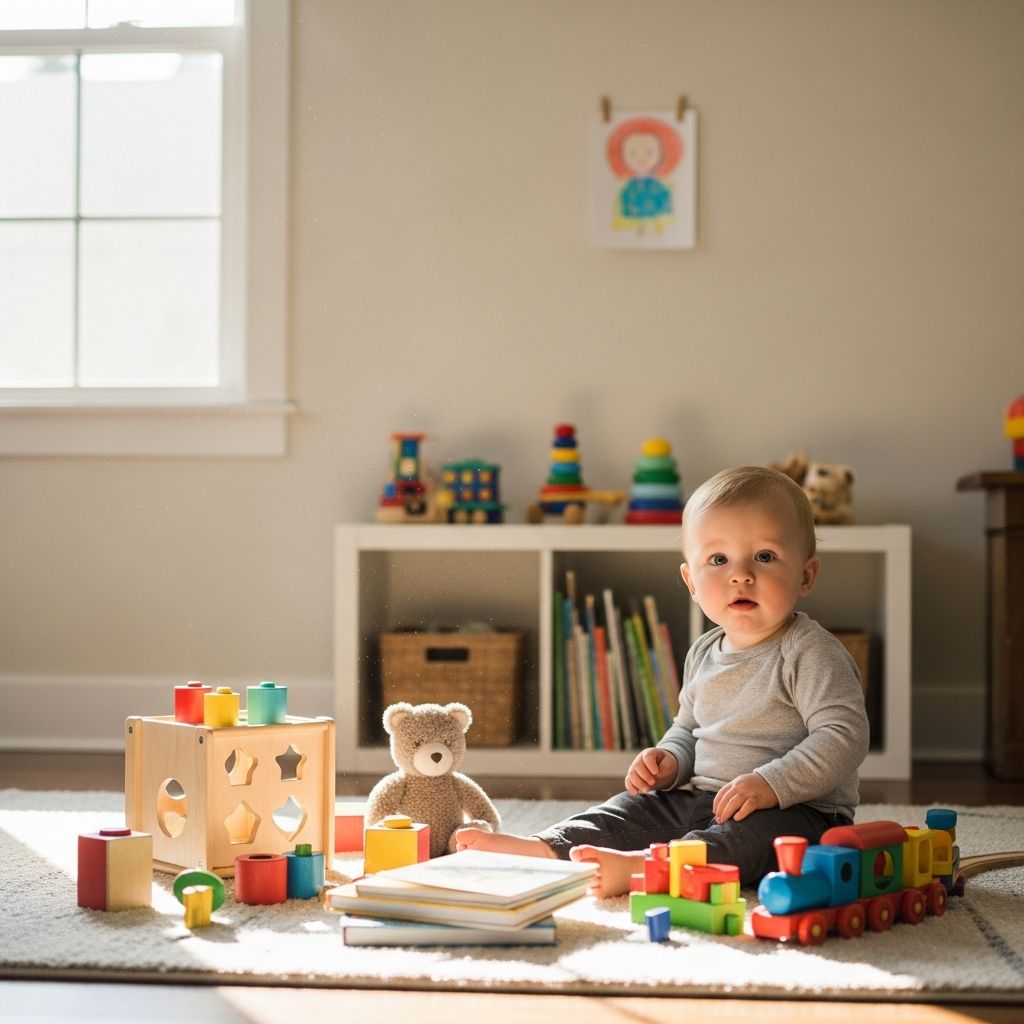
Determining the right number of toys for children involves balancing fun, learning, and home organization. Studies consistently show that fewer toys promote deeper engagement, creativity, and cognitive growth compared to overflowing play areas.
Why Limiting Toys Enhances Play Quality
Children thrive with a curated selection of toys rather than an abundance. A key study from the University of Toledo observed toddlers aged 18-30 months in play sessions with either 4 or 16 toys. Those with fewer options played longer, more creatively, and with greater complexity per toy. This aligns with findings that excess toys cause overstimulation, distraction, and shorter attention spans.
In environments with limited toys, children explore items thoroughly, inventing new uses and building problem-solving skills. Overloaded spaces, common in many homes where families spend hundreds annually on toys, lead to superficial interactions and clutter.
Age-Specific Toy Recommendations
Tailor toy quantities to developmental stages for maximum benefit. Here’s a breakdown based on expert guidelines:
- Infants (0-12 months): 4-8 sensory-focused items like soft rattles, mirrors, or textured balls to stimulate early senses without overwhelming.
- Toddlers (1-3 years): 8-16 toys mixing categories such as blocks, simple puzzles, and pretend play pieces to foster motor skills and imagination.
- Preschoolers (3-5 years): Up to 20 items, emphasizing open-ended toys like building sets or art materials to support emerging creativity and social play.
These ranges prevent choice paralysis, allowing kids to master toys deeply rather than flitting between them.
Implementing Toy Rotation Strategies
Toy rotation, inspired by Montessori principles, involves cycling a subset of toys to maintain novelty and focus. Store extras out of sight and swap every 1-2 weeks based on your child’s interest cues, like boredom or fixation on one item.
Steps for effective rotation:
- Observe play patterns: Keep favorites accessible if they’re sparking prolonged engagement.
- Categorize toys: Include one from gross motor (e.g., balls), fine motor (e.g., nesting cups), pretend play, and art to cover skills broadly.
- Create accessible zones: Place rotated toys on low shelves in main living areas for independent access.
- Refresh periodically: Introduce one new item occasionally to spark excitement without excess.
This method declutters spaces, revives interest in existing toys, and promotes a calm atmosphere for sustained play.
Key Benefits of a Minimalist Toy Approach
| Benefit | Description | Supporting Evidence |
|---|---|---|
| Improved Focus | Children sustain attention longer on fewer items, reducing distractions. | University of Toledo study: Play duration doubled with 4 toys vs. 16. |
| Boosted Creativity | Limited options encourage invention and multi-use of toys. | Toddlers showed more complex play in low-toy settings. |
| Independent Play | Fewer choices build confidence and self-directed exploration. | Promotes longer solo sessions and problem-solving. |
| Better Social Skills | Less competition over toys fosters sharing and cooperation. | Abundance hinders interactions; scarcity encourages negotiation. |
| Home Organization | Reduces clutter, easing cleanup and parental stress. | Families report calmer environments. |
Quality trumps quantity: Invest in durable, versatile toys over disposable trends. Everyday household items like pots or scarves often suffice for imaginative play.
Common Challenges and Solutions
Parents face hurdles like gifts from relatives or guilt over ‘depriving’ kids. Address these by:
- Setting toy limits: Use clear bins labeled by category, rotating as needed.
- Communicating boundaries: Politely request experiences or contributions to a ‘toy fund’ for thoughtful purchases.
- Donating extras: Involve children in sorting to teach generosity.
- Tracking engagement: If a toy sits unused for weeks, rotate it out.
Transition gradually; sudden cuts can cause resistance. Start with one shelf and expand minimalism over time.
Expert Insights on Play and Development
Deborah MacNamara, author of Rest, Play, Grow, emphasizes that play needs no minimum toys—kids naturally explore environments. By age 3, preferences emerge (e.g., building or role-play), so curate accordingly while leaving space for imagination.
Le Toy Van highlights that 20 minutes of engaged parent-child play with few toys outperforms passive hours amid clutter. This underscores prioritizing interaction quality.
Frequently Asked Questions
What if my child gets bored with few toys?
Monitor cues and rotate promptly. Boredom often signals over-familiarity; fresh rotations reignite interest without adding more.
Are household items better than store-bought toys?
Yes, items like bowls or boxes spark creativity equally or more, teaching resourcefulness.
How do I handle gifts that add to the pile?
Thank graciously, then rotate into storage. Suggest consumables like books or outings as alternatives.
Does this work for multiple children?
Absolutely—assign shared rotations by age group, promoting cooperation over ownership disputes.
What’s the long-term impact on development?
Sustained focus, creativity, and independence lay foundations for academic and social success.
Practical Tips for Parents
Curate wisely: Prioritize open-ended toys like blocks, dolls, or vehicles that adapt to growing skills.
Quality time matters: Join play briefly to model creativity, then step back for independence.
Declutter seasonally: Review collections quarterly, keeping only loved, age-appropriate items.
Embracing fewer toys transforms playtime into meaningful growth opportunities, fostering resilient, imaginative children in organized homes.
References
- Mastering Montessori Toy Rotation – How Many Toys to Rotate for Toddlers — Bumbu Toys. 2023. https://www.bumbutoys.com/blog/wooden-toys/mastering-montessori-toy-rotation-how-many-toys-to-rotate-for-toddlers
- How Many Toys Does A Child Really Need? — Le Toy Van. 2023. https://letoyvan.com/blogs/news/how-many-toys-does-a-child-really-need
- How many toys do kids really need? — Today’s Parent. 2023. https://www.todaysparent.com/family/parenting/how-many-toys-do-kids-really-need/
- Less Is More: Toys and Their Impact on Children’s Cognitive and Neurological Development — Jewish Child and Family Services (citing University of Toledo study in Journal of Infant Behavior and Development). 2018-01-16. https://www.jcfs.org/blog/less-more-toys-and-their-impact-childrens-cognitive-and-neurological-development