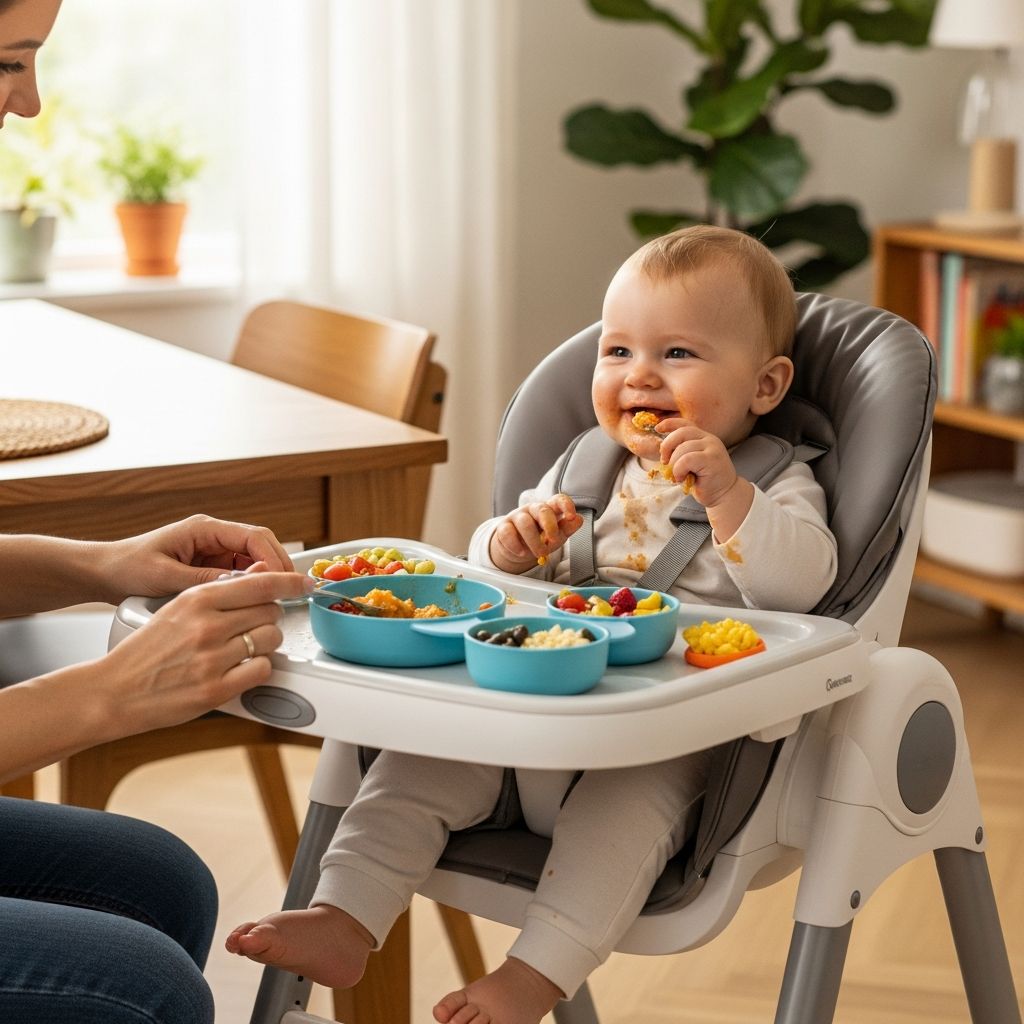
High chairs are incredibly useful, but they are not meant to be a place where babies and toddlers spend large chunks of their day. Understanding how long is reasonable in the high chair—and how to respond when your child is clearly “done”—protects safety, supports development, and reduces mealtime drama.
This guide explores realistic time limits, age-appropriate expectations, and calm, respectful ways to end meals without power struggles.
Why Time Limits Matter
High chairs restrain movement, which is helpful for safety while eating but can become stressful for young children when used too long. Physically, babies and toddlers need frequent opportunities to move, explore, and change positions to support motor skills and healthy circulation. Emotionally, being strapped in for extended periods can lead to frustration, resistance, and negative associations with eating.
When high chair time is kept reasonable and predictable, children feel more secure. They can learn that meals have a clear beginning and end, and that their signals of being finished will be respected.
Recommended High Chair Time by Age
Every child is different, but most will have a natural limit to how long they can sit happily. Think of these as gentle guidelines, not rigid rules.
| Age | Typical Comfortable Time in High Chair | Key Focus |
|---|---|---|
| 6–9 months | 10–20 minutes | Exploring textures, learning to sit, short positive experiences |
| 9–18 months | 15–25 minutes | Practicing self-feeding, joining family meals, building routine |
| 18–36 months | 20–30 minutes | Eating more independently, learning table manners, staying seated safely |
If your child wants to get down earlier than these ranges, it does not mean anything is wrong. It simply signals that their body or brain is done with sitting for now. The goal is not to stretch them as long as possible, but to create calm, focused mealtimes that end before everyone melts down.
Signs Your Child Has Had Enough
Instead of watching the clock alone, pay close attention to your child’s cues. They communicate when their body and brain are done long before they can use words.
- Twisting, arching, or trying to climb out of the high chair.
- Throwing food, cups, or utensils repeatedly after a clear “no.”
- Whining, crying, or shouting instead of eating or playing with food.
- Pushing the tray away or turning their head from offered food.
- Looking away, slumping, or “checking out” instead of engaging with food or family.
These behaviors are not “bad manners” in a baby; they are communication. The message is usually: “I’m done,” “I’m overwhelmed,” or “I need a change.” Responding to those signals calmly teaches children that their needs matter and that meals are not a battleground.
The Risks of Keeping Kids in Too Long
Occasionally running a few minutes over your ideal time is not a crisis. Problems arise when extended high chair time becomes routine or when it is used for convenience rather than connection.
Safety Concerns
- Restless children are more likely to twist, stand, or push off the table, increasing the risk of falls.
- Frustrated toddlers may try to escape their straps, potentially getting stuck in unsafe positions.
- Using a high chair as a playpen or long-term “parking spot” raises the chances of accidents simply because the child is in it longer.
Emotional and Behavioral Impact
- Feeling trapped can turn mealtimes into a source of anxiety or protest instead of comfort and connection.
- Children may associate the high chair with power struggles, making it harder to sit peacefully even for short meals.
- When their “I’m done” signals are regularly ignored, kids often escalate to bigger behaviors—screaming, throwing, or refusing to come to the table next time.
Developmental Considerations
- Babies and toddlers need variety: time on the floor, time moving, time exploring—that’s how they learn about their bodies and the world.
- Excessive restraint can reduce chances for crawling, cruising, climbing, and practicing balance.
- Learning to listen to their own hunger and fullness cues depends on being allowed to stop eating when they are finished.
Creating a Healthy Mealtime Routine
A simple, predictable mealtime rhythm helps your child know what to expect and reduces resistance. Instead of micromanaging minutes, focus on setting up the whole experience thoughtfully.
Before the Meal
- Offer active play or floor time beforehand so your child is not bursting with unused energy in the chair.
- Aim for a consistent mealtime schedule, with snacks spaced so your child arrives moderately hungry, not starving or completely full.
- Gather what you need (food, wipes, cup, utensils) before buckling your child in to minimize delays once they are seated.
During the Meal
- Sit with your child whenever possible so meals feel like shared time, not a solo task they must complete.
- Keep distractions low: turning off TVs and putting phones aside helps children focus long enough to eat.
- Speak calmly and pleasantly, modeling the mood you want—meals are a chance for connection, not correction.
Ending the Meal
- When your child is clearly done, state it simply: “Looks like your tummy is finished. Let’s get you down now.”
- Clean hands and face while they are still buckled (if they tolerate it), then unbuckle and lift them out promptly.
- Avoid “just one more bite” battles. The goal is to protect trust around food and your child’s internal sense of hunger and fullness.
Handling Common Mealtime Challenges
Even with a thoughtful routine, real life with kids is messy. The key is to interpret tricky behaviors as communication rather than defiance.
Challenge: Food Throwing
Many toddlers experiment with dropping or throwing food. Sometimes it is curiosity (“What happens when it falls?”), sometimes boredom, and sometimes a clear “I’m done.”
- Stay calm and neutral; big reactions often turn it into a fun game.
- After the first toss, you might say, “Food stays on the tray. If you throw it again, that tells me you’re all done.”
- If it continues, calmly end the meal: remove the tray, clean up, and help your child down. This teaches that throwing means mealtime is over.
Challenge: Wanting to Get Down and Then Back Up
Some toddlers demand to be let down, only to ask for more food minutes later. This can be exhausting for parents and confusing for the child.
- Use a simple boundary: once they get down, the meal is over until the next scheduled snack or meal.
- You can offer a gentle reminder: “If you get down now, we’re all done eating until snack time.”
- If they still choose to get down, follow through kindly. Consistency helps them learn to eat while at the table.
Challenge: Refusing the High Chair Altogether
Occasionally, toddlers hit a phase where they refuse to sit in the high chair at all. This can be a sign they are ready for a booster or a small table, or that they associate the chair with negative experiences.
- Consider transitioning to a booster seat at the family table, with safe straps and foot support.
- Involve your child in the change: let them choose a placemat, cup color, or a special napkin to make the new spot inviting.
- Keep expectations realistic: they may still sit for only a short time, and that is okay.
Using the High Chair Safely (Without Fear)
Safety and connection go hand in hand. You do not need to be anxious every moment your child is in the high chair, but a few habits go a long way.
- Always use the safety straps as intended, snug but comfortable, and never rely on the tray alone to keep a child in place.
- Place the high chair on a stable surface, with all legs fully open and locked if it folds.
- Keep the chair far enough from counters, tables, and walls so your child cannot push off and tip themselves.
- Do not leave your child unattended in the high chair, even “just for a minute,” especially once they are mobile.
- Avoid using the high chair for non-mealtime activities like long play sessions, TV time, or naps; other spaces are safer and more comfortable.
Supporting Independence While Respecting Limits
One of the main goals of early mealtimes is to help children develop a healthy relationship with food and their own bodies. Time limits and boundaries can actually support that goal when they are delivered with warmth and respect.
- Offer choices within structure: for example, two snack options, or letting your child decide between water and milk.
- Let your child practice self-feeding, even if it is messy. A sense of control at the table often reduces battles over how long they sit.
- Respect when they stop eating. You decide what and when to serve; your child decides how much, or whether to eat at all.
This division of responsibility around food helps children tune into their own hunger and fullness signals over time, which is far more valuable than getting them to sit for a specific number of minutes.
Sample Mealtime Flow for Different Ages
Below is a simple example of how a mealtime might run for different age groups, focusing on a reasonable high chair duration and gentle transitions.
| Age | Example Mealtime Flow |
|---|---|
| 7 months | 5 minutes of floor play → buckle into high chair → offer a few soft pieces of food and sit nearby → chat and smile, no pressure → as soon as baby turns away or fusses for a couple of minutes, end the meal and move to playtime. |
| 15 months | Wash hands → child climbs or is lifted into high chair → simple meal with 2–3 options → parent sits and eats too → after about 15 minutes or when child starts throwing or twisting, calmly announce that mealtime is ending and help them down. |
| 2.5 years | Child helps carry napkins to table → sits in high chair or booster → family shares a meal and conversation → a 20–25 minute limit is plenty → give a 1–2 minute warning before ending: “Two more minutes, then we’re all done and you can go play.” |
Frequently Asked Questions
Is it ever okay to keep my child in the high chair longer than 30 minutes?
Occasional longer meals, such as holidays or eating out, happen. The priority is to watch your child’s cues and give them breaks when they clearly need to move. You might take them out midway to stretch, walk around, or switch to a lap seat for the final few minutes if that feels safe and manageable.
My toddler barely eats and wants to get down in 5 minutes. Should I force longer sitting?
Forcing your child to stay seated often backfires, increasing resistance and stress around eating. Instead, keep offering regular meals and snacks, stay relaxed about how much they eat, and ensure they arrive at the table hungry by limiting grazing. Short, pleasant meals done consistently are more effective than long, tense ones.
Can I use the high chair while I cook or clean up if my baby is happy in it?
Short stretches while you prepare food or clean up are usually fine if your baby is content and supervised. Aim to balance this with plenty of floor and playtime, and avoid letting the high chair become a default holding spot whenever you need two hands. If you notice your baby starting to fuss or twist, it is a sign to change positions.
When should we transition out of the high chair completely?
Most families transition between 18 months and 3 years, depending on the child’s size, safety awareness, and temperament. Signs your child may be ready include climbing in and out with help, staying seated (with reminders) for short periods, and strong resistance to the high chair itself. A booster with straps or a child-sized table can be a helpful next step.
What if my child refuses to get out of the high chair?
Occasionally, children want to stay because they are still enjoying being with you, not because they want to keep eating. You can empathize—“You’re having fun sitting here”—and then gently hold the boundary: “Mealtime is finished, so it’s time to get down. Let’s choose a toy to play with next.” Keeping the routine consistent typically reduces protests over time.
Key Takeaways for Parents
- High chairs are tools for safe, focused eating—not long-term holding devices.
- Most babies and toddlers do best with 10–30 minutes in the high chair, depending on age and temperament.
- Your child’s behavior is communication; twisting, throwing, and shouting are usually clear “I’m done” signals.
- Calm, predictable routines and respectful limits help children feel secure and build healthy lifelong habits around food.
When you treat high chair time as a short, shared experience instead of a test of endurance, mealtimes become more peaceful for everyone—your child included.