Most of us have opened the refrigerator, stared at a questionable container or a faded date on a package, and wondered: “Is this still okay to eat?” Understanding what food dates really mean and how long foods can safely stay in the refrigerator can protect your family from foodborne illness and help you waste less food.
This guide explains how to read food labels, outlines typical refrigerator shelf lives, and offers practical strategies for storing food safely and confidently.
1. What Food Date Labels Really Mean
In many countries, food date labels are about quality more than safety, and they are not regulated in a uniform way.
1.1 Common date label phrases
Manufacturers use several types of labels. These are the most frequent:
- “Best if used by” / “Best before” – Indicates when the product is likely to be at peak flavor or quality; it is not a safety date for most foods.
- “Sell by” – Tells the store how long to display the product; consumers can usually still use the food for a period after this date if it is stored correctly.
- “Use by” – Usually the last date recommended for best quality. For many refrigerated, perishable foods, this is the closest thing to a safety date and should be taken seriously.
- “Freeze by” – Suggests when to freeze for best quality; freezing before this date can essentially pause spoilage processes.
- “Expiration” or “Expires on” – A true expiration date. When used on food, it typically means you should not consume the product after that date.
Because these labels are mostly about quality, many foods are still safe shortly after the printed date if they have been handled and stored properly at 40 °F (4 °C) or below.
1.2 Why there is so much confusion
Consumers often treat any printed date as a strict safety deadline, which can lead to throwing away perfectly safe food. Studies and government guidance point out that:
- There is no single national standard for most food date labels in the U.S.; manufacturers choose their own wording and time frames.
- Many products are safe days or even weeks after the date if refrigerated promptly and kept cold.
- True safety depends on temperature control, cleanliness, and limiting the time food spends in the “danger zone” (40–140 °F / 4–60 °C), not only on the printed date.
2. Fridge Temperature and Food Safety Basics
Correct refrigerator and freezer temperatures are the foundation of safe food storage.
2.1 Recommended temperatures
- Refrigerator: 40 °F (4 °C) or below.
- Freezer: 0 °F (-18 °C) or below.
At these temperatures, harmful bacteria grow much more slowly, and many foods remain safe for the recommended storage times.
2.2 How to keep your refrigerator safe
- Use a refrigerator thermometer and place it in the warmest area (usually the door or front) to ensure the entire unit stays at or below 40 °F.
- Avoid overfilling the fridge; leave space for air to circulate evenly.
- Promptly refrigerate perishable foods within 2 hours of cooking or purchasing, or within 1 hour if the ambient temperature is above 90 °F (32 °C).
- Store raw meat, poultry, and seafood on the lowest shelf in leakproof containers to prevent drips onto ready-to-eat foods.
3. How Long Foods Last in the Refrigerator
The table below summarizes typical safe storage times for common refrigerated foods, based largely on U.S. federal guidance. Always check food with your senses before eating, even if it is within these time frames.
| Food category | Examples | Typical safe storage time | Notes |
|---|---|---|---|
| Fresh meat & poultry (raw) | Ground beef, chicken parts, pork chops | 1–2 days for ground meat and poultry; up to 3–5 days for whole cuts | Freeze if you will not cook within this time. |
| Cooked meat & poultry | Roasts, chicken breasts, meatloaf | 3–4 days | Store in shallow containers to cool quickly. |
| Fish & shellfish (raw) | Fresh fish fillets, shrimp, scallops | 1–2 days | Freeze promptly if not using quickly. |
| Deli meats | Packaged lunch meat, sliced deli turkey | 3–5 days after opening | Unopened packages may last longer; follow label plus these guidelines. |
| Dairy (fluid) | Milk, cream | About 5–7 days after opening | Often safe a bit beyond the “sell by” if kept very cold and smells normal. |
| Yogurt & soft cheeses | Yogurt cups, cottage cheese, cream cheese | About 1–2 weeks for yogurt; 1–2 weeks for most soft cheeses | Discard if moldy or if odor or texture changes. |
| Eggs (in shell) | Raw shell eggs | 3–5 weeks from purchase | Keep in original carton in the main body of the fridge, not the door. |
| Eggs (cooked) | Hard-cooked eggs | About 1 week | Store in a covered container in the refrigerator. |
| Leftovers & prepared foods | Casseroles, soups, cooked grains | 3–4 days; never more than 7 days for any refrigerated ready-to-eat food | FDA Food Code recommends discarding perishable foods after 7 days maximum. |
| Opened sauces & condiments | Mayonnaise, salad dressing, ketchup | Often 1–2 months or more | Follow label; discard if odor, color, or texture changes. |
For longer storage, move foods to the freezer at 0 °F (-18 °C) or below. Properly frozen foods remain safe indefinitely, although quality usually declines over time.
4. Using Your Senses: When to Throw Food Away
Dates and charts are helpful, but your senses are critical. Some foods may spoil faster than expected, especially if the fridge has been too warm or food sat out too long.
4.1 Warning signs of spoilage
Discard food immediately if you notice:
- Off or sour odor that is unusual for the product.
- Visible mold, unless it is a type of cheese or food where surface mold is expected and can be safely trimmed according to expert guidance.
- Slime or sticky film on meat, poultry, or fish.
- Gas bubbles, spurting liquid, or bulging containers, especially in fermented or canned products, which can indicate dangerous bacterial activity.
- Major color changes that suggest spoilage rather than normal oxidation.
Never taste food to see if it is still safe; a small amount of some harmful bacteria or toxins can make you sick even if the food still tastes normal.
4.2 Special caution with high-risk foods
Some foods pose higher risks when stored too long or at improper temperatures. Be extra cautious with:
- Meat, poultry, and seafood – Discard if there is any doubt about storage time or temperature.
- Cooked rice, pasta, and potatoes – Can support growth of bacteria that produce toxins not destroyed by reheating; follow the 3–4 day guideline.
- Sprouts, unpasteurized juices, and soft cheeses made with unpasteurized milk – These carry higher inherent risks and are especially concerning for pregnant people, young children, older adults, and those with weakened immune systems.
5. Strategies to Reduce Waste and Stay Safe
Safe food storage does not have to mean throwing away half your fridge contents. With a few planning and organization strategies, you can both protect your health and use more of what you buy.
5.1 Plan purchases with storage in mind
- Shop with a list based on what you can realistically cook in the next few days.
- Buy perishable foods closer to when you plan to use them, especially fresh fish and poultry.
- When buying discounted items nearing their date, plan to cook or freeze them right away.
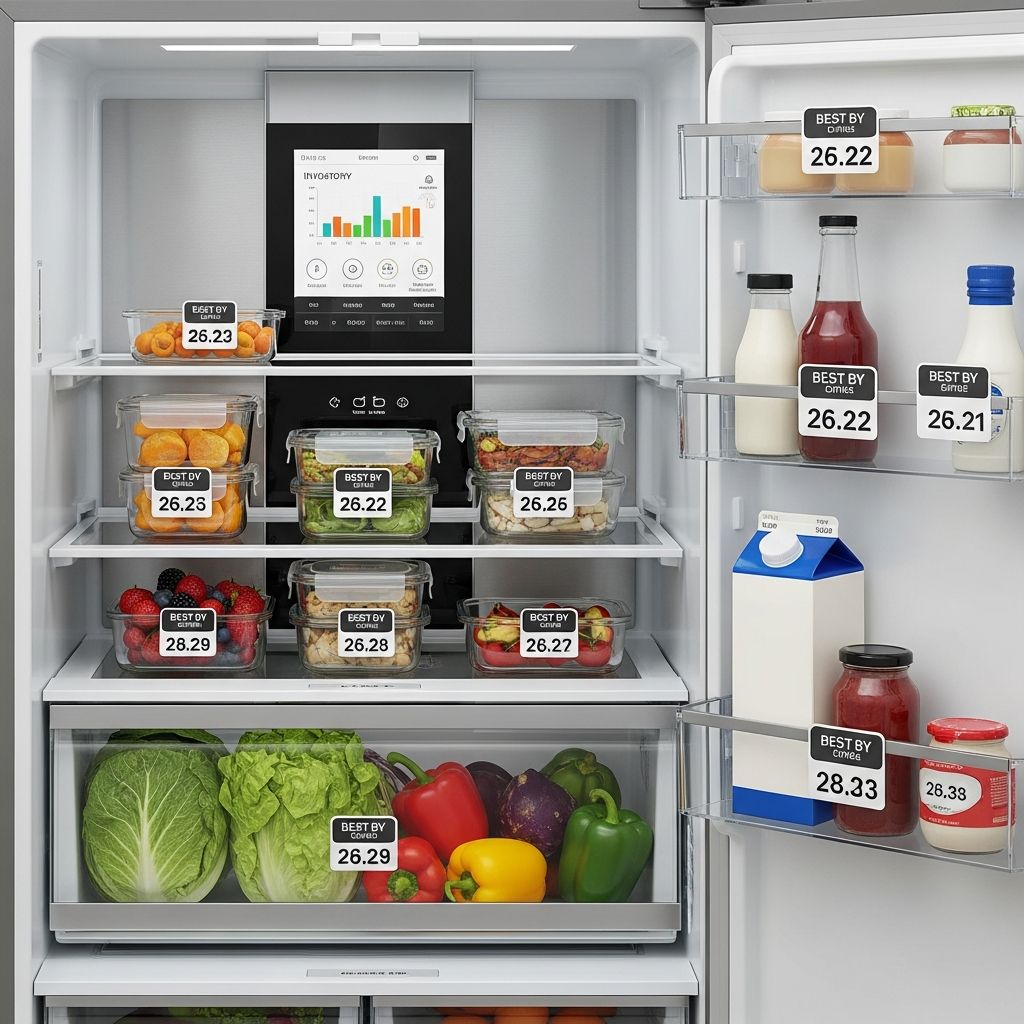
5.2 Label food at home
- Use masking tape or freezer labels to mark the date you opened a package or stored leftovers.
- Write both the contents and the date on containers so you are not forced to guess later.
- For frozen items, add a “use within” month based on typical freezer storage recommendations (for example, 2–3 months for cooked meats for best quality).
5.3 Organize your refrigerator layout
Setting up your fridge thoughtfully helps ensure you use foods while they are still at their best.
- Place ready-to-eat foods (cooked items, leftovers, salads) on the upper shelves, away from raw meat juices.
- Keep raw meats and seafood on the bottom shelf in trays or containers to catch drips.
- Use the crisper drawers for fruits and vegetables, adjusting humidity settings if available.
- Create a “eat first” area where you keep items that are close to their recommended storage limit.
6. Leftovers: Safe Cooling, Storing, and Reheating
Leftovers are convenient and can save time and money, but they must be handled correctly to remain safe.
6.1 Cooling leftovers quickly
- Refrigerate leftovers within 2 hours of cooking (1 hour if it is very hot outside).
- Divide large volumes (such as soup or stew) into shallow containers so they cool faster.
- Avoid leaving large pots in the refrigerator; the center can stay in the danger zone (40–140 °F) too long.
6.2 How long leftovers can stay in the fridge
- Most cooked leftovers are safest when eaten within 3–4 days.
- Food safety codes recommend that all ready-to-eat refrigerated foods be discarded after a maximum of 7 days, including the day of preparation.
- If you will not eat leftovers within a few days, freeze them promptly.
6.3 Reheating safely
- Reheat leftovers to an internal temperature of at least 165 °F (74 °C), checking with a food thermometer when possible.
- Stir or rotate food during reheating in the microwave so there are no cold spots.
- Bring soups and sauces to a full boil when reheating.
7. Frequently Asked Questions (FAQs)
Q1: If my milk smells fine but is past the “sell by” date, can I drink it?
The “sell by” date is primarily for the store. If milk has been kept at or below 40 °F and smells and looks normal, it is often safe to drink for several days after this date. However, if you notice off-odors, clumps, or sour taste, discard it, regardless of the date.
Q2: Are eggs still safe after the date on the carton?
Egg cartons may carry “sell by,” “best if used by,” or “expiration” dates. If you bought the eggs before that date and have kept them refrigerated continuously, they are generally safe for 3–5 weeks from the purchase date, even if the printed date passes during that time.
Q3: How long can I keep cooked leftovers in the refrigerator?
Plan to eat most leftovers within 3–4 days for best safety and quality. Food safety guidance recommends discarding perishable refrigerated foods after a maximum of 7 days, counting the day of cooking as day one.
Q4: Does freezing food make it safe forever?
Freezing food at 0 °F or below stops the growth of most bacteria, so frozen foods remain safe indefinitely as long as they stay fully frozen. However, taste and texture usually decline over time, so it is best to follow quality guidelines (for example, a few months for cooked meats and leftovers).
Q5: If my refrigerator loses power, when do I need to throw food away?
If the door stays closed, a refrigerator can usually keep food safe for about 4 hours, while a full freezer can hold a safe temperature for approximately 48 hours. If perishable foods have been above 40 °F for more than 2 hours, they should be discarded, because bacteria can multiply rapidly at warmer temperatures.
References
- Refrigerated Foods – Shelf Life After Coded Date — FoodShare. 2018-06-01. https://foodshare.com/wp-content/uploads/2018/06/Food-Shelf-Life-Guide.pdf
- Understanding Expiration Dates: How Do I Know When My Food’s Gone Bad? — American Heart Association. 2022-08-01. https://www.heart.org/en/healthy-living/healthy-eating/cooking-skills/storing/understanding-expiration-dates-how-do-i-know-when-my-foods-gone-bad
- Food Product Dating — U.S. Department of Agriculture (USDA) Food Safety and Inspection Service. 2013-08-01. https://foodbankheartland.org/wp-content/uploads/USDA-Food-Safety-Fact-Sheet.pdf
- Refrigerator & Freezer Storage Chart — U.S. Food and Drug Administration (FDA). 2010-10-01. https://www.fda.gov/media/74435/download
- Best by vs. Sell by: UGA Food Safety Expert Explains Expiration Dates — University of Georgia, College of Agricultural & Environmental Sciences. 2023-05-30. https://fieldreport.caes.uga.edu/news/best-by-vs-sell-by-uga-food-safety-expert-explains-expiration-dates/
- Food Safety Guidelines — Maryland Food Bank. 2015-04-01. https://mdfoodbank.org/wp-content/uploads/2015/04/FoodSafetyBrochure.pdf
- When to Throw It Out: Leftovers — StateFoodSafety. 2019-06-01. https://www.statefoodsafety.com/Resources/Resources/when-to-throw-it-out-leftovers