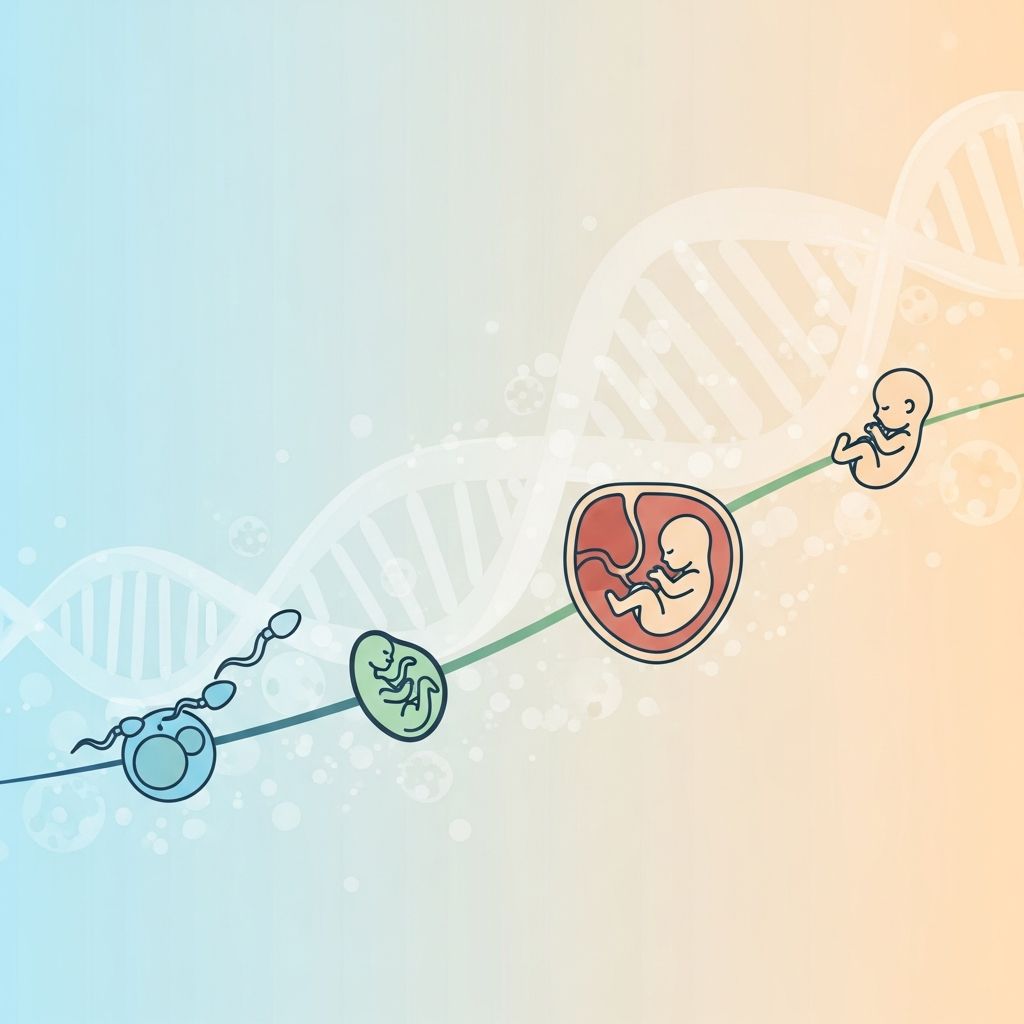
Conception begins shortly after intercourse when sperm meets egg, but pregnancy confirmation takes days to weeks as the embryo implants and hormones rise. This process typically unfolds over 1-2 weeks before a test shows positive.
The Moment of Conception: What Happens During Sex
During ovulation, intercourse introduces millions of sperm into the vagina, which swim through the cervix, uterus, and into the fallopian tubes to find the egg. Only one sperm usually fertilizes it within 12-24 hours post-ovulation. Fertilization creates a zygote, marking conception’s start.
Sperm can survive up to 5 days in fertile cervical mucus, extending the conception window. The egg remains viable for about 24 hours, so timing sex around ovulation maximizes chances.
Journey from Zygote to Uterus: Early Cell Division
Post-fertilization, the zygote divides rapidly. Within 30 hours, it splits into two cells; by day 3, it’s 16 cells. Around day 5-7, this morula becomes a blastocyst and reaches the uterus.
- Day 1 post-conception: Zygote forms and begins cleavage.
- Days 3-4: Enters uterus as a multi-celled structure.
- Days 6-10: Blastocyst prepares for attachment.
This migration allows nutrient absorption while avoiding premature implantation in the tube, which could lead to ectopic pregnancy.
Implantation: Securing the Pregnancy
Implantation occurs 6-10 days after fertilization when the blastocyst embeds into the uterine lining (endometrium). This triggers placenta formation and hCG production, the hormone detected by tests.
During week 4 of pregnancy (counted from last menstrual period, or LMP), the embryo is rice-grain sized, with cells differentiating into body systems. Successful implantation prevents menstruation and sustains growth.
| Stage | Timing After Conception | Key Developments |
|---|---|---|
| Fertilization | 0-1 day | Sperm penetrates egg; zygote forms |
| Cell Division | 1-5 days | Rapid cleavage to blastocyst |
| Implantation | 6-10 days | Attaches to uterus; hCG starts |
Detecting Pregnancy: When hCG Builds Up
hCG appears in blood around 11 days post-conception and urine shortly after. Home tests reliably detect it 11-14 days later, often by the first missed period (about 14 days post-ovulation).
Early testing risks false negatives due to low hCG. Blood tests at clinics confirm sooner. Pregnancy dating starts from LMP, making it ~2 weeks ahead of conception.
Embryonic Growth: Weeks 3-8 After LMP
By pregnancy week 3 (1 week post-conception), the blastocyst implants. Week 4 sees heart and vessel formation starting day 16 post-fertilization.
Week 5: Neural tube (future brain/spinal cord) develops; embryo is ~3mm. Week 6: Heart beats; limbs bud. By week 8 (6 weeks post-conception), it’s a fetus with forming organs.
- Week 5: Yolk sac nourishes until placenta fully forms.
- Week 6: C-shaped body; eye/ear structures emerge.
- Week 10: Elbows bend; head rounds.
Factors Affecting Conception Speed
Age, health, cycle regularity influence timelines. Cycles average 28 days; ovulation ~day 14. Stress, smoking, or conditions like PCOS delay it.
Track ovulation via kits, basal temperature, or apps for precise timing. Multiple intercourse days per cycle boosts odds.
Common Myths About Instant Pregnancy
Myth: Pregnancy happens immediately after sex. Reality: It requires fertilization, travel, implantation—up to 2 weeks.
Myth: You feel conception instantly. Reality: No symptoms until implantation (light spotting, cramps for some).
Myth: Tests work right away. Reality: Wait 10-14 days for accuracy.
Week-by-Week Pregnancy Overview
Pregnancy spans 40 weeks from LMP: first trimester (1-12), second (13-27), third (28-40).
- Weeks 1-2: Pre-conception; ovulation preps.
- Weeks 3-4: Fertilization to implantation.
- Weeks 5-8: Embryo to fetus transition.
- Weeks 9-12: Major organs form; risk of miscarriage peaks.
- Later: Viability at 24 weeks; full-term 39-40.
Health Tips During the Two-Week Wait
The ‘two-week wait’ (post-ovulation to testing) is anxious. Maintain folic acid (400-800mcg daily), avoid alcohol/tobacco, stay hydrated.
Light exercise, balanced diet support implantation. Consult doctors for fertility concerns after 12 months trying (6 for over 35).
Frequently Asked Questions
Can I get pregnant the day after sex?
Yes, if ovulation aligns; sperm lives 5 days, egg 1, so conception possible next day.
How soon after sex can I test?
Wait 11-14 days post-conception for hCG; earlier tests often false negative.
What if implantation fails?
No hCG rise; period arrives. Chemical pregnancies are common early losses.
Does sex timing matter every cycle?
Yes; fertile window days 10-17 in 28-day cycle.
When does the embryo become a fetus?
At 8-10 weeks post-LMP (6-8 weeks post-conception).
Visualizing the 40-Week Journey
From LMP: Weeks 1-2 await ovulation; conception week 3; birth week 40. Baby gains rapidly post-week 37, with brain/lung maturation.
Stay pregnant to 39 weeks if healthy for optimal outcomes.
References
- Pregnancy – week by week — Better Health Channel. 2023. https://www.betterhealth.vic.gov.au/health/healthyliving/pregnancy-week-by-week
- Pregnancy: Timeline of development — YouTube (Transcript). N/A. https://www.youtube.com/watch?v=cX59tv5iqr4
- Conception: Fertilization, Process & When It Happens — Cleveland Clinic. 2023-10-24. https://my.clevelandclinic.org/health/articles/11585-conception
- Stages of Fetal Development — Merck Manuals. 2024. https://www.merckmanuals.com/home/women-s-health-issues/normal-pregnancy/stages-of-fetal-development
- Pregnancy Week by Week — March of Dimes. 2023. https://www.marchofdimes.org/pregnancy-week-week
- Conception: From Egg to Embryo Slideshow — WebMD. 2023. https://www.webmd.com/baby/ss/slideshow-conception