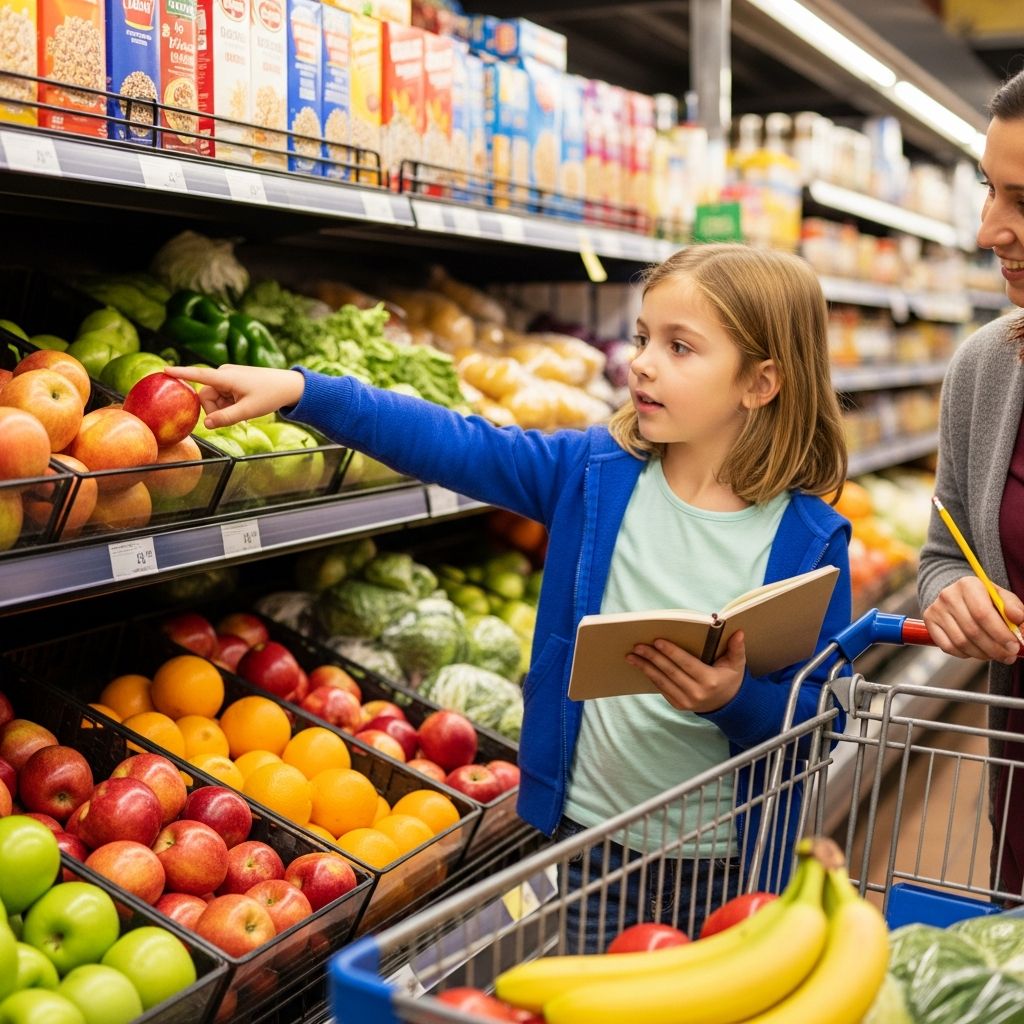
Everyday errands like grocery shopping offer parents a unique opportunity to nurture their children’s development. Far from being a mere chore, these outings serve as dynamic classrooms where kids absorb critical skills through real-world application. From discerning healthy foods to mastering basic arithmetic, the supermarket environment brims with teachable moments that enhance cognitive, social, and emotional growth.
Building Nutritional Awareness from the Aisles
The produce section and beyond provide an ideal setting for introducing children to balanced diets and food origins. Parents can guide kids to select vibrant fruits and vegetables, explaining how colors indicate nutritional benefits—red for heart health from lycopene in tomatoes, orange for vitamin C in carrots. This hands-on approach not only demystifies healthy eating but also empowers children to make informed choices independently.
Involving children in meal planning prior to the trip heightens their engagement. Discussing weekly menus at home and letting them contribute ideas fosters ownership, making them more likely to consume the selected items. Research shows that kids who participate in food selection are inclined to try novel produce, broadening their palates and reducing pickiness. For instance, challenge them to pick an unfamiliar vegetable and research its uses together later, turning curiosity into culinary exploration.
- Identify food groups: Point out proteins in meats and beans, grains in cereals, and dairy for calcium.
- Discuss origins: Explain how farm-fresh items travel to shelves, connecting kids to agriculture.
- Read labels: Teach scanning for sugar content and ingredients, promoting label literacy early.
These interactions lay the groundwork for lifelong healthy habits, as nutrient-dense choices support cognitive function and vitality.
Math Mastery Amid the Shelves
Numbers surround children in grocery stores—from price tags to quantity labels—making it a prime venue for arithmetic practice. Toddlers can count apples in a bag, while school-age kids compare unit prices to grasp value, such as determining if a larger cereal box offers better savings per ounce.
Advance the lesson by using a calculator app to tally cart totals in real-time. This introduces addition, decimals, and estimation, skills reinforced through play like store simulations at home. Older children might budget a fixed amount for treats, weighing options to stay within limits, cultivating financial acumen.
| Age Group | Math Activity | Skills Developed |
|---|---|---|
| 2-4 years | Counting produce items | Basic counting, one-to-one correspondence |
| 5-7 years | Comparing prices, simple addition | Decimals, estimation, basic operations |
| 8+ years | Budgeting, unit pricing calculations | Multiplication, fractions, financial planning |
Such activities mirror real-life applications, enhancing retention over abstract classroom exercises.
Literacy Lessons in Labels and Lists
Grocery stores are textual treasure troves: aisle signs, product packaging, and shopping lists abound with words for emerging readers. Pre-readers match pictures on lists to items, building vocabulary, while beginners sound out brand names or ingredient lists.
Encourage independence by handing over a section of the list, prompting them to locate and read items aloud. This boosts phonics, comprehension, and confidence. For non-readers, describe packaging designs—spotting the cereal with the tiger or the juice in the yellow carton—honing visual literacy and memory.
Extend learning by discussing nutrition facts together, decoding terms like ‘sodium’ or ‘fiber,’ which introduces science vocabulary alongside reading practice.
Cultivating Social graces and Behavior
Beyond academics, stores teach etiquette and self-control. Model politeness—greeting staff, saying ‘excuse me’ in crowds—and have kids practice at checkout. Waiting in lines builds patience, while navigating carts hones spatial awareness and courtesy.
Studies reveal that involved children engage more positively, reducing tantrums through purposeful tasks. Assign roles like ‘produce picker’ or ‘cart organizer’ to channel energy constructively, fostering responsibility.
Practical Strategies for Successful Outings
To maximize benefits, prepare in advance. Create lists with visuals for young ones, set clear expectations, and limit trips to focused durations. Snack beforehand to curb hunger-driven meltdowns, and pack reusable bags for eco-lessons.
Age-tailor involvement: Little ones explore textures in produce, middles handle lists, teens budget aisles. Post-trip, review purchases over unpacking, reinforcing lessons.
Research Insights on Child Involvement
Observational studies confirm that active participation correlates with positive outcomes. Children assisting in shopping initiate more interactions and influence healthier purchases, with two-thirds helping and nearly half at checkout leading to greater family engagement. Extension specialists emphasize preparation for effective nutrition talks.
Frequently Asked Questions
How do I keep toddlers engaged without meltdowns?
Provide small tasks like holding one item or pushing a mini cart. Pre-visit snacks and routines help maintain calm.
What’s the best age to start?
Any age works; adapt tasks—from sensory exploration for infants to budgeting for preteens.
Does this really improve eating habits?
Yes, involvement increases trial of new foods and ownership, per nutrition experts.
How to teach budgeting on a kid’s level?
Allot ‘fun money’ for choices within a total, practicing trade-offs.
Ideas for sensory learning in produce?
Touch bumpy kiwis, smell citrus, compare weights—safely, of course.
Long-Term Benefits for Family Dynamics
Regular outings build family bonds, shared decision-making, and routine positivity around chores. Children develop autonomy, reducing future resistance to healthy routines. Economically, early budgeting lessons promote savvy spending.
Simulate at home with play stores to reinforce: role-playing cashier-customer drills math, manners, and negotiation. Over time, these experiences equip kids for independent living, from college meal prep to household management.
In essence, viewing the supermarket as an extension of school transforms mundane trips into milestones of growth. Parents investing time here yield dividends in well-rounded, capable children.
References
- Why and How to Grocery Shop With Kids — Guiding Stars. 2023-05-15. https://guidingstars.com/healthy-kids/why-and-how-to-grocery-shop-with-kids/
- Grocery Shopping with Kids — Purposeful Toys. 2022-11-10. https://purposefultoys.com/why-going-to-the-grocery-store-with-your-kids-is-important/
- Promoting health by involving kids in meal planning, grocery shopping — University of Georgia Cooperative Extension (caes.uga.edu). 2024-03-20. https://fieldreport.caes.uga.edu/promoting-health-by-involving-kids-in-meal-planning-grocery-shopping/
- Turning the Grocery Store into a Classroom — All My Children Daycare. 2023-08-05. https://allmychildrendaycare.com/turning-the-grocery-store-into-a-classroom-a-fun-learning-adventure/
- Grocery Shopping with Small Children — NHBP-NSN (.gov). 2024-01-12. https://nhbp-nsn.gov/mno-bmadzewen/grocery-shopping-with-small-children/
- The Developmental Benefits of Playing Store with Kids — HABA USA. 2023-06-18. https://www.habausa.com/blogs/blog-inspiration/the-store-is-open-the-developmental-benefits-of-playing-store-with-kids
- What Happens When Parents and Children Go Grocery Shopping — National Center for Biotechnology Information (PMC.ncbi.nlm.nih.gov). 2017-05-24. https://pmc.ncbi.nlm.nih.gov/articles/PMC5435120/
- Nutritious Grocery Shopping on a Budget — Speak Up for Kids. 2024-02-28. https://speakupforkidspbc.org/life-skills-portal/nutritious-grocery-shopping