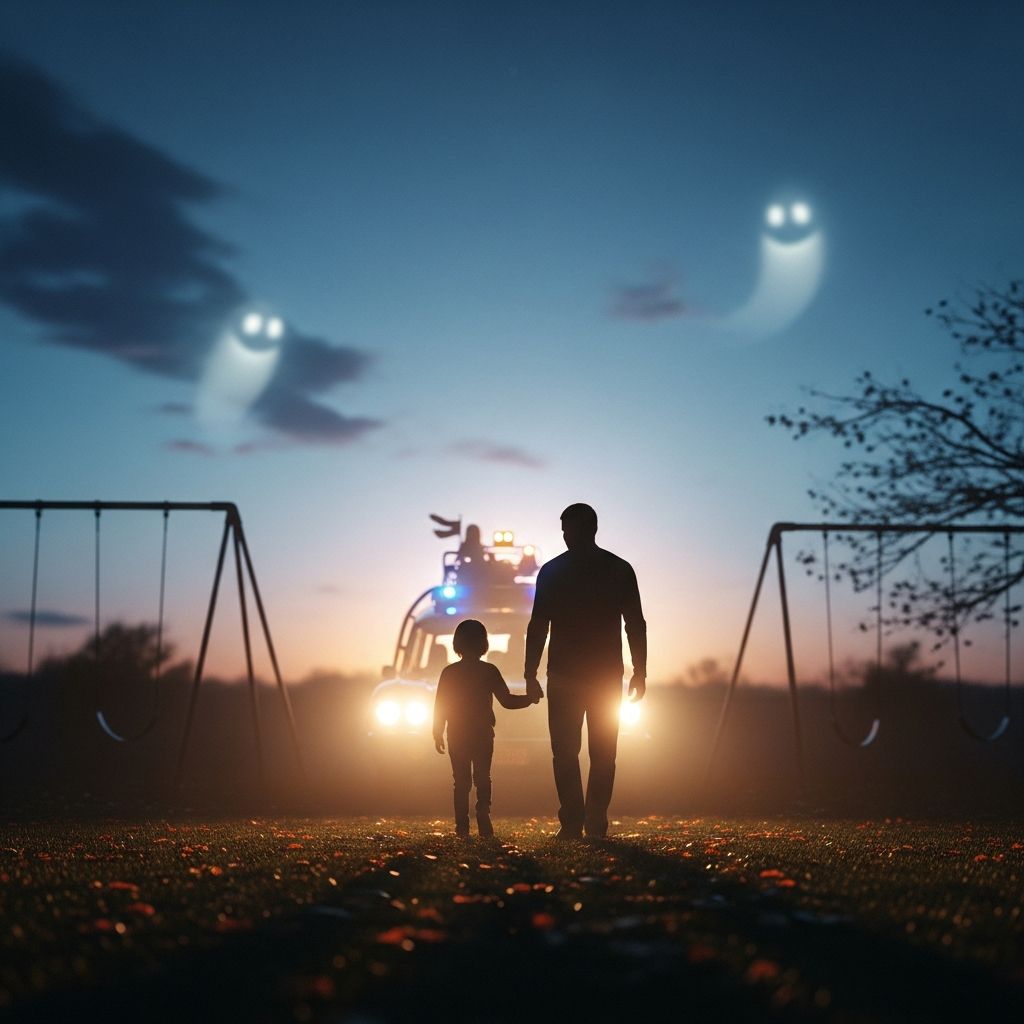
When most adults think of Ghostbusters, they remember jokes, proton packs, and a giant marshmallow monster rampaging through New York. Yet the career of director Ivan Reitman points to something deeper: a belief that comedy, fantasy, and fear can all live in the same story—and that kids are often the ones who understand this balance best. Without referencing any specific article, this piece uses his legacy as inspiration to explore how families can talk honestly about big feelings while still making room for fun.
This article is entirely original. It does not copy, mirror, or reproduce any particular source’s headings, structure, or examples, but instead builds a fresh perspective on how one filmmaker’s movies echo the blunt, surprising wisdom kids bring to conversations about life, death, and everything in between.
The Imagination Behind the Proton Pack
Ivan Reitman’s movies, especially Ghostbusters, are built on the idea that the supernatural can be both terrifying and hilarious without canceling either feeling out. The ghosts in his stories are dangerous enough to feel real, but just absurd enough that audiences can laugh instead of shutting down emotionally. For children, this mix of danger and silliness offers a safe way to experiment with fear.
Parents can borrow this approach. Instead of shielding kids from every scary topic, they can frame challenges—like nightmares, bullying, or loss—inside stories that blend tension with humor. The result is not distraction but transformation: children see that even overwhelming feelings can be named, shaped, and sometimes even laughed at once they are understood.
Why Kids Talk About Death So Bluntly
Spend time with young children and it becomes clear: they often talk about death in a matter-of-fact way that can feel shocking to adults. They might ask, “Will you die?” or “What happens to bodies?” during lunch as casually as they’d ask for more ketchup. This is not cruelty; it is curiosity paired with a brain still learning how permanent loss is.
Adults, conditioned by years of awkward silences and polite avoidance, sometimes respond with vague reassurances that confuse more than they comfort. A better approach is to recognize that blunt questions are signs of trust. When a child asks about death, they are really asking, “Can I feel scared in front of you and still be safe?”
Turning Scary Topics Into Shared Stories
One of the quiet strengths of Reitman’s films is that they turn overwhelming threats into shared adventures. Dangerous ghosts become a team problem; the city’s crisis becomes something a small, oddball group can tackle together. Parents can create a similar atmosphere at home by turning frightening ideas into stories the whole family can explore.
Practical ways to do this include:
- Using characters or toys to “act out” fears, giving kids distance and control.
- Drawing the “scary thing” together—then adding funny details to soften its impact.
- Inventing simple narratives where the child becomes the problem-solver, not just the victim.
How Humor Helps Kids Process Grief
Reitman’s comedies rarely treat serious feelings as unimportant. Instead, they acknowledge that grief, disappointment, and fear can sit right next to laughter. In families, the same coexistence often happens after a death or major loss. Kids may cry hard one moment and then ask for a snack or crack a joke the next.
Rather than correcting this switch, adults can accept it as healthy. Children move in and out of grief in waves. Allowing humor at the dinner table after a funeral, for example, does not disrespect the person who died; it affirms that love makes room for joy even in sadness. Parents who model this balance send a powerful message: it is okay to feel more than one thing at once.
Lessons From a Director Who Loved Misfits
The heroes in many of Reitman’s most famous films are misfits: underdogs, oddballs, and people who don’t quite fit conventional molds. These characters survive not because they suddenly become perfect, but because their quirks turn out to be strengths in disguise. This offers a useful lens for raising children who feel different, anxious, or out of place.
Instead of rushing to smooth every rough edge, parents can help kids see how their sensitivities, intense interests, or unusual perspectives might one day be assets. A child obsessed with monsters, for instance, might grow into a storyteller, designer, or therapist who helps others face fear.
Table: What Misfit Heroes Teach Kids
| On-Screen Pattern | Message for Kids | How Parents Can Reinforce It |
|---|---|---|
| Awkward characters lead the story | Being different does not disqualify you from being important. | Share examples of real people whose unusual traits became superpowers in their work or art. |
| Humor used during crises | It is okay to laugh even when things are hard. | Allow jokes and lightness during stressful times instead of insisting on constant seriousness. |
| Friends forming a team | Big problems feel smaller when shared. | Encourage kids to ask for help and to help siblings or friends solve problems together. |
| Adults who underestimate the heroes | Grown-ups can be wrong about what kids are capable of. | Ask children for their ideas and solutions, and implement some of them in visible ways. |
How to Talk Honestly Without Overwhelming Kids
A key challenge for caregivers is finding language that is both honest and age-appropriate. Overly graphic descriptions can be frightening, but vague euphemisms can be just as unsettling because they leave too much to the imagination. Kids often fill in missing details with worst-case scenarios.
An effective middle ground is simple, concrete explanations that answer the question actually asked—no more, no less. If a child asks, “Why did Grandma die?” a parent might respond with a brief description of illness or age, followed by reassurance about who is caring for the child now. As children grow, they can handle deeper conversations, but the foundation will already be one of truth-telling rather than avoidance.
Using Play to Revisit Hard Conversations
One of the most powerful tools children have is replay. Through imaginative play, they restage arguments, scary scenes, or confusing events again and again, gradually altering details until the story feels less threatening. This is similar to how genre movies revisit similar patterns—a city in danger, a ragtag team assembling, a final showdown—until audiences can anticipate and process the emotional beats.
Parents can support this by:
- Joining in role-play without taking over the narrative.
- Letting the child decide whether the “monster” wins or loses in a given round of the game.
- Offering language—“That was scary but you stayed brave”—to help kids name what they are practicing.
Why Adults Fear Kids’ Honesty More Than Ghosts
In many households, the scariest moment is not a thunderstorm or a horror movie; it is the instant a kid unexpectedly cuts to the emotional core: “Are you going to leave me?” or “Did that person die because of me?” These questions can feel more haunting than any cinematic specter because they force adults to acknowledge their own vulnerability.
Yet those moments are also invitations. When a parent stays calm, admits uncertainty, and maintains connection, the child learns that difficult truths do not have to shatter the relationship. Over time, this builds a kind of emotional “ghostbusting”—a shared confidence that the family can face scary truths side by side.
Practical Scripts Inspired by Playful Storytelling
While every child and situation is different, simple flexible scripts can help adults feel less tongue-tied. These are not rigid lines but starting points that echo the balance of humor, honesty, and imagination found in the best family films.
- When a child asks about death:
“That’s a big question. When someone dies, their body stops working and they don’t feel hurt anymore. We can’t see them like before, but we can remember them and keep loving them. What made you think of this today?” - When a child seems scared of an invisible threat:
“It sounds like your brain is inventing a very spooky story. Let’s draw or build what it looks like so we can see how strong you are compared to it.” - When a child mixes jokes with grief:
“I love that you can still laugh while missing them. Our love is big enough to hold both feelings.”
Celebrating the Adults Behind the Stories
Part of honoring filmmakers like Ivan Reitman is recognizing that their work continues to shape how families talk, joke, and imagine together long after the credits roll. Parents who grew up on his movies may now share them with their own children, using the blend of humor and heart as a jumping-off point for deeper conversations.
Rather than treating those films as mere nostalgia, adults can ask kids what they notice: Which characters seem brave? Which seem scared? How do friends help each other? In doing so, they transform movie night into a gentle workshop on empathy, resilience, and facing the unknown.
From Specters to Secrets: What Really Haunts Families
Ghost stories are fun because the enemy is visible. Real family life is harder because many of the “ghosts” are invisible feelings—secrets, unspoken resentments, or fears no one names. When parents avoid tough topics, kids often sense that something is wrong but come up with their own, often scarier explanations.
Taking inspiration from stories where invisible threats eventually reveal themselves, families can make a habit of gently dragging their own “ghosts” into the light. Regular check-ins, open-ended questions, and the simple phrase, “You can always ask me anything,” help build a culture where mystery is welcomed but secrecy is not.
Frequently Asked Questions
Is it okay to let kids watch movies that mix comedy and scary elements?
It can be appropriate, as long as the content matches the child’s age and sensitivity. The blend of fear and humor often helps some children process big emotions more safely than stark, realistic depictions of danger.
How young is too young to talk about death?
There is no single age, because kids encounter death in different ways—through pets, plants, relatives, or stories. Conversations should begin whenever the child shows curiosity, using simple, concrete language tailored to their developmental stage.
What if I get emotional when answering my child’s hard questions?
Showing genuine emotion is not a failure; it can be grounding. Kids learn that feelings are manageable, not shameful, when they see adults tear up, take a breath, and keep talking honestly.
How do I know if my child is overwhelmed by a scary topic?
Watch for signs like trouble sleeping, new nightmares, clinginess, or sudden behavior changes. Scale back details, revisit reassurance about safety, and, if needed, seek support from a pediatrician or child therapist.
Can humor ever be harmful when talking about serious subjects?
Humor becomes harmful when it dismisses or mocks a child’s feelings. Used carefully—aimed at the situation or at fictional “monsters,” not at the child—it can lower anxiety and invite more open conversation.
Bringing It All Home
The enduring appeal of movies like Ghostbusters lies not just in memorable lines or special effects, but in the way they affirm that ordinary, flawed people can face extraordinary fears together. Parents can adapt that narrative in real life by turning difficult conversations into shared adventures, where honesty, imagination, and humor work as a kind of emotional proton pack.
By respecting kids’ blunt questions, inviting play into heavy moments, and embracing their own imperfections, adults create a family culture in which nothing important has to stay in the shadows. The ghosts may not disappear completely, but they lose much of their power when everyone is brave enough to name them.