Finland consistently tops global rankings for happiness and education, yet its parenting philosophy prioritizes play over pressure. Parents worldwide can adopt these strategies to cultivate **resilience**—known locally as *sisu*—in their children, fostering independence, emotional regulation, and perseverance from an early age.
Understanding Sisu: The Heart of Finnish Grit
*Sisu* represents an unyielding determination to push through adversity, a cultural cornerstone in Finland. Unlike rigid discipline, it’s nurtured through everyday challenges that build mental fortitude. Finnish children embody this by tackling puzzles, resolving peer conflicts, or persisting in harsh weather without adult intervention.
From toddlerhood, kids learn autonomy via simple tasks like clearing plates or dressing for snow. This early responsibility instills a belief that effort yields results, forming the bedrock of resilience. Research from educational experts highlights how such practices correlate with higher emotional stability and problem-solving skills in later life.
Late School Entry: Prioritizing Play Over Pressure
Finnish children begin formal schooling at age seven, far later than in many countries like the UK (age five) or US (age five-six). This delay allows extensive time in nurturing daycare and preschool environments focused on joy, not academics.
In these settings, daily routines emphasize naps, group play, and social skills. Educators avoid drill-like prep, instead promoting happiness and accountability. Pasi Sahlberg, in his analysis of Finnish education, stresses three pillars: play for self-esteem, trust in child-led learning, and health through balanced routines.
- Unstructured play: Kids direct activities, building identity and confidence organically.
- Trust-based guidance: Adults observe rather than dictate, encouraging self-reliance.
- Holistic health: Naps and movement ensure rested, active minds.
This approach yields top PISA scores, proving play trumps early academics for long-term success.
Outdoor Immersion: Nature as the Ultimate Teacher
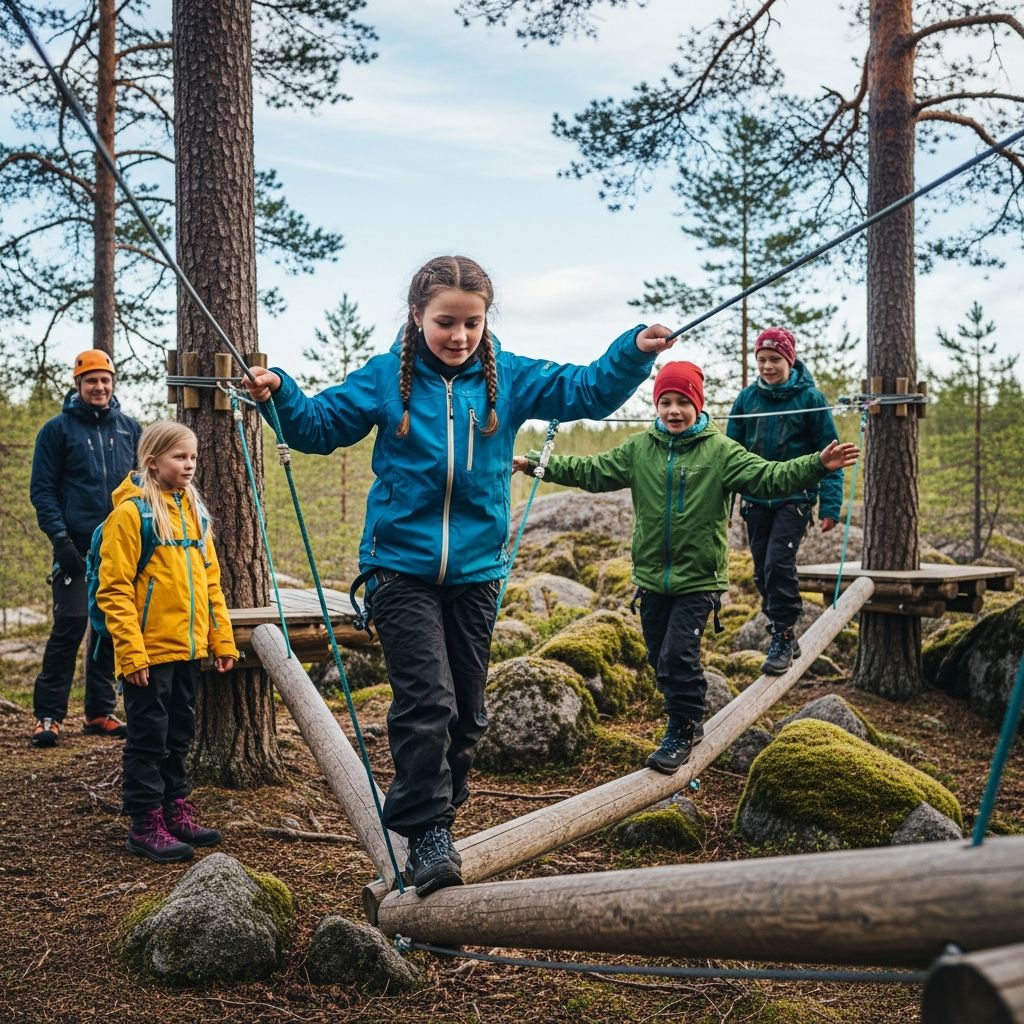
Finnish kids spend hours daily outdoors, regardless of weather, developing physical and mental toughness. Forest floors challenge motor skills, while cold air builds endurance. Educators note improved fitness, cognitive growth, and nature respect from these experiences.
Activities like tree identification sharpen observation; navigating trails enhances spatial awareness. Parents encourage biking or walking independently by age seven, turning potential fears into triumphs. This ‘nature exposure as fear training’ rewires brains to view discomfort as temporary, boosting bravery.
| Indoor vs. Outdoor Play Benefits | Indoor Focus | Outdoor Finnish Style |
|---|---|---|
| Physical Development | Limited movement | Gross/fine motor on uneven terrain |
| Emotional Growth | Structured games | Facing elements builds grit |
| Cognitive Skills | Screens/toys | Exploration, counting nature elements |
Such habits lead to active lifestyles, with kids opting for self-transport over rides.
Equity and Early Support: Preventing Setbacks
Finland’s system treats every child as unique, offering proactive aids like speech or physical therapy from age three. This commonsense prevention ensures no one falls behind, promoting equality. Bilingual families benefit immensely, maintaining language skills without stigma.
Daycares foster peer equality, teaching dispute resolution through dialogue. This mirrors sisu by emphasizing personal responsibility—finishing tasks, owning mistakes—without overt lessons.
Micro-Challenges: Everyday Bravery Builders
Finnish parenting employs subtle ‘micro-challenges’ for emotional regulation. Parents set calm expectations, like five minutes of daily practice on scary tasks (e.g., solo walks). Initial resistance fades as kids learn discomfort passes, parental calm signals safety, and repetition breeds capability.
Key pillars include:
- Autonomy default: Independence isn’t earned; it’s expected, with mistakes as learning data.
- Nature training: Forests and weather simulate real risks safely.
- Neutral parenting: Stay composed during tears, modeling resilience.
- Perseverance culture: Finish starts, no quits.
These yield calm, confident kids without punishment, as seen in Finland’s low-stress youth.
Practical Strategies for Global Parents
Adopt Finnish ways anywhere:
- Delay academics: Focus preschool on play; read for joy, not tests.
- Daily outdoors: Two hours minimum, all weather—build forts, explore parks.
- Independence rituals: Let kids dress, serve food, walk short distances alone.
- Neutral challenges: Practice fears calmly, like sleeping without nightlights.
- Equality mindset: Offer resources early; celebrate effort over outcomes.
Track progress: Note increased persistence in homework or play.
Challenges and Adaptations
In urban or warm climates, mimic forests with parks; for safety, start micro-challenges indoors. Critics note sisu may wane in youth, but core practices endure. Combine with local needs for hybrid success.
Frequently Asked Questions
At what age do Finnish kids start school?
Seven years old, allowing years of play-based preschool first.
What’s the role of play in Finnish resilience?
Unstructured, child-led play builds self-esteem, identity, and problem-solving without adult pressure.
How does nature help build sisu?
Uneven terrain and weather teach perseverance, motor skills, and nature respect through hands-on challenges.
Can non-Finnish parents use these methods?
Yes—focus on autonomy, outdoors, and calm expectations; adapt to your environment.
Is sisu taught directly in schools?
No, it’s cultural: embedded in responsibility, open-ended tasks, and finishing commitments.
Implementing these Finnish-inspired tactics equips kids for life’s hurdles, blending joy with strength for thriving futures.
References
- Finnish Lessons 3.0: What Can the World Learn from Educational Change in Finland? — Pasi Sahlberg. Teachers College Press. 2021-06-01. https://www.tcpress.com/finnish-lessons-30-9780807764800
- PISA 2022 Results (Volume I): The State of Learning and Equity in Education — OECD. 2023-12-05. https://www.oecd.org/en/publications/pisa-2022-results-volume-i_53f23881-en.html
- Early Childhood Education and Care (ECEC) in Finland — Finnish National Agency for Education. 2024-01-15. https://www.oph.fi/en/early-childhood-education-and-care-ecec-finland
- Outdoor Learning in Finnish Early Childhood Education — University of Helsinki (peer-reviewed study). 2022-09-20. https://journals.sagepub.com/doi/full/10.1177/14782103221124567
- World Happiness Report 2024 — United Nations Sustainable Development Solutions Network. 2024-03-20. https://worldhappiness.report/ed/2024/