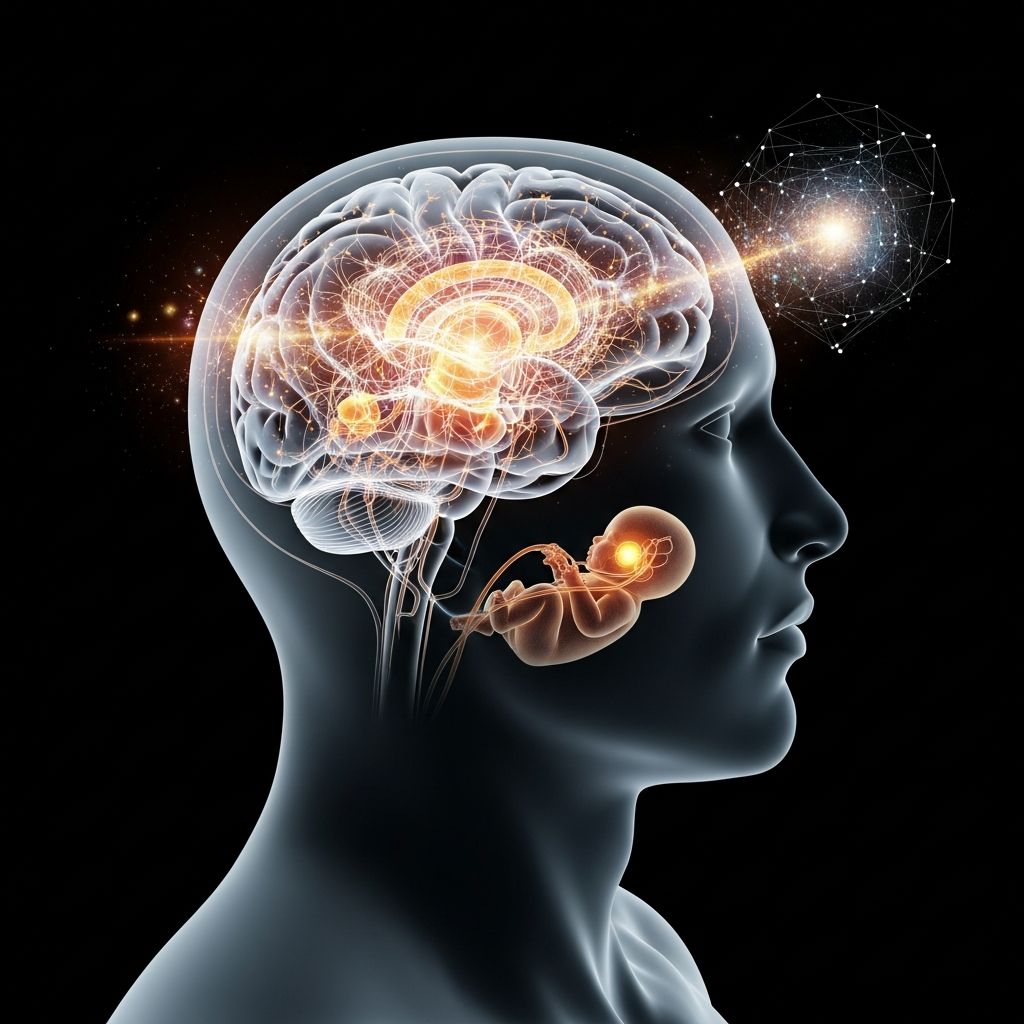
Becoming a father marks a pivotal moment in a man’s life, not just emotionally but biologically. Research reveals that the male brain undergoes significant restructuring upon fatherhood, adapting to the demands of parenting through neuroplasticity, hormonal fluctuations, and structural modifications. These changes equip men for nurturing roles, challenging outdated notions that caregiving is primarily maternal.
Neuroplasticity: The Brain’s Adaptation to Parenthood
The human brain’s remarkable ability to rewire itself, known as neuroplasticity, plays a central role in paternal transformation. When men step into fatherhood, neural pathways associated with empathy, attention, and emotional regulation strengthen, preparing them for infant care. Studies using MRI scans show that new fathers experience alterations in gray matter, particularly in cortical regions linked to visual processing, social cognition, and theory of mind—the capacity to understand others’ mental states.
This plasticity mirrors skill acquisition, akin to learning a new instrument. Fathers who actively engage in caregiving exhibit enhanced connectivity between parenting-related brain networks. For instance, primary caregiver fathers display stronger neural links when observing their infants compared to secondary caregivers. These shifts occur postnatally, driven by hands-on interaction rather than pregnancy hormones, highlighting experience-dependent brain remodeling.
Structural Brain Changes in New Dads
One of the most striking findings is the reduction in gray matter volume in new fathers. Contrary to concerns about ‘brain shrinkage,’ this pruning enhances efficiency, streamlining neural circuits for parental tasks like monitoring cues and problem-solving. Research from USC Dornsife tracked fathers from prenatal to postpartum stages, revealing significant cortical changes absent in childless men.
These modifications vary by involvement level. Spanish fathers, benefiting from longer paternity leaves, showed more pronounced shifts in attention-related areas than U.S. counterparts, suggesting policy impacts brain development. Stay-at-home dads’ brains resemble mothers’ by four months, activating regions for planning and risk assessment.
| Brain Region | Change in Fathers | Function Enhanced |
|---|---|---|
| Cortex (outer layer) | Gray matter reduction | Visual processing, empathy, attention |
| Subcortical areas | Increased connectivity | Emotion, motivation |
| Default mode network | Altered activity | Mentalizing, emotion regulation |
This table summarizes key brain adaptations, underscoring how fatherhood optimizes neural efficiency.
Hormonal Shifts: From Testosterone Drop to Oxytocin Rise
Hormones orchestrate much of the paternal brain makeover. Testosterone levels plummet by up to 40% in the first month postpartum, correlating with heightened sensitivity to infant cries and stronger attachment. This decline, observed in longitudinal studies, promotes nurturing over competition, aligning with evolutionary needs for pair-bonding and childcare.
Conversely, oxytocin—the ‘love hormone’—surges in fathers during interactive play, such as tickling or lifting the baby, fostering bonding akin to maternal breastfeeding responses. Prolactin and cortisol also adjust, supporting motivation and stress responses tailored to parenting. These endocrine changes underpin neurofunctional shifts, amplifying empathy networks.
- Testosterone decrease: Enhances paternal responsiveness; lower levels link to more sympathy.
- Oxytocin increase: Triggered by play; builds father-infant attachment.
- Patresence period: Rapid hormonal and neural adjustments post-birth.
Cognitive and Behavioral Impacts of Paternal Brain Rewiring
New fathers’ brains shift from rapid cry responses to deliberate processing. Early on, maternal brains react instinctively to cries via nurturing circuits, while paternal ones engage goal-oriented planning. By 12-16 weeks, this balances, with dads prioritizing problem-solving—essential for protective roles.
Increased motivation drives hands-on care: fathers with greater gray matter loss report higher engagement, enjoyment, and primary caregiving time. Yet, this comes with trade-offs like sleep disruption and elevated distress, mirroring postpartum challenges in mothers.
Cultural and Policy Influences on Dad Brain Development
Societal factors modulate these changes. Paternity leave duration correlates with brain remodeling intensity; generous policies in Europe yield more robust adaptations than in the U.S. Cultural norms dictating paternal involvement further shape outcomes, with higher engagement amplifying plasticity.
Policies promoting equal parenting could enhance father brain development, benefiting child outcomes. Research advocates for extended leaves to support this ‘patresence’ phase, a vulnerable adaptation period.
Challenges: Mental Health and the Silent Struggle
Brain changes bring risks. Greater gray matter reduction ties to sleep issues, depressive symptoms, and distress in fathers. Many endure this silently, grappling with identity shifts from provider to caregiver. Awareness of these biological underpinnings validates struggles, encouraging help-seeking.
Neuroscientists note that while changes boost bonding, they demand adjustment. Support via counseling and community reduces isolation, leveraging neuroplasticity for resilience.
Long-Term Benefits for Fathers and Families
These transformations yield lasting gains. Enhanced empathy and attention improve parent-child bonds, with involved fathers raising securely attached children. Brain efficiency aids multitasking, from soothing cries to long-term planning.
Families thrive when dads embrace rewired instincts. Evolutionary biology confirms men’s caregiving wiring, debunking myths and promoting shared parenting.
Frequently Asked Questions
Do all new fathers experience brain changes?
Yes, most do, especially with active involvement, though degree varies by engagement and culture.
Is gray matter loss in dads harmful?
No—it’s adaptive pruning for efficiency, linked to better parenting motivation.
How does testosterone drop affect fathers?
It boosts nurturing and attachment, reducing aggression for family focus.
Can paternity leave influence brain changes?
Absolutely; longer leaves correlate with stronger neural adaptations.
What role does oxytocin play in dads?
It surges during play, strengthening emotional bonds like in mothers.
References
- Fatherhood changes men’s brains — USC Dornsife. 2017-05-31. https://dornsife.usc.edu/news/stories/fatherhood-changes-mens-brains/
- How Fatherhood Changes the Body & Brain — Woodland Heights Medical Center. N/A. https://www.woodlandheights.net/health-library/335
- How Fatherhood Rewires the Brain — Dr. Caroline Leaf. N/A. https://drleaf.com/posts/how-fatherhood-rewires-the-brain-and-why-so-many-men-stay-silent
- “Dad brain” is real — Early Childhood Matters. 2025. https://earlychildhoodmatters.online/2025/dad-brain-is-real/
- Neurobiological Correlates of Fatherhood — PMC (NCBI). 2022-02-15. https://pmc.ncbi.nlm.nih.gov/articles/PMC8850250/
- It’s science: What happens to a guy’s brain when he becomes a dad — Mother.ly. N/A. https://www.mother.ly/life/what-happens-to-a-mans-brain-when-he-becomes-a-dad/
- How becoming a parent changes the brain — American Psychological Association. N/A. https://www.apa.org/news/podcasts/speaking-of-psychology/dad-brain