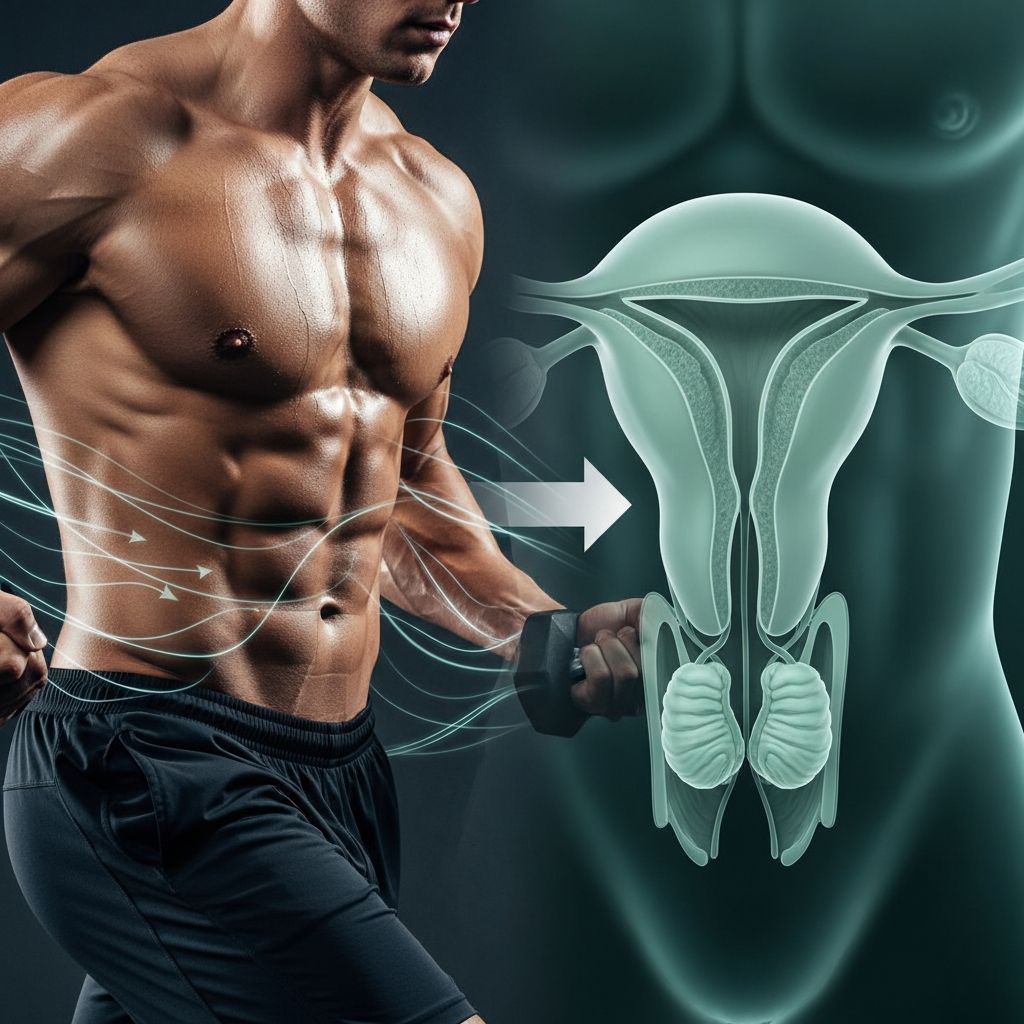
Physical activity plays a complex role in male reproductive health, potentially influencing genital size perceptions, testicular volume, hormone production, and sperm quality. While moderate exercise often boosts overall vitality, excessive or intense training can lead to temporary reductions in testicular size and altered hormone profiles, affecting fertility parameters.
Understanding Genital Size Changes from Physical Training
Men engaging in rigorous exercise routines may notice apparent changes in penis and testicle appearance. High-intensity workouts trigger blood vessel constriction and fluid shifts, creating a temporary ‘shrinkage’ effect due to reduced blood flow to the pelvic region. This phenomenon, often called cold shrinkage amplified by exercise stress, resolves post-recovery but raises concerns about long-term impacts.
Testicular volume can also fluctuate. Prolonged endurance training elevates cortisol, suppressing gonadotropin-releasing hormone (GnRH) and testosterone, which may cause mild atrophy in germinal epithelium. Studies indicate that athletes in high-volume sports like cycling or rowing exhibit smaller testicular sizes compared to sedentary counterparts, linked to chronic hormonal suppression.
- Short-term effects: Vasoconstriction during intense sessions reduces penile girth and length temporarily.
- Long-term risks: Overtraining leads to 10-20% testicular volume reduction in elite endurance athletes.
- Recovery factor: Ceasing intense training restores size within weeks.
Hormonal Shifts: Testosterone, LH, and Cortisol Dynamics
Exercise modulates key reproductive hormones. Moderate resistance training elevates testosterone post-session, enhancing muscle growth and libido. However, endurance activities lasting over an hour suppress luteinizing hormone (LH) and free testosterone, with ratios dropping below optimal thresholds in heavy trainers.
Research shows sedentary men have higher estradiol and lower LH, while regular exercisers balance these for better fertility. High-intensity interval training (HIIT) at 80% VO2max for weeks alters FSH, LH, prolactin, and cortisol without significantly changing total testosterone, reverting after recovery.
| Exercise Type | Testosterone Effect | LH/FSH Impact | Cortisol Change |
|---|---|---|---|
| Moderate Resistance | Increase (up to 20%) | Stable or slight rise | Minimal |
| Endurance (High Volume) | Decrease (T/C ratio drops) | Suppressed | Elevated |
| HIIT (Short Bursts) | Variable, recovers quickly | Temporary alterations | Spike then normalize |
These shifts explain why elite athletes sometimes report lower baseline testosterone, impacting energy and sexual function.
Testicular Health: Volume, Function, and Atrophy Risks
Testicles are sensitive to oxidative stress from intense exercise. Chronic high-load training increases reactive oxygen species (ROS) in testicular tissue, reducing antioxidant enzymes and steroidogenic activity. This can lead to spermatogenesis impairment and subtle volume loss.
Animal models confirm strenuous activity lowers testosterone synthesis and sperm production via oxidative damage. In humans, cyclists and runners show higher sperm DNA fragmentation correlated with training volume, though moderate exercisers exhibit improved parameters.
- Risk factors: Sessions >90 minutes, weekly volume >15 hours.
- Protective measures: Incorporate rest days, antioxidant-rich diets.
- Reversibility: Most changes subclinical, reverse with detraining.
Fertility Outcomes: Sperm Quality Under Exercise Stress
Semen analysis reveals exercise’s dual nature. Moderate activity improves sperm motility, count, and morphology by enhancing blood flow and hormone regulation. Conversely, prolonged intensive training causes oligospermia in up to 10% of endurance athletes, with abnormal morphology and reduced motility.
High training loads correlate with increased seminal ROS and malondialdehyde, damaging sperm DNA. Yet, physically demanding jobs unexpectedly boost sperm concentration by 46%, suggesting occupational vs. athletic differences in stress adaptation.
HIIT shows promise for infertility patients, improving DNA integrity via moderated oxidative stress.
Balancing Workouts for Reproductive Optimization
To harness benefits without drawbacks, tailor routines: 150 minutes moderate aerobic plus 2-3 strength sessions weekly. Avoid extremes; monitor for low T/C ratios signaling overtraining.
Nutrition aids recovery—zinc, vitamin D, omega-3s support testosterone. Track fertility via semen tests if planning conception.
Frequently Asked Questions (FAQs)
Does gym training shrink penis size permanently?
No, exercise-induced shrinkage is temporary from vasoconstriction and resolves with rest. Chronic overtraining may indirectly affect via low testosterone, but not permanent resizing.
Can cycling reduce testicle size?
Yes, prolonged cycling elevates scrotal heat and stress hormones, potentially causing mild atrophy. Use padded shorts and limit sessions to under 3 hours.
Is moderate exercise good for male fertility?
Absolutely—regular moderate activity enhances sperm quality, hormone balance, and erectile function compared to sedentary lifestyles.
How soon do hormone levels recover after overtraining?
Typically 3-7 days for acute changes; 2-4 weeks for chronic suppression with proper rest and nutrition.
Should infertile men avoid intense workouts?
Not entirely—opt for HIIT or moderate routines, which may improve parameters. Consult a specialist for personalized advice.
Expert Strategies for Maintaining Peak Reproductive Health
Athletes and active men can thrive reproductively by periodizing training: cycle high-intensity phases with deload weeks. Incorporate pelvic floor exercises to counter vasoconstriction effects. Regular bloodwork monitors LH, FSH, testosterone, and cortisol.
Emerging research highlights HIIT’s fertility benefits, suppressing pro-inflammatory cytokines while boosting antioxidants. For those in demanding jobs, leverage natural adaptations for higher sperm counts.
Ultimately, exercise enhances male vitality when balanced. Exceeding thresholds invites risks, but informed programming ensures genital health, robust hormones, and optimal fertility.
References
- The Effect of Regular Exercise on Reproductive Hormones in Male … — Journal of Sports Medicine. 2023. https://journalofsportsmedicine.org/full-text/283/eng
- Impact of physical activity and exercise on male reproductive potential — PMC. 2018-04-01. https://pmc.ncbi.nlm.nih.gov/articles/PMC5897111/
- Exploring the dynamics of exercise intensity on male fertility and … — PMC. 2024. https://pmc.ncbi.nlm.nih.gov/articles/PMC11291361/
- Physically Demanding Work Tied to Male Fertility — Harvard Medical School. 2023. https://hms.harvard.edu/news/physically-demanding-work-tied-male-fertility
- The Role of Exercise in Male Reproductive Health — The Fertility Center Mexico. 2024. https://thefertilitycentermexico.com/en/blog/the-role-of-exercise-in-male-reproductive-health-how-exercise-affects-sperm-quality/