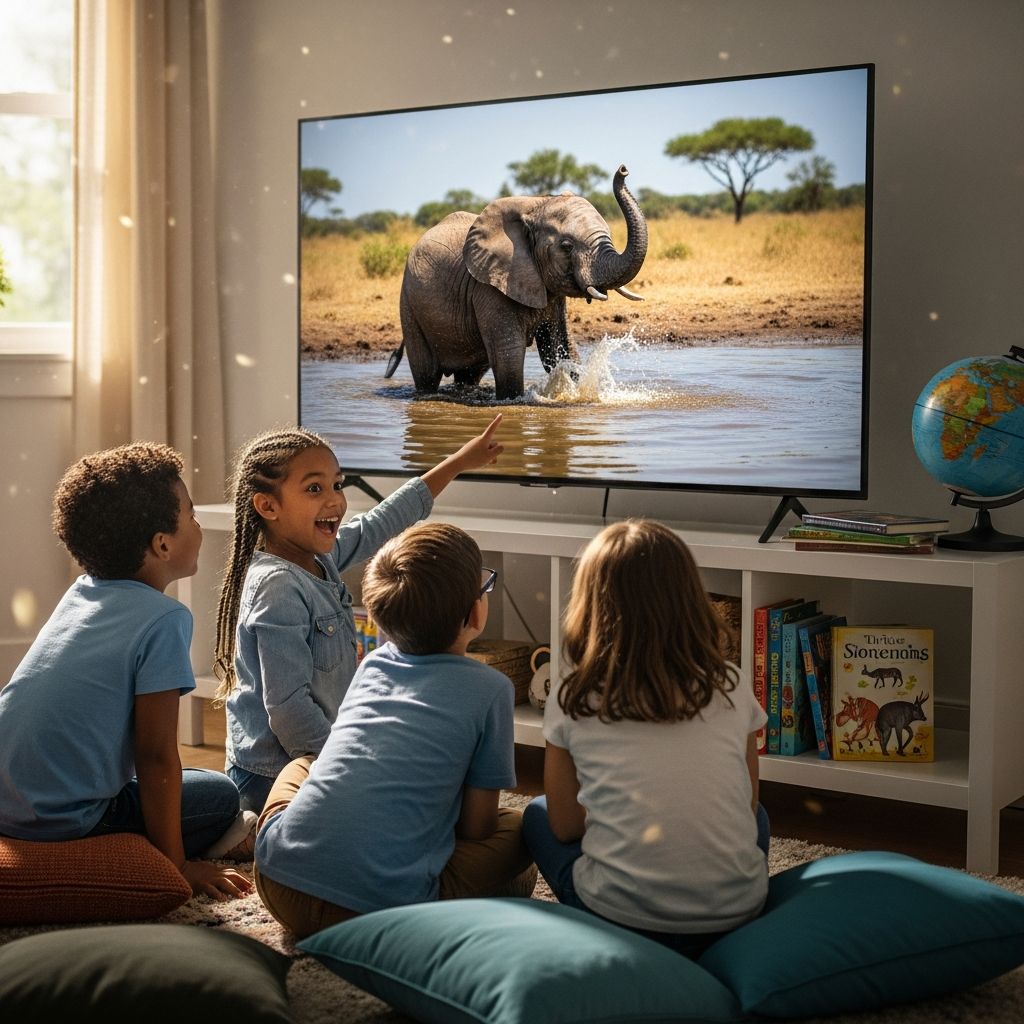
When kids discover a great documentary, it feels like you have sneaked vegetables into dessert: they are entertained, and they are learning more about the real world than any worksheet can offer. Used thoughtfully, documentaries can boost curiosity, empathy, and critical thinking, while also giving families something meaningful to talk about after the screen turns off.
Why Real Stories Captivate Kids
Children are naturally drawn to real people, real animals, and real problems. A well-made documentary taps into that instinct and turns it into a powerful learning experience.
- Visual storytelling helps children understand complex ideas they might struggle to grasp from text alone.
- Emotional connection to real people and animals encourages empathy and perspective-taking.
- Short, focused narratives can fit attention spans better than long lectures or dense reading.
Media researchers note that educational TV and documentaries, when designed for young viewers, can build vocabulary, world knowledge, and social skills, especially when parents watch and discuss them with children.
Core Benefits of Documentaries for Children
Thoughtfully chosen documentaries can support a wide range of developmental goals.
- Expanding world knowledge – Kids can “travel” to oceans, space, jungles, farms, and historic events without leaving the couch.
- Building empathy – Seeing real people’s struggles and triumphs helps children imagine life outside their own neighborhood.
- Boosting science and nature curiosity – Wildlife and space films often spark interest in STEM fields.
- Encouraging media literacy – Discussing what’s shown (and what’s left out) teaches kids that every film has a point of view.
- Providing role models – Biographies and sports docs highlight persistence, teamwork, and creativity.
Age-by-Age Guide to Choosing Documentaries
Not every great film is right for every age. Use the table below as a quick reference when deciding what might work for your child.
| Age Group | Ideal Themes | Recommended Style | What to Watch For |
|---|---|---|---|
| 3–6 (Early Childhood) | Animals, gentle nature, daily life, music | Short episodes, simple narration, bright visuals | Very limited peril, no graphic content, clear happy or neutral endings |
| 7–10 (Early Elementary) | Wildlife, space, kids’ hobbies, basic history | 30–45 minute features, light humor, clear explanations | Minimal intense scenes, age-appropriate discussion of challenges |
| 11–13 (Tweens) | Sports, inventions, environment, biographies | More complex narratives, interviews, behind-the-scenes footage | Moderate emotional content, occasional sadness, basic social issues |
| 14+ (Teens) | Social issues, history, politics, ethics, global problems | Feature-length films, multiple viewpoints, data-driven storytelling | Heavier topics, nuanced debates, strong emotions – best with discussion |
Smart Criteria for Picking Kid-Friendly Docs
Before you press play, run through a quick checklist so you know what kind of experience you are inviting into your living room.
1. Check the Rating and Description
- Look at age ratings and content warnings on major streaming services.
- Read a short synopsis and parent reviews to see if themes match your child’s maturity level.
- Beware that some films rated for general audiences may still include emotional scenes that sensitive children find upsetting.
2. Consider Topic Sensitivity
Ask yourself:
- Does my child already know something about this topic? Starting with familiar interests (animals, sports, space) is often easier.
- Could this raise fears? Environmental disasters, illness, or injustice can be very powerful; be ready to pause and talk.
- Is there hope? Films that show solutions and helpers can balance tough realities.
3. Evaluate Storytelling Style
- Fast-paced and colorful often works best for younger kids.
- Interview-heavy, data-rich storytelling fits tweens and teens better.
- Animation or reenactments can help explain abstract or historical ideas.
4. Aim for Diversity and Representation
Over time, try to choose documentaries that
- Feature kids from different cultures and backgrounds.
- Show girls and boys exploring science, sports, leadership, and creativity.
- Highlight stories from different countries and communities to expand your child’s sense of the world.
Major Types of Documentaries Kids Tend to Love
Every child’s taste is different, but some categories reliably capture young attention.
Nature & Animal Adventures
These are often the most accessible starting point. Sweeping landscapes, close-up animal footage, and gentle narration can mesmerize even young children.
- Key skills supported: science vocabulary, ecosystems, climate awareness.
- Watch for: predation scenes, natural disasters, or animals in distress; be ready to skip or talk through them.
Space, Science & Invention
Exploration of planets, robotics, and everyday technology shows kids that science is not just in textbooks—it is happening right now.
- Key skills supported: critical thinking, understanding experiments, interest in STEM careers.
- Watch for: technical jargon; younger kids may need you to pause and translate.
Sports, Music & Performance
Docs about young athletes, musicians, or dancers highlight the hard work behind impressive skills.
- Key skills supported: perseverance, growth mindset, teamwork.
- Watch for: intense competition or harsh coaching that may upset sensitive viewers.
History & Biography
Short, focused films about explorers, activists, scientists, or everyday kids in other eras can make social studies feel personal.
- Key skills supported: historical thinking, time concepts, understanding cause and effect.
- Watch for: violence or injustice; pre-watch anything dealing with war, civil rights, or disasters.
Social Issues & Problem Solving (For Older Kids)
These films tackle topics like environmental change, health, technology ethics, or inequality. They are best suited to tweens and teens, and benefit from active adult guidance.
- Key skills supported: argument evaluation, civic awareness, ethical reflection.
- Watch for: emotionally heavy content and one-sided storytelling; discuss whose voices are missing.
Making Documentary Night a Family Routine
Treating documentaries as a shared activity instead of background noise makes a big difference in what kids take away.
Before You Watch
- Read the short description together and ask, “What do you hope to learn?”
- Introduce 1–2 key words they will hear (for example, habitat or orbit).
- Invite a prediction: “Do you think the main person will reach their goal?”
While You Watch
- Pause occasionally to clarify confusing moments or strong emotions.
- Point out maps, charts, and diagrams and explain how to read them.
- If younger kids lose focus, let them draw what they see while listening.
After You Watch
Conversation after the film is where a lot of the learning sticks.
- Ask open prompts like:
- “What surprised you most?”
- “If you could ask someone in the film a question, what would it be?”
- “Was there anything you disagreed with?”
- Encourage kids to draw a scene, write a short reaction, or build something inspired by what they saw.
- Look up one extra fact together in a book or trustworthy website to show that films are a starting point, not the final word.
Using Documentaries in Learning and Homeschooling
Whether you homeschool or simply want to support school learning at home, documentaries can slot easily into your week.
- Unit hooks: Begin a new topic (like oceans or ancient civilizations) with a short documentary to spark questions.
- Research springboards: Let kids choose an aspect from the film—an animal, person, or place—and research it further.
- Compare formats: Read an article or book chapter on the same topic and ask what details the film included or left out.
- Creative follow-ups: Challenge kids to storyboard a “mini documentary” about your family, your town, or a pet.
Education scholars note that pairing visual media with reading, discussion, and hands-on projects can deepen comprehension and critical thinking.
Practical Tips for Managing Screen Time
Parents often worry about balancing educational content with overall screen time. Health guidelines emphasize not just how much kids watch, but what they watch and whether adults are engaged.
- Set a clear limit (for example, one documentary or episode, then an offline activity).
- Pair viewing with movement—take a short walk afterward and talk about the film.
- Keep devices out of bedrooms; watch together in shared spaces when possible.
- Prioritize quality over quantity: a single well-chosen documentary with discussion can be more valuable than hours of passive viewing.
Frequently Asked Questions (FAQs)
Q: What is a good first documentary for a very young child?
Look for short, colorful episodes about animals or everyday activities, with calm narration and no intense peril. Nature series aimed at preschoolers are usually a safe starting point; avoid heavy themes like extinction or disasters until they are older.
Q: How often should my kids watch documentaries?
There is no single ideal number. Many families find that one or two documentaries a week, plus regular reading and outdoor time, fits well into a balanced routine. Focus more on watching together and talking afterward than on hitting a specific quota.
Q: Are all educational documentaries appropriate for kids?
No. Many films labeled “educational” were made for adults, with complex themes, graphic images, or strong language. Always check ratings, read reviews from other parents, and when in doubt, preview the documentary yourself before sharing it with children.
Q: How can I tell if a documentary is trustworthy?
Look at who made it, which experts are interviewed, and whether claims are backed by data or reputable organizations. Encourage older kids to notice when films rely heavily on emotional stories without providing sources or alternative viewpoints.
Q: My child was upset by a scene. What should I do?
First, validate their feelings and give them time to calm down. Then, answer questions honestly at their level, and, if needed, turn the experience into a problem-solving talk: Who is helping? What is being done to fix the problem? You can also decide together whether to skip similar scenes in the future.
References
- Families and Screen Time: Current Advice and Emerging Research — Common Sense Media. 2018-02-01. https://www.commonsensemedia.org/sites/default/files/research/report/csm_familiesscreentime_fullreport_release_2.pdf
- Media and Young Minds — Council on Communications and Media, American Academy of Pediatrics. Pediatrics, 2016-11-01. https://publications.aap.org/pediatrics/article/138/5/e20162591/60689/Media-and-Young-Minds
- Communicating Science Through Documentary Film — National Academies of Sciences, Engineering, and Medicine. 2017-04-13. https://nap.nationalacademies.org/read/24617/chapter/1
- Instructional Films and the Visual Revolution — Library of Congress. 2015-06-01. https://www.loc.gov/collections/educational-films-and-documentaries/about/
- Media Literacy — National Association for Media Literacy Education (NAMLE). 2022-01-01. https://namle.net/publications/media-literacy-definition-and-core-concepts/