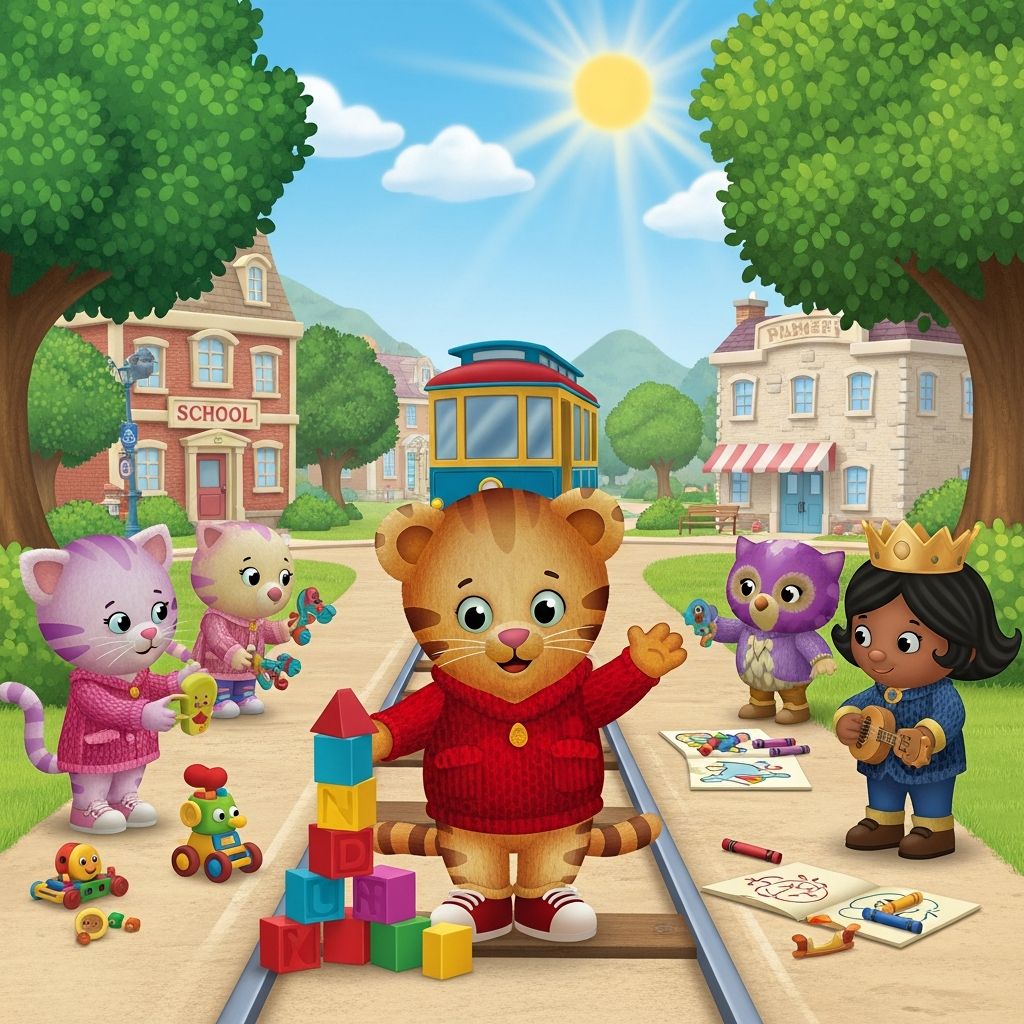
Daniel Tiger’s Neighborhood stands out as a premier educational program for young children, drawing from the timeless wisdom of Mister Rogers to teach vital social-emotional competencies through engaging stories and catchy songs. Research consistently demonstrates its effectiveness in boosting empathy, emotion recognition, and social confidence, particularly when paired with parental involvement.
The Science Behind the Show’s Impact on Young Minds
Scientific studies have rigorously tested the educational value of Daniel Tiger’s Neighborhood, revealing tangible improvements in children’s abilities to navigate social interactions. In a controlled experiment by Texas Tech University researchers, preschoolers who viewed episodes daily for two weeks showed marked gains in key areas compared to those watching neutral content like nature documentaries.
- Empathy Development: Participants exhibited higher empathy levels, enabling better understanding of others’ feelings.
- Emotion Recognition: Children became adept at identifying emotions in themselves and peers.
- Social Confidence: Viewers displayed greater assurance in group settings.
These outcomes were most pronounced among children from low-income backgrounds and those under age four, underscoring the show’s accessibility as a leveling tool in early education.
Long-Term Effects: From Preschool to Teenage Years
Beyond immediate gains, recent investigations by the UCLA Center for Scholars & Storytellers highlight the enduring influence of Daniel Tiger’s Neighborhood. Teens who watched as preschoolers recalled specific strategies, with 21% still employing calming techniques like deep breathing learned from the show’s songs.
| Skill Learned | Teen Recall Rate | Reported Use in Adolescence |
|---|---|---|
| Deep Breathing for Calm | High | 21% still use |
| Strategy Songs | Very High | Frequently sung |
| Emotion Management | Moderate | Applied in daily life |
Participants fondly remembered the series for evoking comfort and happiness, linking it to foundational social-emotional growth that supports academic and communal success.
Supporting Children with Autism Spectrum Disorder
For children with autism spectrum disorder (ASD), Daniel Tiger’s Neighborhood serves as a valuable video modeling resource. A peer-reviewed study in the Journal of Developmental and Physical Disabilities examined its effects on two five-year-old boys with ASD, focusing on skills like trying new foods and politely ending play.
Post-exposure assessments revealed immediate skill acquisition, with performance improving solely after viewing targeted episodes. The show’s structure—featuring repetitive songs, relatable characters, and real-world scenarios—mirrors evidence-based video modeling techniques, making it an accessible supplement to formal therapies.
Repeated viewing reinforced learning, aligning with research on video interventions for ASD, where consistency drives proficiency.
Maximizing Benefits: The Role of Parental Engagement
While the content itself is powerful, studies emphasize that co-viewing and discussion amplify results. Independent watching or talk alone yielded minimal change; the synergy of both was essential.
Practical Strategies for Parents
- Highlight Positive Behaviors: When characters demonstrate kindness, such as sharing, affirm the action verbally (e.g., “Sharing makes friends happy!”)
- Reinforce Lessons Actively: Reference episodes in real-life moments, like “Let’s count to four to calm down, just like Daniel!”
- Initiate Conversations: Ask open-ended questions post-episode: “How did Daniel feel? What would you do?”
- Incorporate Songs: Sing along to embed strategies in memory for long-term recall.
These interactions transform passive viewing into active learning, fostering deeper comprehension and application.
Addressing Modern Challenges: Lessons for Everyday Life
Daniel Tiger’s Neighborhood has proven adaptable to contemporary issues. Special episodes tackled pandemic-related anxieties, teaching hygiene through fun narratives like superhero-themed handwashing songs. This approach helped children process disruptions like social distancing and routine changes.
Parents reported the show’s calm demeanor provided reassurance during uncertain times, blending education with emotional support.
Why Quality Children’s Programming Matters
In an era of abundant screen media, discerning parents seek content with proven pedagogical value. Daniel Tiger’s Neighborhood, produced by Fred Rogers Productions, exemplifies high-quality TV: simple narratives, interactive elements, and evidence-backed outcomes distinguish it from generic entertainment.
Its legacy continues, with teens advocating for similar programming on bullying and friendship—topics over 75% expressed interest in, despite only 35% currently accessing such material.
Frequently Asked Questions
How does Daniel Tiger help with emotional regulation?
Songs and stories teach techniques like deep breathing and counting to four, with studies showing sustained use into teenage years.
Is it effective for children with special needs?
Yes, research confirms skill gains in ASD children for tasks like trying foods and polite transitions.
What’s the best way to watch with kids?
Combine viewing with discussions, pointing out lessons and relating them to daily life for optimal results.
Does it benefit older children too?
Teens retain and apply its strategies years later, valuing its comforting messages.
Are there episodes for current events?
Content addresses issues like hygiene during COVID-19, aiding emotional navigation.
Integrating Daniel Tiger into Family Routines
To harness full potential, schedule consistent viewing sessions, perhaps 30 minutes daily as in research protocols. Follow with play-based reinforcement: role-play scenarios or create family song parodies. Track progress through journals noting improved behaviors, building a positive feedback loop.
For diverse families, the show’s inclusive Neighborhood casts models varied interactions, promoting cultural empathy. Libraries and streaming platforms make episodes readily available, with companion books and apps extending learning offline.
Ultimately, Daniel Tiger’s Neighborhood transcends entertainment, equipping children with resilient mindsets. Its research-supported strategies offer parents a reliable ally in nurturing well-adjusted individuals ready for life’s complexities.
References
- Study Shows Daniel Tiger’s Neighborhood Helps Kids Learn Important Life Lessons — CIMG Peds. 2023. https://cimgpeds.com/study-shows-daniel-tigers-neighborhood-helps-kids-learn-important-life-lessons/
- New Research Shows the Lasting Impact of Daniel Tiger’s Neighborhood on Teens Who Watched as Preschoolers — Kidsburgh.org. 2025. https://www.kidsburgh.org/new-research-shows-the-lasting-impact-of-daniel-tigers-neighborhood-on-teens-who-watched-as-preschoolers/
- Evaluating the Ability of the PBS Children’s Show Daniel Tiger’s Neighborhood to Teach Skills to Children with Autism Spectrum Disorder — PMC (Peer-reviewed). 2017-03-01. https://pmc.ncbi.nlm.nih.gov/articles/PMC5352624/
- Right TV Shows Can Help Kids Develop Social Skills — Texas Tech University. 2016. https://www.depts.ttu.edu/research/discoveries/fall-2016/daniel-tiger.html
- Study Finds Long-Term Benefits of Daniel Tiger’s Neighborhood — Fred Rogers Productions. 2025-03-20. https://www.fredrogers.org/2025/03/20/study-finds-long-term-benefits-of-daniel-tigers-neighborhood/