Hearing that a child has a broken bone can be frightening for any parent, but children’s bones are remarkably resilient. In many cases, kids heal faster and more completely than adults because their bones are still growing and remodeling. Understanding what happens after a fracture, what treatment involves, and how to support recovery at home can greatly reduce anxiety and help families feel more in control.
Why Children’s Bones Heal So Well
Childhood bones are not just smaller versions of adult bones; they are living, growing tissue that continually reshapes itself. This built-in growth and remodeling capacity allows children to repair fractures efficiently and often with very little long-term impact on function or appearance.
- Children have a thicker, more active outer bone layer (periosteum), which supplies cells needed to rebuild bone.
- Growing bones can gradually correct certain minor angulations or imperfections over time as the child continues to develop.
- Because of faster metabolism and growth, the same type of fracture often heals more quickly in a child than in an adult.
From Injury to Recovery: The Healing Timeline
Although every fracture and every child is different, bone healing tends to follow a predictable biological sequence. Parents will often notice that pain improves before the bone is fully strong again, which is why following medical advice about activity limits is critical.
- Immediately after the break: Pain, swelling, and sometimes deformity appear as the body reacts to the injury.
- First few weeks: New bone forms a temporary bridge, gradually stiffening and stabilizing the fracture.
- Months to years: The bone slowly reshapes and strengthens, restoring its usual structure.
The Three Biological Stages of Bone Healing
Under the surface, broken bones repair themselves in three overlapping stages. Children pass through these stages more quickly than adults, but each step still matters for a strong, stable result.
1. Early Reaction Phase
Right after a bone breaks, the body’s first priority is to stabilize and protect the injured area. Small blood vessels at the fracture site leak, forming a clot that acts like a temporary plug. This is accompanied by inflammation, which explains the warmth, swelling, and tenderness parents notice around the injured limb.
In this phase, special cells begin clearing damaged tissue and signaling other cells to start building new bone. Although it is painful and alarming to see, this response is a natural and necessary part of the healing process.
2. Repair Phase
Over the next days to weeks, the blood clot is gradually replaced by a soft, fibrous and cartilaginous structure sometimes called a callus. This callus spans the gap between the broken bone ends, acting like a biological splint. At first it is too weak for full weight-bearing or rough play, but it provides critical early stability.
As time passes, minerals such as calcium are deposited within the callus and it stiffens into hard, immature bone. During this period, children often feel much better, but the bone still may not be strong enough to handle high-impact activities.
3. Remodeling Phase
Once the fracture is firmly united, the body begins a long refining process called remodeling. Bone tissue is constantly broken down and rebuilt in response to stress and movement. Over months, the thicker, irregular callus is reshaped into smoother, stronger bone that more closely matches the child’s original anatomy.
Because kids are still growing, their bodies are especially good at this remodeling work. Mild bends or bumps around the healed fracture can gradually smooth out and, in many cases, become barely noticeable over time.
Common Types of Fractures in Children
Not all fractures look the same on X-ray, and certain patterns are more common in children than adults. Knowing the basic types helps parents understand why doctors choose specific treatments.
- Non-displaced fracture: The bone has a crack or break, but the pieces stay properly aligned.
- Displaced fracture: The bone pieces have moved out of their normal position and may need to be realigned.
- Greenstick fracture: The bone bends and cracks on one side but does not break completely through, similar to a fresh twig.
- Buckle (torus) fracture: One side of the bone is compressed and bulges out, often from a fall onto an outstretched hand.
- Growth plate fracture: The break involves the growth area near the end of the bone, which needs careful assessment and follow-up.
Overview Table: Types of Pediatric Fractures
| Fracture type | What it means | Typical treatment approach |
|---|---|---|
| Non-displaced | Bone cracked or broken but still in correct alignment. | Immobilization with a cast or splint; surgery rarely needed. |
| Displaced | Bone ends are out of position or overlapping. | Realignment (closed reduction or surgery) plus cast or other support. |
| Greenstick | Bone bent and partially broken on one side only. | Cast or splint after gentle straightening, depending on severity. |
| Buckle (torus) | Compressed, bulging area on one side of the bone. | Short-term brace or cast; often heals quickly. |
| Growth plate | Fracture through the growth area at the end of the bone. | Careful alignment and regular follow-up to monitor growth. |
How Doctors Treat Broken Bones in Kids
Medical teams aim to do three main things: reduce pain, restore proper alignment, and keep the bone still while it heals. The exact plan depends on the fracture type, the child’s age, and which bone is involved.
- Pain control: Ice, elevation, and child-appropriate pain medicines are often used early on.
- Realignment (reduction): If the bone is displaced, doctors may gently reposition it, sometimes using sedation or anesthesia.
- Stabilization: A cast, splint, brace, or occasionally metal hardware (like pins or plates) keeps the bone from moving while new tissue forms.
Casts, Splints, and Other Supports
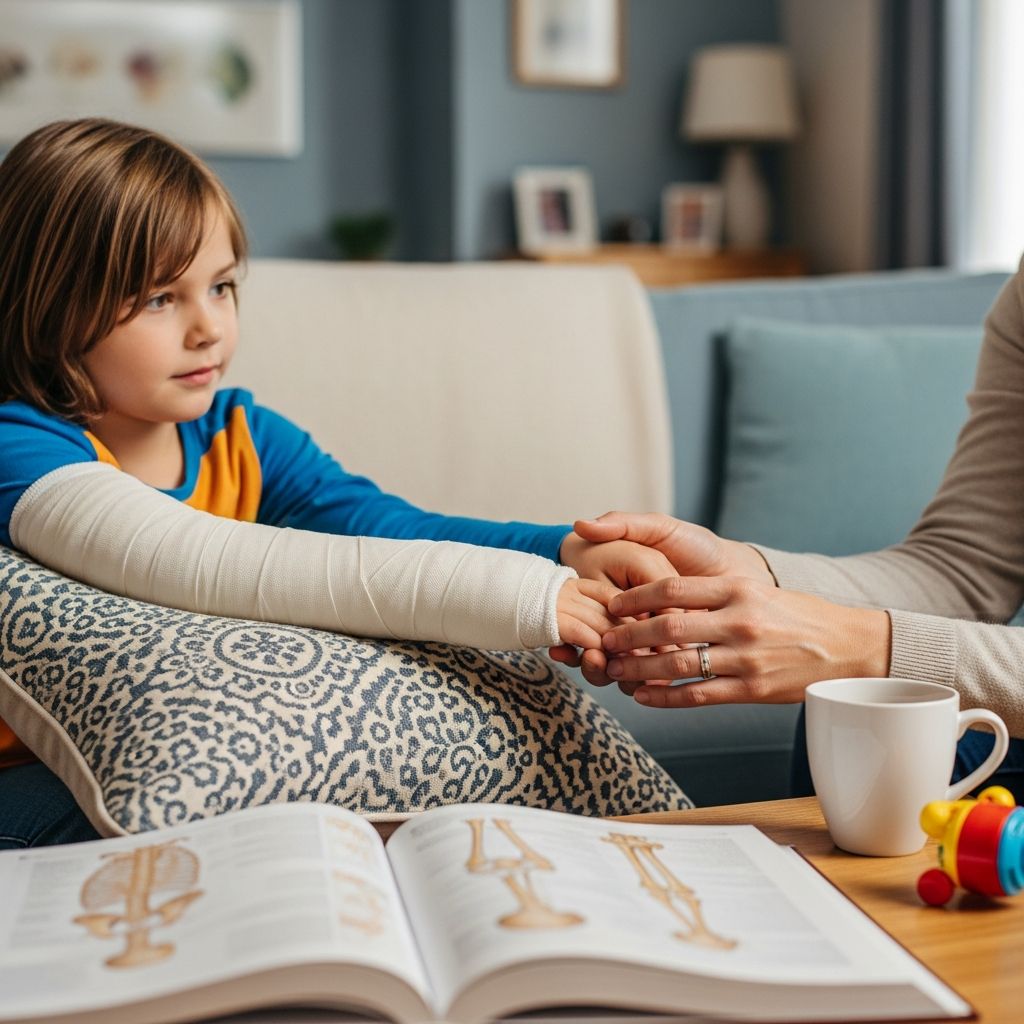
Most children with fractures will wear some form of external support. Each option has its own advantages, and the choice can change as the fracture heals.
- Splints: Often used right after injury, especially when swelling is expected, because they allow some expansion.
- Casts: Provide more rigid, long-term support once the swelling has settled. They can be made from plaster or synthetic materials.
- Braces or boots: Common for stable fractures or later phases of healing, when some movement is allowed.
What Parents Can Expect During Healing
Many families are surprised that the most intense pain usually improves within days, even though the bone needs weeks to regain strength. Follow-up visits are essential to monitor bone position and healing progress.
- X-rays may be taken periodically to ensure the bone is healing in a good position.
- Doctors may adjust activity restrictions as the fracture becomes more stable.
- Most children return to daily routines well before the bone is fully remodeled, but high-impact sports often require extra time.
Home Care: Helping a Child Heal Safely
Parents and caregivers play a major role in successful recovery. Thoughtful care at home helps prevent complications and keeps the child comfortable and engaged while the bone mends.
Cast and Splint Care Tips
- Keep the cast dry unless it is specifically labeled as water-resistant.
- Use a protective cover during bathing, and check the skin around the edges for redness or irritation.
- Discourage children from inserting objects under the cast to scratch, which can damage skin or padding.
- Contact the healthcare provider if the cast cracks, becomes too loose, or seems too tight.
Comfort and Daily Life
- Elevate the injured limb, especially in the first days, to reduce swelling and discomfort.
- Offer age-appropriate pain relievers only as directed by the healthcare provider.
- Help the child find safe activities (reading, drawing, crafts, board games) to stay engaged while physical play is restricted.
- Work with school staff to arrange any necessary accommodations, such as elevator access or help carrying supplies.
Nutrition and Bone Health During Recovery
Good nutrition supports the body’s natural repair mechanisms. While food alone cannot instantly fix a fracture, it can provide essential building blocks for healing bone and soft tissue.
- Include calcium-rich foods such as dairy products, fortified plant milks, leafy greens, or calcium-set tofu.
- Ensure the child gets enough vitamin D from safe sun exposure, fortified foods, or supplements if recommended.
- Offer a variety of protein sources, including lean meats, beans, lentils, nuts, seeds, and eggs.
- Limit sugary drinks and highly processed snacks, which do not contribute to healing.
Returning to Sports and Play
Active children are often eager to “get back out there” as soon as the pain subsides, but the bone may still be vulnerable to re-injury. Decisions about sports and high-impact play should always be guided by the healthcare team.
- Light activities, such as walking or gentle play, may be allowed before full sports clearance, depending on the bone and fracture type.
- Contact sports, jumping, or heavy lifting are usually delayed until the bone is strong enough to withstand sudden forces.
- Once cleared, a gradual return to activity helps rebuild strength, balance, and confidence.
Emotional Support for Kids with Fractures
Beyond physical pain, children may feel frustrated, scared, or left out when they cannot participate in their usual activities. Emotional support is an important but sometimes overlooked part of recovery.
- Encourage the child to talk about worries or fears, and reassure them that feeling upset is normal.
- Involve friends or siblings in safe, inclusive activities that do not require intense physical effort.
- Celebrate small milestones, such as cast removal or first steps without help, to keep motivation high.
Warning Signs: When to Call the Doctor
Most fractures heal without major problems, but some signs warrant prompt medical attention. Trusting instincts and seeking help early can prevent complications.
- New or worsening pain that does not improve with rest or prescribed medication.
- Numbness, tingling, or trouble moving fingers or toes beyond what was expected.
- Severe swelling, bluish or very pale skin, or a cast that feels suddenly too tight.
- Foul odor, drainage, or fever that could suggest infection.
FAQs About Broken Bones and Healing in Children
How long does it usually take for a child’s broken bone to heal?
Healing time depends on the child’s age, the bone involved, and how severe the fracture is. Many simple fractures in younger children become strong enough for normal use within a few weeks, while more complex injuries or fractures in older children can take longer. Full remodeling of the bone continues well beyond the point when the child feels “back to normal.”
Will the bone be weaker after it heals?
During the early phases of recovery, the healing area is more vulnerable to re-injury, which is why activity restrictions are important. As remodeling continues, the bone typically regains strength and, in many cases, becomes as strong as it was before the fracture. Most children with routine fractures can return to their usual sports and activities with no long-term weakness.
Does every fracture in a child need a cast?
Not always. Some stable fractures, especially certain buckle or minor non-displaced fractures, can be treated with splints or removable braces. The medical team will choose the best support based on how stable the break is and how likely it is to shift during healing.
What if the fracture affects a growth plate?
Growth plate fractures need careful evaluation because they occur in areas that control how long bones grow. Many of these injuries heal well, but follow-up visits and occasional X-rays help confirm that the bone continues to grow as expected. In some cases, doctors may recommend specific treatments or prolonged monitoring to protect long-term growth and alignment.
Can anything speed up bone healing?
There is no instant way to “fast-forward” bone repair, but there are many ways to support the process: following medical instructions, protecting the limb, providing good nutrition, and avoiding tobacco smoke exposure. The body’s own healing systems are powerful, especially in children, and they work best when given time and proper care.
Key Takeaways for Parents
- Children’s bones are uniquely equipped to heal, often faster and more completely than adult bones.
- Fracture healing follows three main stages: early reaction, repair, and long-term remodeling.
- Proper alignment, stable support, and good follow-up care are essential for strong healing.
- Home care, including cast protection, pain control, nutrition, and emotional support, plays a major role in recovery.
- Most children with routine fractures return to full, active lives with no lasting problems.