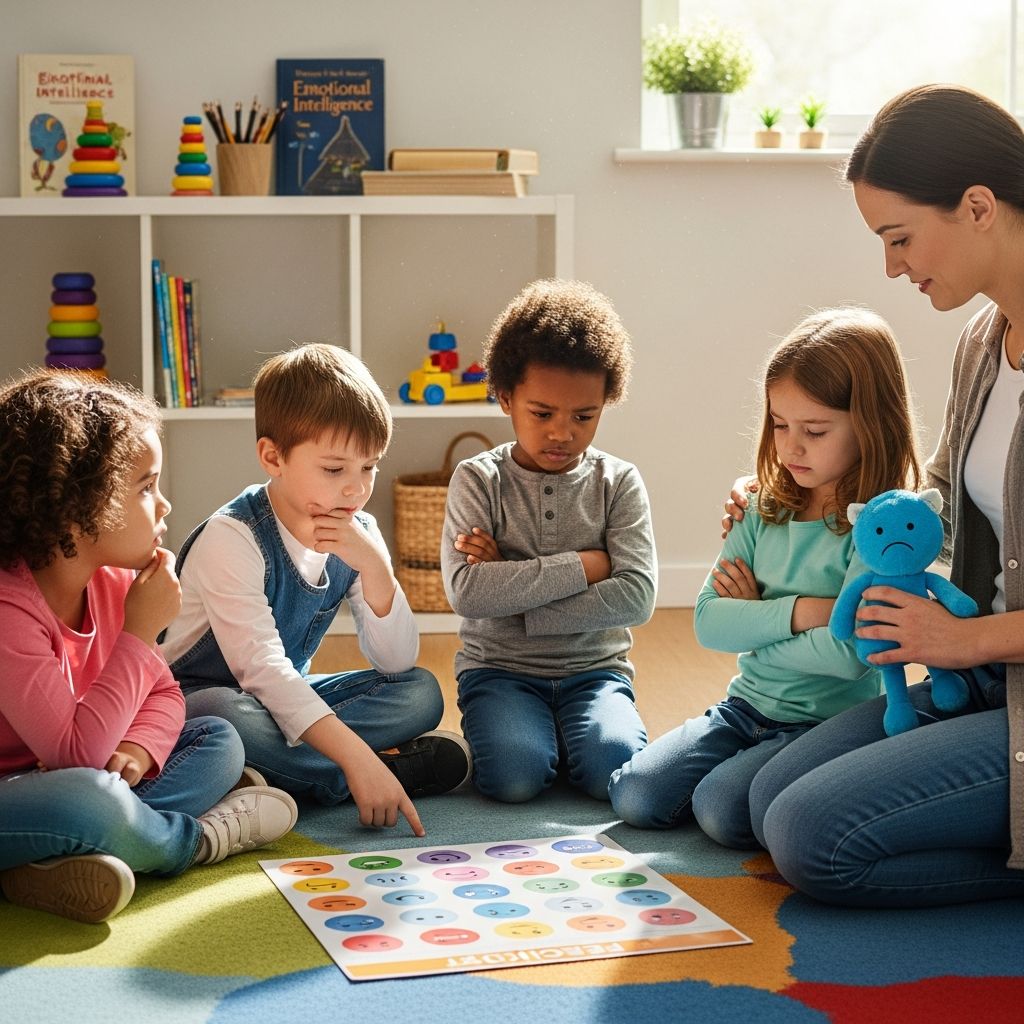
Children are not born knowing how to calm themselves, wait patiently, or talk through a problem. Emotional self-control is a learned skill, built over thousands of small interactions with caring adults who guide, comfort, and set clear limits. When parents understand how this learning unfolds, everyday struggles like tantrums, whining, or backtalk become opportunities to teach lifelong coping skills instead of battles to win.
Why Emotional Regulation Matters More Than Ever
Emotional regulation is the ability to notice feelings, understand them, and choose behaviors that are safe and respectful even when those feelings are very strong. Children who gradually develop these skills tend to be more confident, cooperative, and resilient in the face of stress. They also find it easier to learn at school and maintain friendships, because they can pause, reflect, and respond instead of simply reacting.
- Well-regulated children handle frustration and disappointment with fewer outbursts.
- They recover more quickly from setbacks and are less overwhelmed by anxiety.
- They can pay attention and think clearly, which supports both academic and social success.
Parents cannot prevent big feelings, but they can shape how children respond to those feelings by the way they listen, connect, and set limits.
How Kids’ Brains Grow Around Emotions
To understand why children struggle to “control themselves,” it helps to remember that the parts of the brain involved in planning, impulse control, and perspective-taking mature slowly over many years. Young children often feel emotions as sudden, overwhelming waves that crash over them before any thoughtful response is possible. Expecting a preschooler to “calm down” on command is like asking a beginner swimmer to stand still in the surf.
Instead of assuming defiance or manipulation, parents can view intense reactions as a sign that the child’s emotional “engine” is running too hot. In those moments, children borrow their parents’ calm through soothing tone, comforting touch, and simple words that name and accept the feeling, even while gently stopping hurtful behavior.
From Meltdowns to Self-Control: A Developmental Journey
Emotional self-control is not a single skill children suddenly acquire; it develops gradually through repeated experiences of being soothed, understood, and guided. While every child is unique, the journey typically moves through recognisable phases as children grow.
| Approximate Age | Common Emotional Abilities | Helpful Adult Support |
|---|---|---|
| Toddlers (1–3 years) | Intense feelings, frequent tantrums, very limited impulse control, just learning basic feeling words. | Comfort through touch and presence, simple language to name feelings, very clear and consistent limits. |
| Preschoolers (3–5 years) | Better able to use words, still easily overwhelmed, may copy adult calming strategies. | Coaching in simple coping tools (breathing, asking for help), playful practice, empathy plus firm boundaries. |
| Early school-age (6–9 years) | Growing ability to reflect, increased empathy, beginning to plan and problem-solve around emotions. | Collaborative problem-solving, teaching perspective-taking, involving child in making family rules and routines. |
| Preteens (10–12 years) | More complex emotions, stronger peer influence, occasional regression under stress. | Respectful discussion, teaching advanced coping strategies, balancing autonomy with connection and guidance. |
Rather than rushing children through these phases, parents can look for progress over time: fewer, shorter outbursts; better use of words; and greater willingness to repair after a conflict.
Three Core Skills Behind Emotional Self-Control
Children who manage their emotions well usually develop three interconnected skills: awareness of feelings, understanding of what those feelings mean, and tools to express them safely. Parents can nurture each of these areas in daily life.
1. Emotional Awareness: Recognising What They Feel
Emotional awareness is the ability to notice internal signals like a racing heart, tight chest, or knot in the stomach, and to link those sensations with a specific feeling word. Young children may only distinguish between “happy,” “mad,” and “sad,” but over time they can learn a richer vocabulary such as “disappointed,” “confused,” or “nervous.”
To build this skill, parents can frequently name feelings in a neutral, curious tone. When a child is upset, statements like “Your hands are clenched; it seems like you’re really angry” help connect body signals to emotions. Over time, children begin to say “I feel…” before acting, which is the foundation of self-control.
2. Emotional Understanding: Making Sense of Feelings
Understanding emotions means recognising that feelings have causes, purposes, and patterns. A child might learn that tiredness makes them more easily frustrated, or that jealousy often shows up when attention shifts to a sibling. When children realise that emotions are temporary and meaningful signals rather than dangerous threats, they become less afraid of their inner experience.
- Talk with children about what happened before an outburst, not only about the behavior itself.
- Help them see that more than one feeling can exist at the same time, such as being both excited and worried about a new school.
These conversations slowly build what psychologists call emotional insight: the capacity to reflect on one’s own mind, which supports mature self-regulation later in life.
3. Emotional Expression: Choosing Helpful Behaviors
Once children can recognise and understand their feelings, they can learn healthier ways to express them. This does not mean suppressing emotions or pretending not to care; it means finding actions that release the energy safely and respectfully. For some children, this may involve movement like jumping or running; for others, it might be drawing, talking, or writing.
Parents can model and teach a range of options: using words to ask for space, squeezing a stress ball instead of hitting, or taking a break to cool down. The more varied and practiced these tools are, the easier it becomes for children to choose them in the heat of the moment.
The Parent–Child Relationship as the Emotional Classroom
Children learn far more about emotions from how adults behave than from what adults say. If a parent regularly yells when stressed, the child absorbs yelling as a normal response to frustration, no matter how often they are told to “use a calm voice.” Conversely, when a parent can acknowledge their own feelings, calm themselves, and repair after losing patience, the child sees what accountability and self-regulation look like.
In this sense, the home becomes the child’s first “emotional classroom.” Daily routines, family rituals, and ordinary conflicts create countless chances to show that all feelings are acceptable, but some actions are not. When children feel safe, seen, and valued even when they are upset, their nervous systems learn that strong emotion does not threaten the relationship, which makes it easier to stay regulated.
Practical Strategies for Everyday Situations
Parents often want concrete tools they can use during meltdowns, arguments, or anxious moments. While no single script works every time, certain principles reliably help children move from chaos to calm while still learning from the experience.
Before the Storm: Prevention and Preparation
- Protect basic needs: Sleep, nutrition, movement, and downtime are the foundation of emotional stability. A tired, hungry, overstimulated child will struggle to behave well no matter how many strategies the parent tries.
- Use routines: Predictable schedules for mornings, mealtimes, and bedtimes reduce anxiety and give children a sense of control. Visual charts can be especially helpful for younger kids.
- Practice calm when everyone is okay: Teach simple breathing games, “shake out the wiggles” breaks, or quiet corners when the child is not upset, so they are familiar tools later.
- Talk about feelings proactively: Use books, stories, and everyday events to explore how characters might feel and what they could do.
During Big Feelings: Connection First, Limits Second
In the heat of a meltdown, the thinking part of the brain is largely offline. Logical lectures or threats usually fuel more distress. What helps most is calm, grounded adult presence combined with simple, consistent limits.
- Stay physically safe: Gently prevent hitting, kicking, or throwing objects. Move dangerous items out of reach and, if needed, stay nearby to block aggressive behavior.
- Lower your voice and slow your movements: A calm tone and relaxed posture send the nervous system a powerful message that there is no emergency, even though the child feels there is.
- Reflect and name the feeling: Short phrases like “You really wanted that toy and you’re furious” help the child feel understood without giving in to unreasonable demands.
- Hold the limit clearly: Combine empathy with boundaries, for example: “I hear how upset you are, and I won’t let you hit.” This shows that feelings are allowed; hurting others is not.
After the Storm: Repair and Learning
Once emotions have cooled, children are more able to think about what happened and consider alternatives. This is the ideal time to build self-awareness and problem-solving skills in a warm, non-shaming way.
- Revisit briefly: Ask simple questions such as “What do you think set you off?” or “What could we try next time?”
- Brainstorm together: Invite ideas from the child and add your own, then agree on one or two strategies to practice in future similar situations.
- Encourage repair: Support the child in apologising, helping to fix something broken, or reconnecting with a sibling. Focus on making amends, not on guilt.
- Notice improvement: Point out small steps forward, like using words instead of hitting or calming down more quickly than before.
Supporting Different Temperaments
Children come into the world with distinct temperaments. Some are naturally cautious and sensitive, others are bold and intense, and many fall somewhere in between. A strategy that calms one child may agitate another, so parents benefit from tailoring their approach to the child’s natural style.
- Highly sensitive children: These kids may be easily overwhelmed by noise, crowds, or transitions. They often need extra warnings before changes, calm spaces to retreat to, and reassurance that their strong feelings are okay.
- High-energy, impulsive children: These children may need more physical outlets, clear and simple expectations, and frequent, gentle reminders. Breaking tasks into smaller steps can reduce frustration.
- Slow-to-warm children: These kids may withdraw or shut down under stress. Respecting their need for time, avoiding pushing them too quickly, and praising small social efforts can build confidence.
Whatever the temperament, the goal is not to change who the child is but to help them work with their natural tendencies rather than against them.
The Role of Limits in Emotional Growth
Sometimes parents worry that validating a child’s feelings means allowing any behavior. In reality, clear, kind limits are essential for emotional development. When children know where the boundaries are and trust that adults will enforce them calmly, they feel safer and less compelled to test constantly.
- Set limits on behavior, not feelings: “You may be as angry as you are, and you may not hit.”
- Be consistent but flexible: Rules should be predictable, yet occasionally adjusted for genuine special circumstances with explanation.
- Explain the why in simple terms: Connecting rules to safety, kindness, or respect helps children internalise them over time.
Over years of steady guidance, children begin to adopt these limits as their own internal rules, which is the essence of self-discipline.
Frequently Asked Questions
Is it okay to send my child to their room to calm down?
Separating a child in anger can sometimes stop the behavior, but it may also leave them alone with overwhelming feelings they do not yet know how to handle. A more helpful approach is often to stay nearby, offering calm presence and support while still insisting on safety. As children grow older and show they can use solitude constructively, they can be encouraged to take their own cool-down breaks voluntarily.
Won’t comforting a tantrum just reward bad behavior?
Comforting a distressed child does not mean giving them whatever they demand. The purpose of comfort is to help the nervous system return to balance so the child can learn from the experience. Parents can both hold the limit (for example, not buying an extra treat) and offer empathy (“You’re really disappointed we’re not getting more today”). Over time, this combination tends to reduce, not increase, intense outbursts.
How do I handle my own anger when my child explodes?
Parents are human and will sometimes lose their temper. The key is to notice rising anger early, use simple self-calming tools (like deep breaths or briefly stepping away), and repair afterwards. Saying something like, “I didn’t like how I spoke when I was frustrated; I’m working on staying calmer,” both models accountability and reassures the child that the relationship is secure.
What if my child seems not to care after they hurt someone?
Some children appear indifferent after causing harm, but often this masks discomfort, shame, or confusion. Instead of demanding instant apologies, guide them to reflect on the other person’s experience and support them in making amends in a concrete way, such as helping to rebuild a block tower or drawing a card. Repeated gentle coaching builds empathy more effectively than lectures.
When should I seek professional help?
It can be wise to consult a professional if your child’s emotional reactions are extremely intense or frequent, if they cause serious harm to themselves or others, or if daily life at home or school feels consistently unmanageable. Trusting your instincts as a caregiver and asking for support is a sign of strength, not failure.
Building a Home That Teaches Calm
Helping children learn to manage their emotions is not about perfection; it is about repetition. Every bedtime struggle, sibling conflict, or grocery store meltdown can become practice in staying connected while setting firm limits. Over months and years, these small moments add up to a powerful internal message: feelings are safe, problems can be solved, and relationships are strong enough to handle discomfort.
When parents commit to being their child’s steady guide in stormy emotional weather, they give a gift that will outlast any single rule, technique, or discipline strategy: the confidence that even in the middle of big feelings, calm and connection are always possible.