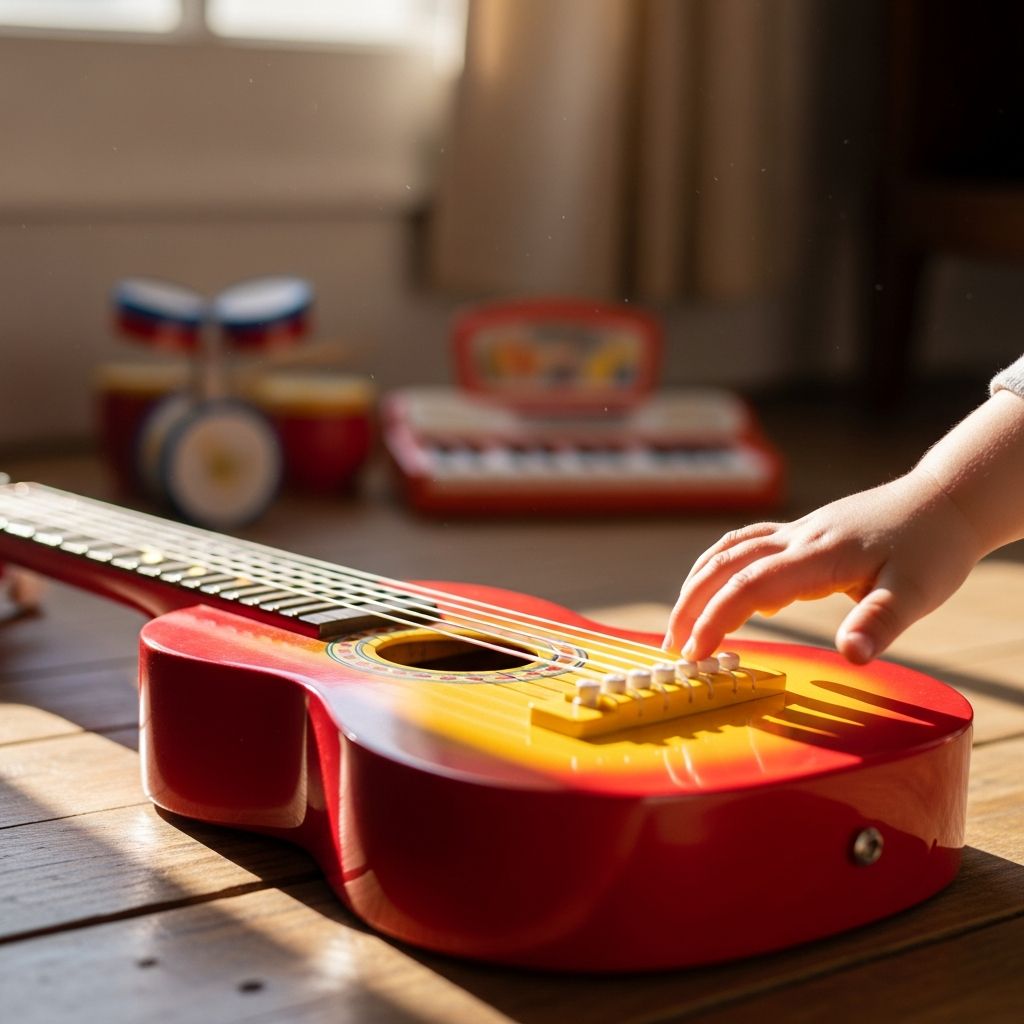
Parents do not need a full-sized piano or years of lessons to introduce a child to music. Sometimes, a playful toy guitar shaped like a friendly dog is enough to light the spark. With buttons, lights, silly sounds, and simple melodies, these toys offer a low-pressure way for kids to explore rhythm, sound, and performance while they play.
Modern research shows that early musical experiences support brain development, language, coordination, and emotional skills in young children. When a toy is cleverly designed to invite strumming, pressing, and singing, it becomes much more than entertainment — it becomes a first musical instrument.
Why Musical Play Matters in Early Childhood
Music is a powerful kind of sensory input. It combines sound, movement, rhythm, and emotion, all of which are essential for early learning. A toy guitar or similar musical toy can help provide that rich sensory environment right at home.
Research from the University of Southern California’s Brain and Creativity Institute has found that musical experiences in childhood can accelerate brain development, especially in language and reading areas. Other studies show that learning an instrument and engaging with music can strengthen attention, memory, and problem-solving skills.
Even when the “instrument” is a small plastic guitar, kids are still:
- Listening for patterns in melodies and rhythms
- Coordinating hands and fingers to produce sounds
- Connecting actions (pressing a button) with outcomes (hearing a sound)
- Expressing feelings through movement and pretend performance
These experiences lay a foundation for future learning, regardless of whether a child goes on to formal music lessons.
From Toy to “Real” Instrument: What a Dog-Shaped Guitar Teaches
A toy guitar modeled as a cheerful dog or animal is intentionally designed to be approachable. Large buttons, bright colors, and built-in songs make it easy for a child to feel successful, even with no prior experience.
Behind the silly barks and catchy tunes, such a toy can introduce several core musical concepts:
- Rhythm: Repeated drum sounds, clapping prompts, or strumming patterns help children feel the beat.
- Pitch: Different buttons triggering different notes or short melodies show that not all sounds are the same height or tone.
- Dynamics: Louder and softer effects help kids notice volume changes.
- Tempo: Fast and slow tunes encourage children to move at different speeds.
| Feature of a Toy Guitar | Skill It Supports | Long-Term Benefit |
|---|---|---|
| Strum bar or strings | Hand-eye coordination, timing | Fine motor control for future instruments or handwriting |
| Light-up buttons and notes | Cause-and-effect, visual tracking | Stronger attention and pattern recognition |
| Preloaded songs | Listening skills, memory | Improved language and reading readiness |
| Animal sounds & silly effects | Imagination, humor, emotional expression | Emotional regulation and creativity |
| Microphone or sing-along mode (if present) | Vocal practice, confidence | Public speaking and performance skills |
Developmental Benefits of Musical Toys
Beyond the fun factor, a thoughtfully designed toy guitar can support multiple areas of a child’s development at once.
Cognitive and Academic Growth
Music engages the brain in complex ways. Children who participate in music-related activities often show improvements in memory, attention, and problem-solving. These are the same skills that support success in school.
- Pattern recognition: Songs and rhythms help children notice sequences, which supports early math and reading skills.
- Working memory: Remembering lyrics or button sequences strengthens the ability to hold and manipulate information.
- Focus: Following along with a song or copying a rhythm encourages sustained attention.
Some research also suggests that instrumental training and ongoing music education can correlate with higher standardized test scores and improved academic performance later on.
Language and Communication Skills
Music and language share many brain pathways. Early exposure to songs and musical patterns can support the development of phonetic awareness, vocabulary, and listening skills.
When a child plays with a toy guitar that sings, speaks, or encourages call-and-response, they are:
- Hearing new words and phrases in context
- Practicing turn-taking through musical prompts
- Learning to distinguish subtle differences between sounds
- Gaining confidence in using their own voice
Improved listening and sound discrimination can also make it easier for children to follow instructions in noisy environments, such as classrooms.
Motor Skills and Coordination
Pressing buttons, moving sliders, and strumming a small guitar help children refine both gross and fine motor skills. Dancing along to fast and slow songs builds strength and body awareness.
- Fine motor: Small finger movements to hit specific buttons or strings.
- Gross motor: Jumping, marching, or swaying along with the music.
- Hand-eye coordination: Watching which part of the guitar lights up and targeting that area.
These motor skills are important not only for later instrument playing, but also for writing, drawing, sports, and daily tasks.
Emotional Expression and Wellbeing
Music provides a natural outlet for emotion. Children may gravitate toward different songs depending on how they feel, or they may express excitement by playing loudly and sadness by playing softly.
Studies of music education have linked musical involvement with better emotional regulation and overall wellbeing. For young children, a toy guitar becomes a safe, playful way to:
- Release energy through movement and sound
- Express feelings they cannot yet put into words
- Experience soothing rhythms that can calm anxiety or restlessness
- Build resilience by practicing, trying again, and hearing improvement
Social Skills and Confidence
When kids perform for siblings, parents, or stuffed animals, they are rehearsing social roles and practicing being seen. Group musical play often requires listening, taking turns, and cooperating.
Research on music education has found connections between musical activities and improved social skills, empathy, and positive youth development. Even at home, simple musical play can encourage children to:
- Share instruments or take turns choosing songs
- Follow another person’s rhythm or lead their own
- Gain confidence by “putting on a show”
- Develop pride in their abilities as others clap or sing along
Choosing a Toy Guitar That Supports Real Learning
Not all musical toys are equal. When selecting a dog-shaped guitar or any similar instrument-style toy, parents can look for features that genuinely support learning, not just noise.
Key Features to Look For
- Multiple sound options: A mix of notes, rhythms, and maybe animal sounds keeps children exploring.
- Interactive controls: Buttons, sliders, or strum bars that clearly change the sound help children understand cause and effect.
- Clear volume control: Adjustable volume protects hearing and keeps play pleasant for everyone.
- Durable design: A sturdy body and large, easy-to-press controls are better for small hands.
- Age-appropriate complexity: Younger toddlers may need very simple options, while preschoolers enjoy more modes and mini “challenges.”
Balancing Structure and Free Play
Some toys focus on playing preset songs, while others allow more open-ended sound-making. Ideally, children get a bit of both:
- Preset tunes help with listening, memory, and imitation.
- Free strumming and button pressing support creativity and experimentation.
Parents can encourage kids to first copy the toy’s song, and then make up their own version. This blend of structure and freedom mirrors how more formal music learning often works.
Simple Ways Parents Can Enhance Musical Play
You do not need any musical training to help your child get more from a toy guitar. Small, consistent routines can make a big difference.
Ideas to Try at Home
- Morning “concert”: Start the day with one short song where your child plays along on the guitar while you clap or dance.
- Story soundtracks: Pick a favorite picture book and let your child add sound effects at key moments.
- Call-and-response rhythms: Tap a simple pattern on the guitar body and ask your child to copy it.
- Feelings music: Ask, “What does happy sound like on your guitar?” or “Can you play a sleepy song?”
- Family band: Offer pots, pans, shakers, or other toys so everyone has an “instrument.”
These playful interactions not only support musical understanding but can also strengthen the bond between parent and child, partly through shared joy and, in some cases, even through biological bonding mechanisms like oxytocin release when moving and singing together.
When to Consider Transitioning to Real Instruments
A toy guitar can be a starting point, not a limit. Many children eventually show interest in learning a real guitar, ukulele, keyboard, or other instrument.
Signs your child may be ready for something more structured include:
- Imitating real musicians and asking detailed questions about instruments
- Spending longer periods experimenting with sound
- Showing curiosity about how songs are made
- Keeping a steady beat or simple rhythm with some consistency
Studies suggest that starting more formal music education in the early school years can enhance cognitive function, confidence, and overall positive development. That said, there is no rush. The main goal is to keep music enjoyable and pressure-free.
Frequently Asked Questions (FAQs)
At what age can my child start using a toy guitar?
Many toy guitars are appropriate from around 18 months to 2 years, as long as they have large buttons and no small removable parts. Always follow the manufacturer’s age guidelines and supervise younger children.
Does playing with a toy guitar really count as music education?
Yes, for young children it absolutely can. Early musical play — even with simple toys — helps build neural pathways, supports language, and strengthens attention and memory, which are all key aspects of music education in early childhood.
How long should my child play with musical toys each day?
There is no strict rule, but short, frequent sessions tend to work best for young kids. Even 10–15 minutes of engaged musical play a few times a day can provide meaningful benefits without causing overstimulation.
Could the noise be harmful to my child’s hearing?
Volume is important. Choose toys with volume controls and use the lower settings, especially if the toy is held close to the ears. If a toy sounds uncomfortably loud to an adult at arm’s length, it is likely too loud for a child’s ears.
How do I know if my child is really interested in music or just pressing buttons?
In early childhood, pressing buttons and exploring sounds is a normal and valuable form of musical play. Over time, you may notice more purposeful patterns, like repeating favorite rhythms or copying songs. That gradual change is a sign of genuine engagement.
Should I correct my child if they “play wrong”?
For very young children, it is better to emphasize exploration and enjoyment rather than correctness. You can model rhythms or melodies and invite them to copy, but avoid criticism. A positive experience now makes it more likely they will enjoy more formal lessons later on.
References
- 8 Benefits of Music Education for Young Children — Des Moines Symphony Academy. 2023-01-10. https://www.dmsymphony.org/about/news/8-benefits-of-music-education-for-young-children
- Kids & Music: Effects of Music on Child Development — School of Rock. 2022-05-01. https://www.schoolofrock.com/resources/music-education/kids-music-effects-of-music-on-child-development
- Children and Music: Benefits of Music in Child Development — Bright Horizons. 2021-03-15. https://www.brighthorizons.com/article/education/music-and-children-rhythm-meets-child-development
- USC researchers find music education benefits youth wellbeing — USC News. 2022-09-13. https://today.usc.edu/music-education-research/
- Benefits of Music Education in Early Childhood — Miracle Recreation. 2020-08-20. https://www.miracle-recreation.com/blog/music-education-in-early-childhood/
- The Importance of Music in Early Childhood — University of Maryland College of Education. 2019-04-05. https://education.umd.edu/importance-music-early-childhood
- Why Making Music Matters — Carnegie Hall. 2020-12-09. https://www.carnegiehall.org/Explore/Articles/2020/12/09/Why-Making-Music-Matters