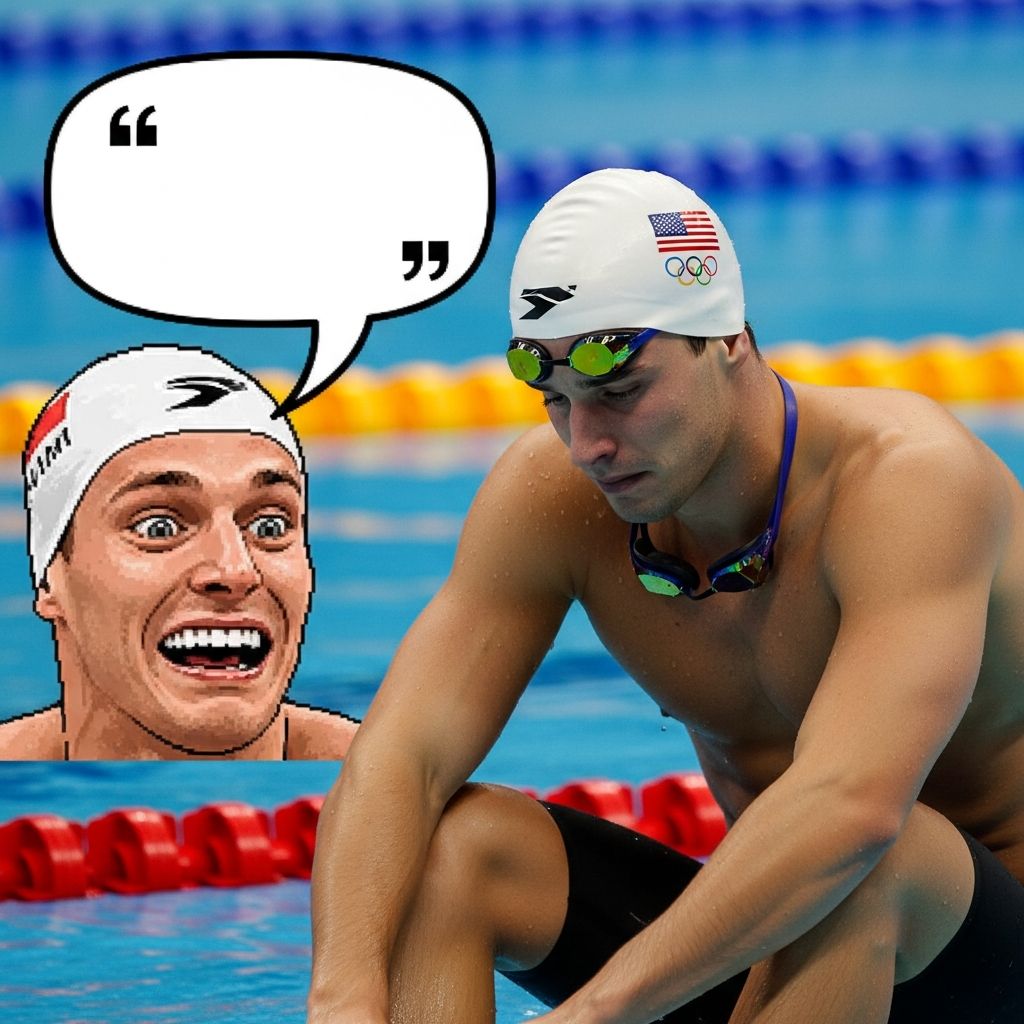
Memes are often treated as harmless jokes, but one viral fake quote about an Olympic swimmer showed how easily a single image can damage reputations, spread misinformation, and confuse millions of people. In an era when a screenshot can travel faster than any correction, this incident is a useful case study for families trying to raise thoughtful, responsible digital citizens.
This article unpacks how a misleading meme about an Olympic athlete turned into a minor online crisis, why it was so believable, and what parents and kids can learn about verifying information before they hit “share.”
From Joke to \”News\”: How the Meme Spiral Started
Many viral misinformation incidents today begin the same way: a simple image is posted to social media, stripped of context, and then amplified by accounts chasing engagement. Fact-checking often comes later, if at all, and by then the damage is mostly done.
In the swimmer fake-quote case, a meme appeared that paired an Olympic champion’s photo with a sensational quote she never said. It touched on a highly charged culture-war topic, virtually guaranteeing outrage, mockery, and rapid sharing. Within hours, users who had never followed the sport were commenting, debating, and attacking someone they only knew through a fake caption.
- The image looked professional — broadcast screenshots and competition photos give fake quotes an air of legitimacy.
- The text was emotionally charged — it was crafted to provoke anger and rapid reactions, not calm reflection.
- The subject was timely — hot-button social issues are fertile ground for viral memes that spread regardless of truth.
According to digital media researchers, misinformation often spreads faster than truthful corrections because it tends to be more novel and emotionally provocative. That pattern played out almost perfectly here.
Why the Meme Worked: The Psychology Behind Believing Images
To understand why so many people believed the fake quote, it helps to look at how our brains process visual information online.
| Factor | How It Boosts Believability |
|---|---|
| Photographic realism | High-quality sports photos and TV stills make the graphic feel like a real news card or interview screenshot. |
| Familiar format | Social users are conditioned to see quotes over photos as authentic commentary, especially with athlete images. |
| Confirmation bias | People more readily believe and share content that aligns with their existing views about sports, gender, or politics. |
| Speed of feeds | Fast-scrolling environments discourage careful reading or verification before reacting. |
Studies on social media show that people often rely on quick visual cues and peer reactions rather than careful source evaluation when judging whether a post is true. When they see a polished graphic with thousands of likes, it feels safer to assume it must be real.
The Athlete Caught in the Middle
Behind every viral meme is a real person. In this case, the swimmer at the center of the storm had never made the comments attributed to her. She had not given any interview on the topic the quote referenced, yet was suddenly being framed as a spokesperson in a heated public debate.
National sporting bodies and athlete unions increasingly have to respond when their athletes are dragged into online controversies built on faked or distorted content. In this incident, the sport’s governing organization eventually released a public statement clarifying that the quote was fabricated and that the swimmer had not spoken on the issue at all.
Reputational damage can be hard to measure but easy to imagine:
- Young fans may see the meme and associate the athlete with views she never expressed.
- Current and future sponsors may quietly reconsider partnerships if controversy persists.
- The athlete herself may face harassment, anxiety, or pressure to respond publicly to something she did not say.
Research on online harassment and public figures notes that false attributions can lead to sustained abuse and mental health strain, even after corrections are issued.
Satire, Parody, or Misinformation? The Blurry Lines
One reason meme-based hoaxes spread so easily is that creators often claim they were “just joking” or making satire. That defense blurs the line between legitimate parody and harmful disinformation.
Key differences that matter for families trying to teach kids about media:
- Good satire is usually clearly labeled or recognizable as a joke, especially to its intended audience.
- Deceptive memes mimic the style of real news or quotes and avoid clear signals that they are fake.
- Impact matters — if a “joke” leads millions to believe a real person said something inflammatory, it functions as misinformation, regardless of intent.
Major fact-checking organizations point out that some of the most widely shared falsehoods start as supposed satire that loses its labeling as it’s copied, cropped, and reposted.
How Official Bodies Stepped In
After the meme spread, the swimmer’s national federation publicly rejected the fake quote and asked media outlets to stop repeating it. This kind of response is becoming more common as sports organizations recognize that social media narratives can shape both public opinion and athlete safety.
Typical steps organizations may take when dealing with similar incidents include:
- Issuing a clear statement that the quote or image is fabricated.
- Contacting media outlets that amplified the meme and requesting corrections.
- Coordinating with platforms when content crosses into defamation or harassment.
- Offering media and legal support to the affected athlete, especially if they are young.
The incident also highlighted a troubling trend: some smaller media or commentary outlets ran pieces based on the fake quote without verifying whether the athlete had ever said it. That practice runs against basic journalistic standards, which call for checking primary sources and confirming controversial statements before publication.
Why These Incidents Matter for Families
At first glance, a fake sports quote might feel trivial compared to other forms of online misinformation, such as false health claims or fake election news. But for kids and teens, memes like this are often their first contact with the concept that “not everything online is true.”
Teaching them how to see through these tricks builds skills they will later use in higher-stakes contexts.
Everyday risks kids face with memes
- Taking jokes as facts: Children may assume that quotes on images are always real, especially when they feature famous people.
- Unknowingly spreading lies: A single tap to share means kids can become part of the misinformation chain.
- Normalizing harassment: Laughing at pile-ons against public figures can dull empathy and make bullying feel acceptable.
Research in digital literacy suggests that explicitly talking through examples of misleading content with young people significantly improves their ability to recognize and question suspicious posts.
Practical Media Literacy Skills: A Simple Checklist
Parents do not need to be social media experts to help kids navigate viral memes wisely. A few simple questions, asked consistently, can build healthy skepticism.
Before you share a meme with a quote, ask:
- Who posted it first? Is it a verified news outlet, the athlete’s own account, or a random page chasing clicks?
- Is there a source? Real quotes are usually linked to interviews, press conferences, or written statements.
- Does it sound like something this person would say? If it feels wildly out of character, that’s a red flag.
- Can I find the quote elsewhere? A quick search using the athlete’s name and key phrases can reveal if trustworthy outlets ever reported it.
- What do I gain by sharing this? If the main payoff is outrage or ridicule, pause.
Several educational initiatives encourage teaching kids “lateral reading”—opening new tabs to check multiple sources instead of relying on one post—to evaluate online claims.
Talking to Kids About Responsibility and Empathy
This swimmer meme wasn’t just about truth and falsehood. It was also about how we treat other people online, especially public figures. Parents can use it as a springboard for broader conversations.
Conversation starters for families
- “How would you feel if someone put fake words in your mouth and thousands of people believed it?”
- “Is it fair to judge someone based on a single screenshot with no proof?”
- “What’s the difference between teasing a fictional character and piling on a real person?”
- “If you share something hurtful and later learn it was fake, what can you do next?”
Child development experts note that connecting digital actions to real-world consequences helps kids see online spaces as extensions of their moral life, not as separate worlds with different rules.
What Platforms and Media Outlets Can Do Better
The responsibility for preventing similar episodes does not rest only on individuals. Platforms and publishers also play a significant role in either amplifying or correcting misinformation.
Steps platforms can take
- Label or downrank disputed content once credible organizations or targets have publicly identified it as fake.
- Provide contextual prompts when users attempt to share content flagged as misleading, nudging them to read more first.
- Improve reporting tools for individuals harmed by fake quotes or doctored images.
Steps media outlets should follow
- Verify controversial quotes with primary sources or official representatives before publishing.
- Avoid embedding viral memes as “evidence” unless their authenticity is confirmed.
- Issue clear corrections and updates when earlier reporting relied on misleading content.
What Parents Can Do Right Now
If you want to turn this swimmer meme incident into a practical learning moment at home, you can approach it like a small family media-literacy workshop.
Simple at-home activity
- Find a screenshot of a meme that looks like a quote from a famous person (it doesn’t have to be from this case).
- Ask your child whether they think it is real or fake and why.
- Together, search for the quote in a browser, adding the word “interview” or “statement.”
- Look for coverage by established news outlets or official organizations.
- Talk about how your child’s opinion changed—or didn’t—after checking more sources.
This kind of exercise trains kids to slow down and investigate, rather than simply react. Over time, habits like these become automatic whenever they see dramatic claims.
Frequently Asked Questions (FAQs)
Q: Did the Olympic swimmer really say the quote in the meme?
No. In the incident discussed here, the quote was fabricated and circulated without any supporting interview or official statement. The sport’s governing body publicly confirmed that the athlete had never made the comments attributed to her.
Q: How can I tell if a sports quote on a meme is fake?
Look for a reliable source. Search the quote along with the athlete’s name and check if trusted news outlets or official team sites reported it. If you only find the quote on low-credibility pages or image reposts, treat it with skepticism.
Q: Are kids more vulnerable to believing meme quotes?
Yes. Younger users often lack experience evaluating sources and may assume that anything in a polished graphic is accurate. Teaching them simple checks—such as looking for original interviews—significantly improves their ability to spot fakes.
Q: What should I do if I shared a fake quote without realizing it?
When you learn a meme was misleading, delete or unshare it if possible, and consider posting a brief note or comment explaining that the quote was fake and sharing a credible correction. Modeling this behavior shows kids that it is responsible to admit mistakes online.
Q: Can fake quotes about athletes have real-world consequences?
Yes. False attributions can affect an athlete’s reputation, sponsorships, mental health, and even safety if they trigger harassment. That is why federations, unions, and platforms are increasingly involved in disputing fabricated content.
References
- The Science of Fake News — David M. J. Lazer et al., Science. 2018-03-09. https://www.science.org/doi/10.1126/science.aao2998
- Stanford History Education Group: Civic Online Reasoning Curriculum — Stanford University. 2021-11-01. https://cor.stanford.edu/curriculum/
- Digital Platforms and Online Misinformation — OECD. 2021-10-12. https://www.oecd.org/digital/digital-economy-outlook/
- Online Harassment, Hate, and Cyberstalking in America — Pew Research Center. 2021-01-13. https://www.pewresearch.org/internet/2021/01/13/online-harassment-hate-and-cyberstalking-in-america/
- Principles of Journalism — American Press Institute. 2016-09-01. https://www.americanpressinstitute.org/journalism-essentials/what-is-journalism/principles-journalism/