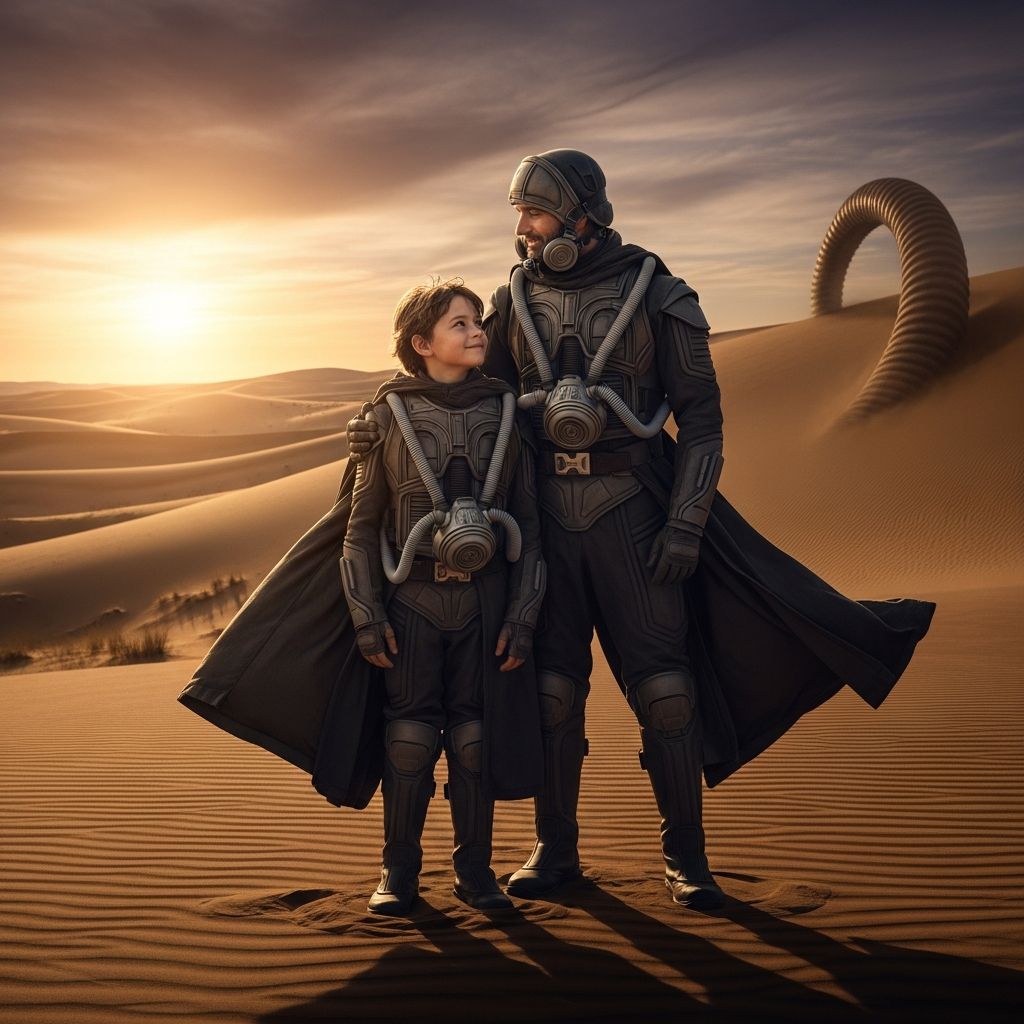
When most people think about Dune, they picture vast deserts, looming sandworms, and the quiet determination of Paul Atreides facing his destiny on Arrakis.[web:2] What rarely makes the spotlight is how this same fictional universe can become a surprisingly powerful bridge between a parent and a child. A simple Paul Atreides costume, built together piece by piece, can turn into one of the most meaningful projects a dad and son ever share.
The Power Of Fandom In Parenting
Pop culture worlds like Dune are more than entertainment; they offer ready-made stories about courage, loyalty, and change that kids naturally latch onto.[web:2] When parents lean into those interests, they enter a language their kids already care about, making it easier to connect on deeper topics like fear, responsibility, and identity.[web:3]
Costumes, props, and shared viewing sessions give families a tangible way to bring those themes into real life, making abstract lessons feel concrete and playful instead of preachy.[web:2]
Why Paul Atreides Resonates With Kids
Paul Atreides is neither a perfect superhero nor a passive bystander, which makes him surprisingly relatable to kids wrestling with their own fears and expectations.[web:2] He is young, uncertain, and often overwhelmed, yet he chooses to grow into responsibility instead of running from it.[web:2]
For a child, dressing as Paul is not just about armor or a stillsuit; it is about trying on bravery, curiosity, and leadership for size and seeing what those traits might feel like in everyday life.[web:2]
From Screen To Sewing Table
For one dad and son, the journey began where many modern adventures start: after a movie night and a wide-eyed, offhand comment about how “cool” Paul looked in his stillsuit.[web:2] Instead of brushing it off, the dad turned that spark into a project, suggesting they build their own version together at home.
They did not aim for a screen-accurate replica; they aimed for something they could create as a team, using affordable materials and a lot of imagination.[web:1]
Planning The Dune-Inspired Costume
Before any fabric was cut, they sat down to talk about what made a Paul Atreides costume recognizable: muted desert tones, layered protective pieces, and a sense of rugged functionality suitable for the harsh world of Arrakis.[web:1] This planning phase turned into an informal design lesson, with sketches, reference pictures, and conversations about why clothing in a desert needs to protect and conserve moisture.[web:2]
By inviting the child to make decisions about colors, layers, and accessories, the dad shifted the project from “I’ll make this for you” to “We’ll build this together,” which is a powerful message for any kid.
Key Elements Of A Paul-Inspired Look
Rather than chasing every tiny movie detail, they focused on a small set of visual cues that clearly communicated “Paul Atreides” without requiring a studio budget.[web:1][web:2]
- A base outfit in dark or sandy tones to echo Arrakis and stillsuit materials.[web:1]
- Layered armor-style pieces, such as vests or padded gear, to suggest survival equipment.[web:1][web:4]
- A simple cloak or cape to capture Paul’s silhouette against the desert.[web:1]
- Sturdy boots or shoes that look ready for rough terrain.[web:2]
- Subtle details like gloves or a mask to hint at protection from dust and heat.[web:2]
Focusing on these core elements kept the costume manageable while still satisfying the child’s desire to “look like Paul.”
DIY Materials Any Parent Can Find
Most of the costume came from everyday items: old jackets, thrift-store finds, and budget-friendly protective gear that echoed the distinct stillsuit look when layered together.[web:4] Spray paint or fabric dye helped unify mismatched pieces into a coherent desert-ready palette.[web:2]
Soft, breathable fabrics like cotton were prioritized for comfort, especially since kids often wear costumes for hours at events or around the house.[web:3] This practical consideration turned into a small side lesson on how real desert cultures value breathable, layering-friendly clothing.
Time, Patience, And Little Hands
What made the project special was not the final result but the process: tracing patterns, cutting fabric, and attaching straps with a small helper at the table. The dad deliberately slowed down tasks—even ones he could finish faster alone—so his son could participate safely and meaningfully.
Each step became an opportunity to teach basic skills like measuring, following simple instructions, and respecting tools, all while the child remained motivated by the vision of eventually stepping into his own Paul Atreides outfit.
Table: Simple Still-Suit-Inspired Pieces
| Costume Part | Budget-Friendly Option | What It Teaches |
|---|---|---|
| Desert base layer | Dark long-sleeve shirt and leggings from a thrift store, dyed or spray-painted in earthy tones.[web:2] | Color theory and how clothing adapts to environment. |
| Armor-style vest | Padded motorcycle or sports vest styled to suggest protective tech.[web:1][web:4] | Function vs. style, and the idea of protective gear. |
| Cape or cloak | Cut-down curtain or bedsheet, hemmed with basic stitches.[web:3] | Basic sewing and how fabric drape changes a silhouette. |
| Gloves and mask | Simple work gloves and a reusable dust mask customized with paint.[web:1][web:2] | Practical reasons for face and hand protection in harsh climates. |
How Cosplay Builds Confidence
When the costume finally came together, the transformation for the son was not just visual; he carried himself differently, standing taller and speaking with more certainty, especially when explaining his outfit to others. Putting on the costume allowed him to borrow some of Paul’s calm and courage in social situations that might otherwise feel intimidating.
Parents often notice that cosplay gives shy kids a temporary script and persona to lean on, which can help them practice speaking up, trying new things, and handling attention in low-stakes, playful contexts.[web:3]
Shared Nerdiness As Emotional Glue
The dad’s willingness to immerse himself in his child’s interests—learning character names, discussing plot twists, and debating the ethics of spice mining—sent a clear message: “What you care about matters to me.” These conversations, sparked by a sci-fi story, opened doors to deeper topics like environmental responsibility and power.
Because these talks unfolded while cutting fabric or testing spray paint colors, they never felt heavy-handed, which made it easier for the child to express worries, fears, and hopes without pressure.
Practical Tips For Parents Inspired By Dune
- Start with what your child loves. Whether it is Dune, superheroes, or animated series, begin with a world they already talk about nonstop.[web:2]
- Right-size the project. Choose one costume or prop instead of an entire cast, so it stays manageable and fun.
- Prioritize participation over perfection. Let kids make color choices, help with low-risk tasks, and add their own “upgrades,” even if they are not canon-accurate.
- Use the story for gentle life lessons. Talk about how characters handle fear, responsibility, or failure while you work.
- Celebrate use, not just completion. Plan a photo shoot, party, convention visit, or movie rewatch night where your child can actually wear the costume proudly.
Balancing Screen Time With Hands-On Creation
Modern kids often consume stories passively through screens, but building a costume flips that script: they become makers rather than just viewers. Cutting, gluing, sewing, and painting tap into creativity and problem-solving that screens alone rarely provide.
Parents who join in show that screens are a starting point, not an endpoint—that inspiration from a movie can flow into art, writing, building, and even learning basic engineering concepts through prop design.[web:3]
Memories Stitched Into Every Seam
Long after the child outgrows the costume, the memory of late nights at the kitchen table, shared jokes about sandworms, and the first time someone recognized the character at an event will linger. That emotional residue—part pride, part nostalgia—is what makes such projects uniquely powerful.
For the dad, the costume becomes a time capsule of who his child was at that moment in life: favorite lines, running jokes, and the nervous excitement of stepping out dressed as a hero for the first time.
Taking The Bond Beyond One Costume
Once a family discovers how satisfying a collaborative project like this can be, they often start looking for the next shared challenge: maybe a sibling joins as another character, or the family builds simple props like crysknives out of foam.[web:3] The key is not to escalate budget and complexity but to keep chasing that feeling of building something together.
Families may even branch into other fandoms, but the lesson remains the same: investing effort in what your child loves is one of the most direct ways to communicate love itself.
Frequently Asked Questions
Is a Dune-inspired costume too complex for beginners?
Not if you simplify the design and focus on a few key traits like color palette, layering, and a recognizable silhouette.[web:1][web:2] Many parents start with thrifted clothing and a single statement piece, such as a vest or cloak, rather than attempting a full technical stillsuit.
How much should a DIY Paul Atreides costume cost?
Costs vary widely, but thoughtful thrift shopping and repurposing items often bring the total down significantly compared to buying a complete pre-made cosplay.[web:1][web:6] Many families already own basics like boots or dark shirts, so they only need to purchase a few specialty items or materials.
What if my sewing skills are limited?
Limited sewing experience is not a deal-breaker; fabric glue, simple hand stitching, and clever layering can create a convincing look without advanced techniques.[web:4] Online tutorials for beginner-friendly armor and fabric modifications can fill in any gaps.
How can I keep my child engaged through a longer project?
Break the work into short, clearly defined steps with visible progress, and let your child handle tasks they can complete relatively quickly, such as painting or attaching Velcro. Celebrating each milestone—trying on the vest, finishing the mask, adding the cape—helps maintain excitement from start to finish.
Is it okay to mix in elements from other characters or designs?
Absolutely. Children often enjoy merging influences from different heroes, and that creative freedom can make the costume feel more personal and empowering. Canon accuracy may matter to dedicated cosplayers, but for most kids, joy and ownership matter far more than perfect replication.
Turning Sand And Spice Into Shared Stories
A homemade Paul Atreides costume will not change the fate of the galaxy, but it can dramatically shift the atmosphere inside a home. The hours spent tracing, cutting, and laughing together become a quiet rebellion against distraction and disconnection.
In a world where schedules and screens easily swallow family time, choosing to step into the desert of Arrakis side by side—one dad, one son, and a shared love of a story—is its own kind of hero’s journey.