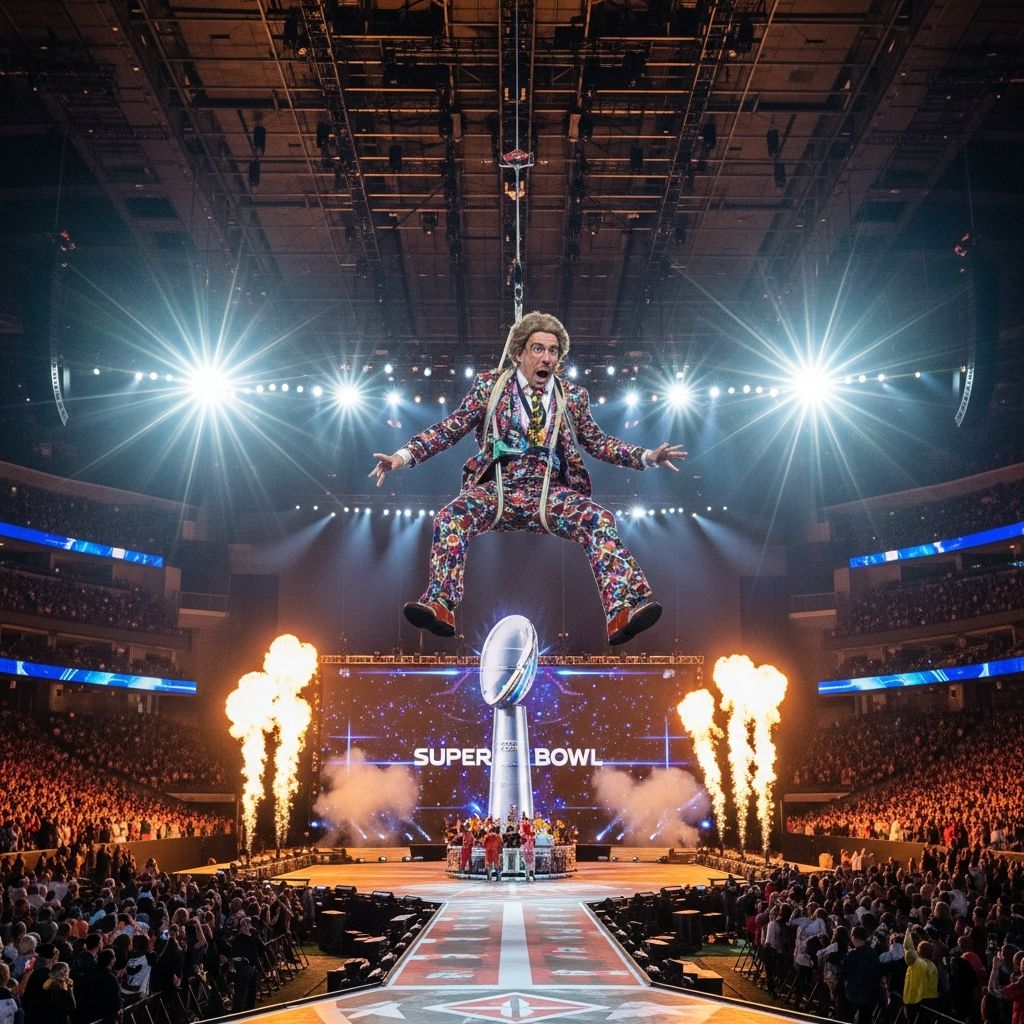
The Super Bowl halftime show was not always a global pop spectacle filled with megastars, cinematic staging, and social media frenzies. For decades, it was a pleasant but forgettable break featuring marching bands, broad themes, and safe variety entertainment. That changed when a bold comedy show challenged the NFL’s dominance and forced the league to rethink what halftime could be.
The Era Before the Spectacle
In the years leading up to the early 1990s, Super Bowl halftime programming was treated as a themed intermission rather than a main event. Networks and the league relied on traditional formats such as college marching bands, Broadway-style ensembles, and family-friendly variety acts built around loose concepts like seasonal celebrations or Americana.
While these shows entertained live crowds, they rarely generated buzz or kept television audiences glued to their screens. Viewers often used halftime to refill snacks, run errands, or flip through channels, which meant the most-watched broadcast of the year had a soft spot right in the middle.
When Comedy Decided to Compete
In 1992, a sketch comedy series on a rival network took a daring gamble: instead of surrendering to the Super Bowl’s ratings juggernaut, it aired a live special designed specifically to steal viewers during halftime. The show offered edgy jokes, celebrity cameos, and a countdown clock so fans could jump back to the game before play resumed.
This counterprogramming experiment demonstrated that the Super Bowl’s halftime slot was vulnerable. Millions of viewers changed the channel, proving that if the league did not treat halftime as appointment television, someone else gladly would.
Key reasons the stunt worked
- It offered fresh, unpredictable live comedy instead of a pre-packaged musical pageant.
- It acknowledged that many casual viewers cared more about entertainment than the game itself.
- It framed halftime not as a break from content, but as premium content in its own right.
The NFL’s Wake-Up Call
The ratings dip during that halftime shook the NFL and its broadcast partners. For the first time, they had clear evidence that competing programming could siphon off tens of millions of viewers simply by being more exciting during the break. Halftime was no longer a throwaway intermission; it was a battleground for attention.
League executives concluded that the old formula of themed spectacles and marching bands was no longer enough. To protect their massive audience and advertising value, they needed a performer so compelling that viewers would not dare change the channel.
Choosing a Global Superstar
The search for a new kind of halftime centerpiece led the NFL to an obvious but ambitious solution: enlist one of the most famous entertainers on the planet. The league and its production partners courted Michael Jackson, whose global fame, elaborate staging, and history of must-see television performances matched the scale of the Super Bowl stage.
Because the NFL does not typically pay traditional performance fees for halftime, the deal leaned on other incentives. The arrangement included charitable donations tied to Jackson’s foundation and valuable commercial time to promote a humanitarian campaign focused on youth support and community rebuilding.
| Challenge | Risk | What a global star offered |
|---|---|---|
| Viewers leaving during halftime | Lower ratings and ad value | An artist audiences would plan their evening around |
| Perception of old-fashioned halftime themes | Loss of cultural relevance with younger viewers | Modern pop spectacle with cutting-edge staging |
| Rising competition from counterprogramming | Other networks capturing headlines and buzz | Headline-making performance that dominated conversation |
Michael Jackson Rewrites the Playbook
When Michael Jackson finally took the Super Bowl stage the year after the comedy special’s stunt, the halftime show transformed from a pleasant diversion into a highly choreographed concert event. The performance leaned on dramatic entrances, carefully timed pauses, and an escalating setlist that treated the field as a vast arena.
The production also brought a new level of technical ambition. A mobile stage, visual stunts, coordinated crowd card displays, and a massive choir created the impression of a global concert condensed into a few electrifying minutes, raising expectations for what halftime should deliver.
Ratings, Impact, and the New Standard
One of the most striking outcomes of Jackson’s halftime show was that television ratings did something they had rarely done before: they climbed during the halftime break. Instead of using the intermission to step away, viewers tuned in specifically to watch the performance, making the show itself a primary draw.
The broadcast reached more than 130 million viewers in the United States and was later recognized as one of the most-watched television events in the country at that time. The exposure also boosted interest in Jackson’s then-current album, proving that the halftime stage could significantly influence music sales and cultural momentum.
Lasting changes sparked by this moment
- Halftime became a sought-after platform for major artists looking to reach massive audiences in a single night.
- Brands and sponsors began to see halftime as an anchor for marketing campaigns rather than background entertainment.
- Fans started to discuss the show as eagerly as the game itself, especially in the days and weeks afterward.
From Novelty to Cultural Institution
In the years that followed, the NFL doubled down on the strategy introduced with Jackson: secure top-tier talent, embrace intricate staging, and treat halftime as a centerpiece of the broadcast. Subsequent shows featured an evolving mix of rock icons, pop stars, and genre-spanning collaborations designed to appeal to multiple generations at once.
Media outlets and critics began ranking halftime shows, debating which performances were the most memorable and how they reflected shifting musical trends. Over time, the halftime show became a cultural barometer, signaling which artists had truly reached the level of mainstream dominance.
Why That 1992 Gamble Still Matters
The most fascinating detail of this transformation is that it began with a risk taken by an upstart comedy series. By daring to challenge the Super Bowl during its own broadcast, the show unintentionally reshaped the league’s approach to entertainment and set off a chain reaction that culminated in one of the most influential live performances in television history.
Without that moment of counterprogramming, the NFL might have taken much longer to recognize the full value of halftime as premium content. Instead, the league was forced to adapt quickly, embracing star power and spectacle as necessities rather than luxuries.
Lessons for Modern Entertainment
The story of the early 1990s halftime shake-up offers broader lessons for creators, leagues, and networks operating in today’s fragmented media landscape. Attention is not guaranteed even for massive events; it must be earned with content that feels essential rather than optional.
It also illustrates how competition can drive innovation. A single disruptive idea from a comparatively smaller show forced one of the largest sports organizations in the world to reimagine its product and, in doing so, created an entirely new kind of live television ritual.
- Audiences reward originality, especially when they sense that something truly unmissable might happen.
- Partnerships between sports, music, and philanthropy can amplify both entertainment and social impact, as seen in campaigns tied to Jackson’s appearance.
- Live television remains uniquely powerful when it combines star power, spectacle, and real-time conversation among viewers.
Frequently Asked Questions
Why were older Super Bowl halftime shows considered less exciting?
Earlier halftime shows typically relied on traditional entertainment such as marching bands, themed medleys, and variety-style productions rather than headline musical acts. These formats did not usually create the same urgency or cultural buzz that modern superstar-centered performances now generate.
What made the early 1990s counterprogramming so influential?
The live comedy special proved that millions of viewers were willing to abandon the game during halftime if they were offered fresher, more engaging content. This wake-up call pushed the NFL to treat halftime as a competitive entertainment slot instead of a simple break in the action.
How did Michael Jackson’s performance change the NFL’s strategy?
Jackson’s halftime show brought concert-level production, global star power, and a carefully paced performance that kept audiences watching throughout the break. The ratings success convinced the league that securing major artists and investing in large-scale staging was key to maintaining viewership.
Did the halftime show help Michael Jackson’s career at the time?
The broadcast exposed Jackson’s music to more than 130 million domestic viewers and was linked to increased attention for his album that was on the market at the time. The performance also reinforced his reputation as a singular live entertainer on one of the largest stages available.
How do modern halftime shows connect to that era?
Today’s halftime productions, featuring multiple stars, elaborate visual effects, and extensive pre-game hype, follow the template established in the wake of the early 1990s shift. The combination of star-driven programming and high production values can be traced back to the moment when the NFL decided halftime must be as compelling as the game itself.