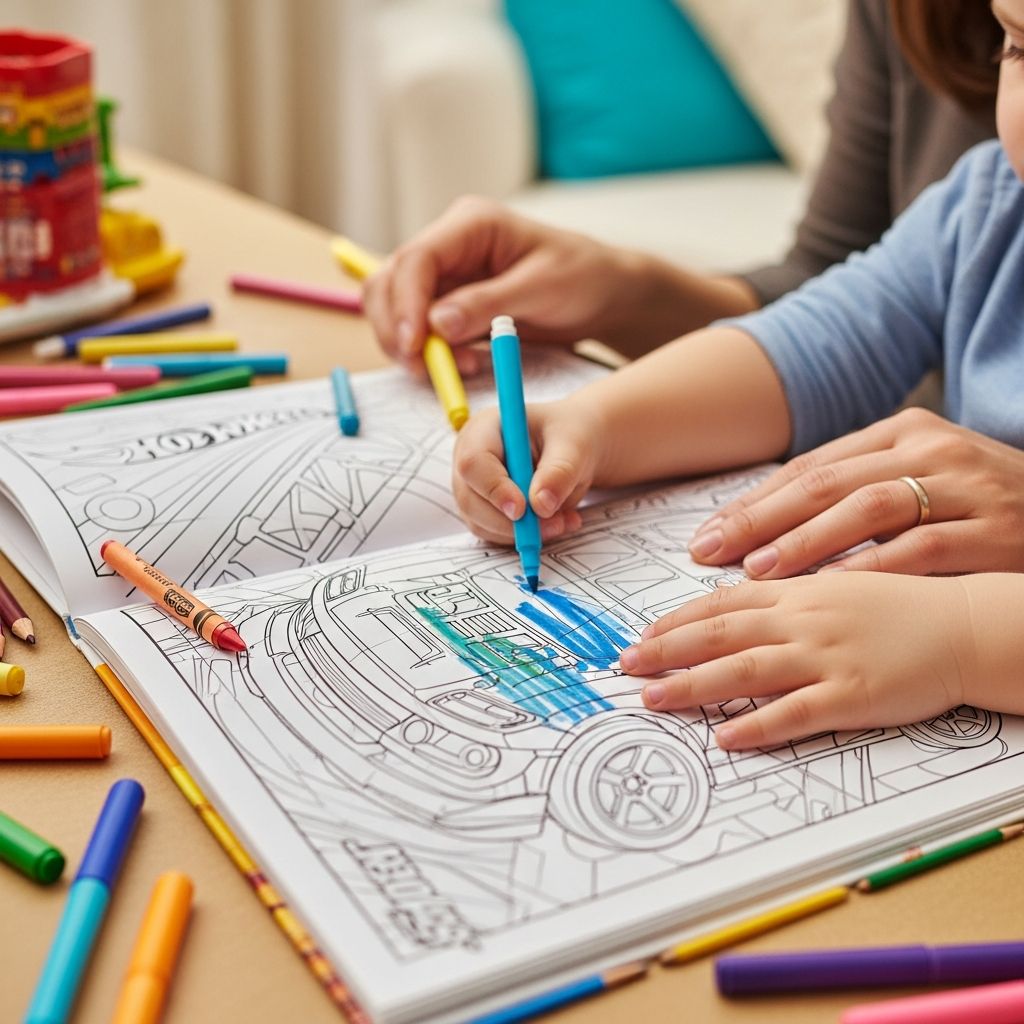
Hot Wheels–style coloring pages turn high-speed racing into a calm, focused activity that children love. Beyond the flashy cars and looping tracks, these pages are powerful tools for nurturing creativity, patience, and early learning skills.
Why Car-Themed Coloring Is So Engaging
Many children are fascinated by cars, engines, and racing, which makes vehicle-based designs instantly appealing. When a child colors race cars and tracks, the familiar theme lowers resistance to sitting down for a quiet, screen-free activity.
Coloring cars also provides a mix of simple and detailed shapes, from big body panels to tiny wheels and spoilers. This variety keeps kids interested longer than plain geometric shapes or repeated patterns.
- Bright colors and bold outlines help younger children stay inside shapes more easily.
- Details like flames, decals, and track elements challenge older kids who want more complexity.
- Racing scenes invite children to imagine stories about competition, teamwork, and problem-solving.
Key Benefits for Your Child’s Development
Coloring race cars is more than a pastime; it quietly builds important skills that carry over into school and everyday life. Parents can support early development simply by providing pages, crayons, and a little encouragement.
The table below highlights some of the main benefits of regular coloring sessions with a car-and-track theme.
| Skill Area | How Hot Wheels–Style Coloring Helps |
|---|---|
| Fine motor control | Holding crayons, tracing curves of the car body, and filling small details strengthen hand muscles and grip. |
| Hand–eye coordination | Children learn to guide their hand to stay within outlines, follow track paths, and color around features like wheels and spoilers. |
| Attention span | Completing a detailed car or complex track scene encourages focus over a longer stretch of time. |
| Color and shape recognition | Kids practice naming colors, identifying circles (wheels), rectangles (windows), and other shapes found in vehicles. |
| Imagination and storytelling | Children imagine drivers, races, and outcomes, then share their ideas while or after they color. |
Choosing the Right Coloring Pages by Age
Not every coloring sheet is right for every child. Matching the level of detail to your child’s age and experience avoids frustration and keeps the activity fun.
For toddlers and preschoolers (ages 2–4)
- Look for cars with large, simple body shapes and thick outlines.
- Avoid pages cluttered with tiny logos or very thin lines.
- Offer chunky crayons or washable markers that are easy to grip.
For early elementary kids (ages 5–7)
- Choose pages that show cars on ramps, loops, or jumps to inspire stories.
- Introduce moderate detail, such as racing stripes, windows, and road markings.
- Encourage kids to add their own elements, like clouds, spectators, or finish lines.
For older kids (ages 8+)
- Offer pages featuring multiple cars, complex tracks, and background scenery.
- Suggest they experiment with shading, color blending, and realistic details.
- Invite them to design their own car on blank paper inspired by the pages they color.
Setting Up the Ultimate Coloring Pit Stop
A little preparation turns a simple coloring page into a calm, inviting activity. Creating a mini “coloring pit stop” at home encourages kids to return to their art again and again.
You do not need fancy supplies; a predictable setup matters more than expensive tools. Focus on making everything accessible and comfortable.
Basic supplies checklist
- A flat, well-lit surface such as a small table or a cleared section of the dining table.
- Printed car and track pages, kept in a folder or tray.
- Crayons, colored pencils, and a few washable markers.
- A scrap sheet where kids can test colors before using them on the car designs.
- A small container for pencil sharpeners, erasers, and extra paper.
Simple setup tips
- Use a plastic tablecloth or craft mat to protect surfaces from marker stains.
- Offer seat cushions or a child-sized chair for better posture and longer focus.
- Play soft background music to create a relaxed, creative atmosphere.
Creative Ways to Use Hot Wheels–Style Coloring Pages
Once cars are colored, they do not have to disappear into a stack of paper. Finished pages can evolve into crafts, decorations, or even part of pretend play.
Reusing colored pages teaches children that their artwork has value and can be displayed or transformed, not just thrown away.
Display and decorate
- Create a “garage gallery” on a bedroom wall or door, rotating new car art every week.
- Laminate favorite pages and use them as placemats for snack time or family movie night.
- Cut out cars and glue them on cardstock to make custom bookmarks or gift tags.
Turn pages into crafts
- Fold a colored page into a simple greeting card for a friend or relative who loves cars.
- Cut out individual cars and tape them to craft sticks to create “car puppets” for storytelling.
- Glue colored cars onto a large sheet of paper to build a giant poster with a homemade racetrack drawn around them.
Inspire pretend play
- Use colored car cutouts as players in a board game your child designs.
- Place them around toy blocks arranged as tunnels, bridges, and garages.
- Encourage kids to narrate race announcements, pit-stop strategies, and victory speeches using their artwork.
Learning Opportunities Hiding in Every Page
Coloring cars and tracks naturally connects to early math, science, and language skills. With a few simple prompts, parents can turn a casual activity into a light educational moment.
Early math and logic
- Ask your child to count wheels, windows, or stripes on the car.
- Compare sizes: “Which car is longer? Which has bigger wheels?”
- Talk about patterns: “Can you make the stripes repeat red, blue, red, blue?”
Intro to science and engineering
- Discuss what makes cars go fast, like smooth shapes, big engines, or light materials.
- Talk about friction using the track as an example: “What happens when the track is bumpy or sticky?”
- Encourage kids to imagine how a loop or jump would work in real life and what might make a car fall off.
Language and storytelling
- Give the car a name, a driver, and a backstory.
- Ask open questions: “Where is this car racing? Who is it racing against?”
- Invite older kids to write a short race report or comic strip inspired by their colored scene.
Making Coloring Time Calm and Positive
For some children, perfectionism or frustration shows up quickly during art activities. A few simple guidelines help keep car-themed coloring stress-free and enjoyable.
Focus on effort and creativity, not staying perfectly inside the lines or choosing “correct” colors.
Helpful encouragement phrases
- “I love how bold you made those flames.”
- “You picked such interesting colors for that car body.”
- “You worked hard to finish that whole track scene.”
Managing frustration
- Remind kids that race cars in the real world also come in many designs and colors—there is no single right answer.
- Keep extra copies of favorite pages so children can try again if they want to experiment.
- Offer short breaks to stretch, get water, or talk about the story behind the car when attention starts to fade.
Coloring on the Go: Travel-Friendly Ideas
Car-themed coloring pages pair perfectly with real-life travel. A small collection of printouts can turn long car rides or waiting rooms into quiet, focused moments.
Travel kit essentials
- A zippered pouch or small box with crayons or colored pencils.
- Half-size printed pages that fit easily in a bag or clipboard.
- A firm surface for coloring, such as a lap desk or sturdy folder.
On-the-road activities
- Ask kids to color cars in the same colors as vehicles they see outside the window.
- Encourage them to design a “family race car” that represents your trip.
- Invite siblings to trade pages halfway through the journey and finish each other’s artwork.
Frequently Asked Questions
Are car-themed coloring pages suitable for very young children?
Yes, as long as you choose simple designs with large car shapes and minimal small details. Toddlers may mostly scribble at first, but they still benefit from practicing hand movements and exploring colors.
What type of coloring tools work best?
Crayons and colored pencils are the most forgiving options for kids of all ages. Washable markers add bold color but may bleed through thin paper, so consider placing scrap paper underneath.
How can I keep my child interested over time?
Rotate the types of pages you provide—single cars, crowded races, and stunt tracks—and introduce occasional challenges, such as using only two colors or inventing a new sponsor logo. Displaying finished work also motivates children to keep creating.
Can these activities help with school readiness?
Regular coloring supports fine motor skills needed for handwriting, as well as focus and the ability to follow visual boundaries. When parents talk about colors, shapes, and simple stories during coloring, children practice early academic skills in a relaxed way.
How often should my child color?
There is no strict rule, but short, frequent sessions—such as 10 to 20 minutes a few times a week—provide steady benefits without overwhelming kids. Let your child’s interest guide the length of each session.
Bringing It All Together
Hot Wheels–style coloring pages offer parents an easy, low-cost way to inspire creativity and support important developmental skills. With a handful of supplies and a bit of encouragement, coloring time can become a cherished part of your child’s routine.
Whether your child loves roaring engines or simply enjoys bright colors, car-themed pages provide endless opportunities for storytelling, learning, and family connection—one colored wheel at a time.