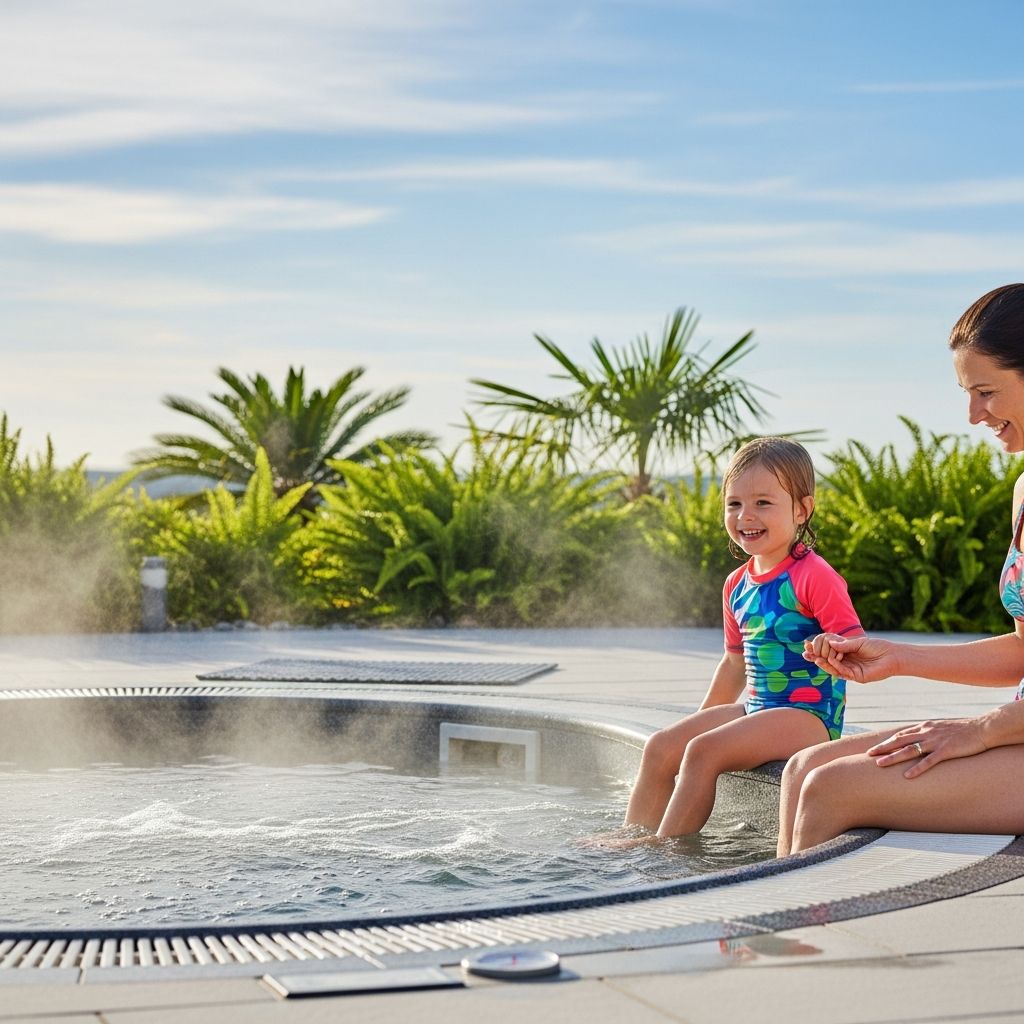
Hot tubs provide relaxing family moments, but they pose significant risks to children, including overheating, drowning, and infections. Health authorities like the CDC recommend no hot tub use for kids under 5 due to immature temperature regulation and submersion dangers. For older children, strict protocols ensure safety.
Understanding Age Restrictions and Physiological Risks
Young children’s bodies absorb heat faster and regulate it less efficiently than adults, heightening overheating risks like heatstroke. The CDC explicitly advises against hot tub use for children under 5 years old. Alberta Health suggests consulting a doctor before allowing any under-5 access and considering keeping hot tubs off-limits. Even for kids 5 and older, they must stand with heads fully above water to avoid accidental submersion.
Smaller body mass amplifies dehydration and heat-related issues during short exposures. Drowning risks escalate from powerful jets, slippery surfaces, and suction drains that can trap hair or limbs. Implementing age-based rules prevents tragedies.
- Under 5 years: Prohibited by CDC; consult pediatrician if considering exceptions.
- 5 years and older: Allowed only if height permits head-above-water standing.
- All ages: Never unsupervised; exit together if adult leaves.
Optimal Temperature Settings for Young Users
Adult hot tubs often reach 104°F, but this endangers children. The Pool & Hot Tub Alliance (PHTA) recommends lowering to 98°F maximum for kids, with some experts suggesting 95°F to minimize overheating. Always verify with a floating thermometer before entry, as built-in gauges can be inaccurate.
| Group | Recommended Max Temperature | Rationale |
|---|---|---|
| Adults | 104°F | Standard for relaxation |
| Children 5+ | 98°F (PHTA) | Prevents rapid heat absorption |
| Conservative for kids | 95°F | Extra margin against heat illness |
Lower temperatures 30-60 minutes in advance. Monitor for flushed skin, dizziness, or lethargy—immediate exit and cooling required.
Session Duration and Hydration Protocols
Limit children’s immersion to 5-15 minutes per session at safe temperatures to avert dehydration and fatigue. Start with 5 minutes for younger kids, never exceeding 15. Enforce breaks: exit, hydrate with cool water (no sugary drinks), and rest in shade.
- Enter slowly to acclimate.
- No head submersion; use seats.
- Watch for overheating signs: rapid breathing, nausea, confusion.
- Rehydrate frequently; avoid alcohol or caffeine for all.
Multiple short dips with intervals are safer than prolonged soaks.
Constant Supervision and Behavioral Rules
Zero tolerance for unattended children near hot tubs—within arm’s reach at all times. If adult exits, children must exit immediately. Ban running, diving, pushing, or toys that block drains/jets, as these cause entrapment.
Educate on etiquette: walk carefully, no horseplay, shower pre-entry to reduce bacteria. Powerful jets can startle or exhaust kids—turn off if needed.
Physical Barriers and Structural Safeguards
Lockable, ASTM-compliant covers prevent unauthorized access. Surround with 4-foot fences featuring self-closing, self-latching gates (latches at 54+ inches). Secure ladders/steps; add non-slip surfaces and pool alarms. Inspect drains for anti-entrapment covers meeting current standards—upgrade if pre-2008.
Clear surrounding area of toys/attractants. Lighting aids nighttime monitoring.
Maintaining Water Quality to Prevent Illness
Imbalanced chemicals irritate sensitive child skin/eyes and foster infections. Test pH (7.2-7.8), chlorine (1-3 ppm), alkalinity weekly with strips. Shower before entry; ban diarrhea-sick users. Limit public hot tub occupancy; no swallowing water. Change water monthly; clean filters.
Pregnant families: consult providers, as high heat risks fetal harm.
Recognizing and Responding to Emergencies
Overheating symptoms: hot/dry skin, rapid pulse, vomiting—remove, cool with wet cloths, seek medical help if persistent. Drowning signs: unresponsiveness—call 911, CPR if no breathing.
Keep safety gear: life ring, hook, phone nearby. First-aid training for parents essential.
Customizing Safety for Home and Vacation Hot Tubs
Home: Follow manufacturer guidelines; annual pro inspections. Resorts/jacuzzis: Verify temp/chemicals; same rules apply—request adjustments. Portable spas need stable, ventilated setups.
Frequently Asked Questions
Can children under 5 use hot tubs?
No, CDC recommends avoidance due to overheating and drowning risks. Consult pediatrician for exceptions.
What temperature is safe for kids in hot tubs?
98°F max per PHTA; ideally 95°F. Confirm with thermometer.
How long can children stay in a hot tub?
5-15 minutes max; shorter for hotter water or younger kids.
Is supervision always required?
Yes, constant adult presence; never leave kids alone.
What barriers prevent access?
Lockable covers, 4-ft fences with self-latching gates, alarms.
Building a Family Hot Tub Safety Culture
Combine rules with fun: family meetings on protocols, kid-friendly signage, rewards for compliance. Pediatrician check-ins personalize advice. These steps transform hot tubs from hazards to safe retreats.
(Word count: 1678)
References
- Hot Tub Safety Guidelines for Families with Children and Pets — Spas of Oregon. 2023. https://www.spasoforegon.com/hot-tub-safety-guidelines-for-families-with-children-and-pets/
- Can Kids Go in Hot Tubs? – Safety Guide For Parents — Epic Hot Tubs. 2023. https://epichottubs.com/blog/can-kids-go-in-hot-tubs/
- Child Safety: Drowning Prevention in Pools and Hot Tubs — Alberta Health/MyHealth. Accessed 2026. https://myhealth.alberta.ca/Health/pages/conditions.aspx?hwid=ue5149
- What You Can Do to Stay Healthy in Hot Tubs — Centers for Disease Control and Prevention (CDC). 2024-01-16. https://www.cdc.gov/healthy-swimming/safety/what-you-can-do-to-stay-healthy-in-hot-tubs.html