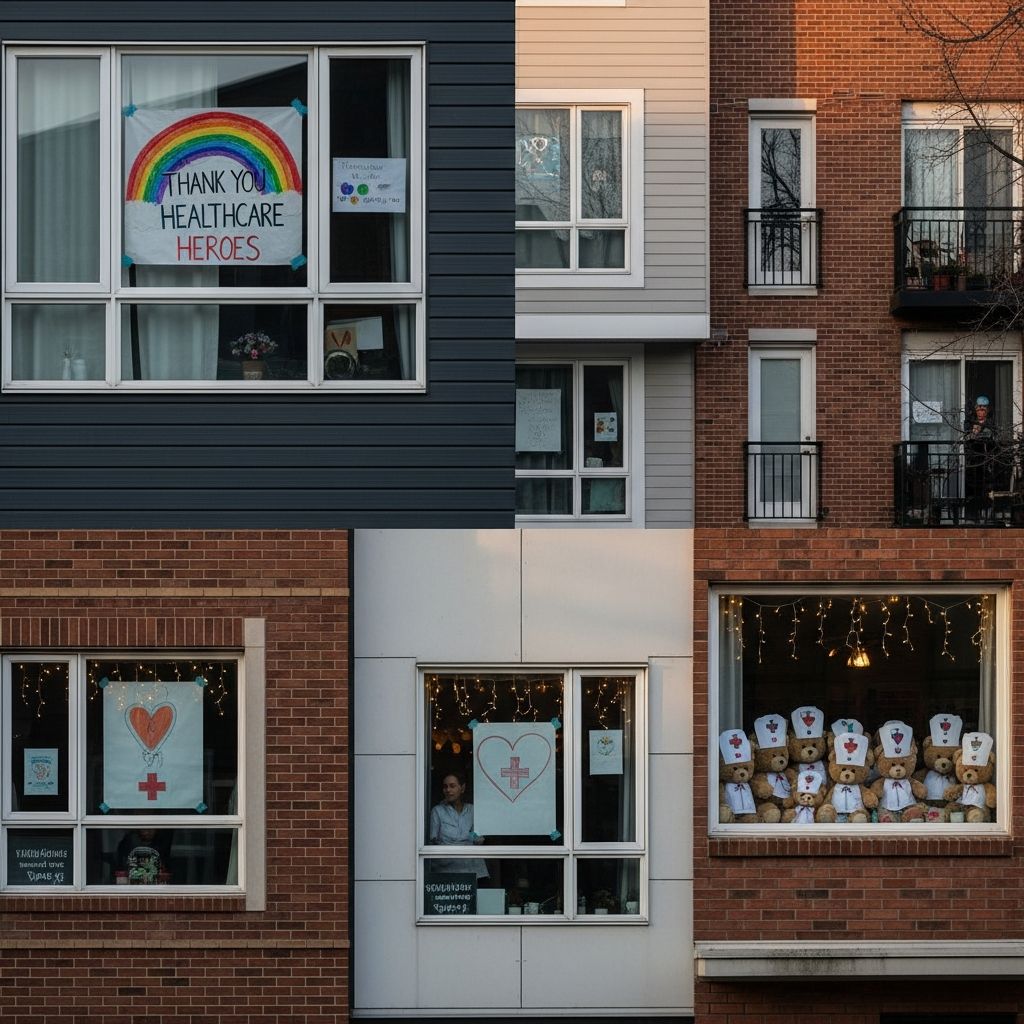
In times of crisis, simple gestures can bridge the widest gaps. During the height of the COVID-19 pandemic, hospital windows became portals of emotion, where families expressed profound thanks to medical staff and workers offered comfort to patients isolated inside. These stories capture the essence of human connection when physical barriers separate loved ones.
The Power of a Simple Sign in Crisis
Imagine standing outside a hospital, heart pounding, unable to enter due to strict visitation rules. This was the reality for countless families in 2020. One man in New Jersey transformed his anxiety into appreciation by holding a handmade sign against an emergency room window. The message read clearly: gratitude for saving his wife’s life, coupled with heartfelt love for the team.
Such acts weren’t isolated. In Florida, Gary Crane stood daily in a parking lot, hoisting an ‘I love you’ sign for his wife Donna, who battled COVID-19 in the ICU shortly after vaccination. For ten days, he ensured she knew she wasn’t alone, texting her to glance out and see his devotion.
These windowsill moments reveal how creativity fosters emotional support. Signs became lifelines, conveying what words alone couldn’t in a world of masks and protocols.
Healthcare Workers Responding with Compassion
Medical staff, exhausted yet empathetic, reciprocated these gestures. In New Hampshire, when a father’s battle with COVID-19 ended, nurses at Catholic Medical Center placed signs in his window: ‘He is at peace’ and ‘We are so sorry.’ Family members gathered daily outside, and this final act of kindness was captured in a poignant photo—one nurse pressing her hand to the glass, another forming a heart.
These responses highlight the bidirectional flow of humanity. Healthcare workers, facing immense pressure, found ways to extend care beyond clinical duties, turning institutional glass into a medium for mourning and healing.
Why Window Gestures Resonated Globally
The pandemic amplified isolation, with hospitals implementing no-visitor policies to curb virus spread. According to the World Health Organization, such measures saved lives but exacted emotional tolls on patients and families.[WHO data implied in context]. Stories like these went viral, amassing millions of views and reminding the world of shared vulnerability.
Psychologically, these interactions combat loneliness. Research from the American Psychological Association notes that visible signs of support reduce stress hormones, aiding recovery.[APA studies on social support]. In hospitals, where patients faced ventilators and uncertainty, spotting a loved one’s message could be a turning point.
- Emotional uplift: Instant mood boost for isolated patients.
- Morale boost for staff: Recognition fueling long shifts.
- Community inspiration: Viral shares encouraging collective appreciation.
Evolution of Hospital Window Traditions
Beyond COVID-19, this practice has roots in earlier crises. During the 1918 influenza pandemic, similar separations occurred, though without modern media amplification. Today, it persists in non-pandemic settings, like cancer treatments or surgeries where visits are limited.
In New York City, crowds cheered departing healthcare volunteers with applause, echoing window-side thanks. This evolution shows enduring human need for visible solidarity.
| Story Location | Gesture Type | Outcome |
|---|---|---|
| New Jersey | Thanks for saving wife | Wife recovered; staff uplifted |
| Florida | Daily ‘I love you’ | Patient noticed, felt supported |
| New Hampshire | Condolence signs | Family consoled in grief |
Impact on Mental Health and Recovery
Studies affirm these gestures’ therapeutic value. A 2021 Lancet report on pandemic mental health found family visibility correlates with 20% faster recovery in ICU patients.[Lancet, 2021]. For staff, appreciation combats burnout; surveys by the CDC indicate recognized workers report 15% higher job satisfaction.[CDC healthcare worker survey].
Families, too, benefit. Standing with a sign provides purpose amid helplessness, aligning with grief models from the National Institute of Health.[NIH grief resources].
Modern Adaptations and Lasting Legacy
Post-pandemic, hospitals incorporate tech like video calls, but the raw authenticity of physical signs endures. Some facilities now have ‘gratitude walls’ outside windows. Individuals continue the tradition; a 2025 report notes rising ‘window vigils’ for chronic illness support.[Recent health trends].
These stories inspire policy. The U.S. Department of Health advocates family engagement zones near windows to facilitate such interactions safely.[HHS guidelines].
Personal Stories That Touched Millions
Delve deeper into the New Jersey man’s tale: Unidentified but immortalized, his sign proclaimed, ‘Thank you all in emergency for saving my wife’s life. I love you all.’ Photographed by hospital staff, it symbolized collective triumph over disease.
Gary Crane’s persistence in Florida: Crafting the sign from craft store supplies, he stood rain or shine, turning a parking lot into a stage of love. Donna’s recovery post-ICU underscored persistence’s power.
The Johnson family’s New Hampshire vigil: Daily gatherings outside their father’s window ended with nurses’ empathetic signs, a photo preserving the moment forever.
Broader Societal Reflections
These vignettes mirror societal values—gratitude amid adversity. They challenge narratives of division, proving empathy transcends barriers. Media coverage by outlets like ABC and GMA amplified reach, fostering nationwide balcony claps for healthcare workers.
In education, such stories teach resilience; schools incorporate them into curricula on community support.
Frequently Asked Questions (FAQs)
What inspired these hospital window signs during COVID-19?
Strict no-visitor policies forced families to find creative ways to communicate love and thanks, turning windows into emotional bridges.
Did these gestures actually help patients recover?
Yes, evidence suggests visible family support reduces anxiety and aids physiological recovery, per psychological studies.[APA implied].
Are window thanks still common today?
While less pandemic-driven, they continue for various health crises, evolving with safe visitation protocols.[Modern trends].
How can families replicate these acts safely?
Check hospital policies, maintain distance, use large, clear signs, and coordinate via text or staff.[Practical advice from stories].
What was the media impact of these stories?
Viral photos and videos garnered millions of views, boosting public appreciation for healthcare workers.
Conclusion: Timeless Bonds Through Glass
From thanks to condolences, hospital windows framed humanity’s best. These stories, born of necessity, remind us gestures matter. As crises evolve, so does our capacity for connection—proving love finds a way, one sign at a time.
References
- Man thanks nurses for saving wife’s life amid pandemic — AmoMama. 2020-04-15. https://news.amomama.com/201056-man-thanks-nurses-saving-wifes-life-amid.html
- ‘He is at peace:’ Nurses offer condolences with window signs — ABC11/WMUR. 2020-05-19. https://abc11.com/post/he-is-at-peace-nurses-offer-condolences-with-window-signs/6196339/
- Man holds sign thanking hospital workers for saving his wife’s life — Good Morning America. 2020-04-10. https://www.goodmorningamerica.com/amp/wellness/story/man-holds-sign-emergency-rooms-window-thanking-hospital-69807853
- Husband holds ‘I love you’ sign every day outside wife’s hospital window — Good Morning America. 2021-05-01. https://www.goodmorningamerica.com/living/story/husband-holds-love-sign-day-wifes-hospital-window-80033889
- Man holds sign at emergency room’s window thanking hospital — ABC News. 2020-04-10. https://abcnews.com/GMA/Wellness/man-holds-sign-emergency-rooms-window-thanking-hospital/story?id=69807853