Horse coloring pages offer a simple, low-prep activity that can keep kids busy while secretly teaching them about animals, colors, and even early writing skills. Whether your child loves gentle ponies or powerful racehorses, printable pages give them a safe way to explore that fascination on paper.
This guide explains why horse-themed coloring sheets are so appealing to kids, how they support development, and creative ways to turn a stack of printables into hours of meaningful play.
Why Kids Are Drawn to Horses
Horses capture children’s attention because they are both strong and gentle, and many kids instantly connect with the idea of riding or caring for such a large, friendly animal. Coloring allows them to step into that world without leaving the kitchen table.
From a development perspective, this fascination is useful; when a child is genuinely interested in a subject, it becomes easier to keep them focused on a quiet activity like coloring for longer stretches of time.
Key Benefits of Horse Coloring Pages
Coloring is more than just filling in shapes. When you hand a child a horse coloring page, you are also offering them a chance to practice skills they will use in school and beyond.
- Fine motor practice: Holding crayons or colored pencils and staying (mostly) within the lines strengthens tiny muscles in the hand.
- Hand–eye coordination: Children learn to guide their hand based on what their eyes see on the page.
- Focus and patience: Coloring a full horse scene takes time, which gradually builds attention span.
- Color recognition: Kids experiment with warm and cool colors, color names, and simple matching.
- Emotional regulation: The repetitive, rhythmic motion of coloring can be calming after a busy or stressful day.
Types of Horse Coloring Pages to Try
Not every child will enjoy the same style of picture. Offering a mix of designs helps you match the page to your child’s age, mood, and interests.
- Simple pony outlines: Large shapes with thick lines for toddlers and preschoolers.
- Cartoon horses: Cute, friendly faces and playful poses that appeal to younger kids.
- Realistic horses: More detailed manes, muscles, and backgrounds for older children.
- Fantasy horses: Unicorns, winged horses, or magical scenes for imaginative kids.
- Scene-based pages: Horses in fields, barns, or at a show for storytelling and conversation.
Choosing the Right Page for Each Age
| Age group | Best page style | Recommended tools |
|---|---|---|
| Toddlers (1–3) | Very simple, large horse shapes with minimal details | Chunky crayons, washable markers |
| Preschoolers (3–5) | Cartoon horses and basic farm scenes | Crayons, easy-grip colored pencils |
| Early elementary (6–8) | More detailed horses and fantasy designs | Colored pencils, fine-tip markers |
| Older kids (9+) | Realistic horse anatomy, complex backgrounds | Blending pencils, gel pens, dual-tip markers |
How Horse Coloring Supports Learning
Coloring might look purely recreational, but it quietly supports early academic skills. When your child chooses colors or decides where to start, they are practicing simple planning and problem-solving.
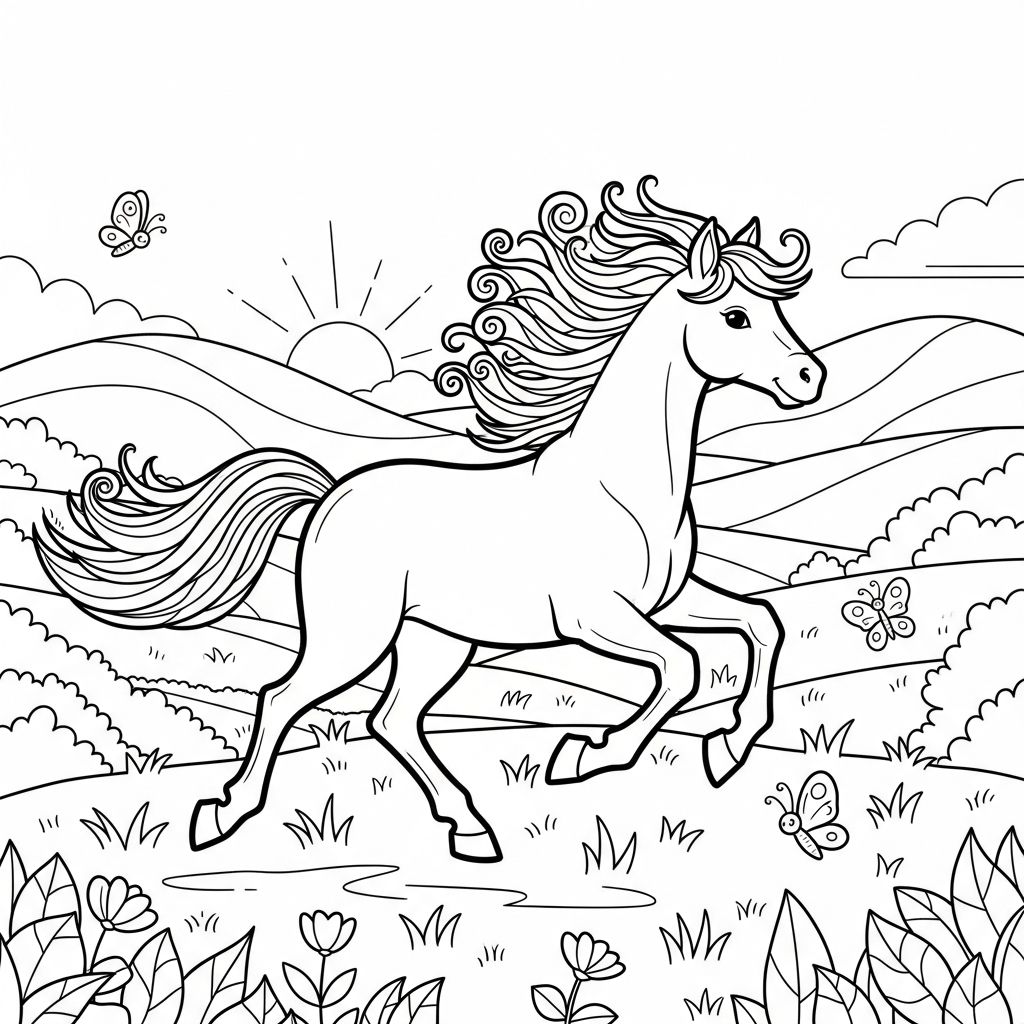
Pages that feature horses in motion—jumping, running, or trotting—also create natural opportunities to talk about science concepts like movement, strength, and balance using age-appropriate language.
Language and Storytelling Skills
After your child colors a horse, invite them to explain who the horse is and what it might be doing. These conversations help grow vocabulary and narrative thinking.
- Ask open-ended questions such as “Where is this horse going?” or “What is the horse’s name?”
- Encourage children to describe colors, shapes, and emotions shown in the picture.
- Write down a short story they dictate about their finished page and keep it together with the artwork.
Early Math and Science Connections
With a little creativity, a single coloring page can become a math or science mini-lesson. This does not need to feel like a worksheet; simply weave questions into your normal conversation.
- Count how many horses, trees, or clouds appear on the page.
- Compare sizes: Which horse is bigger? Which is smaller?
- Talk about what horses eat, where they live, and how they move.
Setting Up a Horse Coloring Station at Home
A dedicated coloring spot encourages kids to return to the activity independently. You do not need a full art studio—just a surface, materials, and a simple way to keep everything tidy.
- Use a low shelf or bin for paper and printed pages.
- Store crayons and pencils in labeled cups or small containers.
- Keep washable wipes or a cloth nearby for quick clean-up.
Suggested Materials
Having the right tools makes coloring more satisfying and helps pages last longer if you plan to display them.
- Thicker paper or cardstock for marker-heavy artists.
- Washable crayons and markers for younger kids.
- Colored pencils or gel pens for detailed work in manes and tails.
- Child-safe scissors and glue for turning finished pages into crafts.
Creative Horse-Themed Activities Using Coloring Pages
Once the coloring is done, the fun does not have to stop. Finished horse pages can be transformed into decorations, storytelling props, and homemade gifts.
- Cut out colored horses and glue them onto a larger sheet to build barnyard scenes.
- Staple several colored pages together into a personal “horse album.”
- Mount favorite pages on cardboard to make simple puzzles by cutting them into large shapes.
Horse-Themed Craft Ideas
If your child loves crafting, coloring pages can provide the base layer for more involved projects. Encourage experimentation with textures and layers.
- Add yarn or ribbon to create a 3D mane and tail.
- Use fabric scraps for saddle blankets or banners in the background.
- Decorate with stickers, glitter glue, or stamps to personalize each horse.
Using Horse Coloring Pages for Calm and Routine
Coloring can be part of your family’s daily rhythm, especially during transitions that are normally hectic. Many parents find it helpful to offer a quiet page during early mornings or right before bedtime.
Keeping horse pages as a consistent option shows children that they have a predictable, comforting activity to return to whenever they feel overwhelmed or bored.
Ideas for Gentle Transitions
- Offer a coloring page after school to decompress before homework.
- Use a short coloring session as a screen-free alternative on slow afternoons.
- Invite siblings to color together to create a calmer shared activity.
Safety and Practical Tips
While coloring is generally low risk, a few simple precautions will prevent messes and keep everyone safe. Choose washable materials and supervise closely when introducing new tools.
- Keep sharp colored pencils and scissors out of reach of very young children.
- Use washable supplies on wipeable surfaces or with a tablecloth.
- Consider taping pages to the table for toddlers who tend to crumple paper.
Frequently Asked Questions About Horse Coloring Pages
1. What age is best for horse coloring pages?
Coloring pages can be adapted for almost any age. Young toddlers may enjoy scribbling over very simple horse outlines, while older kids often prefer detailed or realistic designs.
2. How can I keep my child interested in coloring?
Rotate the types of horse pages you provide and occasionally add a twist, such as a challenge to use only cool colors or to invent a new magical horse. Pairing coloring with music or a story about horses can also help hold attention.
3. Are digital coloring apps as good as printed pages?
Digital coloring can be fun, but printed pages give more direct practice with real-world tools like pencils and crayons. If your child enjoys screens, consider using both, but keep paper coloring as a regular hands-on option.
4. How do I store all the finished artwork?
Choose a few favorite pages to display on walls or the refrigerator and photograph the rest before recycling. You can also keep a small binder or portfolio with clear sleeves for special pieces.
5. Can horse coloring pages help with learning about animals?
Yes. While your child colors, talk about basic horse facts, such as what they eat, where they live, and how people care for them. This turns a relaxing activity into a gentle introduction to animal science.
Making Horse Coloring a Loved Family Activity
When caregivers sit down and color alongside kids, the activity becomes a shared experience rather than a solitary task. Children see that creativity is valuable at every age, and adults often discover that the slow, repetitive strokes are calming for them as well.
With a small stack of horse coloring pages and a handful of crayons, you can create a simple family ritual that supports learning, connection, and relaxation all at once.