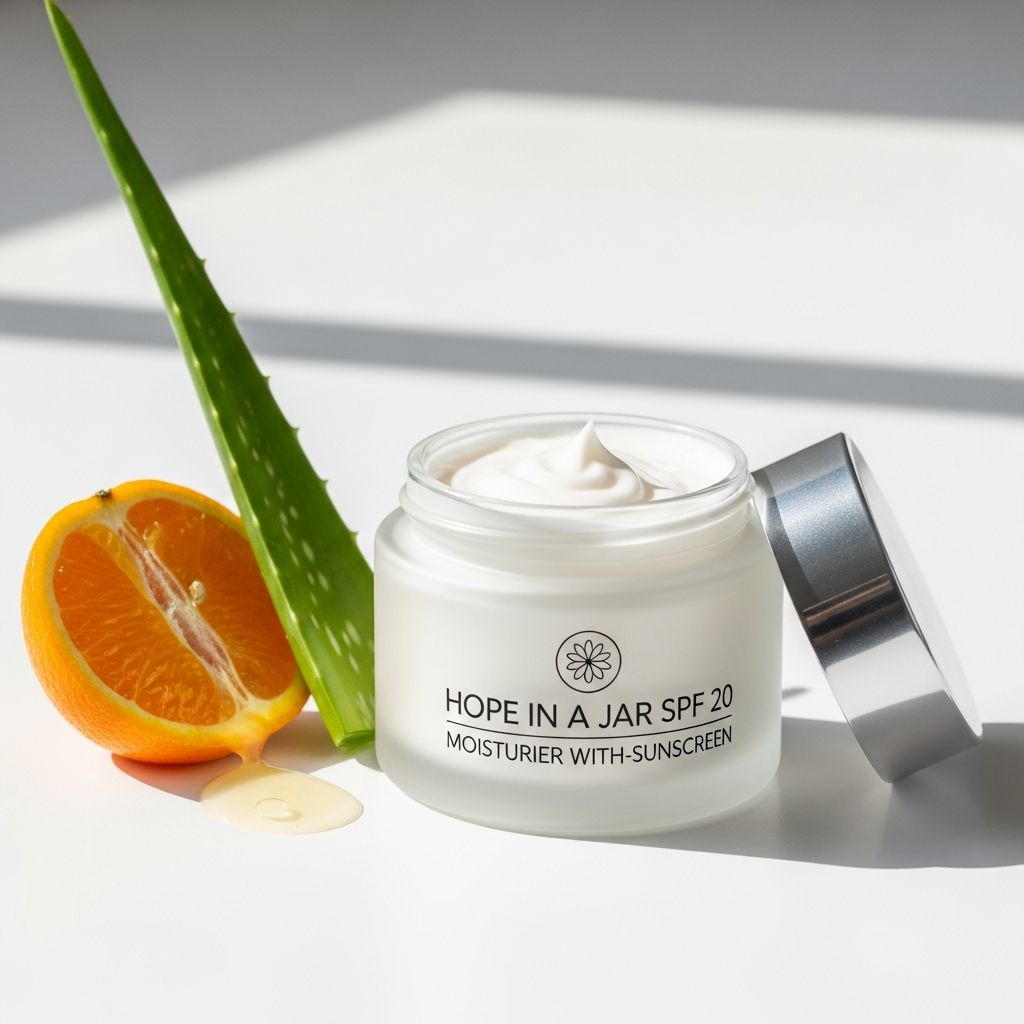
Face moisturizers that promise both hydration and sun protection sound like the perfect lazy-day solution: one step, fewer bottles, and skin that looks smooth and stays safe in the sun. Products like Hope in a Jar SPF 20 are designed to be that shortcut. But in everyday use, do they really work as well as they claim, and are they comfortable enough that you will actually wear them every single day?
This guide uses Hope in a Jar SPF 20 as a jumping-off point to explore what you should realistically expect from any moisturizer-with-SPF, how they compare to the original non-SPF formulas, and how to decide if an all-in-one cream is your personal dream product or just another jar gathering dust in your bathroom.
What Makes SPF Moisturizers So Tempting?
Brands market SPF moisturizers as a smarter, simpler way to get sun protection. Instead of applying a separate sunscreen, you can grab one jar and be done. On paper, it is an appealing concept for several reasons:
- Convenience: One product instead of two means less time and fewer steps in the morning.
- Less layering: For people who dislike feeling multiple products on their skin, combining SPF and moisturizer seems ideal.
- Marketing promises: Many hybrid creams promise hydration, anti-aging benefits, a glow, and sun protection all at once.
- Perceived value: Paying for one product that claims to do several things can look like a cost saver.
However, dermatology and photoprotection research suggest that the reality is more complicated. People often apply far less of these hybrid creams than needed for the labeled SPF, which can leave skin under-protected even if the product itself is correctly formulated.
How SPF Changes the Feel of a Beloved Moisturizer
One of the biggest surprises for many users is how dramatically SPF can change the texture and finish of a moisturizer they already love in its original form.
The classic non-SPF versions of popular creams (including the original Hope in a Jar) are often described as:
- Lightweight and whipped in texture
- Quick to absorb without leaving a film
- Comfortable for combination or slightly oily skin, not just dry types
Once sunscreen filters are added, users commonly report very different experiences:
- A heavier, creamier feel that takes longer to rub in
- A subtle (or not-so-subtle) greasy or sunscreen-like sheen on the skin
- A feeling that the product sits on top of the skin instead of disappearing
| Feature | Typical Non-SPF Moisturizer | Typical SPF Moisturizer (e.g., SPF 20) |
|---|---|---|
| Texture | Light, whipped, fast-absorbing | Richer, more emollient, slower to blend |
| Finish | Soft, natural, often semi-matte | More shine or noticeable cream layer |
| Application time | Quick, almost no effort | Requires more rubbing and patience |
| Makeup compatibility | Foundation usually glides on easily | Can cause slipping, pilling, or extra shine |
If your main reason for loving a moisturizer is its airy feel and invisible finish, you may notice that the SPF version feels like a different product entirely.
Is SPF 20 Enough Protection for Everyday Life?
Many hybrid moisturizers, including Hope in a Jar SPF 20, hover in the SPF 15–25 range. Whether that is sufficient depends on your habits, your skin, and how precisely you apply them.
Dermatology organizations and cancer societies emphasize several points about daily facial sunscreen use:
- Most adults need about 2 milligrams of sunscreen per square centimeter of skin to reach the full labeled SPF.
- For the face and neck, this usually translates to about 1/3 to 1/2 teaspoon of product.
- Many people apply far less than this when using a cosmetic moisturizer, leading to lower-than-expected real-world protection.
- Health authorities such as the American Academy of Dermatology and the U.S. FDA generally recommend using at least SPF 30 broad-spectrum for routine daily use.
Because of this, SPF 20 in a moisturizer can offer some protection, but it may be inadequate if:
- You spend significant time outdoors, even casually (walking a dog, commuting, playground time).
- You apply only a thin layer because you dislike the heavy or greasy feel.
- You have fair skin, a history of skin cancer, or are using exfoliating or retinoid products that increase sun sensitivity.
Common Complaints About Moisturizer-With-SPF Formulas
When people are disappointed with hybrid products like Hope in a Jar SPF 20, their reasons usually fall into predictable themes. Recognizing these can help you decide in advance whether such formulas will work for you.
1. Greasy or Heavy Finish
Even if a brand markets a cream as suitable for “all skin types,” combination and oily skin users often notice:
- More surface shine shortly after application
- A lingering tacky or creamy layer that never fully sets
- Makeup that slides around instead of adhering smoothly
People who adored the original light, whipped feel of non-SPF formulas may find the SPF version unacceptable for daytime wear, especially in warm or humid climates.
2. Distinct “Sunscreen” Smell
Even when brands add fragrance to mask it, many SPF creams still carry a noticeable sunscreen aroma. For some, this is mildly nostalgic and tolerable; for others, it is a deal-breaker. Feedback often describes:
- A chemical or plasticky scent lurking under the perfume.
- Fragrance that lingers longer than a standard moisturizer.
- Discomfort for those with sensitive noses or fragrance allergies.
3. Pore and Breakout Concerns
Although not everyone experiences breakouts, users with acne-prone or combination skin sometimes report:
- Clogged pores or congestion after repeated use.
- Sunscreen filters and occlusive textures feeling too rich for their T-zone.
- Difficulty finding a balance between enough product for SPF coverage and too much product for their skin type.
Non-comedogenic labeling can help, but it is not foolproof; skin responses vary widely.
Who Might Actually Like Hope-in-a-Jar-Style SPF Creams?
Despite the criticisms, moisturizer-with-SPF products do have a highly satisfied group of users. They tend to share certain skin types and priorities.
- Normal to dry skin: Those who naturally tolerate richer textures often find the added slip and protection comfortable.
- Minimal makeup wearers: If you rarely apply foundation or heavy base makeup, a bit of shine or creaminess is less of an issue.
- Low-sun lifestyles: People who mostly stay indoors and get sun exposure in short bursts can find SPF 20 acceptable for routine days, especially if they supplement with hats or sunglasses.
- Skincare minimalists: Those who truly prefer one or two steps are more likely to consistently wear a hybrid product than to skip sunscreen entirely.
If this sounds like you, a product similar to Hope in a Jar SPF 20 may deliver adequate hydration and baseline protection—as long as you are realistic about its limitations.
How to Test if a Hybrid Moisturizer Will Work for You
Instead of committing to a full-size jar immediately, use a methodical mini-test to see if an SPF moisturizer fits your skin and lifestyle. Here is a simple step-by-step approach:
- Patch and scent test (Day 1–2): Apply a small amount behind your ear or along the jawline.
- Check for redness, itching, or fragrance-induced headaches.
- Note whether the scent fades to your comfort level.
- Full-face wear at home (Day 3–5): Wear the product on a no-pressure day when you do not need to look polished.
- Observe shine, comfort, and whether your skin feels smothered.
- Pay attention to any clogged pores or irritation by day 3–4.
- Makeup compatibility test (Day 6–7): Layer your usual makeup over the cream.
- Check if foundation pills, streaks, or slides.
- Assess how your makeup looks after 4–6 hours of wear.
- Realistic SPF check: Measure roughly 1/3 to 1/2 teaspoon of product for face and neck, then decide if that amount feels wearable every day.
If the formula fails on texture, scent, or comfort at the quantity needed for SPF, it is unlikely to become a reliable daily staple.
When You Should Skip a Moisturizer-With-SPF
Some people are better served by using a separate dedicated sunscreen in addition to their favorite moisturizer. You should strongly consider this route if:
- You have oily, acne-prone, or very sensitive skin that reacts easily to new combinations of ingredients.
- You need or want SPF 30 or higher, as recommended by many dermatology groups for daily use.
- You already love your current moisturizer’s texture and performance and do not want to compromise it.
- You frequently spend time outdoors or live at higher altitudes or in high UV-index regions.
A lightweight, cosmetically elegant separate sunscreen often layers better, gives more flexibility with SPF levels, and allows you to switch moisturizers seasonally without sacrificing protection.
Smart Ways to Use SPF Moisturizers If You Own One
If you already have a jar of something like Hope in a Jar SPF 20, you do not necessarily need to throw it out. Instead, you can strategically repurpose it:
- Short errand days: Use it on days when you truly spend most of your time indoors and are outside only briefly.
- Neck and chest: Many people under-moisturize the neck and décolletage; a richer SPF cream can work well there.
- Backup product: Keep it in your bag or desk as an emergency option if you forget your main sunscreen.
- Layered under higher SPF: Apply your SPF moisturizer, then add a dedicated, higher-SPF sunscreen on top when you know you will be outdoors longer.
Simple Checklist: Dream Cream or Dud for You?
Use this quick checklist to decide where a product like Hope in a Jar SPF 20 is likely to land for your specific needs:
- You might love it if:
- Your skin is normal to dry and tolerates richer textures.
- You prefer a short routine and rarely wear heavy makeup.
- You spend limited time in direct sun and use hats or shade.
- You are satisfied with modest protection (around SPF 20) for office or home days.
- You might dislike it if:
- Your skin is oily, combination, or breakout-prone.
- You hate any greasiness, shine, or feeling of product on your skin.
- You need reliably high, broad-spectrum protection (SPF 30+).
- You are sensitive to fragrance or traditional sunscreen smell.
Frequently Asked Questions (FAQs)
Can a moisturizer with SPF truly replace a separate sunscreen?
Only if you apply enough of it, choose at least broad-spectrum SPF 30, and reapply as needed when outdoors. In practice, most people use too little, especially with thicker or greasy-feeling creams, so protection is often less than the label suggests.
Is SPF 20 enough for daily use?
For very brief, low-intensity exposure in people with lower skin cancer risk, SPF 20 may offer some baseline protection, but major dermatology organizations typically recommend SPF 30 or higher for routine daily facial use, especially if you are outdoors or have fair or sensitive skin.
Why does the SPF version of my favorite cream feel greasier?
Sunscreen filters and the emollients needed to spread them evenly usually add weight and slip to a formula. Even when a brand keeps the marketing and the jar similar, the underlying texture often has to change significantly to accommodate SPF, so the product can feel heavier, shinier, or more occlusive.
Can SPF moisturizers cause breakouts?
They can for some people, especially those with oily or acne-prone skin. Richer textures, certain UV filters, and fragrance can all contribute to clogged pores or irritation in susceptible individuals. Choosing non-comedogenic, fragrance-free options and patch-testing first can help reduce the risk, but cannot guarantee zero breakouts.
How should I layer makeup over a moisturizer with SPF?
Apply a generous, even layer of the SPF moisturizer, wait several minutes for it to settle, then use a light, thin layer of foundation or tinted moisturizer on top. Avoid rubbing aggressively; instead, press or gently buff makeup into place. If your base still slides or pills, the formula may be too rich for your skin-type–makeup combo.
References
- Photoprotection: A review of the evidence for sunscreen efficacy in the prevention of skin cancer. — Green AC, Williams GM. Journal of the American Academy of Dermatology. 2021-06-01. https://doi.org/10.1016/j.jaad.2020.05.111
- Sun protection: advice for consumers. — U.S. Food and Drug Administration (FDA). 2022-03-01. https://www.fda.gov/drugs/understanding-over-counter-medicines/sunscreen-how-help-protect-your-skin-sun
- Sunscreen: How to choose and apply. — American Academy of Dermatology Association. 2023-05-15. https://www.aad.org/public/everyday-care/sun-protection/sunscreen/how-to-select-sunscreen
- Sun Safety. — Centers for Disease Control and Prevention (CDC). 2023-07-03. https://www.cdc.gov/cancer/skin/basic_info/sun-safety.htm