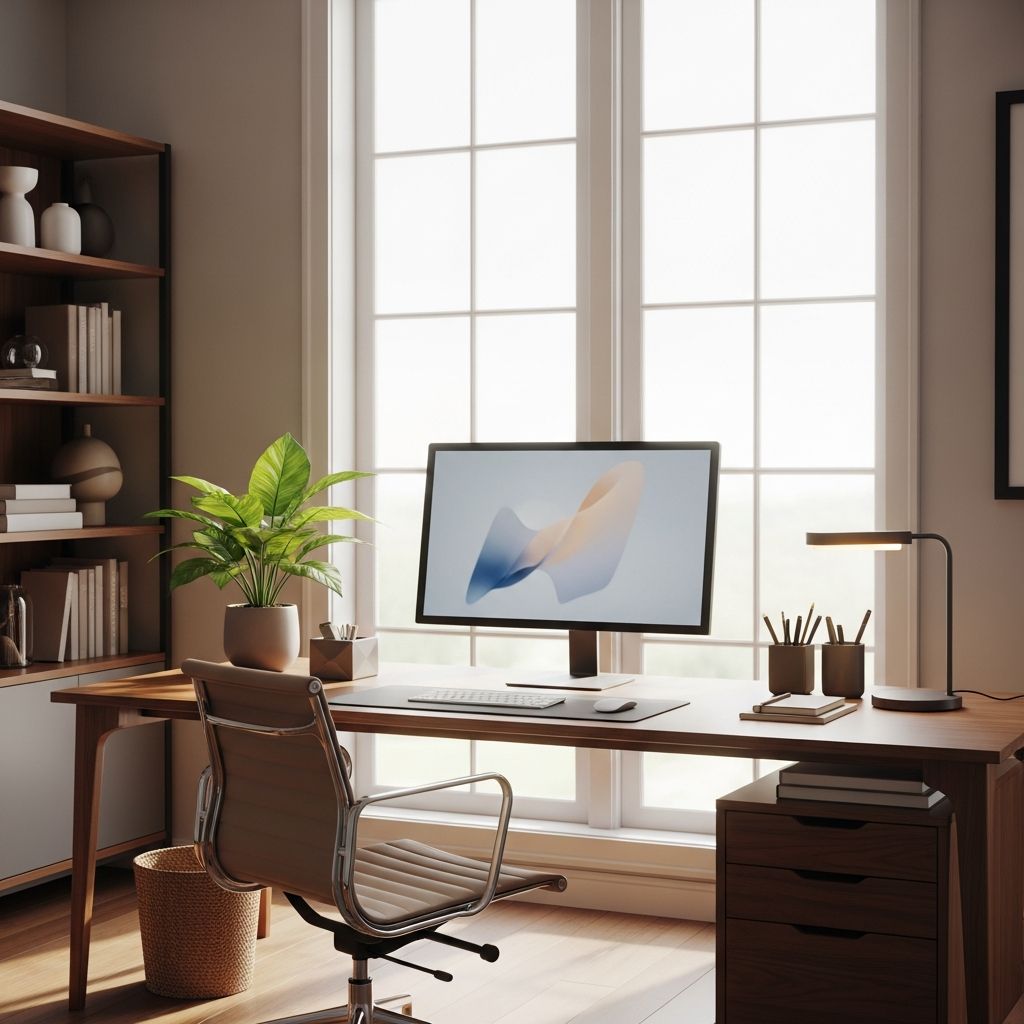
Establishing Your Foundation: Why Your Home Office Environment Matters
The shift toward remote work has transformed how professionals approach their workspaces. Unlike traditional office environments, your home office is entirely within your control. This means that every design choice, color selection, and organizational decision directly influences your ability to focus, create, and accomplish meaningful work. Research demonstrates that environmental factors significantly impact cognitive function, motivation, and overall job satisfaction. When you invest time in creating an intentional workspace, you’re not simply decorating a room—you’re building a foundation for sustained productivity and professional growth.
Your home office serves multiple functions simultaneously. It’s your professional headquarters, your creative sanctuary, and your personal retreat. This convergence of purposes makes thoughtful design particularly important. A well-constructed workspace reduces the mental friction between relaxation and work, helping your brain transition into productive mode more efficiently. Additionally, a visually appealing environment combats the isolation that can accompany remote work, replacing it with spaces that energize and motivate you throughout your workday.
Harnessing Natural Light for Enhanced Focus and Mood
Daylight is one of the most powerful tools available for improving both mental clarity and physical wellbeing. Natural light regulates your circadian rhythm, which directly affects alertness, cognitive function, and mood stability. When your home office receives adequate natural illumination, you experience improved concentration, reduced eye strain, and enhanced mood compared to artificially lit spaces.
Position your desk near a window whenever possible, orienting it to maximize exposure to natural light throughout the day. This simple adjustment can dramatically improve your work quality and energy levels. If direct window proximity isn’t feasible, consider installing skylights, glass partitions, or reflective surfaces that bounce natural light deeper into your workspace. During darker months or cloudy periods, supplement natural light with bright, warm-toned artificial lighting that mimics daylight characteristics.
Incorporating Biophilic Elements: The Power of Living Spaces
Biophilic design—the practice of integrating natural elements into interior spaces—creates measurable improvements in workspace functionality and emotional wellbeing. This approach recognizes that humans have an inherent connection to nature, and even small touches of natural elements can substantially enhance your working environment.
Plants represent the most accessible and effective biophilic intervention for home offices. Incorporating at least four air-purifying plant species creates multiple benefits simultaneously: they absorb carbon dioxide, eliminate harmful toxins, reduce stress levels, and enhance concentration. Beyond their physiological benefits, plants add visual interest, color variation, and organic texture to your workspace. Consider low-maintenance varieties like pothos, snake plants, or peace lilies that thrive with minimal care while maximizing their air-purifying properties.
Extend biophilic design principles beyond plants by incorporating natural materials throughout your office. Wood furnishings, stone accents, natural fiber rugs, and organic textiles create tactile connections to the natural world. Even photographs of natural landscapes or water features can trigger the calming effects associated with nature exposure.
Strategic Color Selection for Cognitive Enhancement
Color psychology plays a crucial role in workplace productivity and creative output. Different colors trigger distinct psychological and physiological responses that directly influence your work performance. Understanding these color dynamics allows you to intentionally design your environment for specific tasks and outcomes.
Research indicates that specific colors enhance particular cognitive functions:
- Green and Blue: These colors stimulate creative thinking and ideation, making them ideal for brainstorming and conceptual work.
- Red: This energizing color increases alertness and focuses attention, making it suitable for detail-oriented tasks requiring precision and concentration.
- Yellow: This uplifting color promotes innovation and optimism, creating an environment that encourages novel thinking and problem-solving.
- Neutral tones: Whites, grays, and beiges provide calm backgrounds that reduce visual overwhelm and support sustained focus.
Consider your primary work activities when selecting your color scheme. If you perform analytical work requiring precision, incorporate red accents. If your role emphasizes creative development, introduce blues and greens. Many professionals benefit from a neutral base with strategic color accents that energize without overwhelming the senses.
Designing Layouts That Encourage Movement and Engagement
Sedentary work patterns negatively impact both physical health and cognitive function. Creating a home office layout that encourages regular movement throughout your day counteracts these effects while maintaining productivity. Arrange your workspace to include distinct zones for different activities: a primary work area for focused tasks, a secondary area for calls or collaborative work, and a movement space for stretching or walking breaks.
Vertical storage solutions and elevated shelving create visual interest while freeing floor space for movement. This organizational approach prevents the cramped feeling that accompanies cluttered, horizontally-oriented arrangements. Incorporate a small side table or standing area where you can work for portions of your day, providing relief from constant sitting while maintaining engagement with your tasks.
Position your desk to face a window or attractive view rather than a blank wall. This environmental orientation supports both psychological wellbeing and physical posture, as you’re more likely to maintain healthy positioning when viewing engaging visual content rather than monotonous surfaces.
Curating Personal Elements That Spark Motivation
The most inspiring workspaces reflect the personality, values, and aspirations of the people occupying them. Generic, impersonal environments fail to generate the emotional resonance necessary for sustained motivation. Instead, deliberately incorporate personal touches that remind you daily of your goals, values, and sources of joy.
Display meaningful artwork that resonates emotionally and professionally. This might include inspirational quotes, photographs of meaningful people and places, or artwork that aligns with your aesthetic preferences and professional identity. Antique or vintage furnishings—sourced from family heirlooms or curated collections—add personality while creating a distinctive atmosphere that feels distinctly yours rather than corporate or standardized.
Fresh flowers, decorative objects, beautiful desk accessories, and carefully selected lighting fixtures contribute to an environment that feels intentional and nurturing. Each element should serve a dual purpose: supporting functionality while elevating the aesthetic experience of your workspace.
Audio Environment: Selecting Soundscapes for Different Tasks
The acoustic environment profoundly influences productivity, yet it’s often overlooked in workspace design. Different tasks require different sonic environments to optimize performance. Understanding these distinctions allows you to curate your audio landscape intentionally.
For routine, repetitive tasks with lower cognitive demands, upbeat music with lyrics can maintain engagement and prevent monotony. Singing along or moving to music keeps your mind active and sustains energy during less challenging work. Conversely, when your work demands deep concentration or complex problem-solving, switch to instrumental music—particularly classical or symphonic compositions. These genres provide gentle stimulation without the cognitive load of lyrical content, preserving mental resources for your primary task.
Consider establishing a library of different playlists optimized for distinct work types. This allows seamless transitions between varied tasks while maintaining optimal audio conditions for each.
Lighting Layering: Creating Dynamic and Functional Illumination
Comprehensive lighting design involves multiple layers working together rather than relying on single light sources. Task lighting—such as adjustable desk lamps—provides focused illumination for specific work areas and reduces eye strain during detailed tasks. Ambient lighting creates an overall, comfortable brightness level throughout your space, while accent lighting adds visual interest and highlights decorative elements.
Warm color temperatures (2700-3000K) create inviting, relaxed atmospheres suitable for early morning or evening work sessions. Cooler temperatures (4000-5000K) enhance alertness and are preferable during peak productivity hours. Adjustable lighting systems allow you to modify your environment throughout the day as your circadian rhythm and task demands shift.
Organizational Systems That Support Mental Clarity
Clutter represents far more than an aesthetic problem—it actively diminishes cognitive function and increases stress. Visible disorder fragments attention, reduces available working memory, and creates psychological barriers to focused work. Implementing robust organizational systems creates the mental space necessary for deep thinking and creative output.
Establish designated storage for all work materials, supplies, and documents. Utilize vertical space through shelving, wall-mounted organizers, and elevated storage to maximize organization without consuming valuable floor or desk space. Develop a filing system—both digital and physical—that allows you to locate necessary items instantly without search-related frustration.
Maintain a clear workspace as your default state. Beginning each work session with an organized, uncluttered desk creates psychological momentum and reduces decision fatigue. End each day by clearing unnecessary items and preparing your space for the following day, creating a ritual that honors the transition between work and personal time.
Style Integration: From Rustic to Industrial
Your workspace aesthetic should authentically reflect your personality while supporting functional requirements. Various design styles offer distinct benefits and moods:
Rustic Design: Incorporating warm wood tones, brick accents, and natural materials creates a cabin-like atmosphere that feels inviting and grounded. This aesthetic works particularly well for those seeking to create distance between their home office and traditional corporate environments.
Industrial Style: Clean lines, metal accents, and architectural elements create organized, efficient workspaces that minimize distractions while maximizing functionality. This approach particularly suits those in technical, analytical, or architectural fields.
Vintage Aesthetic: Combining antique furnishings, eclectic accessories, and timeless design elements creates characterful spaces that feel refined and individually curated. This style particularly appeals to those with appreciation for history and craftsmanship.
Contemporary Clean: Minimalist approaches emphasizing open space, neutral palettes, and essential furnishings create calm, distraction-free environments ideal for those easily overwhelmed by visual complexity.
Creating Specialized Zones Within Your Workspace
Even modest home offices benefit from functional zoning. Designate distinct areas for different activities: a primary work station for focused tasks, a secondary area for calls or meetings, and a relaxation corner for breaks. This separation helps your brain transition between different cognitive modes and prevents workspace fatigue.
Consider incorporating a small library area with accessible reference materials and inspirational reading. This zone serves dual purposes: practical resource storage and visual interest that stimulates creative thinking during mental breaks. Display books with attractive spines visible—they add color, texture, and intellectual atmosphere to your space.
Frequently Asked Questions
Q: How much natural light do I need in my home office for optimal productivity?
A: Ideally, position your desk to receive direct or indirect natural light throughout your working hours. Even partial daylight exposure significantly improves focus and mood compared to purely artificial lighting. If window access is limited, maximize available natural light through reflective surfaces and supplement with bright artificial lighting that mimics daylight characteristics.
Q: What plants work best for home offices with low light conditions?
A: Low-light tolerant plants include pothos, snake plants, peace lilies, and ZZ plants. These species maintain air-purifying properties while thriving in reduced sunlight, making them ideal for offices lacking direct window access.
Q: How should I choose between different design styles for my workspace?
A: Select a style that resonates personally while supporting your work requirements. Consider your professional field, aesthetic preferences, and the mood you want to cultivate. Your workspace should feel authentically yours rather than dictated by trends.
Q: What’s the ideal desk organization system for maintaining productivity?
A: Implement a system that designates specific storage for different categories (supplies, documents, reference materials). Keep your active work surface clear, storing items only as needed for current projects. Digital organization should mirror physical systems for consistency.
Q: Can I improve my home office without major renovations or significant expense?
A: Absolutely. Begin with simple additions: affordable plants, adjustable lighting, personal artwork, and organizational supplies. These incremental improvements accumulate into substantial environmental transformation without requiring structural changes or large investments.
References
- The Impact of Natural Light on Productivity and Wellbeing — Harvard Medical School Center for Health and the Global Environment. 2021. Based on research cited in Homes and Gardens interior design resources and flexispot spine care research.
- Lighting Design for Productivity and Comfort — American Lighting Association. 2023. https://www.americanlightingassoc.org
- Biophilic Design in Interior Spaces — International Interior Design Association. 2022. Research on plant-based air purification and stress reduction in workspaces.
- Color Psychology and Cognitive Performance — American Psychological Association. 2020. Research on color’s effects on creativity, focus, and task performance in professional environments.