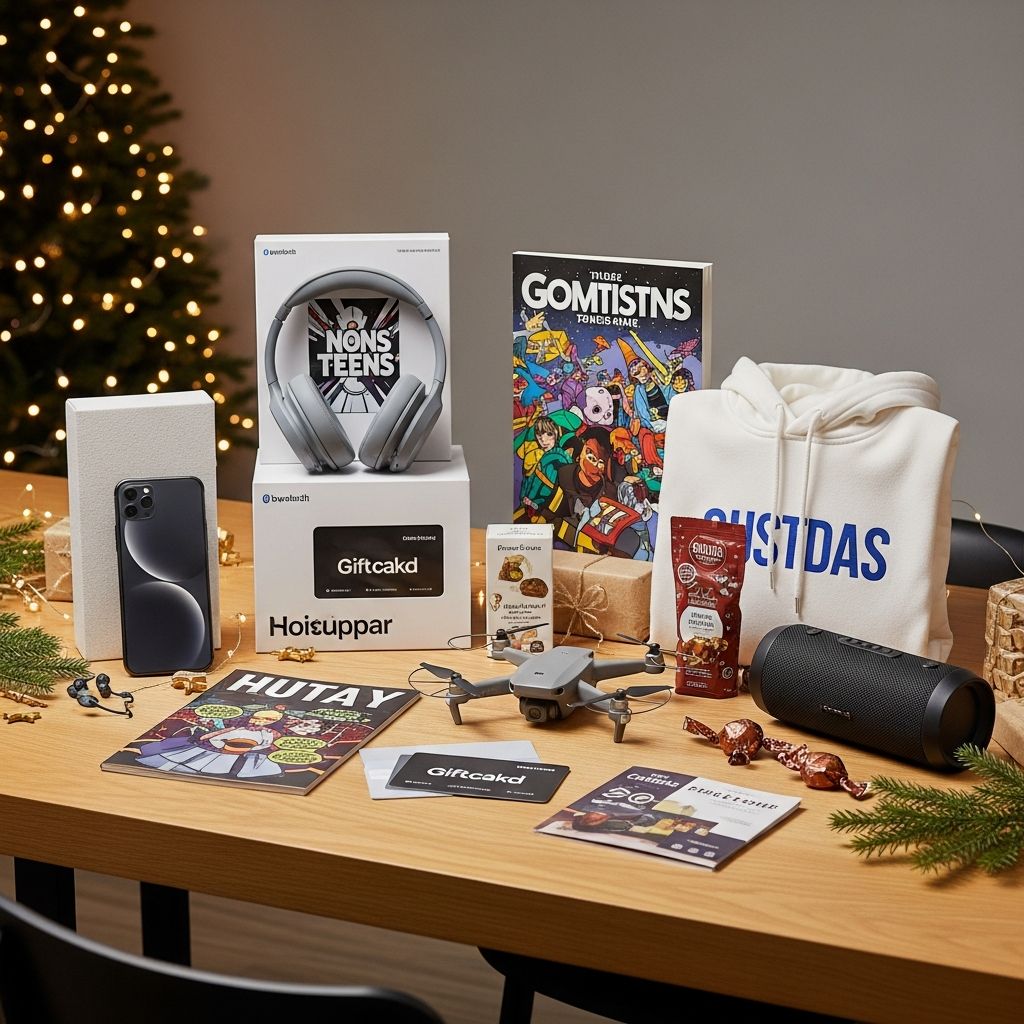
Buying holiday gifts for teenagers can feel like trying to hit a moving target in the dark. One minute they adore a trend, and the next they roll their eyes at it. This guide helps parents step out of panic mode and into a more thoughtful, strategic, and relationship-building approach to holiday shopping for teens.
Why Shopping for Teens Feels So Hard
Holiday shopping was simpler when your child was thrilled by anything that lit up, made noise, or came in a giant box. Teens, however, are in a stage where identity, independence, and social image matter, which raises the emotional stakes around gifts. What used to be a fun errand can now feel like a test you might fail.
On top of changing tastes, parents often feel pressure from social media, relatives, and even their teen’s peer group to deliver the “perfect” gift. The result is a toxic mix of guilt, confusion, and overspending. Stepping back and understanding what’s truly going on can help you shop with more clarity and less drama.
Understanding What Teens Really Want
Most teenagers want three big things from holiday gifts: to feel understood, to feel respected, and to feel included in what their peers are excited about. The specific item on their list might change weekly, but those underlying needs are fairly consistent. Recognizing this makes it easier to choose presents that land well, even if they’re not the most cutting-edge trend.
When teens ask for something very specific or very expensive, they’re often trying to communicate more than just a product preference. They might be signaling a new interest, a desire to fit in at school, or an attempt to express a part of their personality they hope you’ll see and accept. Gifts become less overwhelming when viewed as a conversation about who they are becoming.
Common Holiday Shopping Traps to Avoid
Before getting into tactics, it helps to sidestep a few predictable mistakes that cause stress and resentment. Avoiding these traps can immediately make the season feel lighter.
- The surprise-only strategy: Relying solely on your own guesses, then feeling crushed when your teen doesn’t react with wild enthusiasm.
- The comparison spiral: Measuring your gifting against what friends, influencers, or relatives are buying and assuming your teen will judge you the same way.
- The guilt purchase: Over-spending to compensate for a tough year, divorce, busy schedule, or past conflicts, then resenting the price tag later.
- The last-minute scramble: Waiting until the final days, which guarantees higher stress, fewer options, and rushed choices.
Step-by-Step Plan for Stress-Free Teen Gift Shopping
Transforming holiday shopping into a more manageable process starts with a simple, step-by-step approach. Use the following framework to keep emotions and spending in check.
1. Define Your Budget Before You Browse
Set a realistic total spending limit, then break it into a rough per-teen number. Remember that “fair” does not always mean “identical” if ages and needs are different; what matters is that each teen feels considered and valued. If possible, include space for one bigger item and a few smaller, flexible options.
Write the numbers down before you open a shopping site or walk into a store. When sticker shock hits, it’s easier to make tradeoffs if you’ve already decided what your boundaries are. Teen wish lists expand to fill whatever space they sense is available; your job is to make the container clear.
2. Ask Better Questions (Not Just “What Do You Want?”)
“What do you want for the holidays?” usually gets vague answers or links to wildly expensive items. Instead, ask more targeted questions to understand categories, not just products. That allows you to find creative, budget-friendly choices within the same theme.
Try prompts like:
- “What are you most into right now that you weren’t last year?”
- “Is there anything you wish you had for your hobby or favorite activity?”
- “If you had a small budget to upgrade your room or style, what would you change?”
- “Are there any experiences you’d love more than a physical gift?”
3. Use a Simple Gift Formula
To avoid both overwhelm and excess, many families adopt a simple formula to structure their teen’s gifts. This keeps shopping focused and helps set expectations in advance.
| Category | Purpose | Example Ideas |
|---|---|---|
| Something they really want | Shows you listen to their wishes | A specific game, tech accessory, or clothing item they’ve mentioned |
| Something they will use often | Makes daily life easier or more comfortable | Backpack, earbuds, cozy hoodie, reusable water bottle |
| Something that grows them | Supports learning, creativity, or a new skill | Online course, art supplies, sports gear, musical equipment |
| Something just for fun | Adds humor and personality to the mix | Funny socks, fandom merch, novelty item you both can laugh about |
You can adapt this framework to suit your budget, culture, and family traditions. The structure matters more than sticking rigidly to an exact formula.
Balancing Practicality and Trendiness
Most parents want to avoid wasteful, one-season fads while still letting their teen feel current and included. The key is to blend practical basics with a few well-chosen trend pieces that matter most to your teen’s social world. This approach respects both your wallet and your teen’s need for self-expression.
Think of each gift as landing somewhere on a spectrum from “timeless” to “trendy.” A balanced holiday haul includes a mix, instead of leaning too heavily in one direction. Even a very practical gift—like shoes or a coat—can feel exciting if the style aligns with what they see their peers wearing.
Questions That Help You Choose
- “Will they still be excited about this in six months?” If yes, it leans timeless; if no, treat it as a small extra, not a main gift.
- “Does this support something they genuinely do, or just something they saw once online?” Match gifts to real habits, not fleeting scrolling.
- “Can I meet the same need with a slightly more durable or versatile version?” For example, a classic version of a trendy color or cut.
Creative Gift Ideas That Actually Work for Teens
No single list will fit every teenager, but a few categories tend to be reliable winners. Use these as inspiration, then customize based on your teen’s personality, interests, and lifestyle.
Experience-Based Gifts
Experiences often become the memories teens actually talk about years later. They also avoid adding clutter to already crowded bedrooms and closets.
- Tickets to a concert, sports event, or show featuring someone they genuinely follow.
- Memberships or passes: climbing gym, art museum, skating rink, escape room, or local attractions.
- A day-out voucher with you: their choice of activity, plus lunch, with no lectures about school allowed.
Skill-Building and Hobby Gifts
Teens often appreciate gifts that support what they’re already investing time in. These reinforce their sense of competence and identity.
- Upgraded supplies for existing hobbies (better sketchbook, baking tools, sports equipment, music accessories).
- Online classes or subscriptions related to their interests, from coding to photography to creative writing.
- Starter kits for something new they’ve mentioned, such as gardening, digital art, or DIY crafts.
Comfort and Self-Care Gifts
Teen life can be emotionally and physically exhausting. Cozy, calming gifts can feel surprisingly meaningful when chosen with care.
- High-quality bedding, blankets, or pillows that make their room feel like a sanctuary.
- Skincare or haircare tailored to their needs, chosen with their input so it doesn’t feel like criticism.
- Journals, mindfulness apps, or items that support relaxation, like soft lighting or a white-noise machine.
“Big Ticket” Items Without the Regret
Sometimes a teen has one large request, like a device or higher-priced item. Deciding whether to say yes involves clear expectations and boundaries rather than guessing silently.
- Consider making it a combined gift from multiple relatives, so no one person bears the full cost.
- Attach age-appropriate responsibilities: caring for the item, contributing savings, or agreeing on usage limits.
- Be honest if it’s simply not possible; pairing a clear “no” with alternative suggestions is better than vague promises.
Talking About Money Without Killing the Holiday Mood
Many parents avoid discussing budgets with teens out of fear it will make the season feel transactional. In reality, honest but calm conversations about money can teach responsibility and reduce unrealistic expectations. It also shows your teen that you trust them with real-world information.
You don’t need to reveal every line of your household finances. Instead, frame it around choices: “We have X amount to spend on gifts this year, so let’s figure out what will feel most meaningful within that.” Doing this early prevents hurt feelings when some items are off the table.
When Your Teen Seems Ungrateful
Even with thoughtful planning, there may be a moment where your teen reacts with less enthusiasm than you hoped for. Adolescents are still learning how to regulate emotions and respond graciously under pressure. Their “meh” reaction might reflect social anxiety, comparison, or fatigue more than a true lack of appreciation.
If a reaction stings, give everyone some breathing room before addressing it. Later, in a calmer moment, you can say something like, “I put a lot of care into choosing that for you. I’d like to hear what you genuinely think and how we might do things differently next year.” This opens dialogue instead of turning the holiday into a lecture on gratitude.
Making Gift Shopping a Collaborative Tradition
Holiday gifts don’t have to be a secret project you shoulder alone. Involving your teen at appropriate stages can reduce your workload and deepen connection. Collaboration also respects their growing independence while keeping you in the loop.
- Invite them to create a wish list in ranges: one or two “dream” items, several “would be great” options, and a handful of smaller ideas.
- Offer them a small budget to choose a gift for a sibling or family member, teaching them the joy of giving as well as receiving.
- Turn at least one shopping trip into an outing together, even if you’re mostly gathering ideas rather than buying that day.
Over time, these rituals can matter more than any particular item that ends up under the tree or beside the candles.
FAQs About Holiday Shopping for Teens
What if my teen only wants money or gift cards?
Cash and gift cards are popular with teens because they provide autonomy, which is a core developmental need at this age. You can absolutely make part of their gift financial while still including one or two smaller, more personal items that show you see who they are. Presenting money in a creative way—a small scavenger hunt, a funny card, or pairing it with a symbolic item—turns something simple into something memorable.
How do I handle siblings comparing gifts?
Comparison is almost inevitable, especially if siblings are close in age. One helpful strategy is to emphasize that gifts are chosen for each person’s stage of life and interests, not as a scorecard. If needed, you can also reinforce general parity in value over time, while explaining that not every year will look exactly the same on the surface.
What if I can’t afford what my teen is asking for?
It’s better to be honest than to stretch beyond what you can safely spend. Share your limits clearly and calmly, then invite your teen to brainstorm alternatives that still capture the spirit of what they want. For instance, if they’re dreaming of a high-end device, consider a previous-generation model, refurbished option, or accessory that enhances something they already own.
Is it okay to give practical gifts, like clothes or school supplies?
Practical gifts are absolutely acceptable, especially for older teens preparing for college, work, or big transitions. The key is to choose versions that feel aligned with their style and preferences rather than purely utilitarian. A thoughtfully chosen hoodie in a favorite color, for example, usually lands better than a random pack of socks with no personal touch.
How early should I start planning?
Starting earlier than feels necessary is almost always helpful. Giving yourself several weeks or months allows time for conversation, price comparisons, and thoughtful decisions. Early planning doesn’t just spread out costs; it also reduces last-minute pressure, which tends to lead to overspending and impulse purchases.
Focusing on Connection Over Perfection
At the end of the season, your teen will remember how the holidays felt at least as much as what they unwrapped. When gifts reflect genuine curiosity about who they are, even imperfect choices can become inside jokes and stories you share later. Perfection is not the goal; connection is.
By setting clear budgets, asking better questions, mixing practical and fun items, and being transparent about limits, you transform holiday shopping from a panic-inducing chore into an ongoing conversation about growing up. That shift benefits both you and your teenager long after the wrapping paper is gone.