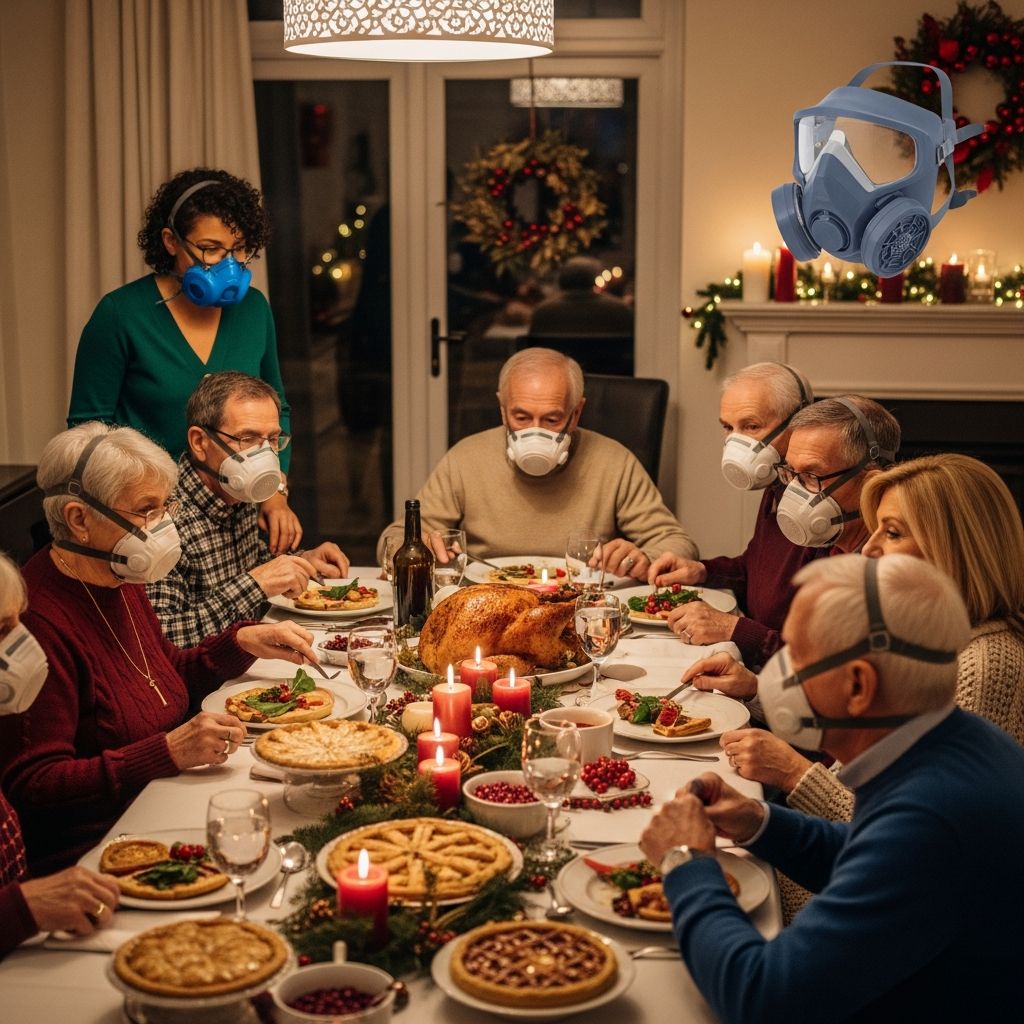
As families prepare to gather for major holidays, questions about safety and health precautions have become increasingly important considerations. While celebrating with loved ones remains a cherished tradition, understanding and implementing appropriate protective measures can help ensure that gatherings remain enjoyable for everyone involved. Health professionals and infectious disease experts have developed evidence-based guidance to help families balance the desire for togetherness with health considerations.
Understanding the Case for Protective Measures During Holiday Gatherings
Medical professionals emphasize that respiratory viruses spread most easily in indoor environments where people gather closely together for extended periods. Holiday celebrations often involve exactly these conditions—family members congregating indoors, sharing meals, and engaging in prolonged conversations, all of which create ideal conditions for respiratory pathogen transmission. According to infection control specialists, the combination of eating, talking, and proximity typical of holiday gatherings creates what experts identify as high-risk scenarios for disease spread.
The reality that some individuals may transmit illness without displaying any symptoms complicates the situation further. This asymptomatic transmission means that even guests who feel perfectly healthy could potentially carry and spread infections to vulnerable family members. Understanding this scientific reality forms the foundation for why health experts recommend implementing layered protective strategies rather than relying on symptoms as an indicator of safety.
The Role of Respiratory Protection in Holiday Settings
Respiratory protective devices, commonly referred to as masks, represent one of the most straightforward and effective tools available to reduce transmission risk during gatherings. When worn correctly, masks with multiple layers create a physical barrier that significantly reduces the volume of respiratory droplets released into the surrounding air. Health experts emphasize that mask effectiveness depends heavily on proper fit and consistent usage throughout interactions with people from different households.
For those choosing to wear masks during holiday celebrations, proper selection matters considerably. Masks should fit snugly against the sides of the face without gaps, and ideally contain two or more layers of material. Looser-fitting masks or those with gaps around the edges provide substantially less protection than properly fitted options. During meals and beverages, masks can be safely stored in a designated location and replaced after eating concludes.
Creating Distance as a Complementary Safety Layer
While respiratory protection represents one important tool, physical distance between household groups provides an additional protective mechanism. Health professionals recommend maintaining at least six feet of separation between individuals from different households during holiday gatherings. This distance recommendation reflects research on how respiratory droplets travel through air, with most larger droplets settling within this range.
Implementing this spacing during holiday meals requires intentional planning. Host families should arrange seating to maximize distance between different household units rather than the traditional closely-packed table arrangement. When hosting outdoors becomes possible, this naturally facilitates greater spacing and reduces the concentration of respiratory particles in enclosed air.
Strategic Food Preparation and Serving Methods
The preparation and serving of holiday meals presents specific opportunities for reducing transmission risk. Rather than traditional buffet-style arrangements where multiple people handle serving utensils and touch shared containers, modified serving approaches significantly reduce contact points. Having designated servers handle all food plating and service, with these individuals wearing masks and gloves, reduces the potential for contamination through shared utensil contact.
Another effective modification involves providing pre-plated portions that guests can retrieve directly to their seats, eliminating the need for communal serving areas. Condiments should be offered in individual packets rather than shared containers that multiple people touch throughout the meal. These adjustments require minimal effort from hosts while substantially reducing transmission vectors during the gathering.
Hand Hygiene Practices Throughout the Celebration
Consistent hand hygiene remains a fundamental protective measure that complements mask usage and distancing. Hands contact many surfaces throughout a gathering—doorknobs, countertops, serving areas, and bathroom fixtures—all of which can transfer pathogens when hands subsequently contact the face. Health professionals recommend washing hands frequently with soap and water for at least twenty seconds, particularly before eating and after using bathroom facilities.
When hand washing facilities prove inconvenient during a gathering, portable hand sanitizer containing at least sixty percent alcohol provides an effective alternative. Hosts should ensure sanitizer remains available in multiple locations throughout the celebration space, making it convenient for guests to maintain hygiene without disrupting the festivities. Regular surface cleaning, particularly in high-touch areas like doorknobs and bathroom counters, further reduces potential transmission pathways.
Environmental Considerations and Indoor Hosting
When weather permits outdoor celebrations, this naturally facilitates better air circulation and reduced pathogen concentration compared to enclosed indoor spaces. Outdoor settings allow respiratory droplets to dissipate more readily into open air rather than accumulating in a confined environment. For those unable to host outdoors, maximizing indoor air circulation through open windows provides some benefit, though experts emphasize this does not replace other protective measures.
Indoor gatherings benefit from attention to ventilation systems and air quality. Opening windows and doors to increase fresh air circulation can help reduce the concentration of respiratory particles. However, ventilation improvements work most effectively when combined with other protective strategies rather than as a standalone solution.
Special Considerations for Vulnerable Populations
Certain household members face substantially elevated risks during holiday gatherings. Elderly individuals and those with underlying medical conditions including heart disease, diabetes, kidney disease, or compromised immune systems should receive special consideration when planning celebrations. Health experts recommend that these individuals avoid attending gatherings that include people from different households, or alternatively, participate through virtual means that eliminate in-person transmission risks.
Young adults returning from colleges or other residential settings should be similarly considered as members of separate households, requiring the same protective precautions as guests from external family groups. This classification reflects the transmission risks associated with time spent in communal living environments before returning home for celebrations.
Travel-Related Precautions for Holiday Gatherings
For families traveling to reach holiday celebrations, specific protective measures apply throughout the travel process. Vehicle travel with household members only represents the lowest-risk option, provided overnight stays do not introduce additional transmission exposure. Those flying for holiday travel should consider direct flights when possible rather than connections that increase airport time and contact with multiple individuals.
During air travel, maintaining consistent mask usage throughout flights and in airport terminals provides important protection. Bringing hand sanitizer and disinfectant wipes allows for frequent surface cleaning of seats and other frequently-touched items. Avoiding shared armrests and overhead bin contact further reduces potential exposure during transit.
Modifications to Traditional Holiday Activities
Traditional holiday activities like group games, caroling, or close group conversations require modification when gatherings include people from different households. Extended close conversation without respiratory protection significantly increases transmission risk. Physical contact customs including hugs and handshakes should be avoided between individuals from different households. Well-intentioned greetings should be replaced with gestures like waving or verbal acknowledgments that maintain distance.
Gift exchanges, if conducted, should minimize direct contact and allow for surface contamination protocols if desired. Opening gifts at different times or locations rather than in a large group gathering further reduces close contact situations.
Vaccination and Preventive Health Measures
In addition to the protective measures discussed above, vaccination against seasonal respiratory illnesses provides an important baseline protection level. Annual influenza vaccination, in particular, prevents one major infectious disease that coincides with holiday gathering season. Reducing the burden of multiple simultaneous infections represents an important public health consideration that simplifies distinguishing between different illnesses if symptoms do develop.
Planning Considerations Before Holiday Celebrations
Successful implementation of protective measures requires advance planning rather than last-minute adjustments. Hosts should communicate anticipated safety practices to guests well before the gathering date, allowing attendees to make informed decisions about participation. This advance notice prevents awkward situations and ensures guests arrive prepared with any necessary items like masks.
Discussing health status before gatherings allows families to identify individuals who may wish to participate remotely if they or household members have experienced recent respiratory symptoms. This conversation-based approach respects individual autonomy while supporting collective safety.
Pre-Gathering Checklist
- Communicate safety expectations to all expected guests at least two weeks before the gathering
- Arrange seating to accommodate six-foot distances between household groups
- Stock masks, gloves, hand sanitizer, and disinfectant wipes
- Plan modified serving methods that designate specific food handlers
- Identify outdoor spaces that could accommodate the gathering if needed
- Ensure all household members who will attend have received recommended vaccinations
- Prepare virtual participation options for guests unable or unwilling to attend in person
Decision-Making Framework for Holiday Gathering Participation
Families ultimately must weigh personal circumstances, risk tolerance, and vaccination status when deciding about holiday gathering participation. Those at higher personal risk may benefit from virtual attendance rather than in-person participation. Families with multiple generations should carefully consider whether gathering formats adequately protect vulnerable members.
The decision to gather, scale back traditional formats, or shift to virtual celebrations represents a legitimate personal choice informed by individual circumstances and health considerations. Respecting diverse decisions within families helps maintain relationships while supporting varied comfort levels regarding gathering risks.
Frequently Asked Questions About Holiday Gathering Safety
Do I really need to wear a mask during a family holiday gathering?A: Health experts recommend masks when gathering with people from different households, particularly indoors. Masks significantly reduce respiratory particle transmission when worn consistently and properly fitted. They can be removed during eating and replaced afterward, making them practical for multi-hour celebrations.
Q: Is six feet of distance realistic during holiday meals?
While challenging with traditional seating arrangements, modified table configurations or staggered meal times can accommodate six-foot spacing. Outdoor celebrations naturally facilitate greater distance. Even partial distance improvements reduce transmission risk compared to closely-packed seating.
Can vaccinated individuals skip protective measures at holiday gatherings?
Vaccination significantly reduces individual risk but does not eliminate transmission possibility, particularly with emerging variants. Vaccinated individuals can still benefit from additional protective measures when gathering with unvaccinated or vulnerable family members.
What should I do if a guest shows symptoms during the gathering?
Guests displaying symptoms should immediately move to a separate area and ideally leave the gathering. Increased mask usage, ventilation, and hand hygiene protocols should follow for remaining attendees. If symptoms suggest acute illness, guests should seek medical evaluation.
Are outdoor holiday celebrations significantly safer than indoor gatherings?
Yes, outdoor settings substantially reduce transmission risk due to superior air circulation and natural pathogen dispersal. Weather permitting, hosting celebrations outdoors provides meaningful safety advantages over indoor alternatives.
Can virtual celebration participation replace in-person gatherings?
Virtual participation allows holiday connection without transmission risk for vulnerable family members or those uncomfortable with in-person gatherings. Hybrid approaches combining virtual and in-person attendance offer flexibility for diverse family situations.
References
- Everyone Can Make Thanksgiving Safer — Trinity Health Mid-Atlantic. 2021. https://www.trinityhealthma.org/newsroom/blog-articles/everyone-can-make-thanksgiving-safer
- Keeping Your Family Safe This Thanksgiving — Harvard Health Publishing, Harvard Medical School. 2020. https://www.health.harvard.edu/blog/keeping-your-family-safe-this-thanksgiving-2020102921302
- Tips to Celebrate Thanksgiving Safely — Health Matters, NewYork-Presbyterian. 2021. https://healthmatters.nyp.org/how-to-celebrate-thanksgiving-safely-amid-the-covid-19-pandemic/
- Celebrating Thanksgiving Safely Amid the COVID-19 Pandemic — Texas Children’s Hospital. 2020. https://www.texaschildrens.org/content/wellness/celebrating-thanksgiving-safely-amid-covid-19-pandemic
- Celebrating Thanksgiving More Safely During COVID-19 — UAB Medicine, University of Alabama at Birmingham. 2021. https://www.uabmedicine.org/news/celebrating-thanksgiving-more-safely-during-covid-19/
- How to Celebrate Thanksgiving Safely During the Coronavirus COVID-19 Pandemic — MD Anderson Cancer Center, University of Texas. 2020. https://www.mdanderson.org/cancerwise/how-to-celebrate-thanksgiving-safely-during-the-coronavirus-covid-19-pandemic.h00-159385890.html